Fuji in one long day beats planning headaches. I love how this trip combines Mt. Fuji flower views at the Fuji Shibazakura Festival with a real local culture stop at Saiko Iyashi-no-Sato Nenba. The other big plus is the fast-moving photo circuit around Lake Kawaguchiko, including viewpoints designed specifically for Fuji-in-frame pictures. The main drawback is simple: it’s jam-packed, so some stops are short and you’ll need to move quickly for photos and breaks.
You get round-trip, air-conditioned vehicle transport with an English or Mandarin guide, and the group is capped at 45 people. The guides (you might be with people like Kishida, Agnes, or Taiyo) tend to keep timing tight and communication clear, which matters on a day where Mt. Fuji is mostly a weather game. If you want unhurried wandering, you’ll probably feel a bit rushed here.
In This Review
- Key highlights worth building your day around
- Why this Mt. Fuji day trip from Tokyo makes sense
- The Shibazakura Festival stop: what to expect at Motosuko Resort
- Saiko Iyashi-no-Sato Nenba: rural life in a very compact visit
- Lake Kawaguchiko: your main Mt. Fuji viewpoint zone
- Oishi Park: the classic flowers + lake + Fuji photo trio
- Kawaguchiko Natural Living Center: red torii + Fuji for easy composition
- Chureito Pagoda and Arakura Fuji Sengen Shrine: the “guardian god” payoff
- Golden Week route note
- Timing, weather, and how to avoid feeling rushed
- Price and ticket reality: what you pay vs. what you still pay
- Who this Mt. Fuji tour is best for
- Should you book this one-day Mt. Fuji & shibazakura trip?
- FAQ
- What’s included in the Mt. Fuji one-day trip price?
- Which entrance tickets cost extra?
- How long is the tour?
- Is the ticket mobile?
- What language is the tour available in?
- How many people are on the tour?
- What are the main stops on the itinerary?
- Are Chureito Pagoda and Arakura Fuji Sengen Shrine always included?
- Is lunch included?
- Is there free cancellation?
- What should I do if I’m traveling with a stroller or large luggage?
Key highlights worth building your day around
- Fuji Shibazakura Festival at Motosuko Resort when the shibazakura are in bloom (festival ticket not included)
- Saiko Iyashi-no-Sato Nenba for a compact, moving look at rural Japanese life
- Lake Kawaguchiko + Oishi Park for multiple classic Fuji angles in one area
- A red torii photo viewpoint at Kawaguchiko Natural Living Center
- Arakurayama Sengen Shrine and Chureito Pagoda (and a Golden Week route change if traffic spikes)
- Maximum group size of 45 for easier meeting points and smoother timing
Why this Mt. Fuji day trip from Tokyo makes sense
A one-day Mt. Fuji plan can go either way: it’s either efficient and satisfying, or it’s a bus ride with a few “we were here” photos. This tour’s structure is built for efficiency, but it still includes enough variety to feel like you left Tokyo—not just stared at a mountain from the highway.
The value starts with what’s included: round-trip transport and a guide. That matters because getting to the Fuji Five Lakes area on your own can turn into a time math problem—train schedules, transfers, and then finding viewpoints that match the weather. Here, the guide handles the flow so you can focus on what you came for: Mt. Fuji views, flowers, and local culture.
The itinerary also makes practical sense. You hit a flagship flower experience early, then shift to scenic lakeside viewpoints and a village-style stop. That mix helps even if the weather is moody, since you’re not betting the entire day on one single sight.
One more reality check: Mt. Fuji is famously weather-dependent. In the best-case scenario, you’ll see the mountain clearly more than once. When clouds roll in, you’ll still see the lake area and the gardens—but the “Fuji card” is never guaranteed.
You can also read our reviews of more tours and experiences in Tokyo.
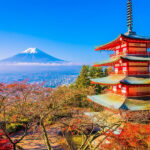


The Shibazakura Festival stop: what to expect at Motosuko Resort
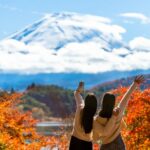
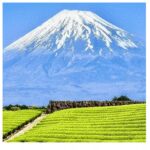
The day begins with the Fuji Shibazakura Festival at Motosuko Resort. Shibazakura (pink moss phlox) forms low, carpet-like blooms that create a strong foreground for photos, especially with Mt. Fuji in the distance. The festival started in 2008, and the key thing is timing: you’re going when the plants are in bloom, so the view is meant to be at its peak.
Plan for a full-photo mindset here. This stop is listed as about 1 hour, and the festival ticket is not included (¥1,200 per person). If you want your best shot, arrive ready: phone storage cleared, camera battery charged, and a quick plan for where you’ll stand for the classic “flowers + Fuji” angle.
If the weather is overcast, don’t assume the day is ruined. The people who’ve had luck on this itinerary often see Mt. Fuji at more than one viewpoint during the day. Since this is an early stop, you also have more time later to catch a clearer moment from Lake Kawaguchiko if the morning is cloudy.
Saiko Iyashi-no-Sato Nenba: rural life in a very compact visit
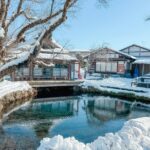
Next up is Saiko Iyashi-no-Sato Nenba, a traditional Japanese village area in Fujikawaguchiko. The story behind the village adds emotional weight: it was destroyed by a landslide during a typhoon in 1966 and later rebuilt. That background helps the visit feel more than scenic—it’s about resilience and local identity.
Your time here is about 50 minutes, and the ticket is not included (¥500 per person). This is the kind of stop where you should slow down just a little, because the details are what turn a village visit into a memory: traditional-style building layouts, a sense of place, and the way the village frames Mt. Fuji when conditions are right.
The drawback is that 50 minutes is tight if you love to read every sign and wander slowly. So I’d treat this as a “best-of” cultural stop. Enjoy the vibe, take a few photos, and then be ready to move when the group keeps rolling.
Lake Kawaguchiko: your main Mt. Fuji viewpoint zone
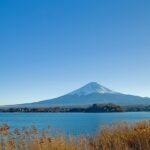
Then you shift to Lake Kawaguchiko, one of the Fuji Five Lakes and the most popular for panoramic Fuji views from the shore. The lake also has the longest shoreline among the five, which is why it works well for a guided circuit: there are multiple spots where you can look toward the mountain without crisscrossing too much.
This stop is short—about 20 minutes—but it’s positioned as a prime viewing window. If the mountain is visible, this is where it can feel “big” and iconic, not just like a background.
Even if the mountain is partly obscured, the lake still gives you atmosphere. The key is to keep expectations realistic: on an active group day, you don’t have time for endless “wait and see” loops. Use this time for a few focused viewing angles, then trust the later viewpoints.
Oishi Park: the classic flowers + lake + Fuji photo trio
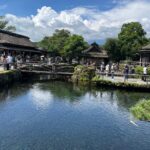
Oishi Park is one of the most popular spots around Lake Kawaguchiko because it gives you a strong combo: flowers, lake views, and Mt. Fuji all in one sweep. The lakeside promenade is designed for strolling and photographing, and the flower mix changes across seasons—so the park is often at its best when the timing matches local bloom cycles.
Your visit here is around 30 minutes, and admission is listed as free. This is good value: you get a scenic payoff without paying another entry fee. It’s also a practical pause in the schedule. If you need to step away from tight group pacing, this is the place where you can naturally stretch your legs.
Here’s the photo tip that saves time: pick one main spot first (your “target Fuji angle”), then circle for a second shot rather than trying to photograph everything. The lake and flowers give you enough variety that you’ll still come home with multiple options, even with limited time.
Kawaguchiko Natural Living Center: red torii + Fuji for easy composition
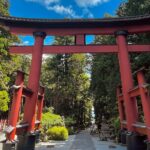
One of the most memorable visual stops on this route is Kawaguchiko Natural Living Center. The focus is photography: from the second floor you can capture a red torii blending with Mt. Fuji.
This is a short stop—about 15 minutes—but it’s the kind of place where a little time goes a long way. Because the viewpoint is specific, you don’t have to play detective. You can get set up, take your shot (or two), and be ready for the next stop without losing the momentum of the day.
Admission here is listed as free, which makes it a high-value quick win. If you’re traveling with anyone who cares more about photos than long walks, this stop tends to land well.
Chureito Pagoda and Arakura Fuji Sengen Shrine: the “guardian god” payoff
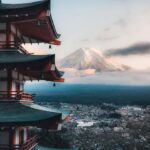
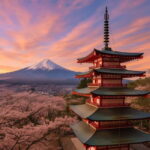
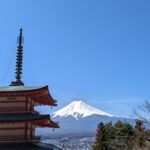
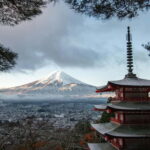
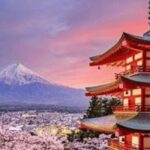
The last scenic block is Arakurayama Sengen Park and its famous sites: Chureito Pagoda and Arakura Fuji Sengen Shrine. The pagoda is one of those Japan icons where people line up because the view is hard to get wrong—especially when Mt. Fuji appears behind it.
The tour schedules:
- Chureito Pagoda: about 50 minutes (free admission)
- Arakura Fuji Sengen Shrine: about 15 minutes (free admission)
The shrine adds depth. It was built in 705 and has served as the guardian god of Arakura Village for over 1,300 years. Even if you don’t read every detail on site, you can feel the continuity. It’s also a nice contrast to the earlier flower and village stops, since it shifts from scenery to spirituality and long-term local tradition.
Golden Week route note
There’s an important seasonal tweak. During Japan’s Golden Week (May 1–7), traffic around Mt. Fuji is expected to be heavily congested. To keep the timing workable, the tour may cancel the visits to Chureito Pagoda and Arakura Fuji Sengen Shrine and allocate that time to other attractions instead. If you’re traveling in those dates, plan mentally for a slightly different ending.
Timing, weather, and how to avoid feeling rushed
This is a 10-hour group day, and the itinerary reflects that. Most stops are 15 to 50 minutes, which is perfect if your goal is “see the highlights” and keep energy high. It can feel less perfect if you’re the type who likes to linger, eat slowly, or take your time reading every placard.
To keep the day enjoyable, I suggest you travel light. If you’ve got a stroller or large luggage, you’ll want to indicate that when booking so the group can plan vehicle space. When timing is tight, logistics that would be annoying on a slow day can become stressful on a fast one.
Weather is the biggest wildcard. Since Mt. Fuji visibility can change quickly, it helps that you don’t only go to one viewpoint. If you get lucky early, you’ll likely feel like the day is paying you back. If clouds roll in, you’ll still get lake views, gardens, village atmosphere, and the shrine/pagoda combination.
Also, manage your expectations about food. Lunch isn’t included. The tour may share food recommendations through the guide, but if food variety isn’t your top priority, bring your own snacks and water and treat any suggested meals as a bonus rather than a plan.
Price and ticket reality: what you pay vs. what you still pay
The base price is $58.90 per person, and you get air-conditioned vehicle transport plus a guide. That’s a solid value when you’re comparing it to the effort and stress of coordinating transport on your own during peak season.
But do the math on the day’s additional tickets. Two admissions are listed as not included:
- Saiko Iyashi-no-Sato Nenba: ¥500
- Fuji Shibazakura Festival: ¥1,200
Lake Kawaguchiko, Oishi Park, Kawaguchiko Natural Living Center, Chureito Pagoda, and Arakura Fuji Sengen Shrine are listed as free. So most of what you pay for is the transport + guide + the paid cultural/flower highlights.
If you’re budget-minded, the best move is simple: plan ahead so you don’t get surprised when you’re asked to pay at the festival and the village. If you’d rather spend time than money, know that the biggest paid experiences on this tour are also the ones most tied to the seasonal “wow” factor.
Who this Mt. Fuji tour is best for
This one-day trip fits best if you:
- Want a structured Mt. Fuji day without worrying about transport timing
- Like the mix of views + culture (flowers, village atmosphere, lake scenery, shrine/pagoda)
- Prefer a guide’s pacing and clear meeting points over independent planning
- Can handle short stops for photos and quick sightseeing
It may be less ideal if you want:
- Lots of downtime or unhurried walking
- A flexible, “stay until the mountain appears” strategy
- A day centered on one single attraction rather than many highlights
It also suits couples and small groups well because you’ll likely stay together, and the tour’s rhythm does most of the work for you. Families can work too, as long as you’ve indicated stroller or large luggage needs when booking.
Should you book this one-day Mt. Fuji & shibazakura trip?
I’d book it if you want a high-odds way to hit the core Mt. Fuji sights from Tokyo in one day: shibazakura foreground drama, a cultural village stop, and multiple Lake Kawaguchiko photo angles. The price is fair for what you’re getting, and the mix of paid and free attractions keeps the overall day from feeling overpriced.
You might skip it if you’re the type who gets irritated by fast transitions, or if you’re traveling during Golden Week and want a guaranteed schedule ending at Chureito Pagoda and Arakura Fuji Sengen Shrine. In those dates, traffic can reshape the last part of the day.
If you can accept that this is a highlight circuit—and you show up ready to photograph, walk, and move when the guide calls it—this is a strong way to make Mt. Fuji happen without turning your day into a planning project.
FAQ
What’s included in the Mt. Fuji one-day trip price?
The tour includes round-trip transportation by air-conditioned vehicle and a guide. Lunch is not included.
Which entrance tickets cost extra?
Saiko Iyashi-no-Sato Nenba costs ¥500 per person, and the Fuji Shibazakura Festival costs ¥1,200 per person. Other listed stops on the route are free.
How long is the tour?
The duration is about 10 hours.
Is the ticket mobile?
Yes, it uses a mobile ticket.
What language is the tour available in?
The tour is available in English and Mandarin.
How many people are on the tour?
The group has a maximum size of 45 travelers.
What are the main stops on the itinerary?
You’ll visit the Fuji Shibazakura Festival, Saiko Iyashi-no-Sato Nenba, Lake Kawaguchiko, Oishi Park, Kawaguchiko Natural Living Center, Chureito Pagoda, and Arakura Fuji Sengen Shrine (timing may change during Golden Week).
Are Chureito Pagoda and Arakura Fuji Sengen Shrine always included?
During Golden Week (May 1–7), those two visits are expected to be canceled due to heavy traffic, and time may be reassigned to other attractions.
Is lunch included?
No, lunch is not included.
Is there free cancellation?
Yes. You can cancel for a full refund up to 24 hours in advance of the experience start time. If you cancel less than 24 hours before, the amount paid is not refunded.
What should I do if I’m traveling with a stroller or large luggage?
Indicate that during booking so the tour can plan the vehicle space.