REVIEW · BRUSSELS
From Brussels: Bruges Day Trip with Boat Tour Option (ENG)
Book on GetYourGuide →Operated by buendía · Bookable on GetYourGuide
Bruges feels like a movie set you can walk through. This guided day trip gives you the UNESCO canal-core walk and quiet city pauses like the Begijnhof and Minnewaterpark without wasting your time figuring it out. One catch: it’s a long, full day, and the free time can disappear fast if you overplan your lunch and shopping stops.
From Brussels, you’ll ride in comfortably, meet your guide at Brussels Central Station, then spend the day in Bruges with a mix of guided sightseeing and on-your-own wandering. English-speaking guides (people like Peter, Blanca, and Antonio show up in recent departures) tend to make the history click—and they also share practical tips for where to eat and what to shop for.
In This Review
- Key Points That Make This Day Trip Work
- Price and Value: What You’re Paying for at $50
- The 10-Hour Rhythm From Brussels Central Station
- The Guided Walk in Bruges: Canals and Squares You’ll Recognize Fast
- Castle Square and Market Square: Where Bruges Flexed Its Power
- Minnewaterpark and the Begijnhof: The Quiet Side of Bruges
- St. John’s Hospital and Our Lady: Big Medieval Monuments, Made Understandable
- Gruuthuse Palace and the Dijver Canal Banks
- Rozenhoedkaai and Small Squares: Photo Spots Without the Guesswork
- Four Hours of Free Time: Lunch, Chocolate, Lace, and Walking at Your Own Speed
- Optional Boat Tour: A Second Angle on the Same Beautiful City
- Practical Notes: Radios, Headphones, and Comfort
- Who This Day Trip Fits Best (and Who Should Rethink It)
- Should You Book This Bruges Day Trip?
- FAQ
- How long is the Bruges day trip from Brussels?
- What is included in the price?
- Is food included?
- Do I need headphones for the tour?
- Is there an optional boat tour?
- Is the tour suitable for people with mobility impairments?
- Are there any requirements for small children?
Key Points That Make This Day Trip Work
- UNESCO-listed walking route in the historic heart of Bruges, designed for a first visit
- Two hours of guided context, so you know what you’re looking at before you wander
- Real free time (about four hours) to eat, shop, and take photos at your pace
- Optional canal boat tour that adds a second, calmer way to see the city
- Radio guide system is often used with Bruges tourism rules, so bring headphones if you can
Price and Value: What You’re Paying for at $50
At around $50 per person, this is the kind of day trip that’s priced less like a luxury excursion and more like a time-saver. You’re covering round-trip bus transfers plus a professional English guide and a structured walking tour. Then Bruges throws you the best part: the city itself, with free time to handle lunch and personal wandering.
Here’s why that balance matters. Bruges is compact, but it’s also easy to get turned around—especially around the canals, small squares, and street clusters where the good photo angles are. Paying for the guided framework means you don’t waste your limited daylight staring at a map. Your own time then becomes choice, not confusion.
Food and drinks are not included, so you’ll still control your budget. But the guide typically includes recommendations for chocolates, lace, and where to eat, which helps you spend money in places that match your tastes instead of falling for the nearest storefront.
You can also read our reviews of more tours and experiences in Brussels.
The 10-Hour Rhythm From Brussels Central Station
This trip is built like a day bus tour with a clear rhythm:
- Morning coach ride from Brussels (about 2 hours)
- A guided Bruges walk (about 2 hours)
- About four hours of free time in Bruges for lunch and exploring
- The return coach ride to Brussels (about 2 hours), with arrival back around 6:00 PM
The practical win is timing. You get to see Bruges in daylight, get real context from the guide, and still have enough unscheduled time to go where your curiosity pulls you. If you’re only in Belgium for a short visit, that matters more than squeezing in one more stop.
The meeting point is straightforward: in front of Central Station in Brussels, outside, where the guide waits with ID for Buendía Tours. In busy station areas, double-check you’re in the right line for your tour group.
The Guided Walk in Bruges: Canals and Squares You’ll Recognize Fast
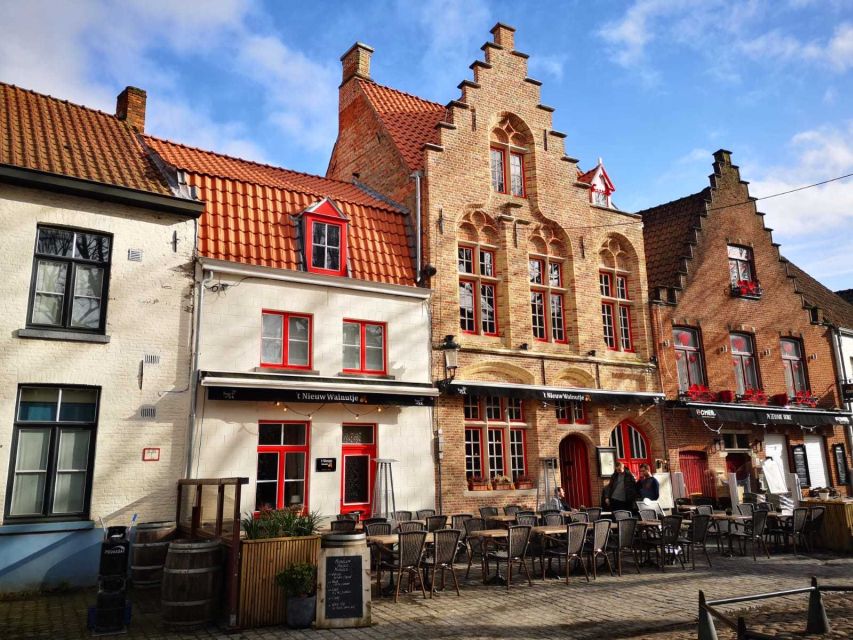
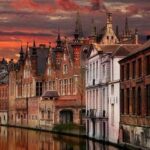
The heart of the experience is a fully-guided walk through the historic UNESCO area—Bruges’ “Venice of the North” vibe, but on foot. You’ll see why the medieval layout survives: canals slice through neighborhoods, stone buildings stack up along waterways, and the public squares feel designed for strolling.
Your guide will connect the dots between major landmarks and everyday details. Even if you’ve seen Bruges photos before, this kind of route helps you spot what to notice:
- canal sightlines that look random until you know the history
- architectural clues in facades and rooflines
- where squares sit in relation to key institutions
The route includes stops around Market Square and Castle Square areas. You also pass through character streets like Stoofstraat, where the scale makes you slow down. That’s not an accident. Bruges rewards pace.
This is one of the most praised parts of the trip in recent feedback: guides like Peter and Blanca are repeatedly described as energetic and story-driven, and that style matters because you’ll see more, not just walk more.
Castle Square and Market Square: Where Bruges Flexed Its Power
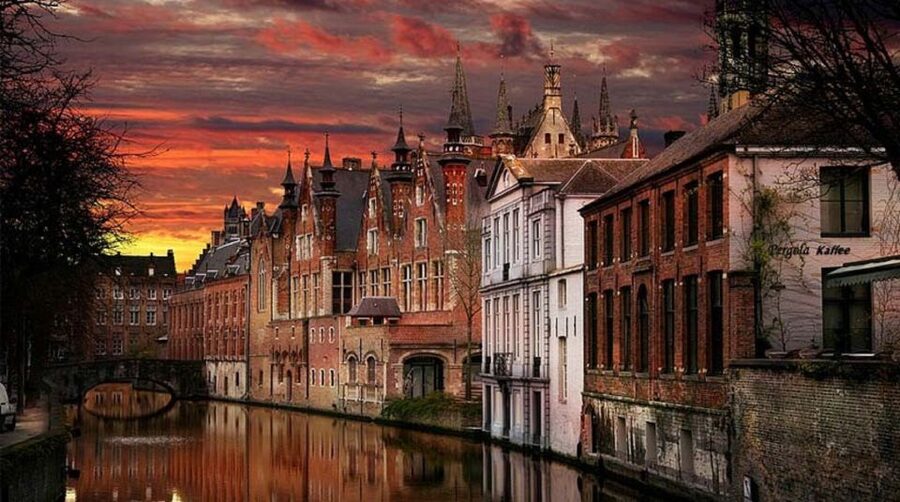
If Bruges has a “main stage,” it’s these squares. Castle Square is tied to the site of the first count’s castle—so even if you’re not seeing castle walls the way you would in a bigger ruin, the location explains the city’s early importance. It’s a lesson in how a place grows: power attracts trade, trade attracts wealth, wealth funds monumental buildings.
Market Square highlights the same theme from another angle: Bruges didn’t just collect visitors; it ran commerce. Standing in these spaces helps you understand why the city looks the way it does—why buildings face the open areas, and why routes feel directed rather than accidental.
If you like taking photos, this is where you’ll get angles with a bit of drama. Just be ready for crowds around the squares at peak times—Bruges is popular, and the best viewpoints can feel like a shared secret that isn’t very secret.
Minnewaterpark and the Begijnhof: The Quiet Side of Bruges
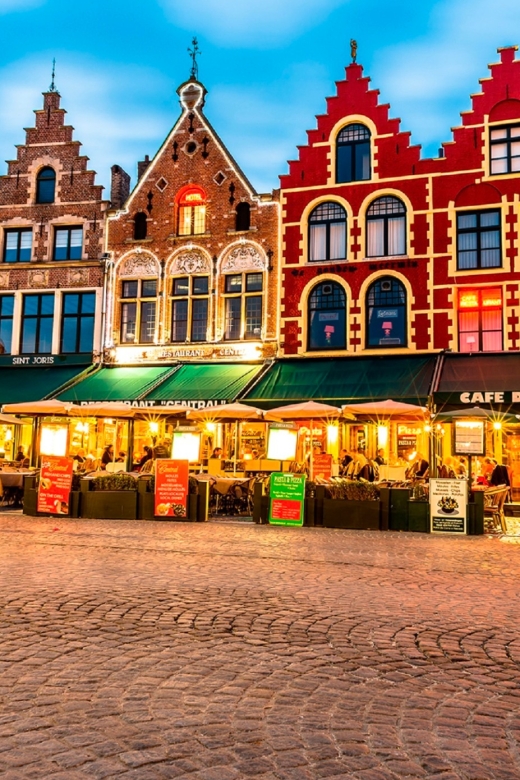
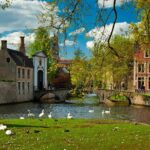
After the bigger landmark energy, the tour shifts to calm. You’ll visit Minnewaterpark, often called the Lake of Love. It’s not about romance-only. It’s about breathing room. In a city where the streets and canals keep moving, this kind of pause gives you a different Bruges mood—slower, softer, more reflective.
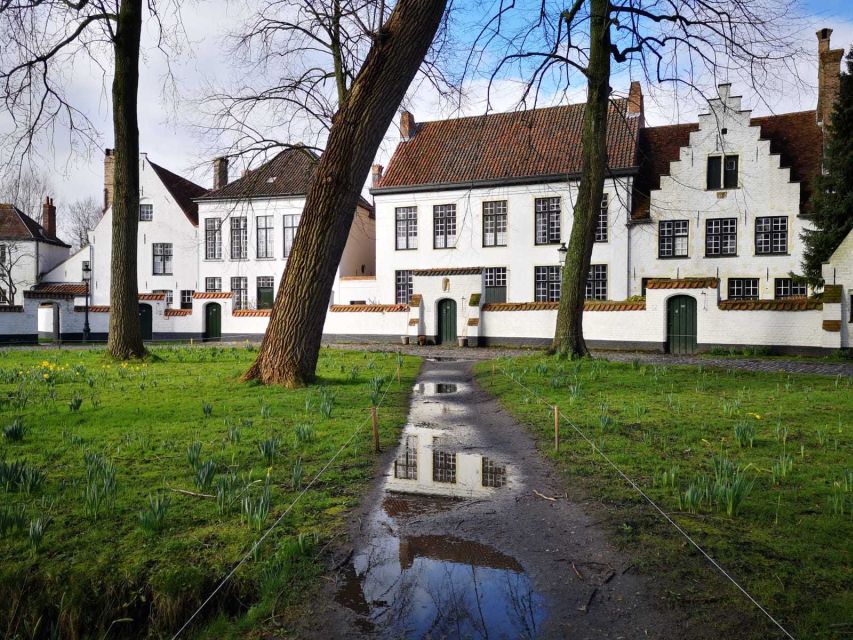
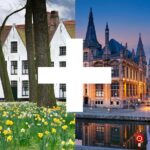
Then there’s the Begijnhof, a 13th-century beguinage. In spring, it can be especially pretty, with daffodils creating a carpet-like effect. Even if you’re not traveling in peak bloom, the point is the same: it’s a sheltered, human-scale space, a reminder that Bruges wasn’t only churches and guild power. It also held places for community life.
This section is a big reason people love the trip. You don’t just check sights; you get a feeling for the city’s rhythm—public squares, then quiet corners.
St. John’s Hospital and Our Lady: Big Medieval Monuments, Made Understandable
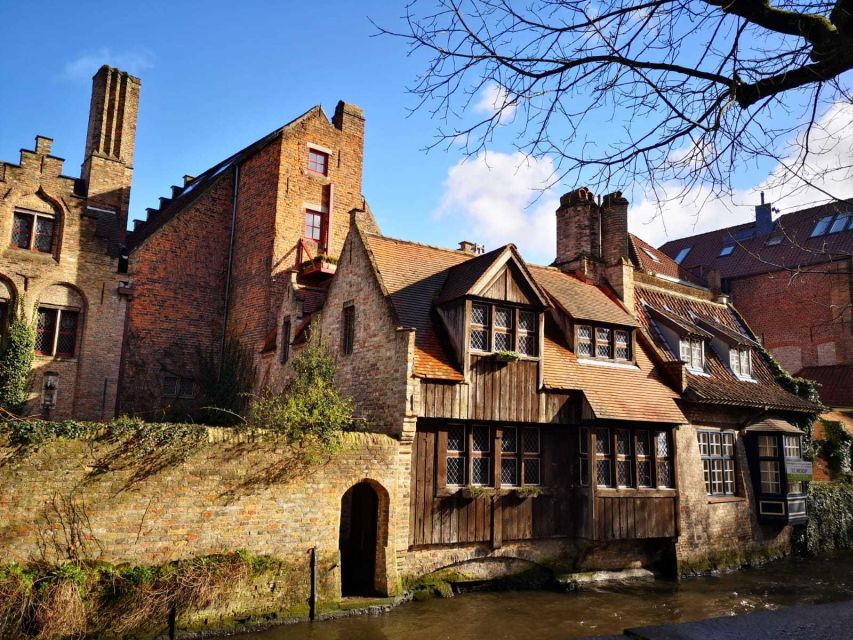
The guided walk also takes you past major church and hospital landmarks, including:
- St. John’s Hospital, described as about 800 years old
- the imposing Church of Our Lady
These aren’t just buildings to admire from the outside. The tour format is designed to make the structures legible—what they represent, why they mattered, and how they connect to the city’s wealth and civic identity.
It helps that many recent guides bring the storytelling. Names that show up in feedback include Jorge and Pablo, with praise for making medieval facts feel connected rather than memorized. When the guide can explain why a facade looks the way it does—or what a site originally served—you’ll walk away with real understanding, even on a single day.
Gruuthuse Palace and the Dijver Canal Banks
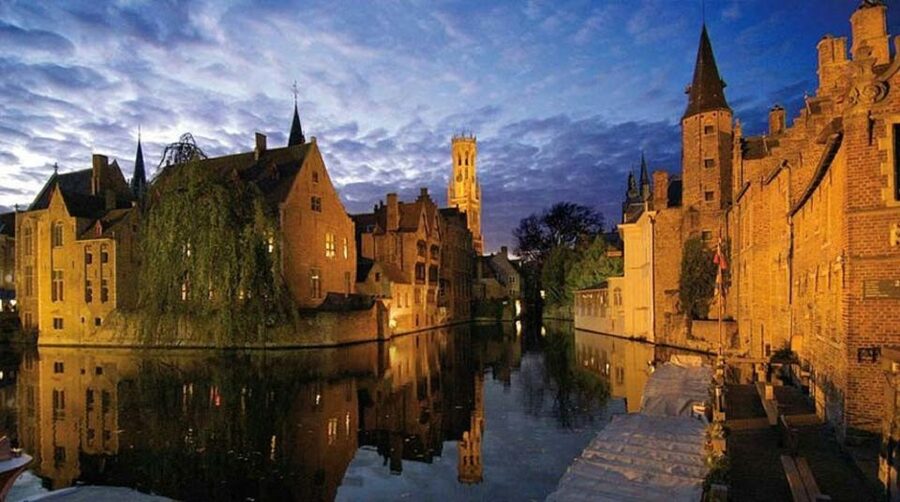
Next comes a stretch that feels like Bruges in slow motion: the approach around Gruuthuse Palace and the walk alongside the Dijver Canal banks. The Gruuthuse story is the kind that helps you stop seeing Bruges as only postcard architecture. It’s about opulence and influence—how families and institutions shaped the city.
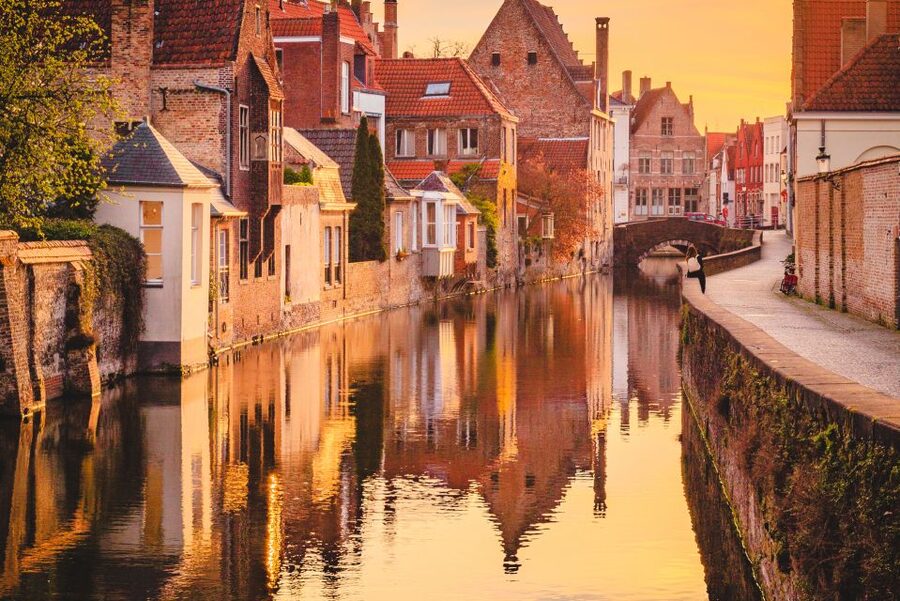
The canal side is where your photos get better. Canal houses, reflections, and the way bridges frame views all create instant “how is this real?” moments. If you’re the type who likes details—brickwork, window shapes, water angles—this is your section.
Rozenhoedkaai and Small Squares: Photo Spots Without the Guesswork

Bruges gets especially charming in the smaller moments:
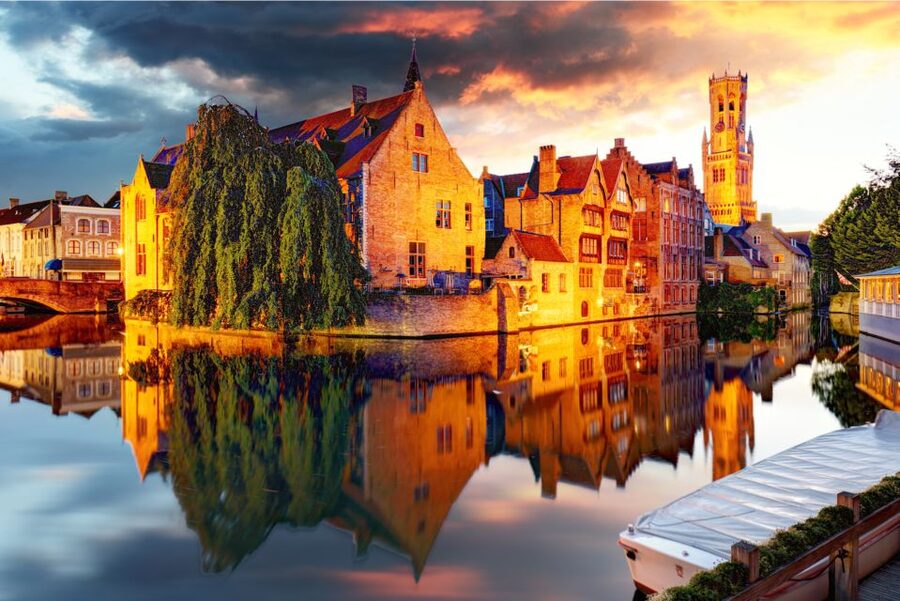
- Rozenhoedkaai, known for canal-side houses and classic views
- Huidenvettersplein, a tiny square that feels like a breather between busier streets
These stops are smart on a day trip schedule. They give you iconic Bruges scenery without requiring extra transit time or complicated navigation. You also get a better sense of how the canal system connects neighborhoods, which helps during your free time later.
One practical note: if you’re aiming for specific photo angles, give yourself a few minutes longer than you think. Bruges is full of near-identical-looking streets at first glance, and you’ll want to reposition when the light hits.
Four Hours of Free Time: Lunch, Chocolate, Lace, and Walking at Your Own Speed
The tour doesn’t end with the guided portion. You get about four hours of free time for lunch and exploring your way through Bruges.
This is where the city becomes personal:
- pick a lunch spot based on what you’re craving (and what the guide recommended)
- wander toward canals and squares you liked most on the tour
- shop if you want Belgium’s food souvenirs
Two shopping themes come up again and again: exclusive chocolates and legendary lace shops. The guide’s recommendations help here because Bruges has plenty of storefronts, and it’s easy to end up somewhere pricier or less “special” than you expected.
If you don’t read maps well, that’s still fine. Even a solo traveler can handle Bruges during this free window because you’ve already learned the layout from the guided route. Some guides even help people find their way back to the coach at the end, which is comforting if you’re unsure about directions.
Optional Boat Tour: A Second Angle on the Same Beautiful City
If you have the option to add a boat tour, I strongly suggest it. The reason is simple: Bruges is made for water-level views.
The boat adds a different pace. From the canals, you see the city’s facades and canal edges from a perspective you can’t fully get on foot. Recent feedback also calls the boat tour a highlight, with one mention that it’s about 35 minutes—short enough to fit without eating your entire afternoon.
Best move: do the boat after you’ve had the walking context. Then you’ll recognize what you see from the guide’s landmarks, not just admire it as scenery.
Practical Notes: Radios, Headphones, and Comfort
Bruges has tourism rules that can require a guided system using radios with headphones. To reduce environmental waste from disposable headphones, you may be asked to use your own. If you don’t have any, disposable headphones are available for 1 EUR.
A few groups reported that radio reception can be patchy, and some devices may run low on power. So if you want the smoothest experience, bring your own wired or compatible headphones and keep them accessible.
Also: wear comfortable shoes. This day is a walking tour plus canal-side sightseeing. Even if you’re just moderately comfortable on your feet, you’ll appreciate good footwear.
Finally, think about basics before you leave the coach. One review mentioned there may not be a bathroom on the bus, so plan accordingly and avoid relying on mid-journey stops.
Who This Day Trip Fits Best (and Who Should Rethink It)
This is a great match if you:
- have limited time in Belgium and want a solid first look at Bruges
- like structured sightseeing but still want free time to choose lunch and shopping
- appreciate guides who mix facts with stories, like Peter and Blanca, who get repeated praise
- want an easy day plan with minimal navigation stress
It may not fit if you:
- need mobility support, since it’s listed as not suitable for people with mobility impairments
- want a super slow, unplanned day with no schedule at all (because this is a coached rhythm)
- prefer totally self-guided travel without radios or a set walking route
Should You Book This Bruges Day Trip?
I’d book it if your goal is smart Bruges coverage in one day: bus from Brussels, guided UNESCO sights, calm pauses, and enough free time to eat and shop without rushing. The structure is the value here, and the guide quality seems consistently high based on recent experiences—people frequently highlight guides like Peter, Blanca, and others for energy and clear recommendations.
I’d skip (or seriously consider alternatives) if you hate long days or you need mobility-friendly logistics. Also, if you want maximum time for museums or very specific neighborhoods, Bruges deserves more than a one-day sampling.
If you want the best of Bruges without the stress, this is a practical, good-value choice.
FAQ
How long is the Bruges day trip from Brussels?
The total duration is listed as 570 minutes, about 10 hours, with an approximate return to Brussels around 6:00 PM.
What is included in the price?
Round-trip bus transfers from Brussels, a professional guide, the guided walking tour in Bruges, free time for lunch, and city recommendations.
Is food included?
No. Food and drinks are not included, so you’ll need to buy lunch and snacks during the free time.
Do I need headphones for the tour?
The tour may use radios with headphones due to Bruges visitor regulations. You’re encouraged to bring your own headphones to avoid disposable ones. If you don’t have any, disposable headphones are available for 1 EUR.
Is there an optional boat tour?
Yes, the experience is offered with an optional boat tour option. Recent notes describe it as about 35 minutes and a highlight for many people.
Is the tour suitable for people with mobility impairments?
No. It is listed as not suitable for people with mobility impairments.
Are there any requirements for small children?
Yes. Children under 3 years old must travel in a car seat on the bus, so you’ll need to bring the appropriate seat.