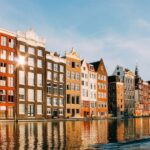
REVIEW · BRUSSELS
Bruges and Ghent Day Trip from Brussels
Book on Viator →Operated by Buendía · Bookable on Viator
Bruges and Ghent in a single day is a smart move. This trip strings together two UNESCO-listed cities with guided walks, A/C round-trip transport, and enough planning so you’re not guessing where to go first. You’ll start early, get a tight-but-meaningful look at the canals, cathedrals, guild halls, and riverfront photo spots, and still have time to wander.
I especially like the mix of hands-on stops and storytelling. You get a guided run through Bruges highlights like Minnewater (Lake of Love), the Begijnhof, and Rozenhoedkaai, plus Ghent’s big-ticket sights like Saint Bavo’s Cathedral with the Van Eyck brothers painting. In the best versions of this tour, guides like Angie and Antonio have a calm, organized style that makes the walking feel purposeful, not rushed.
One thing to consider: this is a walk-heavy day and the bus may park a bit away from the main center, sometimes around 15 minutes. Also, free time is helpful but not huge, so if you want a long sit-down lunch (or you’re aiming for deep museum time), you’ll feel the schedule.
Two cities, one early start with guided walks in both Bruges and Ghent
Chocolaterie and beer history stops so the day isn’t only churches and buildings
Guides shape the experience (many groups praise calm, structured explanations)
You’ll see the iconic photo stops like Boniface Bridge and Rozenhoedkaai
Free time is real but limited (plan meals and shopping around it)
Crowd management matters: radio/headphone rules can apply in Bruges
In This Review
- A 10-hour Brussels day trip that’s packed, not chaotic
- Bruges walking route: from Bargeplein to Rozenhoedkaai
- My practical note on Bruges free time
- What the guided stops add up to in Bruges (and what to expect)
- Ghent on a tighter loop: Town Hall, Belfry dragon, and Saint Bavo
- Ghent free time tip
- Headphones, radios, and how to stay together in busy streets
- Price and value: is $56.72 worth it compared to going solo?
- Who should book this Bruges and Ghent day trip (and who should skip it)
- Should you book Bruges and Ghent from Brussels?
- FAQ
- What time does this Bruges and Ghent day trip start?
- How long is the tour?
- Is the tour guided in English?
- Do I need headphones?
- Is food included in the price?
- What free time do I get in Bruges and Ghent?
- Final word: should you book?
A 10-hour Brussels day trip that’s packed, not chaotic
This tour leaves Brussels at 8:30am and returns you to the same starting point. Expect about 10 hours total including bus time and bathroom breaks, with a full morning/afternoon loop that covers both cities on foot. The bus is A/C and you’re traveling with a group capped at 45, which helps keep logistics manageable.
The rhythm is classic “guided segments + short breaks.” In Bruges you’ll get a lot of 2–10 minute stops, then a longer guided finish around the Grote Markt, and only then do you get about 1.5 hours to roam on your own. In Ghent the guided walk is followed by roughly 1 hour free time.
This schedule is great if you want an overview that helps you decide what to do on a future trip. It’s not ideal if you only travel for slow wandering, long meals, or you want to enter multiple major museums and attractions beyond what you see on the route.
Bruges walking route: from Bargeplein to Rozenhoedkaai
Bruges starts with a quick regroup at Bargeplein (Katelijnparking). You’ll have around 10 minutes to get to the bathroom and make sure you know where to meet the guide before walking begins. This is one of those small moments that matters—if you miss the timing, you’ll be the one sprinting to catch up later.
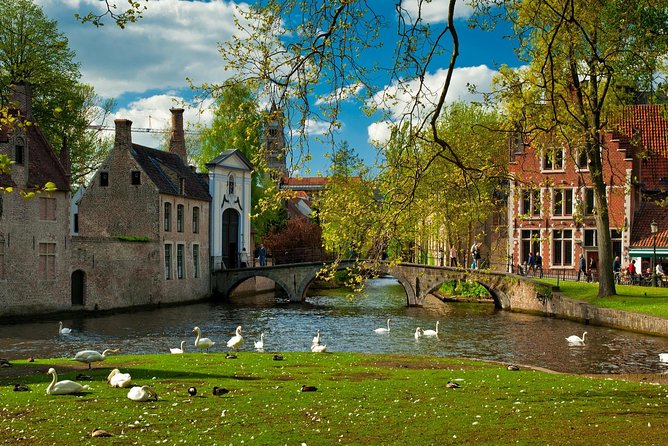
From there, the tour leans into Bruges-by-foot charm. You begin at Minnewater, the Lake of Love, where the guide ties the scenery to a specific local story. It’s short, but it’s a good “set the mood” stop before the medieval details start stacking up.
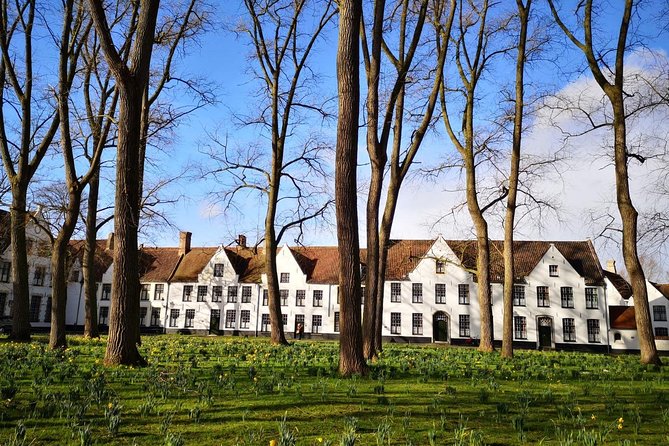
Next is the Begijnhof, founded in 1245, where you’ll get a sense of how life was organized around a unique community of women. After that, the day turns delicious at Chocolalino, an artisan chocolate shop on the route. The guide explains how Bruges chocolate is made and offers tips to tell handmade from industrial—useful if you plan to bring sweets home and you want more than a random box.
You’ll also hit the Walplein area, where the guide connects the city’s tradition to Bruges beer history. Then come the “look closely” streets like Stoofstraat, where the guide shows you how to recognize original medieval houses—basically a shortcut to seeing architecture instead of just passing it.
After a series of quick photo-friendly breaks, the route includes Saint John’s Hospital with an explanation of how medieval healthcare worked. You’ll also stand outside Onze-Lieve-Vrouwekerk (Church of Our Lady), where the famous Madonna and Child sculpture tied to Michelangelo is located inside—your time here is mostly about what you notice from the outside and what to remember when you step in later (if you choose).
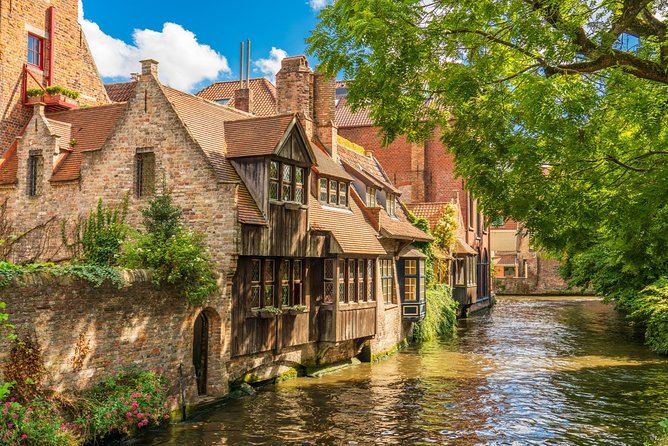
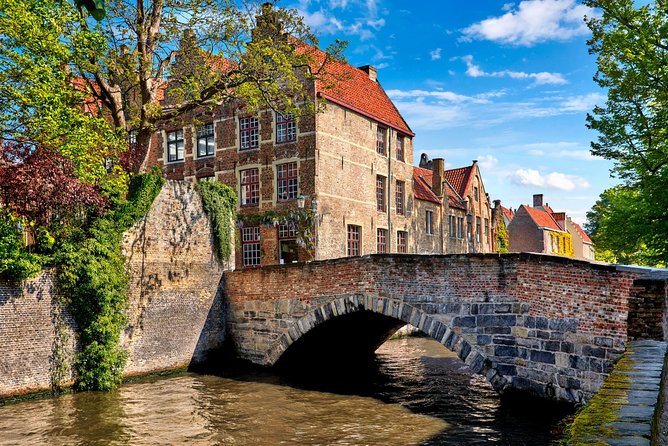
The route then tracks major Bruges landmarks without overloading you with entrances. You’ll see Gruuthusemuseum from outside, learn about the influential Gruuthuse family, and walk past spots like Boniface Bridge, including the bridge’s legend plus time for photos. One of the most loved sections is Quai du Rosaire / Rozenhoedkaai, which the guide uses as a backdrop for the “pier of the roses” story, while giving you space to take pictures.
Then you’ll move to Huidenvettersplein (tanners’ square), Burg Square for the Gothic town hall area and other historic buildings, and finally The Markt / Grote Markt. That last guided stretch matters because it’s where the guide gives practical tips—where to eat and which shops are worth your time for traditional chocolate. After that, you’re released for your main free roaming window.
You can also read our reviews of more tours and experiences in Brussels.
My practical note on Bruges free time
You get roughly 1.5 hours in Bruges, and that can be perfect for a canal wander, a chocolate buy, and one sit-down drink. But several people feel it’s tight if you want a longer lunch or want to explore beyond the center (like into quieter harbor areas). If food is a big priority, go early in your free-time window so you’re not rushed into whatever is closest.
What the guided stops add up to in Bruges (and what to expect)
The Bruges portion is designed to teach you how to read the city. Instead of “walk, look, next,” you get short explanations that help you connect the dots: why a place exists, what role people played, and what to notice visually.
Here’s what stands out about the structure:
- The chocolate stop is not only for tasting; it’s also for buying smarter. The guide’s tips on distinguishing handmade vs industrial chocolate make a difference if you’re trying to avoid mass-market packaging.
- The beer history on Walplein turns a simple square into something you’ll recognize later when you spot Bruges beer culture around town.
- The architecture lessons on Stoofstraat and the trades stops like tanners’ square help you see medieval life in the street layout.
Guides can make or break a day like this, and this tour tends to earn praise when the guide stays organized and upbeat even in rain. Names that come up again and again include Angie, Antonio, Blanca, Oscar, and Julian. The pattern is the same: clear pacing, good recommendations, and enough structure that you don’t lose your place constantly.
The drawback is built into the format: the stops are brief. In Bruges you’re often learning for a few minutes and then moving on quickly. That’s fine if you like momentum, but it can feel like “walk and talk” if you’re hoping to spend time inside churches or museums that aren’t on the route.
Ghent on a tighter loop: Town Hall, Belfry dragon, and Saint Bavo
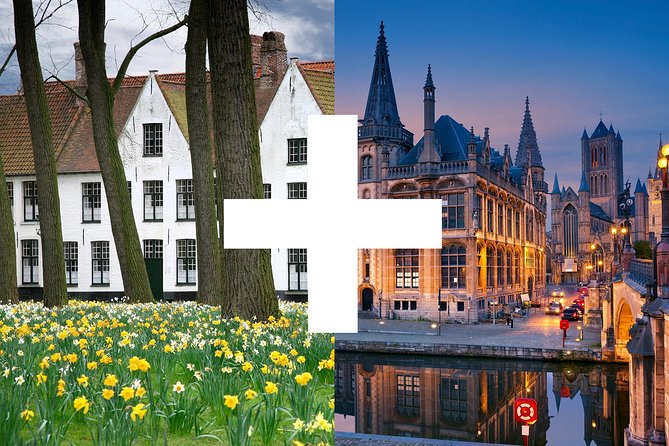
After Bruges free time, you rejoin the bus at Bargeplein (Katelijnparking) and head to Ghent. You arrive with time to walk into the center and start the Ghent guided walk.
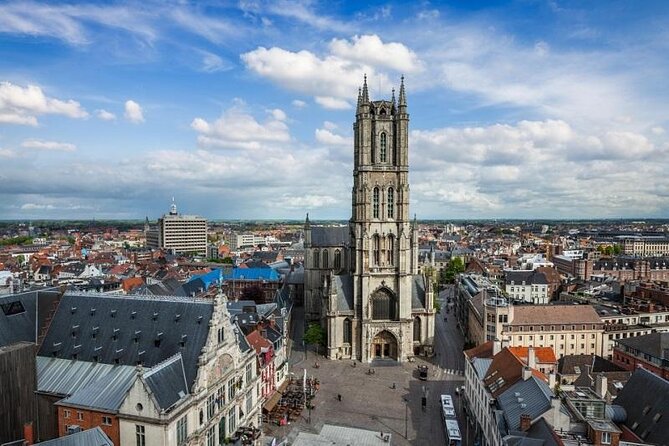
Ghent is where the tour becomes more compact and, in my opinion, easier to understand quickly. You start at Ghent Town Hall (Stadhuis), with an explanation of the building’s architectural styles. Then you move toward Het Belfort van Gent (the Belfry), where the guide shares the story around the tower and its dragon.
The big anchor is Saint Bavo’s Cathedral. You’ll see both outside and inside, and the guide focuses on the museum-level importance of the Van Eyck brothers’ The Adoration of the Mystic Lamb—the famous painting tied to one of the most talked-about art stories in history. Even if you don’t know much about the painting, the guide’s framing helps you see why this is a must-stop.
You’ll also get smaller but useful reminders about how local life works. For example, you’ll make a quick stop near Saint Nicholas area where the tour points out that Belgian churches host concerts and events. It’s a small detail, but it helps you imagine the city as living culture, not just a photo set.
Then comes guild and civic texture: Masons’ Guild Hall, Korenmarkt (connected to the former post office), and Saint Michael’s Bridge with time for impressive photos plus a story about the church tower. The riverfront sequence—Graslei and Korenlei along the Lys—does what it should: it turns Ghent’s layout into something you can visualize, especially when you’re standing on the pedestrian-friendly riverbanks.
After that, the tour shifts into markets and daily life. You’ll see OOOST (The Great Butchers), originally a covered market dating back to the 15th century, and a short market-stall stop at Kleine Vismarkt where you hear about Ghent’s famous candy, cuberdon. That’s a neat snack-food moment that feels more local than a generic tourist shop.
The tour ends the guided portion at Sint-Veerleplein, with tips for beer and souvenir shops plus the reminder of where and when to meet the bus. Then you’re released again for roughly 1 hour of free time.
Ghent free time tip
Because the Ghent loop is efficient, you can use your hour well. Think: pick one café or bar stop, wander the riverbanks again for different angles, and do a quick look around the historic core—don’t try to “finish the whole city.” One hour is enough for a satisfying reset.
Headphones, radios, and how to stay together in busy streets
This tour sometimes uses radio-guides in Belgium, and Bruges is specifically noted as having tourist regulations that may require them. If you have your own headset, bring a 3.5 mm jack and not wireless. If you don’t, you can buy disposable ones for €1.
This matters for two reasons. First, it improves what you hear during quick stops, especially when groups overlap in crowded areas. Second, it helps prevent that common day-trip issue: people wandering off mid-sentence and then trying to find the guide again in a sea of umbrellas.
A few practical habits help a lot:
- Stay close when you’re moving through narrow lanes and busy squares.
- When you stop, face the guide so you know exactly where the group will go next.
- Have your meeting point plan in your head before the free-time release ends (the guides do remind you, but crowds make memory fuzzy).
Some people reported radio static or audio issues, so the best backup is your own headset and a willingness to get extra directions verbally when needed. Even then, if the city is crowded, you’ll want good walking shoes and patience.
Price and value: is $56.72 worth it compared to going solo?
At $56.72 per person, the value is really about what’s included: English-speaking professional guide(s), round-trip A/C transport, and guided walking tours in both Bruges and Ghent. You’re also getting city tips that can save you time—where to eat, where to shop, and what’s worth prioritizing while you’re limited to one day.
Doing it on your own can be cheaper on paper, but you’ll pay in time and planning stress. You’d need to sort out routes, schedule day-train or bus timing, figure out guided-free pacing, and decide what to skip—then you still have to solve the “two cities, one day” problem. This tour handles the big parts for you: timing, sequencing, and a guide to connect spots so they feel like a story instead of a checklist.
That said, this is not a bargain if your ideal day includes long museum time or you want to stay away from crowds as much as possible. Several people thought the schedule felt tight for Bruges—especially if you want a long sit-down lunch and extra time near the more relaxed corners.
So I see this price as fair if your goal is: see the classics, learn enough to enjoy them, and still have time to wander. If your goal is: linger slowly and go deep, a two-day plan might feel more satisfying.
Who should book this Bruges and Ghent day trip (and who should skip it)
This trip fits best if you:
- Want a fast, high-impact overview of both cities from Brussels.
- Like walking tours that explain what you’re seeing.
- Enjoy chocolate and beer culture as part of sightseeing, not as a side quest.
- Are okay with short guided stops and then free roaming windows.
It may not fit if you:
- Have limited mobility or dislike lots of cobblestones and walking (some feedback specifically warns that it’s a lot of walking).
- Need lots of time for sit-down meals in each city.
- Want to spend significant time entering major sites beyond what the route shows.
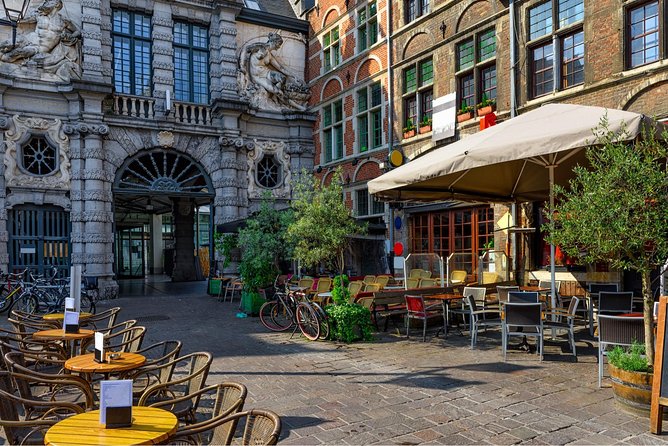
It’s also ideal for first-timers to Belgium who want the strongest visual hits—canals in Bruges, medieval civic buildings and the cathedral setting in Ghent—without doing homework beforehand.
One more small logistics point: some passengers noted the bus can park a bit away from the main spots in both cities. That doesn’t ruin the day, but it adds to the walk count, so it’s worth planning for.
Should you book Bruges and Ghent from Brussels?
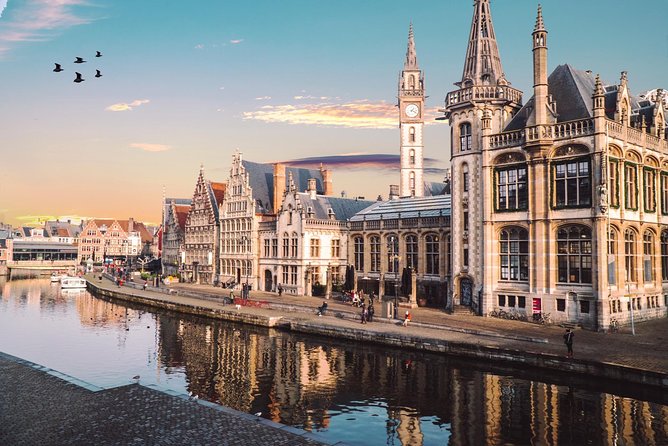
I’d book it if you want to maximize a single day and you like guided structure. The tour’s biggest strength is that it gives you context while also hitting the iconic sights—Rozenhoedkaai, Boniface Bridge, Saint Bavo’s Cathedral, the Belfry, and the riverfront views at Graslei/Korenlei. Guides like Angie and Antonio are repeatedly praised for keeping things organized and easy to follow, which is exactly what you want on a packed schedule.
Before you book, ask yourself one question: do you want an overview or a slow deep dive? If you’d rather shop leisurely, eat at length, and explore the edges of Bruges or Ghent, you might feel the day is rushed. If you’re happy with a “see it all once, then return later” mindset, this is a solid way to do it.
My final checklist:
- Bring good walking shoes for cobbles.
- Bring euros for snacks and optional extras, and consider getting the €1 disposable headset if you don’t have one.
- Plan your Bruges free time for one meal and one shopping mission, not five missions.
FAQ
What time does this Bruges and Ghent day trip start?
It starts at 8:30am from Carrefour de l’Europe in Brussels, and it ends back at the same meeting point.
How long is the tour?
The duration is listed at about 10 hours.
Is the tour guided in English?
Yes. The experience is offered in English.
Do I need headphones?
Sometimes radio-guides are required due to local rules. You can use your own 3.5 mm jack headset, or buy disposable ones for €1.
Is food included in the price?
No. Food and drinks are not included, but the guide will point you to good places to eat.
What free time do I get in Bruges and Ghent?
You get about 1.5 hours in Bruges and about 1 hour in Ghent (timing can vary with traffic and the group’s pace).
Final word: should you book?
If you want a well-paced, guide-led introduction to both Bruges and Ghent without spending days planning, this is worth it. I’d skip it only if you hate walking, you need lots of museum time, or you want a long sit-down lunch in each city.