REVIEW · BRUSSELS
From Brussels: Bruges and Ghent Full-Day Trip by Train
Book on GetYourGuide →Operated by Bravo Discovery · Bookable on GetYourGuide
Two medieval cities in one train day. This Bruges and Ghent guided trip turns a long travel day into a tight hit of canal beauty, cathedral art, and medieval power centers. I like the Bruges pacing: a guided walk through the UNESCO old core, then real breathing room for eating and shopping.
In Ghent, I especially like how the route links major sights into one clear story, from Saint Bavo Cathedral’s art to the fortress feel of Gravensteen. One catch: it’s a 10-hour day with lots of walking on uneven ground, so comfortable shoes are not optional.
In This Review
- Key things that make this trip worth your time
- A Full 10 Hours: timing, train flow, and what you’re really buying
- Bruges canal life: walking the UNESCO core without getting lost
- From De Halve Maan to Old St. John’s Hospital: practical Bruges stops
- Our Lady of Bruges and the market squares: churches, art options, and photo fuel
- Bruges free time: what to do with 2 hours (and the €8 boat choice)
- Ghent’s cathedral power: Saint Bavo and art stops you can’t fake
- The Van Eyck Mystic Lamb add-on: who should pay the extra €4
- City Hall, Market Hall, and the covered market: Gothic meets real life
- Graslei guildhalls and the Leie views: the kind of scenery you remember
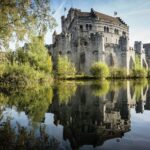
- Gravensteen: medieval castle energy without the long detour
- Patershol and the Great Butchers’ Hall: food district charm plus history
- Price and value at $82: what’s included, what’s optional, and how to budget
- Is this the right fit for you?
- FAQ
- What time does the tour start and where do we meet?
- What time does the tour return to Brussels?
- Is this tour available every day?
- How long is the trip?
- What’s included in the price?
- What costs extra during the day?
- Can I choose to come back later if I’m in a small group?
- Is the tour easy to do without comfortable shoes?
- Are there different language options for the guide?
Key things that make this trip worth your time
- UNESCO Bruges in walking form: canals, guildhall squares, and the medieval core without needing to plan every turn.
- Saint Bavo Cathedral with major art stops: Rubens, the Rococo pulpit, and the Romanesque crypt.
- Castle of Gravensteen: an easy-to-grasp medieval “power” visit, right in the flow.
- Free time that’s actually useful: 2 hours in Bruges for Moules Frites, beer, chocolates, and optional extras.
- Optional upgrades you control: the Ghent altarpiece add-on and a Bruges canal boat ride are both priced separately.
- Same-day return flexibility (small groups): you may be able to come back later on your own.
A Full 10 Hours: timing, train flow, and what you’re really buying
This tour is built for people who want two of Flanders’ biggest medieval hits without switching hotels. You depart Brussels from the Grand Place at 9:30 AM only on Sunday, and you meet your guide earlier at 08:30 at the Tourist Information Office in front, with your guide holding a white umbrella.
The total day runs 10 hours, and the scheduled return is 17:00, with arrival back in Brussels around 18:00. That means you’ll spend most of the day in motion, not lingering. If you’re the kind of traveler who likes to read every plaque and sit every few minutes, this may feel rushed. If you prefer a guided “highlights first” approach, it’s a strong fit.
At about $82 per person, the value comes from two things: you get a local guide and round-trip transportation from Brussels, plus organized time in both cities. Then you choose a couple of paid add-ons (boat in Bruges and one art option in Ghent) instead of being forced into every ticket.
You can also read our reviews of more tours and experiences in Brussels.

Bruges canal life: walking the UNESCO core without getting lost
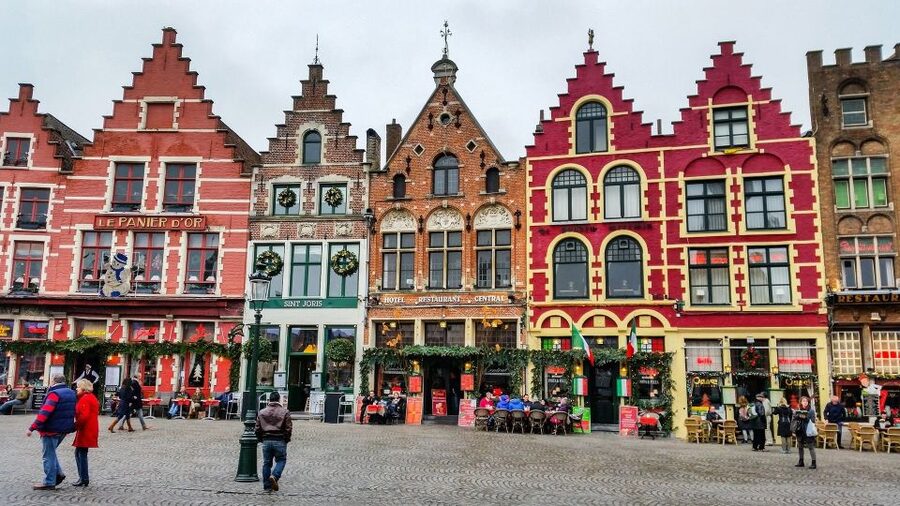
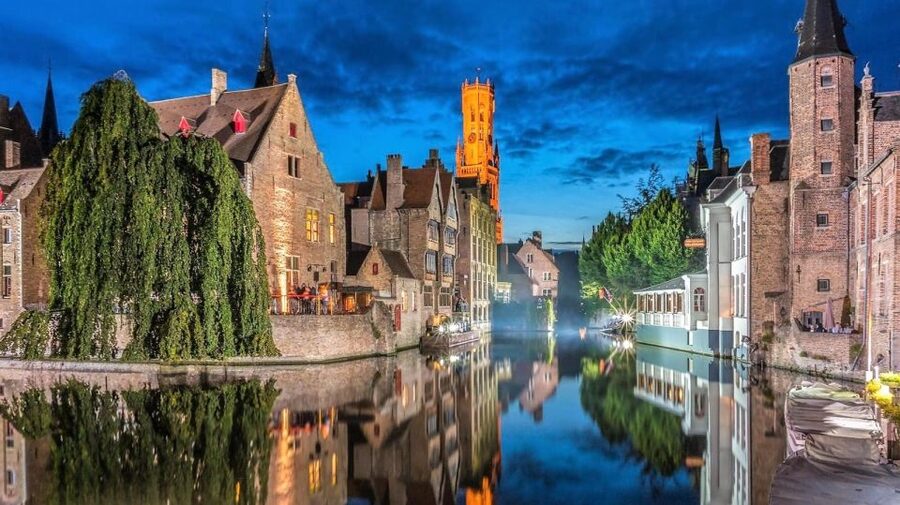
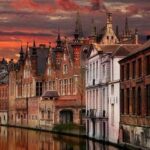
Bruges is often called the Venice of the North, and the tour helps you see why. Your guided start is a 2.5-hour walking tour focused on the historic center, where canals and medieval streets do the talking. You’ll walk through the kind of compact old-city layout that can be magical, but also easy to misread if you don’t know where to start.
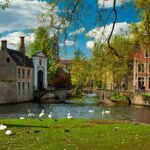
A standout piece here is the canal system connection. In the ancient city wall park you’ll see the Lake of Love, which is described as one of the water reservoirs nourishing Bruges’ canals. It’s a small stop, but it adds context fast: you stop seeing canals as decoration and start understanding them as infrastructure.
Then you’ll visit the Beguinage, one of the best-preserved medieval gated communities in the area where only women lived. Even if you’re not a big history reader, it’s the kind of place where the pace naturally slows—courtyards, quiet lanes, and that medieval “everyone knew the rules” feel.
From De Halve Maan to Old St. John’s Hospital: practical Bruges stops
Next comes a very Bruges kind of stop: Brewery De Halve Maan. It’s highlighted as the only brewery still operating in the city center, which gives you a real sense that this isn’t just a museum district. If you like beer culture, you’ll likely connect this to what you’ll do during free time later, when beer is part of the suggested tasting plan.
After that, you’ll head to Old St. John’s Hospital, described as one of the oldest hospitals in Europe. The tour frames it as an architectural time capsule—about 800 years of European architecture—and you can also visit the museum of Hans Memling as an optional extra.
What I like about this stretch is that it mixes “big famous views” with a more local, lived-in kind of heritage. Hospitals, breweries, and working traditions are often overlooked on short trips, and that’s exactly why they feel rewarding.
Our Lady of Bruges and the market squares: churches, art options, and photo fuel
The next big anchor is Our Lady of Bruges. You’ll see one of the oldest churches in the city and its tower, noted as one of the tallest brickwork towers in the world. Even if you don’t climb, it’s the visual landmark that helps you orient yourself in Bruges quickly.
The tour also points out art treasures inside. There’s an optional mention of Michelangelo’s Madonna with the Child—so you can choose whether to spend the extra time if you care about major religious art. That optional structure matters on a day trip. You can stay focused, rather than feeling forced to do every indoor stop.
Then it shifts into Bruges’ street-level energy with VisMarkt (fishmarket) and Tanners’ Square. These are among the oldest squares, with guildhalls and café life, and they’re the kind of spaces where you can both photograph and reset. You’ll also visit Groeninge Museum, plus Burg Square and Markt Square, which are treated as the economic heart of Bruges.
If you want one simple rule for getting value from this part of the day: treat the squares as your waypoints. When you get tired, sit for a few minutes. When you’re energized, move on for the next view. The route supports that rhythm.
Bruges free time: what to do with 2 hours (and the €8 boat choice)
You’ll have 2 hours of free time in Bruges for eating, souvenirs, and a possible boat trip. This is the moment to turn walking fatigue into a good break. The highlights specifically call out Belgian chocolates, Moules Frites, and beer, so if those are your priorities, this is where they fit.
You also have the option for a canal boat tour later in Bruges. It’s listed as €8 per person, paid while you board. A canal boat is the classic way to see Bruges’ canals from eye level, especially if your day already included church towers and square views. It’s also a good way to stretch your legs without another long walking loop.
Just be realistic: the whole day is packed. If you feel that your energy is fading, you can skip the boat and still leave with a complete Bruges day. The tour gives enough guided structure that you won’t feel like you missed the core experience.
Ghent’s cathedral power: Saint Bavo and art stops you can’t fake
After Bruges, the tour takes you to Ghent, a port city at the scenic confluence of the Leie and Scheldt rivers. This matters because Ghent feels different from Bruges: more “working city” and more bold architecture, not just postcard charm.
Your Ghent tour begins at Saint Bavo Cathedral, described as a spectacular Gothic church with Baroque ornamentations. The itinerary is designed like an art-and-architecture walk: you don’t just see a building; you see how parts of it connect.
Inside, you’ll get the marble choir and private chapels. The route also points out a major painting by Rubens: Saint Bavo Enters the Convent at Ghent. Then you’ll notice the Rococo pulpit, and you’ll see the stunning frescoes of the Romanesque crypt.
The balance here is smart. Even if your art interests are mixed, you’ll get both big names and a sense of how styles stack over centuries.
The Van Eyck Mystic Lamb add-on: who should pay the extra €4
One optional stop is the altarpiece The Adoration of the Mystic Lamb by the Van Eyck brothers, described as one of the most important Middle Ages works. The tour lists a small extra fee of €4 for this entry.
This is a “choose your interest” moment. If religious art and Early Netherlandish painting matter to you, this is likely the best use of that add-on money in the day. If you’d rather spend your energy on outdoor views—like the port area and castle—it’s easy to skip without breaking the rest of the route.
Either way, the rest of Saint Bavo Cathedral is already a strong centerpiece, so you’re not “missing everything” by passing.
City Hall, Market Hall, and the covered market: Gothic meets real life
Next comes Ghent City Hall, noted for its mix of Gothic, Renaissance, and Baroque architecture. That mix is more than a trivia point. It helps you understand Ghent as a city that kept growing and re-inventing itself, rather than freezing in one style.
Then the tour moves to Market Hall, including a look at the Belfort Tower and the covered market. A covered market isn’t just a roof; it’s where daily city rhythms happen. Even if you don’t shop, you get a sense of local life.
From here, the route adds a reminder of medieval Ghent through nearby churches: Saint Nicholas, Saint James, and Saint Michael. These are the kind of landmarks that help the city feel coherent, not like a collection of separate stops.
Graslei guildhalls and the Leie views: the kind of scenery you remember
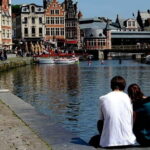
At Graslei, you’ll reach the old port with beautiful views over the river Leie and the old guildhalls. This is where your eyes finally get rewarded after indoor art and architectural details. The guildhalls give you context for what these cities were built on: trade, wealth, and civic power.
In a short-day format, this port area is key. It’s your big “open-air payoff,” and it also helps you take photos without feeling like you’re hunting for the right angle for hours.
Gravensteen: medieval castle energy without the long detour
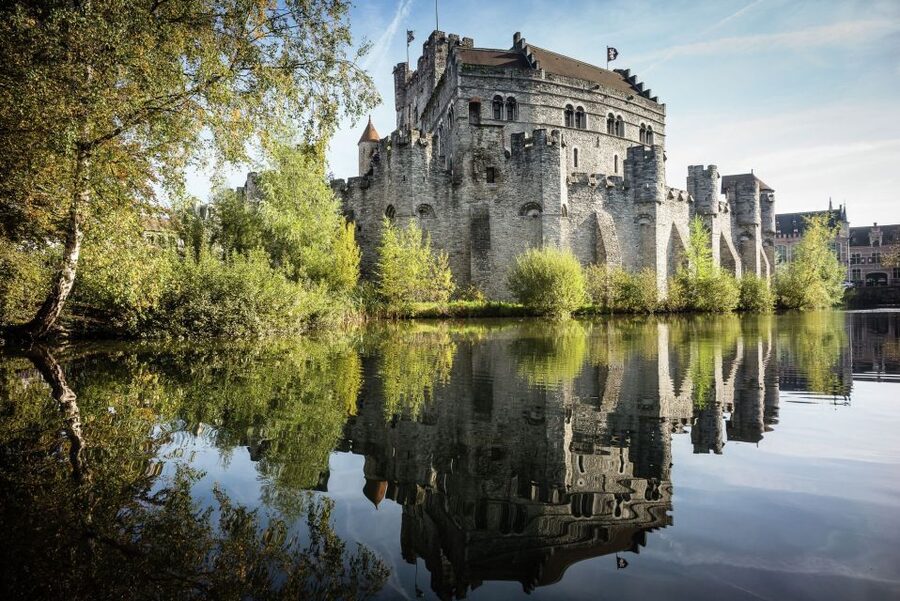
The day’s final major architectural anchor in Ghent is the medieval castle of Gravensteen, where the counts of Flanders used to live. You’ll explore the castle grounds as part of the guided flow.
If you’ve ever wondered why medieval Europe loved castles so much, Gravensteen helps answer that fast. It’s built to project authority. Even from the outside views and the way the site is laid out, you get a clear sense of why this kind of structure mattered for control, defense, and status.
Patershol and the Great Butchers’ Hall: food district charm plus history
After Gravensteen, the tour shifts into a more relaxed neighborhood feel with Patershol. It’s described as a picturesque district with charming brick facades, packed with restaurants and cafés offering some of the best Flemish cuisine. Even if you don’t eat a full meal here, it’s a nice change from heavy architecture.
Then comes the Great Butchers’ Hall, a 15th-century site described as one of Europe’s oldest meat markets. This stop is a smart counterweight to the churches and castles. It reminds you that medieval cities ran on trades and daily commerce, not just rulers and religious art.
Price and value at $82: what’s included, what’s optional, and how to budget
The listed price is $82 per person, and it includes:
- a guided tour with a local guide
- transportation from and to Brussels
That’s the core value. You’re paying for organization across two cities, not just for someone to point out landmarks.
Your main extra costs are the optional items clearly called out:
- Boat trip in Bruges: €8
- Van Eyck Mystic Lamb entry: €4
If you do both paid options, you’re adding €12 on top of the tour cost. Optional indoor extras in Bruges are also mentioned (like Hans Memling in Old St. John’s Hospital and Michelangelo’s Madonna at Our Lady), but the tour doesn’t state fees for those items in the info provided. That makes your total day cost easier to control: you can decide on the big-ticket add-ons only.
Is this the right fit for you?
I’d book this trip if:
- you want Bruges and Ghent in one day from Brussels
- you like a guided route that covers a lot of ground in a structured way
- you’re interested in medieval architecture and major art, but you’re okay with short, focused time windows
I’d rethink it if:
- you hate packed schedules or long walking days
- your ideal travel pace is slow and seated
- you’re hoping for deep museum time in either city, because this is built for highlights, not a full independent day
If you do go, plan around the big fact that your success depends on your shoes and your stamina. Then let the schedule do what it’s good at: give you a clear medieval storyline across UNESCO canals, cathedral art, guildhalls, and a working fortress feel.
FAQ
What time does the tour start and where do we meet?
You meet at 08:30 at the Grand Place Brussels, in front of the Tourist Information Office. Your guide will be holding a white umbrella.
What time does the tour return to Brussels?
The scheduled return is 17:00, and you arrive back around 18:00 with your guide.
Is this tour available every day?
It departs from the Grand Place at 9:30 AM only on Sunday.
How long is the trip?
The total duration is 10 hours.
What’s included in the price?
The price includes a guided tour, a local guide, and transportation from and to Brussels.
What costs extra during the day?
Two listed extras are the Bruges canal boat trip (€8) and entrance to the Van Eyck altarpiece The Adoration of the Mystic Lamb (€4).
Can I choose to come back later if I’m in a small group?
Yes. For small groups, there may be the option to return later by yourselves instead of returning with the guide at the scheduled time.
Is the tour easy to do without comfortable shoes?
No. You should bring comfortable shoes, since there will be a lot of walking on uneven surfaces.
Are there different language options for the guide?
Yes. The guide is available in Spanish, English, and French.