REVIEW · BRUSSELS
From Brussels: Guided Day Trip to Bruges and Ghent
Book on GetYourGuide →Operated by buendía · Bookable on GetYourGuide
Two Belgian cities, one long day of walking. What makes this trip work is the mix of guided storytelling and real free time, so you get the highlights of Bruges and Ghent without feeling glued to a schedule. Guides like Antonio and Peter also earn serious praise for keeping the group moving and making the details click.
I especially like the way the tour points you to the “must-see” landmarks that explain how each city became famous. In Ghent, that includes Saint Bavo Cathedral and its connection to the Van Eyck brothers, plus the Belfort and the Gothic-and-Renaissance town hall area. One possible drawback: it’s a long day with a lot of walking, and it’s not set up for wheelchairs or mobility limitations.
In This Review
- Key highlights people love
- From Brussels to Bruges: a practical start you can actually find
- Bruges on foot: canals, Minnewater Lake, and the Begijnhof
- Medieval Bruges monuments: From St. John’s Hospital to the Church of Our Lady
- Rozenhoedkaai, Castle Square, and Grote Markt: where Bruges looks like Bruges
- Lunch break in Bruges: free time that’s long enough to enjoy
- Ghent transfer: switching gears from canal city to cathedral city
- Saint Bavo Cathedral in Ghent: the Van Eyck anchor stop
- St. Nicholas, the Masons’ Guild House, and the medieval port of Graslei
- Timing and walking reality: how to set yourself up for a good day
- Price and value: is $55 worth it for Bruges + Ghent?
- Who should book this day trip, and who should skip it
- Should you book this Bruges and Ghent day trip?
- FAQ
- Where is the meeting point in Brussels?
- How long is the day trip?
- What do I get in Bruges?
- What do I get in Ghent?
- Are entrance tickets included?
- Is lunch included?
- Do I need earphones?
- What languages is the live guide offered in?
- Is the tour suitable for wheelchair users or people with mobility impairments?
- Are there rules about food or smoking on the coach?
Key highlights people love
- Bruges UNESCO historic center views on a guided walk with quick orientation
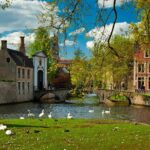
- Minnewater Lake and the Begijnhof (founded 1245) for a calm, historic contrast to the canals
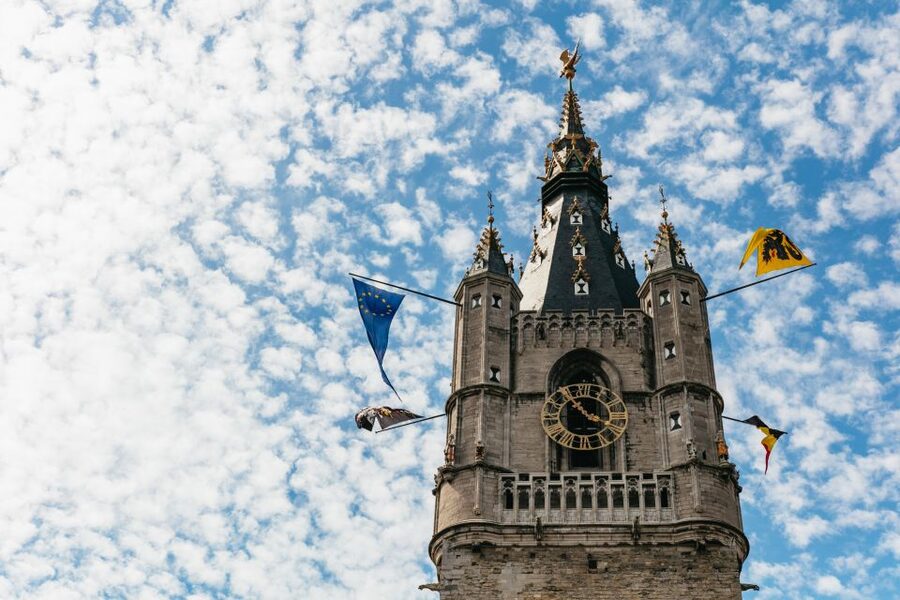
- Belfries and main squares: Bruges’ Belfry and Ghent’s Belfort are both front-and-center
- Saint Bavo Cathedral in Ghent linked to The Adoration of the Mystic Lamb by the Van Eyck brothers
- Graslei medieval port area plus guild-hall stops that show how Ghent traded and prospered
From Brussels to Bruges: a practical start you can actually find
The day begins at Carrefour de l’Europe under the columns of the main entrance of Brussel-Centraal, in front of the Hilton Grand Place Hotel. It’s the kind of meeting point that’s easy to reach and easy to spot, which matters when you’re trying to beat travel-day stress.
You’ll board an eco-friendly, comfortable coach and settle in for the drive to Bruges. This is roughly a 100-kilometer transfer, and the timing is built around giving you enough in Bruges to understand the layout and still have time to wander. One small tip: where possible, plan to arrive a little early so the group doesn’t lose minutes before the guide even starts.
You can also read our reviews of more tours and experiences in Brussels.

Bruges on foot: canals, Minnewater Lake, and the Begijnhof
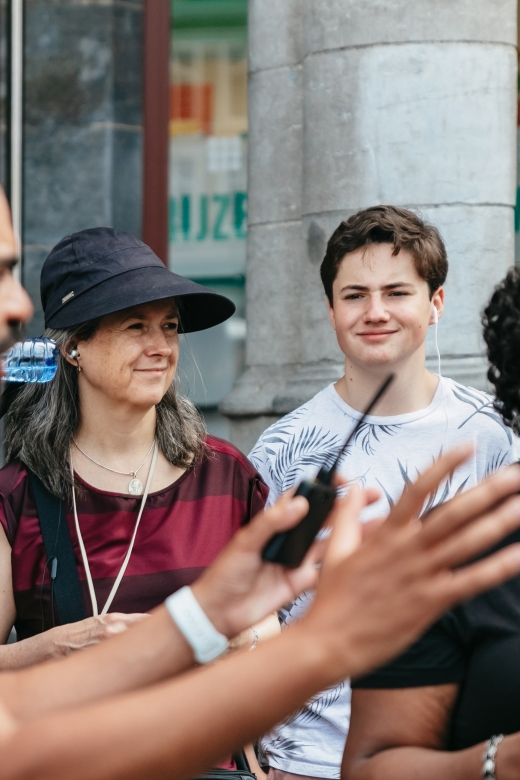
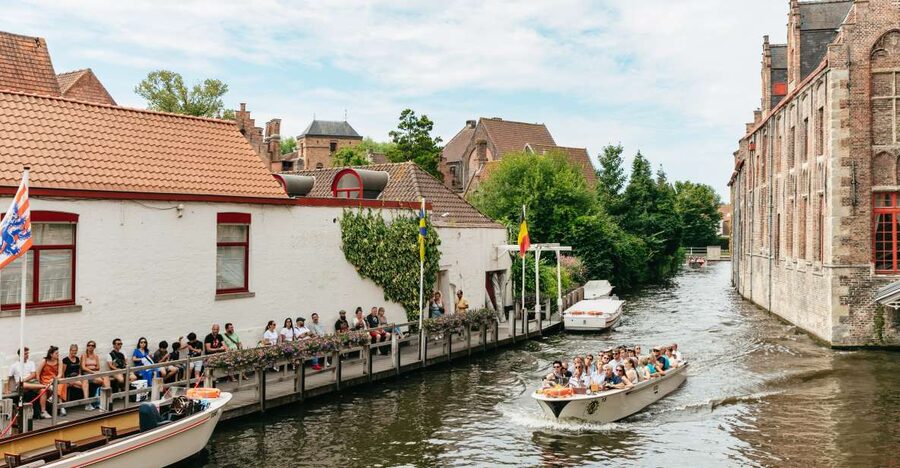
Bruges hits fast. Even before you get deep into the big squares, you’ll be led through the places that explain why people call it the Venice of the North. The guide’s pacing helps you get oriented, then you start seeing how the canal-side streets connect.
Two stops are especially strong for first-time visitors:
Minnewater Lake (Lake of Love)
This is one of those Bruges moments where the city slows down. It’s a great place to stand for a few minutes, look around, and notice how the water shapes the whole feel of the area. If you’re photographing, it also helps to have a calm spot before you move into the busier highlights.
Begijnhof, founded in 1245
The Begijnhof is a wonderfully specific piece of Bruges life: a complex originally founded to house lay religious women. It gives you a human-scale perspective that’s easy to miss if you only rush from one monument to another. It also breaks up the day with a quieter atmosphere.
Along the way, you’ll pass through areas tied to Bruges’ older layers, including Walplein Square for shady-cafe energy and Stoofstraat, which sits on the site of the city’s former Red Light District. The result is a walk that feels like a guided map of the city’s past—not just a list of photo stops.
Medieval Bruges monuments: From St. John’s Hospital to the Church of Our Lady
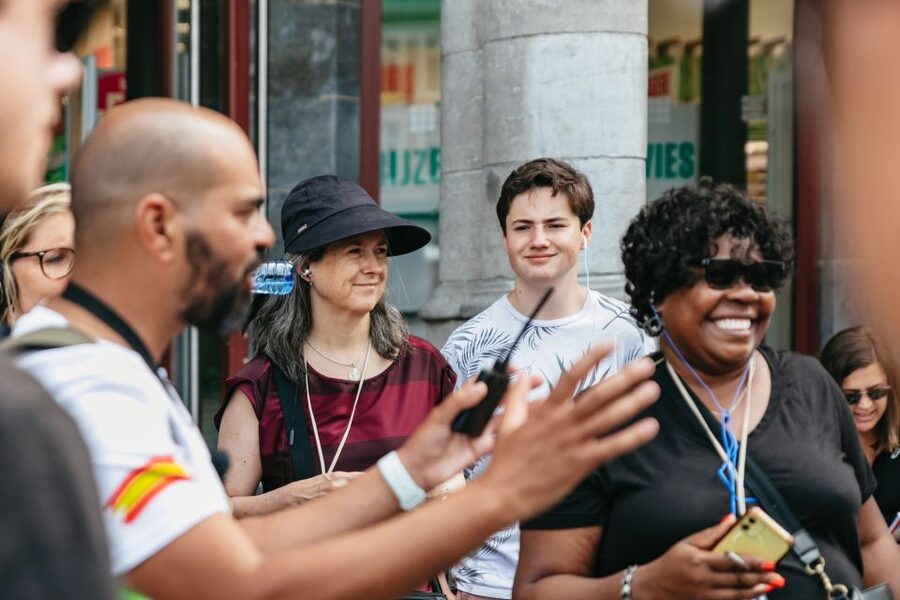
What I like about this Bruges section is that it doesn’t only show the famous “pretty postcard” sites. It also gives you context for how the city functioned.
You’ll see Old St. John’s Hospital, described as an 11th-century monument. Even if you don’t go inside anywhere, it helps you understand that Bruges’ medieval story includes care institutions and civic buildings, not just churches and squares.
Then comes a high-impact architectural stop: the Church of Our Lady. One of the standout facts here is the mention of the world’s second tallest brickwork tower. That kind of detail gives you a real scale reference while you look up and realize why this church dominates the skyline.
The walk also connects you to Gruuthuse Palace and the Dijver Canal, which help explain how Bruges’ wealth and power were displayed through buildings as much as through trade.
Rozenhoedkaai, Castle Square, and Grote Markt: where Bruges looks like Bruges
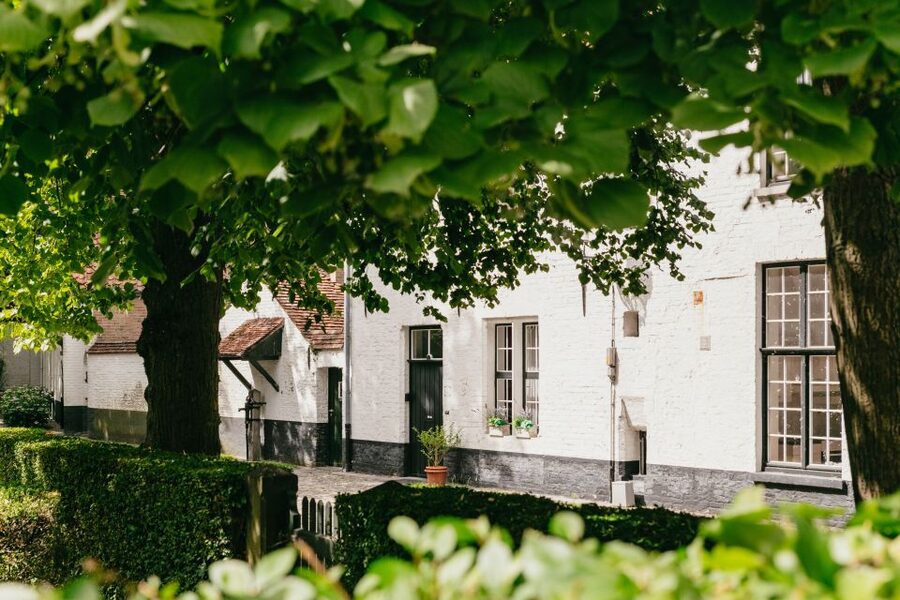
If you’ve seen Bruges postcards before, you’ll recognize this part immediately.
You’ll go to Rozenhoedkaai, one of the city’s most photographed viewpoints. This is a smart move near the middle of the guided portion because it works as a reward moment after the earlier streets and historic context.
Then you’ll arrive at Castle Square, where the Belfry sits prominently. From there, the tour goes on to Market Square (Grote Markt) and the Belfort (Bruges’ bell tower). This combination matters because it shows how civic pride and religious power were both written into the city’s skyline.
The guide’s job here is to help you read the city in layers. You’re not just passing buildings—you’re being taught what to look for, like the way tall civic towers create a visual “map” even when you’re walking on small medieval lanes.
Lunch break in Bruges: free time that’s long enough to enjoy
After the guided walk, you’ll get time on your own in Bruges—enough to handle lunch and still drift into side streets.
You’ll have about an hour carved out specifically as lunch time, and it’s also a good stretch for sampling Belgian chocolate. The key is to plan something simple: pick a place that’s near where you’re already standing, then come back to your bearings. Bruges can be easy to enjoy right into a time sink if you wander too far.
One note from real-world feedback: some people feel Bruges needs a bit more free time to fully absorb it, especially if the city is crowded. If you’re the type who likes to pop into shops and slowly work through photo locations, you might want to arrive with a relaxed pace—or consider spending an extra day in Bruges another time.
Ghent transfer: switching gears from canal city to cathedral city
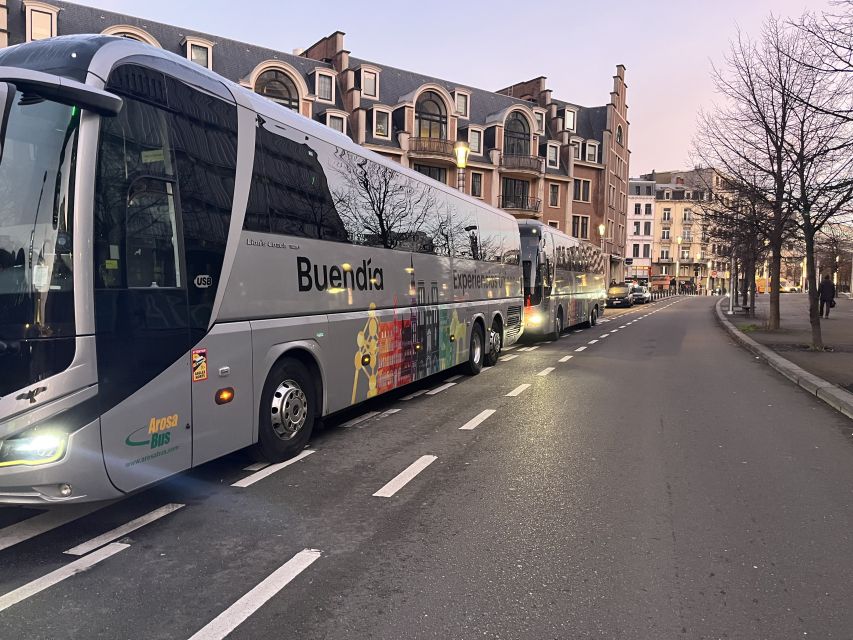
Once Bruges wraps, you’ll head to Ghent by coach. The drive is short enough that you don’t feel like you’re losing the day, but it gives you the mental reset you need. Ghent has a different personality: Gothic churches, older guild buildings, and a strong sense of how the city earned its living.
You’ll also hear context about Ghent that’s tied to Charles V and a nickname recorded as noose-bearers. It’s the kind of quirky historical detail that makes the later stops land better, because you start seeing the city as something people lived inside—not just something you toured.
Saint Bavo Cathedral in Ghent: the Van Eyck anchor stop
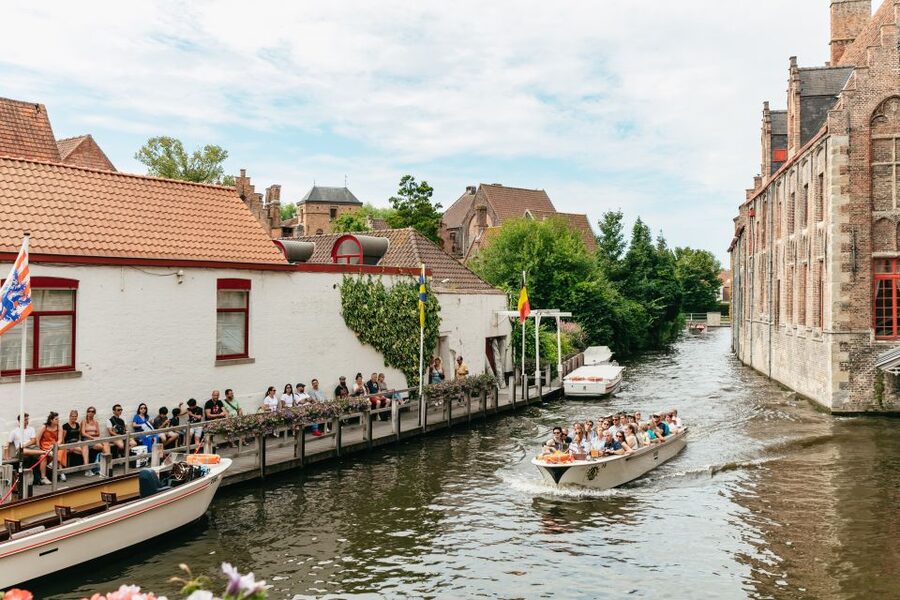
Ghent’s guided portion focuses on major landmarks, but the emotional center is Saint Bavo Cathedral. This is where the tour points you toward the story of The Adoration of the Mystic Lamb by the Van Eyck brothers.
Even if you’re not a museum-buff, this stop is valuable because it turns a famous work into a living part of the city’s identity. You’ll understand why people treat this church like a destination, not just a stop on a walking loop. It also helps you connect the “big art” idea to the “big place” idea: the building matters because it’s tied to what happened there historically.
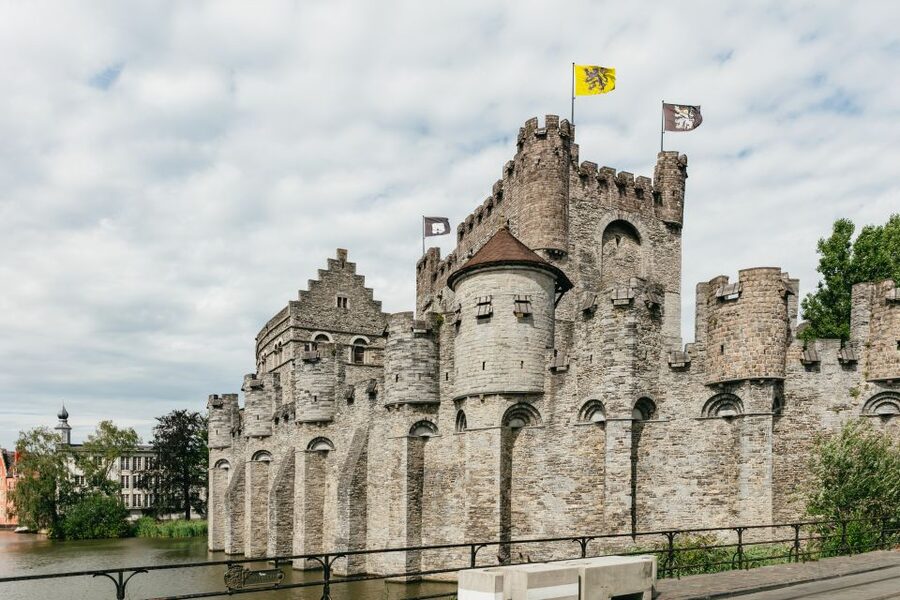
You’ll also see the Belfort (Ghent’s bell tower) and the area around the town hall, described as having both Gothic and Renaissance-style features. When you stand in that zone, you get a sense of civic power—how the city announced itself with stone and height.
St. Nicholas, the Masons’ Guild House, and the medieval port of Graslei
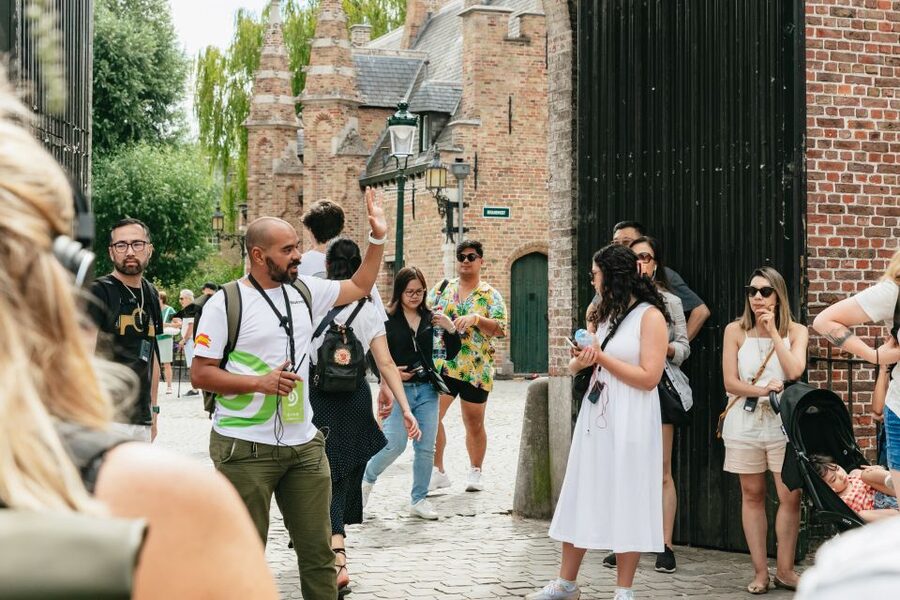
The Ghent walk continues with a mix of architectural variety and city-function clues.
You’ll see St. Nicholas’ Church, noted for being one of the oldest monuments and for facing the unusual facade of the Masons’ Guild House. That pairing is a good example of why guided tours can beat self-guided ones: a guide helps you notice why buildings “talk” to each other across a street.
Then you’ll head along the embankments of Graslei, a medieval port area. This is one of the best parts of the Ghent experience because it shows you how the city’s wealth moved through water. From there, you’ll also be guided past other big names tied to Ghent’s trading and daily life, including:
- Castle of the Counts of Flanders
- Great Butchers’ Hall
- Old Fish Market
- Friday Market Square
If Bruges is about looking like a fairytale, Ghent is more about reading how the city worked. That’s why this tour feels like a two-part lesson.
Timing and walking reality: how to set yourself up for a good day
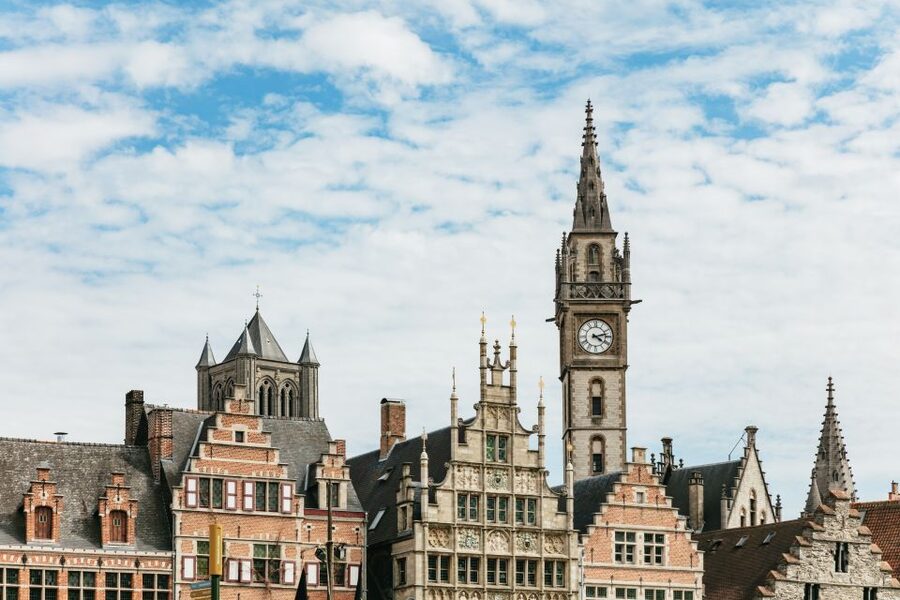
This is a long day, roughly 630 minutes total. It’s not meant to be a slow sightseeing stroll; it’s structured around coach time, guided walks, and two stretches of free time (one in Bruges and one in Ghent).
So pack like you’re walking all day:
- Comfortable shoes are a must.
- Bring your own wired earphones if you can. The tour uses a radio system, and in Bruges you’re asked to use your own earphones rather than disposable ones.
- If you need to buy earphones, the provided cost mentioned is 1 EUR. Some people reported the collection at the moment didn’t feel fully smooth, so having a coin ready can save you friction.
Also remember the coach rules: no smoking, and no food in the vehicle. It sounds basic, but it helps the day run cleanly when everyone follows the same rhythm.
Price and value: is $55 worth it for Bruges + Ghent?
At about $55 per person, the value here comes from three things you’d otherwise have to piece together yourself:
1) Two guided city walks with a live guide
You’re getting structure in both cities, not just transit and a map. People consistently praise guides for organization and for making the stories easy to follow.
2) Coach transportation between the cities
Brussels to Bruges and then to Ghent takes time and planning. Here, the day is built around that movement, so you can focus on sightseeing.
3) Radio system while walking
If you’ve ever tried to hear a guide in a busy square, you’ll understand why this matters. You can still end up with static now and then, but the overall format is built for readability.
What’s not included is just as important: lunch and entrance tickets are not part of the price. So if you’re hoping to go inside major sites, budget extra. Still, the guided route is positioned so you don’t feel like you’re paying just to look from the outside.
Net: if you’re new to Belgium and want the best first-day pairing—Bruges’ iconic medieval scene plus Ghent’s cathedral and port history—this is a solid value.
Who should book this day trip, and who should skip it
This tour is a strong fit if:
- You want a single-day introduction to Bruges and Ghent from Brussels.
- You like guided context, not just wandering.
- You’re happy with a mix of monuments and free time to grab lunch and photos.
Consider skipping (or at least changing expectations) if:
- You need lots of accessibility support. The tour is not suitable for wheelchair users or people with mobility impairments.
- You prefer slow museum time. Entrance tickets aren’t included, and the pacing is built for walking and key sights.
Should you book this Bruges and Ghent day trip?
If your goal is to see real Belgium beyond Brussels with smart guidance and clear “headline” stops, I think this is a good booking. The repeated praise centers on guide quality, organization, and the way the schedule gives you enough guided orientation to enjoy the free time afterward. Just come prepared for a long day on your feet, bring your own earphones if you can, and use the lunch/free periods to reset your energy.
FAQ
Where is the meeting point in Brussels?
Meet at Carrefour de l’Europe, under the columns of the main entrance of Brussel-Centraal, in front of the Hilton Grand Place Hotel. The guide will be there with Buendia Tours ID.
How long is the day trip?
The total duration is listed as 630 minutes.
What do I get in Bruges?
You get a guided walking portion and then free time, including time that works well for lunch on your own.
What do I get in Ghent?
You get a guided walking tour and then free time in Ghent before returning to Brussels.
Are entrance tickets included?
No. Entrance tickets are not included.
Is lunch included?
Lunch is not included.
Do I need earphones?
The tour uses a radio system. Earphones may be required for the guide to be heard clearly, especially for groups over 24. You’re also told to use your own earphones in Bruges, and you can purchase earphones from the provider for 1 EUR if you don’t have them.
What languages is the live guide offered in?
The live guide is offered in Spanish and English.
Is the tour suitable for wheelchair users or people with mobility impairments?
No. It is listed as not suitable for people with mobility impairments and for wheelchair users.
Are there rules about food or smoking on the coach?
Smoking in the vehicle is not allowed, and food in the vehicle is also not allowed.