REVIEW · MARRAKECH
Atlas Mountains Day Trip with Camel Ride from Marrakech
Book on Viator →Operated by Marrakech Day Trips · Bookable on Viator
Hot air in Marrakech feels far away.
This day trip trades city heat for the cool High Atlas, with a guided hike around Imlil Valley waterfalls and Berber hamlets, plus a stop at a women’s argan oil co-operative. The day also feels grounded and real, because you’re not just driving through scenery—you’re meeting the people behind it, sharing tea, and eating a proper traditional lunch along the way.
One thing to plan for: the walking can be steep in spots, and the weather can swing fast once you’re higher up—so pack layers and real hiking shoes, even in warmer months.
In This Review
- Key moments that make this trip worth your time
- Marrakech to Imlil: the switch from traffic to mountain rhythm
- The road stops: Tahnouat and the women’s argan oil co-op
- Asni market on Saturdays: a short window into daily Berber life
- Imlil arrival: tea, guide meet-up, and the start of the hike
- Waterfalls and hamlets: what the trek feels like in real time
- Berber village lunch: where the day becomes a meal, not a schedule
- Optional camel ride by Moulay Ibrahim River
- Argan stop plus lunch plus trek: why this tour is good value
- Pace, comfort, and what to pack for the Atlas
- Guides on the ground: why their names keep showing up
- Price and logistics: the practical stuff that helps you enjoy the day
- Should you book the Atlas Mountains day trip with camel ride?
- FAQ
- How long is the Atlas Mountains day trip from Marrakech?
- What time does the tour start?
- Do I get hotel pickup and drop-off?
- Where does the hike start?
- Is lunch included?
- Is the camel ride included?
- Do we visit an argan oil co-operative?
- Is there a Berber market stop?
- What does the tour include for drinks?
- How many people are in a group?
- Is this tour hard?
Key moments that make this trip worth your time
- Women’s argan oil co-operative visit in Tahnouat, where you see how the products are made
- Saturday Asni market stop (only then), for quick Berber market browsing
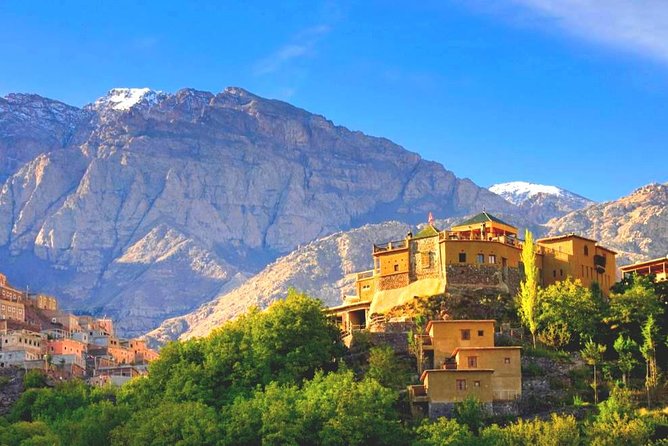
- Guided hike from Imlil through walnut orchards, terraced fields, and Berber hamlets
- Traditional Berber lunch plus tea/coffee and biscuits when a family stop is available
- Optional camel ride along the River Moulay Ibrahim, timed for how you feel that day
Marrakech to Imlil: the switch from traffic to mountain rhythm
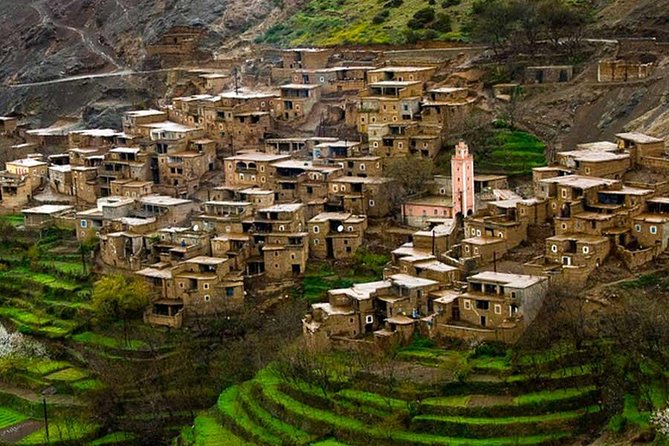
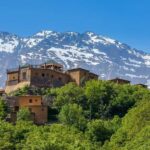
The best part of this tour isn’t any single photo stop. It’s the slow change in pace. You leave Marrakech by air-conditioned vehicle, head south into the High Atlas, and watch the scenery shift from busy streets to terraced fields and thick green valleys. As you climb, the air gets noticeably fresher, which makes a huge difference if you’re traveling during hot months.
This trip also keeps group size small—up to 10 travelers—so the day feels less like a cattle call. Pickup and drop-off from your hotel mean you don’t waste time figuring out transport. Starting at 9:00 am helps too: you’re not scrambling to meet up later in the day.
You can also read our reviews of more tours and experiences in Marrakech.
The road stops: Tahnouat and the women’s argan oil co-op
Around the time you’re getting your bearings, you’ll stop in Tahnouat for a women’s argan oil co-operative visit. This is the kind of stop that becomes meaningful when you pay attention. You’ll watch workers making argan oil products, and you get a better sense of how this local industry supports families.
In practice, this is one of those stops where the value comes from staying curious. Ask simple questions, watch the process, and don’t treat it like a quick shop-and-go. You’ll also have the chance to try products, and that makes the whole thing easier to understand than just listening to facts.
Asni market on Saturdays: a short window into daily Berber life
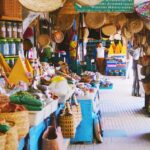
If your day falls on a Saturday, you’ll add a stop at Asni’s traditional Berber market. This is not always guaranteed, because it’s tied to the market day. But if you’re there when it’s running, it’s a great way to see local trade in motion—spices, small items, everyday supplies, and the buzz of bargaining.
The takeaway: check your travel dates. If you want that market element, plan your tour for Saturday.
Imlil arrival: tea, guide meet-up, and the start of the hike
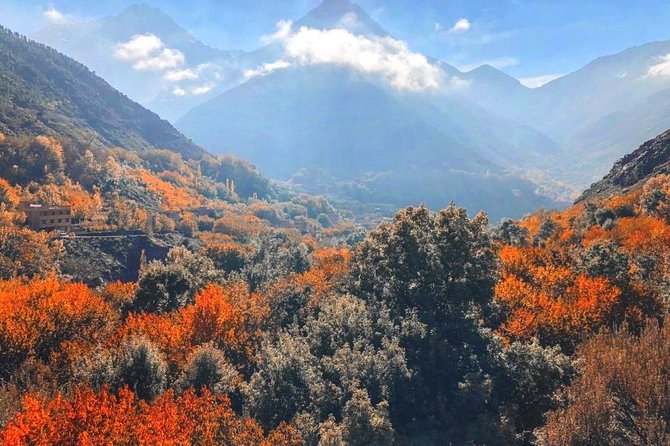
Imlil is the last main hiking point below Mt. Toubkal, and once you arrive, the vibe changes quickly. You’ll have tea or coffee, then meet your local guide for the trek. This is where the trip becomes more than a drive through mountains.
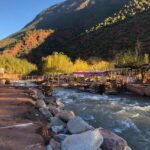
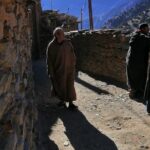
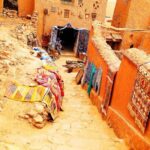
The hiking route is built around Berber hamlets, walnut orchards, terraced fields, and waterfalls. The exact feel of the hike depends on conditions and the group’s pace, but the common thread is variety: walking through different village pockets, then seeing water where you expect it least in the mountains. It also helps that your guide talks about what you’re seeing—daily life, culture, and the places around Imlil.
Waterfalls and hamlets: what the trek feels like in real time
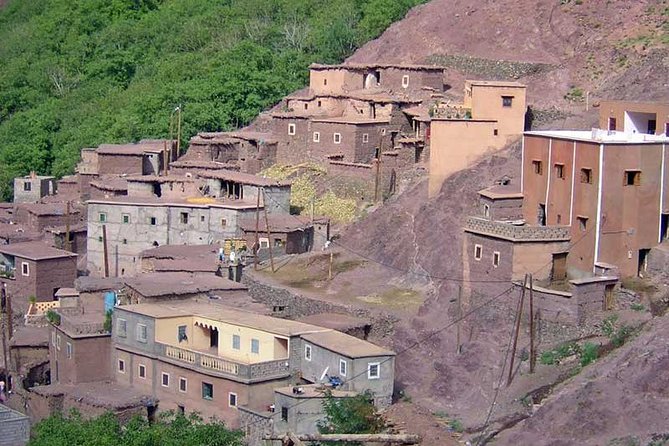
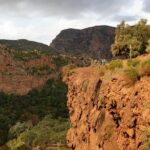
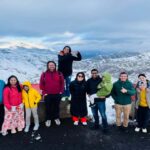
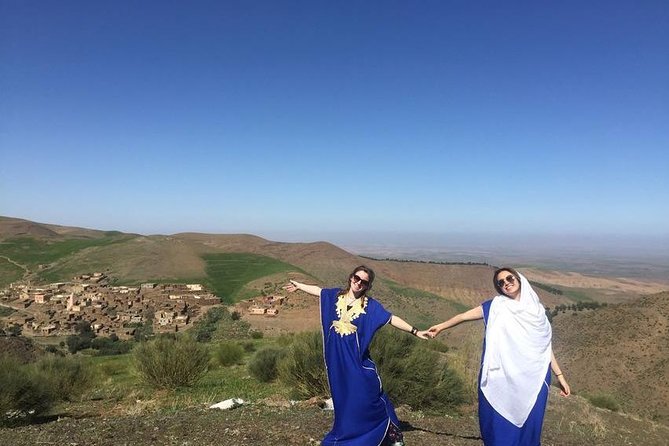
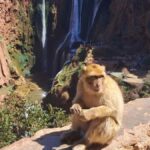
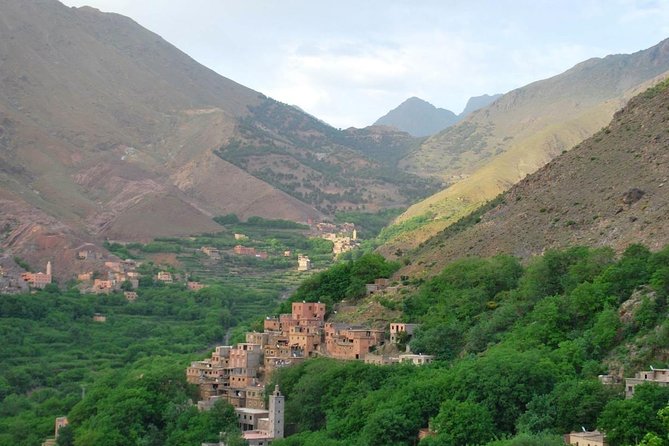
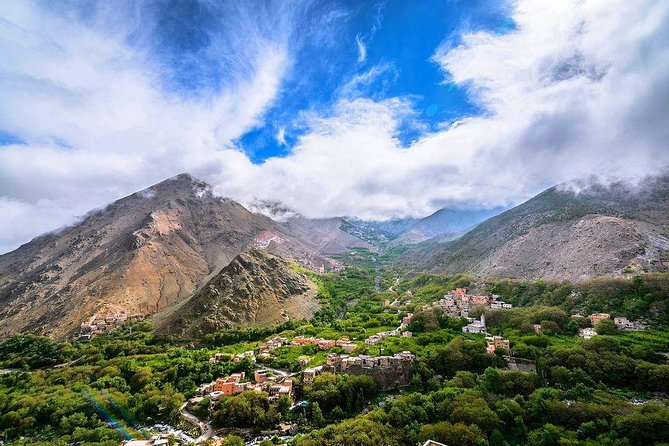
Most of the day’s “wow” factor comes from the hike. You’ll go past waterfalls and through small settlements, with views opening up over irrigated terraced fields and surrounding mountain valleys. Even when you’re not aiming for long trekking hours, you’ll have enough stopping moments for photos and short rests.
A key practical point from what I’ve seen: don’t assume it’s a flat stroll. Some accounts describe the walk as just over an hour, while others talk about longer trekking effort and steep bits. Translation: you’ll want sturdy footwear, and you should be ready for some climbing.
If you get motion-sick or you hate cold wind once you’re higher, bring layers. One of the more useful lessons from people who’ve done this trip is that mountain weather can surprise you, especially early or late in the day.
Berber village lunch: where the day becomes a meal, not a schedule
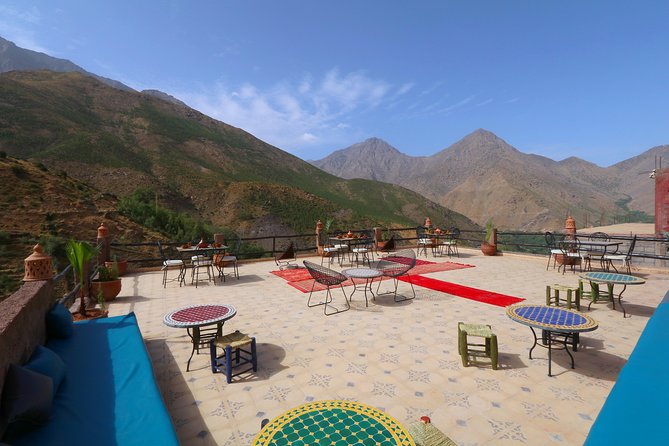
Lunch is traditional Berber food, and it’s more than a checkbox. You’ll eat at a spot that’s part of the local mountain rhythm, with mint tea often showing up as part of the hospitality.
Some days also include tea or coffee with biscuits at another Berber village family home, depending on availability. That “subject to availability” matters: it’s not something you should count on like a train departure, but when it happens, it turns a sightseeing tour into a human moment.
For me, the best way to get value here is simple: slow down during lunch and don’t eat like you’re in a hurry. This is one of the few chances you’ll be sitting with local hospitality in a rural setting.
Optional camel ride by Moulay Ibrahim River
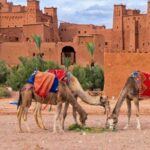
After leaving Imlil later in the afternoon, you’ll have the option of a camel ride by the River Moulay Ibrahim. People who did the ride often describe it as a fun, photo-friendly activity—short enough that it doesn’t take over the whole day, and memorable because it’s in a very different setting from the mountain trek.
Should you do it? If you’re feeling good and the weather is mild, it can be a nice capstone. If it’s windy or cold, you might decide to skip and rest instead. One practical hint I’d follow: if you’re sensitive to chills, make your call based on conditions that day, not the idea of the camel itself.
Argan stop plus lunch plus trek: why this tour is good value
At $31.40 per person, this tour is a strong value because so much is included: return transport from Marrakech, a local guide, the guided trek, lunch, water, and an optional camel ride. You’re also not paying extra for “the big ticket” parts of the day.
Where the price feels especially fair is in how the day is structured. It’s not just driving. You get guided walking in the Imlil area, a co-operative visit in Tahnouat, and a proper meal. Most similar day trips either cheap out on the experience quality or swap cultural stops for a rushed souvenir stop. Here, the day has a real sequence.
Small group size (max 10) also improves the value feel. With fewer people, guides can manage pace better, and you’re more likely to get real answers instead of generic explanations.
Pace, comfort, and what to pack for the Atlas
This is a hike day. That means you should dress and pack like you’re going to walk in hills, not like you’re strolling in a city.
Here’s what I’d recommend based on what shows up repeatedly in real accounts and what the route implies:
- Walking shoes with grip (the path can be steep)
- A water plan: water is included, but bringing your own can save you if you want more than what’s provided
- Layers: mountain air can turn cold, and wind can hit once you’re higher
- Light snacks if you’re prone to getting hungry between lunch and the return
- A small towel/tissue pack (some stops and weather can make this handy)
You can also bring a spare layer if you’ll be traveling in shoulder season. One account describes a guide borrowing a jacket locally when the conditions were colder than expected. It’s a reminder that improvising is sometimes possible, but you shouldn’t rely on it—just pack smart.
Guides on the ground: why their names keep showing up
One reason this trip earns near-perfect ratings is the guide style. Multiple people mention guides like Saïd, Youssef, Hassan, Ibrahim, Omar, Lahcen, Abdou, Rachid, Youness, and Mustapha Amazouz. The pattern is clear: guides explain what you’re seeing, manage the pace, and look out for safety on steeper sections.
That matters because the trek is what you’ll remember most. A calm, attentive guide helps you focus on views and stories instead of worrying about footing or timing. If you’re traveling with kids or you want a day that feels organized without being stiff, choose this kind of guided setup.
Price and logistics: the practical stuff that helps you enjoy the day
The tour runs about 6 to 8 hours and starts at 9:00 am. You’ll be back at your pickup/drop-off point afterward. You can use a mobile ticket and hotel pickup and drop-off are included, which cuts down friction.
Also, the group size is capped at 10, and a minimum of 2 people per booking is required. That’s good news if you hate crowded tours, but it also means the operator needs enough bookings to run.
One more tiny heads-up: some accounts note that water supply on the walkback can feel limited, even when water is included. If you’re the type who likes to sip often, pack your own bottle anyway.
Should you book the Atlas Mountains day trip with camel ride?
If you want a day that mixes mountain views, Berber culture, and a real hike without planning stress, I’d book this. It’s especially worth it if you’re short on time in Marrakech and want to get out into the High Atlas quickly with a guided local route.
I’d skip it or rethink if:
- You have knee or mobility issues and steep walking is a no-go
- You hate cold weather swings and won’t pack layers
- You’re expecting a long, hard trek like a serious expedition (this is more of a guided cultural hike day)
For most people, though, it’s a great deal: transport, guiding, lunch, and multiple cultural stops for a price that won’t sting your budget. Add the option of a camel ride by the river, and you’ve got a full day that feels like Morocco, not just a drive outside town.
FAQ
How long is the Atlas Mountains day trip from Marrakech?
It runs about 6 to 8 hours.
What time does the tour start?
The start time is 9:00 am.
Do I get hotel pickup and drop-off?
Yes, pickup and drop-off from your Marrakech hotel are included.
Where does the hike start?
The hike is from Imlil, in the Atlas foothills and below Mt. Toubkal.
Is lunch included?
Yes. You’ll have a traditional Berber lunch, and tea is included as well.
Is the camel ride included?
The camel ride by the River Moulay Ibrahim is optional, and it’s part of the day’s activities.
Do we visit an argan oil co-operative?
Yes. You’ll visit a women’s argan oil co-operative in Tahnouat where you can watch the products being made.
Is there a Berber market stop?
There is a Berber market stop in Asni, but it’s only on Saturdays.
What does the tour include for drinks?
Water is included. Sodas are not included.
How many people are in a group?
The tour has a maximum of 10 travelers.
Is this tour hard?
Most people can participate, but the walk can include steep parts and mountain conditions can change, so wear proper shoes and dress in layers.