REVIEW · MARRAKECH
All Inclusive Atlas Mountains & 5 Valleys Day Tour from Marrakech
Book on Viator →Operated by Attractive Tours · Bookable on Viator
Seven hours to escape the city noise.
This Atlas Mountains day trip is interesting because you actually move through multiple valleys and see how Amazigh/Berber life looks outside Marrakech, from waterfall-side greenery to high mountain villages. I especially like that the group is capped small (so your guide can slow down when you have questions) and that you get more than viewpoints: you visit places tied to daily life, including an argan oil co-operative and a bio-aromatic garden. One possible drawback: the day is mostly spent riding and stopping briefly, so if you want long hikes or time in a single village, this tour may feel a bit stop-and-go.
The best part for me is the cultural contact—especially the option to have lunch with a local family—and the scenery stays varied all day, not just at one dramatic moment. I also like the high-altitude feel in the Oukaimeden area, where villages cling to slopes and the air changes as you climb. The main consideration is practical: you’ll be in mountain weather, and you’ll be on roads that can be slow, plus you should plan around conservative dress expectations (shoulders and knees covered).
In This Review
- Key Highlights Worth Planning For
- Why Marrakech to the High Atlas Feels Like a Reset
- Pickup, Transport, and the Real Meaning of a 7.5-Hour Day
- Ourika Valley Waterfalls and the Argan Oil Co-operative Stop
- Oukaimeden Villages: Stone, Adobe, and a Short Walk in Thin Air
- Toubkal Photo Stop and the Fruit Valley Moments Near Asni
- Lunch in the Mountains: Restaurant Option or Berber Family Meal
- Takerkoust Lake Upgrade and the Kik Plateau Views
- What the Small Group Size Really Changes (Max 10 People)
- Price and Value: Is $67.95 Worth Your One Day?
- Practical Tips Before You Go: Dress, Cash, and Expectations
- Who This Tour Suits Best (and Who Might Want Something Else)
- Should You Book This Atlas Mountains & 5 Valleys Day Trip?
- FAQ
- How long is the All Inclusive Atlas Mountains & 5 Valleys Day Tour from Marrakech?
- Does this tour offer pickup from my accommodation in Marrakech?
- What is the group size?
- What will we see and do during the day?
- Is lunch included, or is it extra?
- Is the tour focused on culture as well as scenery?
- Does the weather affect whether the tour runs?
- What is the cancellation window for a full refund?
Key Highlights Worth Planning For
- Small group, up to 10 people: it tends to feel like a shared day, not a bus tour.
- Ourika Valley waterfalls on foot: a short walk where photos make sense and the sound fills the valley.
- Argan oil co-operative visit: you see how Berber women work with argan nuts, then you can shop if you want.
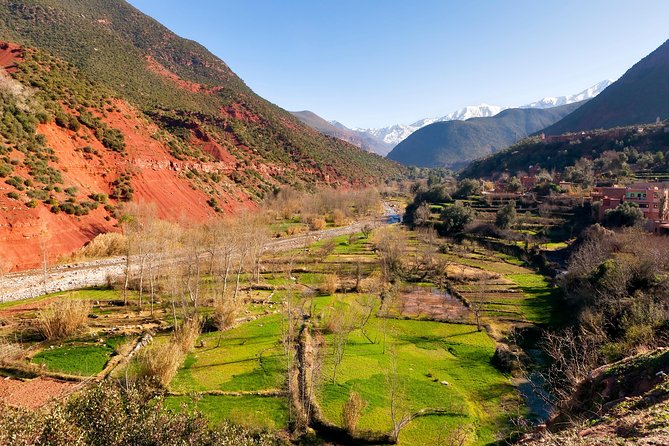
- Oukaimeden village views at ~5,900 ft (1,800 m): high slopes, stone-and-adobe homes, and mountain-road drama.
- Lunch with a local family (optional): homemade meal experience instead of only restaurant stops.
- Toubkal photo stop: you get the iconic North Africa high-point moment, even if it is quick.
Why Marrakech to the High Atlas Feels Like a Reset
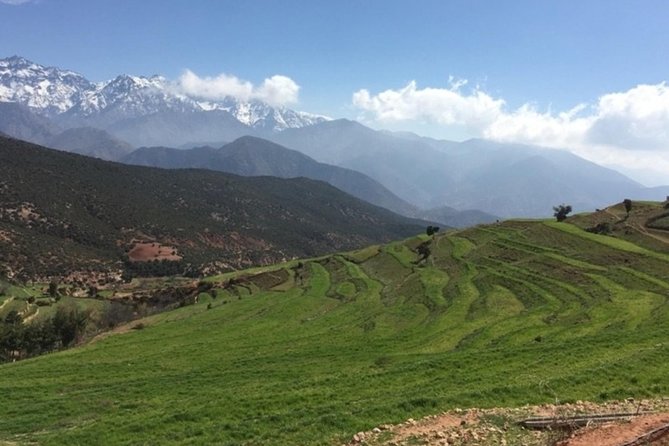
Marrakech has a way of pulling all your attention into the medina—sounds, scents, shop talk. This tour flips that. You’re out of the city and into the foothills of the Atlas Mountains, where the pace changes fast. One hour into the drive you reach the Ourika Valley area, and the scenery starts doing the work for you: greener slopes, terraced fields, then that sudden waterfall contrast against rugged mountain terrain.
What makes it work as a first big day trip is that you don’t just drive to one scenic stop. You move valley to valley, with each place showing a different side of Morocco’s mountainous life. You’ll see traditional villages in the Oukaimeden Valley, a viewpoint moment near Mount Toubkal, and fruit-tree country around Asni and Tahnaout. It’s a tidy “sampler platter” day, but it’s not shallow.
You can also read our reviews of more tours and experiences in Marrakech.

Pickup, Transport, and the Real Meaning of a 7.5-Hour Day
The tour runs about 7 hours 30 minutes, and the timing matters because it shapes what kind of day you’re actually getting. You’ll be picked up from your Marrakech hotel or riad (pickup is offered), then ride in an air-conditioned 4×4 or minivan. That choice—4×4 versus minivan—usually affects how “mountain-y” the roads feel, but either way you’re built for the twists.
This is not a “you get there, you hike for hours, you return” itinerary. Expect a rhythm of drive time plus short stops. The upside is you see more places in one day. The trade-off is you won’t linger long in any single valley. In the reviews, guides like Marwan and Abdul are praised for timing and pacing, including doing things at the group’s comfort level—so you’re not forced through every stop the same way.
Ourika Valley Waterfalls and the Argan Oil Co-operative Stop
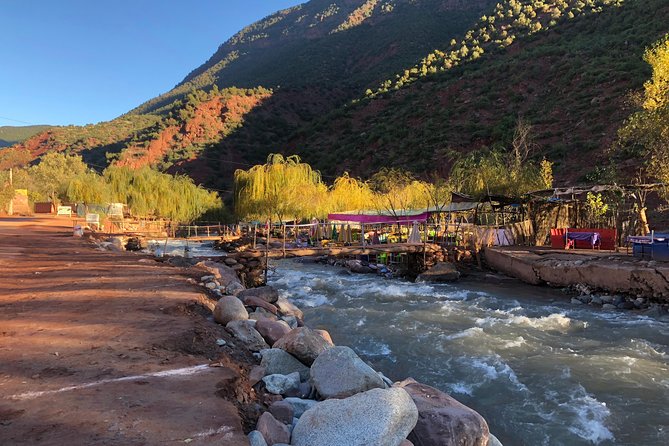
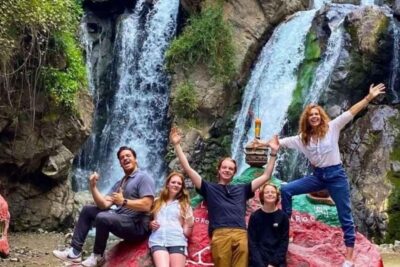
Ourika Valley is your first big nature hit. After the drive into the mountains, you get a waterfall stop and time to walk and take photos. Even if you’re not a “waterfall person,” it’s one of those moments where Morocco’s mountain life feels tangible: you hear it before you see it fully, and the green around it looks almost surprising after the dusty road.
Then the day adds a human layer. You visit an Argan Oil Co-operative, where Berber women extract oil from argan nuts used in cooking and cosmetics. This is valuable because it connects the landscape to labor and local business—something you won’t get from Marrakech alone. You’re not just buying a product; you’re learning why the product matters.
You also get time at a bio-aromatic garden where plants and herbs are cultivated for medicinal, aromatic, and decorative uses. It’s a quieter stop than the waterfalls, but it helps you understand how people work with mountain-grown resources beyond farming terraces.
Practical note from experience-style feedback: if you want to buy argan oil products, bring cash. One review specifically mentioned the shop has no card signal, and prices can be high (a small bottle was cited around £25). The good news: the same feedback emphasized there’s no hard pressure to purchase—so you can just observe.
Oukaimeden Villages: Stone, Adobe, and a Short Walk in Thin Air
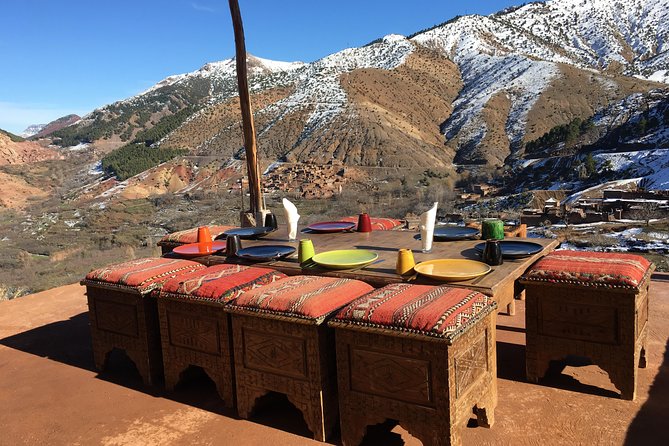
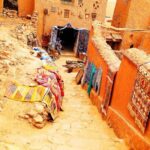
Next comes the part that feels most “up close.” You head into the Oukaimeden Valley, reaching roughly 5,900 feet (1,800 meters) along winding mountain roads. This is where you see Berber villages made from stone and adobe, built into steep slopes that look like they’d be a bad idea anywhere else.
You’ll get a chance to wander briefly—described as an old-village look with a little walk in the mountains—and this is where the day’s pacing shifts from pure sightseeing to light movement. It’s not a marathon hike. It’s more like the kind of walk where you can step aside for photos, feel the altitude change, and take in how homes sit along the contours.
The best part is what a good guide does with this section. Guides like Abdul are praised for explaining Berber culture and history in a way that feels connected to what you’re seeing, not like a lecture. That matters here, because the villages can look simple at first glance—until someone explains how the layout, materials, and daily routines fit mountain life.
Toubkal Photo Stop and the Fruit Valley Moments Near Asni
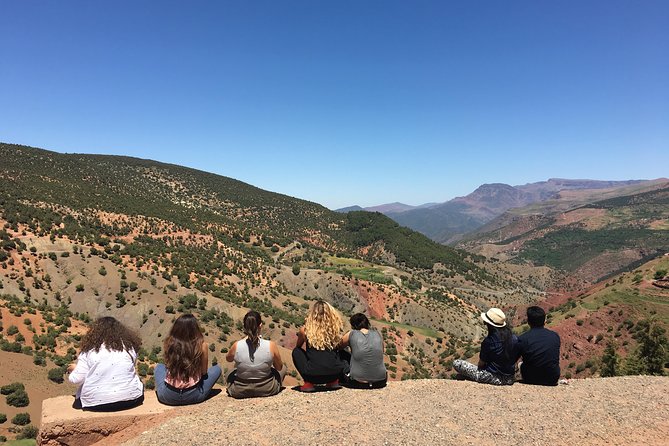
Mount Toubkal is the headline here, and you get a photo stop time near the peak—listed at 13,665 feet (4,165 meters). It’s quick by design, but it’s still the kind of stop you’ll remember because it anchors the day’s altitude story. You’re not just touring “the Atlas.” You’re seeing why the range gets attention from climbers and hikers worldwide.
After that, the tour shifts into fruit-tree country with stops around Asni and Tahnaout. These are shorter photo-and-view moments—think 10 minutes each in the itinerary—so the goal is less about deep exploration and more about context. You see groves of apple, walnut, peach, almond, and similar crops mentioned for the Asni area. In a day that started with waterfalls and went through stone villages, it’s a nice reminder that mountains here aren’t only about rocks and snow. They’re agricultural too.
One trade-off: because these stops are brief, you’ll want your camera ready and your patience for quick transitions. If your travel style is all about slow wandering, consider treating these as “look and learn” stops rather than “stay and absorb” stops.


Lunch in the Mountains: Restaurant Option or Berber Family Meal
Food is a big reason people love this day. You have two approaches for lunch:
- a restaurant stop (described as own expense)
- or an option to visit a local family home for lunch
If you choose the family home meal, you’re not just eating tagine. You’re part of a moment of everyday hospitality in a mountain setting. The meal description includes salad or soup, tagine with couscous, dessert, and drinks. That kind of structure is why this tour can feel “more real” than a standard scenic lunch.
In the reviews, the family lunch keeps coming up as a highlight, including praise for an al fresco mountain setting and the taste of homemade Moroccan cooking. One traveler noted it was among the best Moroccan food they had during a week in Marrakech. Even better, the meal is also a way you’re directly supporting the community you’re visiting.
If you stick with the restaurant option, you’ll still get a break, but you lose the most personal part of the experience. For best value, I’d aim for the family-home lunch if it’s offered to your group and you’re comfortable with the cultural setting.
Takerkoust Lake Upgrade and the Kik Plateau Views
After the main valley route, you return toward Marrakech. There’s also an upgrade option mentioned: an additional 1-hour drive to Takerkoust Lake, where you can see an artificial lake framed by snow-capped mountains.
Whether you take it depends on your energy and your priorities. The standard day already includes multiple valley stops and the Toubkal photo moment. The lake extension adds variety and an extra scenic finish, but it also lengthens the day and adds more road time.
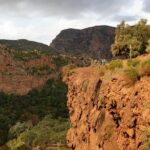
Another element worth noting is the Kik Plateau area, described as a limestone plateau with views over the valleys below. Even if you don’t have long to stand there, the plateau stop helps the day feel like more than a string of roadside stops. It’s a chance to step back and see the region as a whole.
What the Small Group Size Really Changes (Max 10 People)
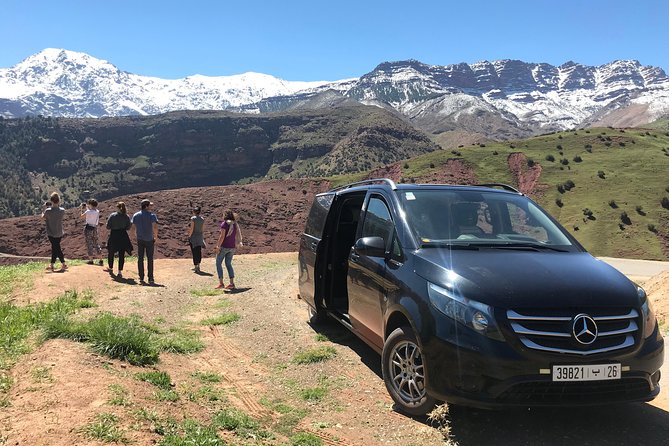
The tour is listed as a small group, with a maximum of 10 travelers. That might sound like a marketing detail, but in practice it changes how your day feels.
With a group that size, your guide can:
- answer questions without rushing people
- adjust pacing if you want photos or need a slower moment
- manage timing around mountain roads so the group stays together
In the feedback, guides such as Marwan and Abdul are repeatedly mentioned for friendliness, humor, and staying flexible to the group’s pace. That’s the difference between “a driver and a script” and a guide who can connect what you’re seeing to local life.
If you’re traveling solo, as a couple, or with a small group, this setup can feel like a shared conversation day instead of a check-list day. If you’re a big-group traveler used to bigger tours, you might still find it smoother.
Price and Value: Is $67.95 Worth Your One Day?
At $67.95 per person, this is positioned as a budget-friendly way to get out into the Atlas without needing your own car. The value comes from the mix of included elements:
- pickup from Marrakech and return drop-off
- air-conditioned transport (4×4 or minivan)
- multiple valley stops, including Ourika Valley waterfalls
- an argan oil co-operative visit plus a bio-aromatic garden
- a chance to learn about Berber life and culture
- optional lunch with a local family home (with the meal described in the tour info)
For many people, the biggest value is simply seeing how quickly Morocco changes from city to mountain. You get a full day’s worth of that contrast without planning a route, managing directions, or paying for multiple separate activities.
One caution: you may spend extra if you choose the restaurant lunch option and if you shop at argan oil outlets. A review specifically warned that argan products can be expensive and the payment setup may require cash. The tour itself feels fair for the price; the add-ons and purchases are where costs can rise.
Practical Tips Before You Go: Dress, Cash, and Expectations
This is a mountain day in Morocco, so plan for both sun and cooler air at elevation. The tour info also calls for a conservative dress code: keep shoulders, chest, and midriff covered, and keep knees covered. Shorts aren’t recommended. This matters because you’ll be visiting local spaces and communities, and it helps you feel more comfortable and respectful.
A few more practical ideas:
- Bring a camera ready for quick stops, especially around Toubkal.
- Wear shoes you can walk in comfortably. You’ll do short walks near waterfalls and in the village area.
- If you want to buy argan products, bring cash, since the shop may not have card payment service.
Finally, go in expecting a day that’s structured. You get time at key points, but it’s not “free roam.” A good guide like Marwan or Abdul can make that structure feel easy.
Who This Tour Suits Best (and Who Might Want Something Else)
This tour is a strong match if you:
- want your first Atlas day trip from Marrakech
- enjoy cultural context alongside scenery
- like small groups (max 10) and a guide who talks through what you’re seeing
- want a shot at a local family lunch rather than only restaurant food
You might choose another style of trip if you:
- want a longer hike day with sustained trail time
- dislike short stops and prefer one or two places for the majority of the day
- get carsick easily, since mountain roads mean lots of curves and transitions
The sweet spot is “I want to see a lot and understand it,” not “I want hours of solitary wandering.”
Should You Book This Atlas Mountains & 5 Valleys Day Trip?
If your goal is a memorable first taste of the Atlas—waterfalls, mountain villages, fruit-tree valleys, and a real lunch moment with Berber hosts—this is a solid booking. At $67.95, the included visits make the day feel structured and worthwhile, especially with the small group size.
Book it if you’re comfortable with a full day on the road and with conservative clothing expectations. Consider a different option if you want long hikes or lots of free time in one place.
Either way, it’s the kind of Marrakech day trip that changes your map in your head. You leave knowing where the waterfalls sit, why argan matters, and how high-mountain communities build a life on steep slopes.
FAQ
How long is the All Inclusive Atlas Mountains & 5 Valleys Day Tour from Marrakech?
It runs for about 7 hours 30 minutes.
Does this tour offer pickup from my accommodation in Marrakech?
Yes. Pickup is offered from your Marrakech hotel or riad, and the day ends with a drop-off back in Marrakech.
What is the group size?
The tour is described as a small-group experience with a maximum of 10 travelers.
What will we see and do during the day?
You’ll visit multiple areas in the Atlas region, including Ourika Valley (waterfalls), Oukaimeden Valley (traditional Berber village life and a short walk), and viewpoint/photo stops connected to Mount Toubkal, plus stops in Asni and Tahnaout.
Is lunch included, or is it extra?
You have options: you can stop for lunch at a restaurant (own expense) or opt to visit a local family home for lunch.
Is the tour focused on culture as well as scenery?
Yes. The tour includes visits such as an argan oil co-operative and a bio-aromatic garden, plus time spent learning about Berber/Amazigh rural life.
Does the weather affect whether the tour runs?
Yes. The tour requires good weather, and if it’s canceled due to poor weather, you’ll be offered another date or a full refund.
What is the cancellation window for a full refund?
You can cancel up to 24 hours in advance for a full refund. If you cancel less than 24 hours before the experience starts, the amount paid is not refunded.