REVIEW · ROME
Rome: Tuscany & Montepulciano Day Trip with Lunch & Wine Tasting
Book on Viator →Operated by City Wonders Ltd · Bookable on Viator
One day can change your view of Tuscany. This tour gives you Montepulciano’s hilltown wine life, then lets you wander the UNESCO Renaissance streets of Pienza at your own pace. What I like most is the real Tuscan farm lunch paired with regional wines, including Brunello di Montalcino, and the fact that Pienza is not just a photo stop. One thing to plan for: it’s a long day with real walking and steep moments, so good shoes matter.
I also like how low-stress the logistics feel. You start at Piazza del Popolo, ride in an air-conditioned coach with audio headsets so you don’t miss key bits, and you get Wi‑Fi onboard to keep the day moving while the countryside rolls by. And the guides tend to land the tone well; I’ve seen names like Flavio, Anna, Barbara, Sonia, Enrica, and Antonino tied to great days, with drivers like Pablo, Massimo, and Luca getting credit for safe, smooth driving through winding roads.
The day flows in a smart order: Val d’Orcia for scenery, Montepulciano for wine culture and a guided walk, Tempio di San Biagio for one of Tuscany’s most famous Renaissance views, then lunch and time in Pienza. Just keep expectations realistic about the wine: it is a tasting experience, not a full-bar party.
In This Review
- Key points worth knowing before you go
- What You Get for About $83: the value math
- From Piazza del Popolo to Val d’Orcia: comfort on the long coach ride
- Montepulciano Walking Tour: vino nobile views and real hilltown texture
- Tempio di San Biagio: that Renaissance church view people talk about
- Lunch on a Tuscan farm + the Brunello tasting: where the day earns its keep
- Pienza UNESCO time: pecorino shopping and Renaissance streets
- How steep and how long: making the day work for your legs
- Who should book this Rome to Tuscany day trip
- Should you book this Montepulciano and Pienza day trip?
- FAQ
- How long is the tour?
- Where does the tour start and end?
- Is lunch included?
- What languages are offered?
- Is wine included, and are there age restrictions?
- Do I need tickets for Tempio di San Biagio?
Key points worth knowing before you go
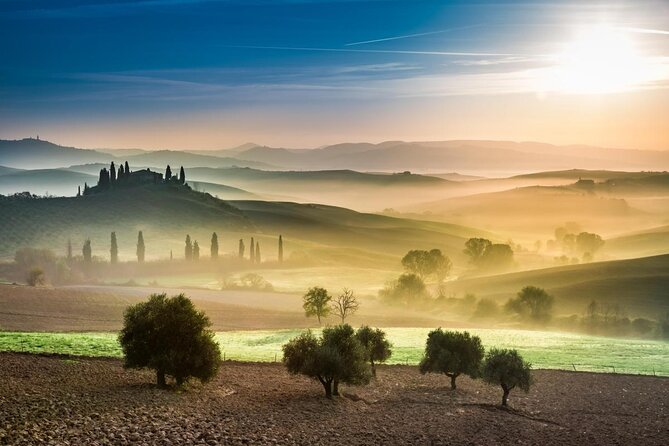
- Farm lunch in Tuscany: a 3-course meal with local flavors, served in the countryside.
- Brunello di Montalcino included: you get to sample wines from one of Italy’s most famous names.
- Pienza free time: up to 45 minutes to explore the UNESCO historic center on your own.
- Steep hilltown walking: plan for uneven streets and some climbs, especially in Montepulciano.
- Strong guide energy: many top scores cite guides like Flavio, Anna, Barbara, Sonia, Enrica, and Antonino.
- Seasonal timing can change things: in winter, shop hours can be limited and some areas may feel closed.
What You Get for About $83: the value math
At $83.44 per person for roughly 12 hours, you’re paying for more than “just a ride.” You get round-trip coach transport from central Rome, a guided experience that covers multiple hilltown stops, and a 3-course lunch plus wine tasting at an authentic Tuscan farm and winery. That combo is where day trips from Rome can either shine—or feel like a money squeeze.
Here’s the practical way to judge the value:
- Transport is included, and it’s not a cramped bus situation. The coach is air-conditioned and includes unlimited high-speed Wi‑Fi onboard.
- Your time in the towns is managed, so you’re not stuck figuring out parking, tickets, and routes.
- The lunch and tasting are bundled, meaning you don’t have to hunt for a place to eat once you arrive.
One note for your expectations: wine tastings can feel generous on some days and more like a light sampling on others. The tour includes wine tasting with lunch, and from March 1 the tasting is led by a professional sommelier (for group departures). Still, it’s a tasting, not a pour-it-all-you-can setup—so if you want a heavy drink experience, plan your expectations accordingly.
You can also read our reviews of more tours and experiences in Rome.
From Piazza del Popolo to Val d’Orcia: comfort on the long coach ride
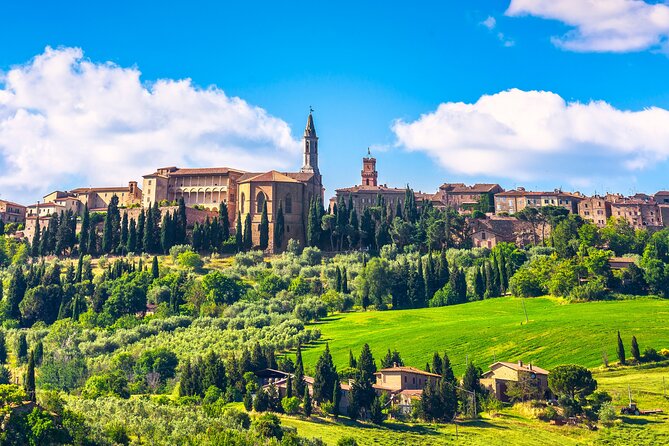
This is a classic Rome-to-Tuscany structure: you leave the city, then the countryside does the “wow” work while you sit back. You depart from Piazza del Popolo, and you return to the same meeting point at the end of the day.
The onboard setup matters more than it sounds. You get audio headsets for the whole day, so the guide’s commentary doesn’t turn into a muffled blur. And there’s unlimited high-speed Wi‑Fi on the coach, which is useful for quick map checks, photo sorting, or just sending one last message before you unplug.
Val d’Orcia is where you start getting the big rolling-hills feeling. You have a stop for sightseeing in the region (with admission not required for that stop), and it’s the kind of moment that makes the later hill towns easier to appreciate. You see why this part of Tuscany gets referenced so often in movies and postcards: the views are there because the terrain is dramatic.
Also, one practical tip from real timing on these days: the coach ride can be long, and on some departures you may get a brief chance to stop for souvenirs or a quick stretch. Don’t count on it as a guaranteed feature, but it’s a smart way to keep the day from feeling like one straight ride.
Montepulciano Walking Tour: vino nobile views and real hilltown texture
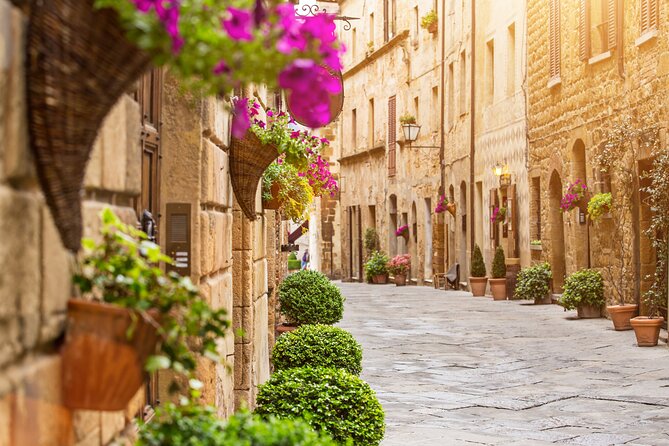
Montepulciano is the star for wine lovers and photo people. The town sits on a hill like it’s been built for viewpoints. You’ll do a guided walking tour that focuses on both sights and the story behind Vino Nobile di Montepulciano, the area’s celebrated red wine.
During your walk, you’re looking for details like:
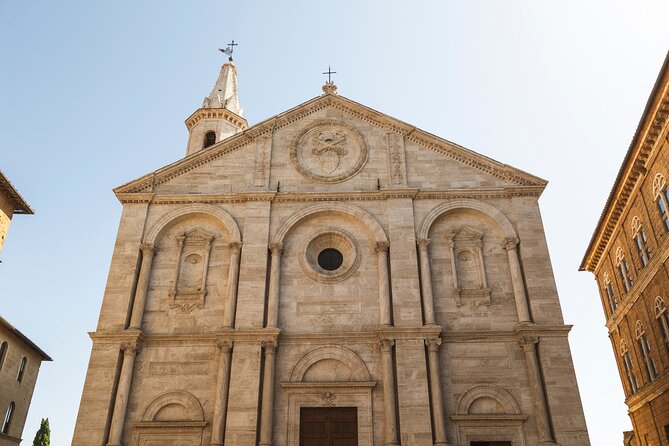
- The Cathedral of Santa Maria Assunta, paired with local context (including mention of its cathedral façade story, since the façade is not finished as it might appear in other places).
- A Florence-style clock tower that helps you orient quickly.
- Medieval wine cellars and the town walls that shaped how the area stored and protected its wine wealth.
The tour is timed so you don’t just wander. You learn what to look for and how to connect the architecture to the wine economy. That matters because Montepulciano can feel like a collection of pretty streets unless you know what to pay attention to.
One small caution: you should expect a hilltown pace. In your shoes, you’ll notice uneven pavement and steps. If you want to maximize photos, go slower for the first 10 minutes so you don’t burn your legs before the best viewpoints.
Tempio di San Biagio: that Renaissance church view people talk about
Then you’ll head to Tempio di San Biagio, a Renaissance church set in an almost theatrical position overlooking the hills. You get a shorter stop (about 30 minutes), but it’s built for one purpose: look, orient yourself, and enjoy the view.
What makes it worth your time is the design story. This church blends Renaissance artistic ideas with the feel of the Tuscan landscape, and it’s tied to famous names through its design concepts (including references to Bramante and Michelangelo’s influence on the idea).
Admission for this stop is not included, so if you decide to go inside, keep that in mind. Even if you treat it as a viewpoint stop, it’s one of those places where you instantly understand why postcards exist.
Lunch on a Tuscan farm + the Brunello tasting: where the day earns its keep
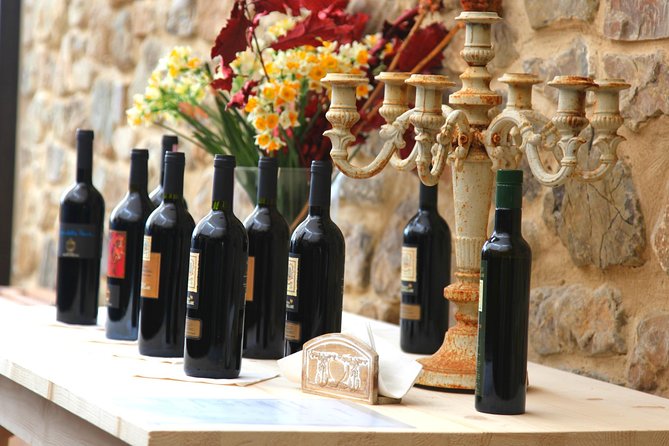
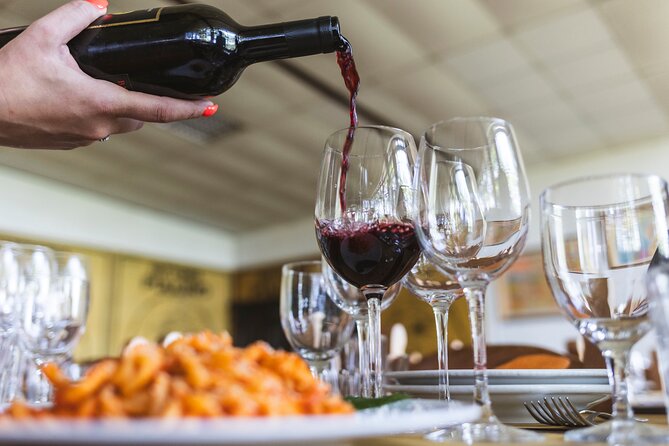
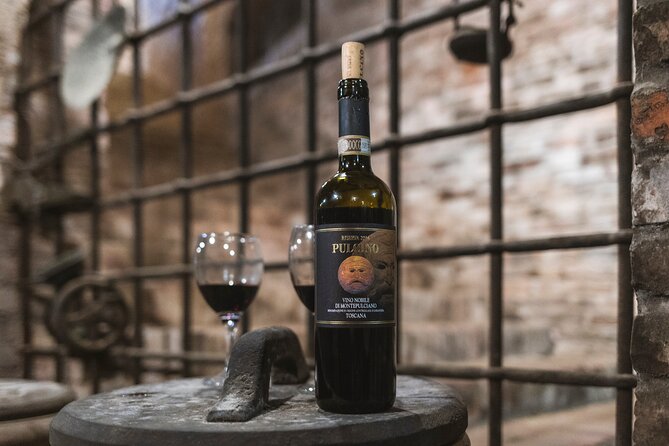
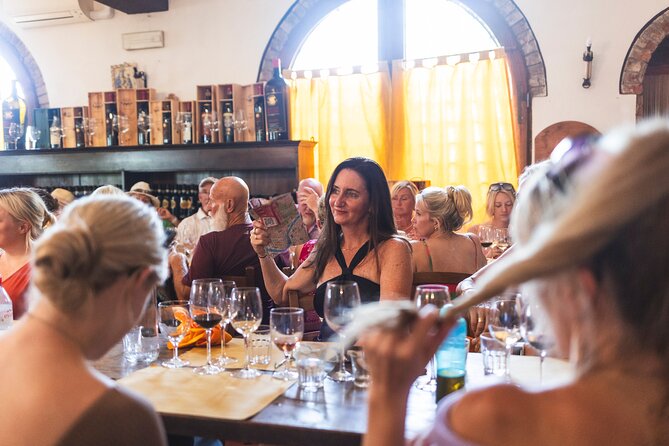
Lunch is served at an authentic Tuscan farm and winery, and it’s a big part of why this tour has such strong satisfaction. You’ll eat a 3-course lunch with local pairings. Wine is part of the experience, and the tasting includes regional wines tied to the area, including Brunello di Montalcino.
From a “what should I expect” standpoint:
- You’re not just eating. You’re eating in a setting designed to feel like the countryside, not a restaurant that happens to be in Tuscany.
- The tasting is designed to connect what you’re drinking to where it’s produced.
- From March 1 onward, the tasting for group departures is led by a professional sommelier, which typically means you’ll hear more focused explanations during the wine portion.
Now the honest part. Some people love the wine and meal, describing the lunch as delicious and worth it. Others felt the wine tasting portions were small or that the food quality in their meal service wasn’t up to the hype. That mismatch often comes down to two things: how a group is served and how much variety is offered in that tasting moment.
So here’s my practical advice: come hungry, and treat the wine tasting as a tasting. If you want to taste a lot of bottles, plan to buy more after you have time to do it at your own pace. For day-trip reality, the tasting inclusion is a win—but it’s still a single midday stop.
For certain upgrades, you may also get extra tasting elements like wine and olive oil, and there’s even mention of an optional castle visit in Montalcino for small group or private upgrades. Those options can make the “wine focus” stronger if that’s your priority.

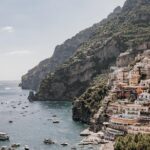
Pienza UNESCO time: pecorino shopping and Renaissance streets
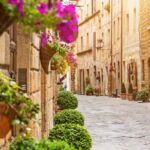
Pienza is a UNESCO-listed historic center, and the tour gives you a chance to see the town’s layout without turning it into a rushed checklist. You’ll travel from the farm to Pienza, then get free time to explore the historic center.
Why Pienza matters: its street plan was shaped in Renaissance times under Pope Pius II, who wanted to change the look of his birth town. You’ll see architecture that holds onto that vision. Even if you’re not a history buff, you can feel the intentional design: it’s orderly in a way that makes strolling more satisfying than just wandering.
During your time there, you’ll also get practical guide tips. If you like food, aim for pecorino shopping. That’s a recurring highlight of Pienza’s identity, and it’s the kind of souvenir that actually tastes like where you were.
A note that affects your experience: some departures line up with seasons when shops may be open and active, and others don’t. Winter can mean closures or reduced opening hours, which can make free time feel quieter. If your goal is shopping, pick dates where you expect normal hours.
And yes, you might find the town offers classic stop-and-snack choices. Gelato is often an easy win here, because it keeps you moving even when the streets are a bit chilly.
How steep and how long: making the day work for your legs
This is a moderate fitness day with fair walking and some steep sections. Montepulciano is the main place your calves will remember later. Pienza is smaller, but its streets still ask you to keep moving.
If you’re trying to plan smart, do these three things:
- Wear shoes with solid grip. Stones and steps happen.
- Keep a light layer with you. You’ll be in a van and then out in open air.
- Use your breaks and timing. When there’s free time, it’s when you can go at your own pace.
There’s also a timing rhythm you should know: your day starts in Rome and ends back at the meeting point, with multiple short stops. That means you’ll spend plenty of time on a coach, but you should still expect a full day away from your hotel.
Even the positive reviews hint at one universal day-trip truth: it’s long, and you’ll want to manage energy.
Who should book this Rome to Tuscany day trip
This is a strong fit if you want:
- A one-day escape from Rome that still feels like Tuscany, not a rushed sightseeing sprint.
- Wine tasting that’s tied to real place and real agriculture, including access to Brunello di Montalcino wines.
- A day structured enough that you don’t worry about transport, routing, or finding lunch.
It’s also a good choice for people who like the combination of “guided explanation” plus “actual free time.” Montepulciano and Tempio di San Biagio give you context, while Pienza gives you breathing room to wander.
If you hate walking or steep hill towns, then this is not the easiest day trip. You can still enjoy the scenery, but your comfort will depend on how your legs handle stairs and uneven streets.
Should you book this Montepulciano and Pienza day trip?
I’d book it if you want a balanced Tuscany day: scenery, a hilltop town with wine culture, a Renaissance church viewpoint, and UNESCO Pienza with shopping time. The value improves when you actually care about the lunch setting and the included wine tasting—because that’s where the tour’s cost makes sense.
I’d think twice if your main goal is heavy wine quantity, top-tier restaurant food every single course, or lots of shopping time in every season. Some days feel like a calm, satisfying tasting. Other days have been described as too light or lunch quality not matching expectations. Also, in off-season periods, shops in the towns can be limited, so your free time may feel more like wandering for views than shopping for treats.
If you book with realistic expectations—tasting, not a wine marathon—and plan your footwear and pace, this tour can deliver a very enjoyable Tuscany taste in the middle of a Rome trip.
FAQ
How long is the tour?
The tour runs for about 12 hours.
Where does the tour start and end?
It starts at Piazza del Popolo, Roma and ends back at the same meeting point.
Is lunch included?
Yes. You’ll have a 3-course lunch as part of the experience, served at an authentic Tuscan farm and winery.
What languages are offered?
The tour is offered in English.
Is wine included, and are there age restrictions?
Wine tasting is included, and alcohol is not served to travelers who have not reached Italy’s legal drinking age of 18.
Do I need tickets for Tempio di San Biagio?
Admission for Tempio di San Biagio is not included, so if you enter that site, you may need to pay separately.