REVIEW · ROME
Pompeii and Naples Tour from Rome by Train with Lunch
Book on Viator →Operated by ItaliaTours · Bookable on Viator
Pompeii in one stress-free day? That’s the hook. You get the big win up front: high-speed rail between Rome and Naples so you dodge long road trips, then you’re whisked to the ruins with a guide who keeps the story clear and human.
What I like most is the way the day is built around Pompeii time. You get guided, skip-the-line access to the archaeological park, plus a structured walk through the streets, shops, homes, and public baths—without you playing ticket-game or route-planning at each step.
The main drawback is simple: it’s a long day and Pompeii is physical. Expect lots of walking on uneven ground, and Naples time can feel tight if timing slips with train delays.
In This Review
- Key Takeaways Before You Go
- Rome to Pompeii by Train: Why This Format Works
- Morning Transfer: Termini to Naples Central Without the Road Trap
- The Coach Ride to Pompeii: Quick, Air-Conditioned, and Worth It
- Pompeii Visit: Skip-the-Line Entry and a Guided Walk Through Real Streets
- Guide Style: Clear English and Strong Group Management
- Pizza Lunch in Pompeii: A Scheduled Break That Feels Like a Treat
- Naples After Pompeii: Coach Ride, City Highlights, Then Free Time
- Returning to Rome: Back to Termini, No Late-Night Chaos
- What This Day Trip Feels Like: Best For, Not For
- Price and Value: Is $269 a Good Deal?
- Should You Book This Pompeii and Naples Tour?
- FAQ
- How long is the Pompeii and Naples tour from Rome?
- What is included with Pompeii entry?
- Is lunch included, and what do I eat?
- Do I need to pay extra for Naples monuments?
- How do you travel between Naples and Pompeii?
- Is there free time in Naples?
- How big are the groups?
- How physically demanding is it?
Key Takeaways Before You Go
- High-speed train round trip keeps the day moving and reduces road hassle
- Skip-the-line Pompeii entry plus a guide helps you see more without waiting
- Pizza lunch included takes the meal-planning stress off your plate
- Private air-conditioned coach handles the transfer from Naples station to Pompeii
- Pompeii is the heart of the trip; Naples is an overview, not a deep dive
Rome to Pompeii by Train: Why This Format Works
If you’ve ever tried to stitch together Rome-to-Naples transport, a Pompeii ticket, and a guide all on your own, you already know the risk: the pieces don’t always line up. This tour reduces the moving parts. You meet at Caffè Vergnano (Via Marsala, near Termini), then you ride the fast train to Naples and let the team handle the handoffs.
That matters because Pompeii rewards momentum. The site is huge, and a guided flow helps you focus on the most meaningful zones—especially when you only have part of a day. It also helps that the day is capped at 18 travelers, which makes it easier for a guide to manage questions and keep people together (even when you’re stopping often for look-and-listen moments).
One more practical point: the tour explicitly calls for moderate physical fitness. That’s your cue to plan for walking, uneven surfaces, and some time outdoors—especially because the park has stretches with little shade.
You can also read our reviews of more tours and experiences in Rome.


Morning Transfer: Termini to Naples Central Without the Road Trap
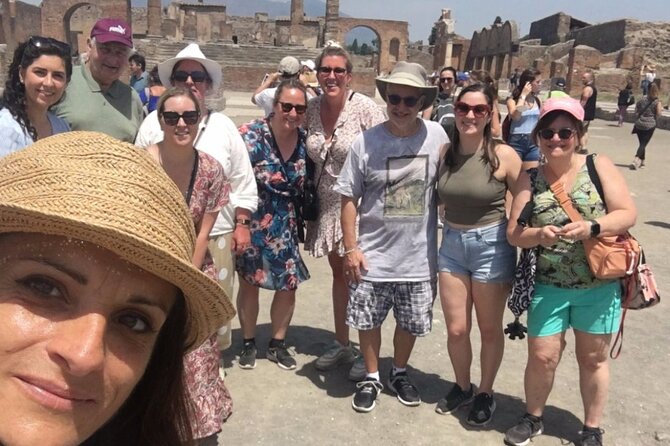
You start at the meeting point by Termini Station. From there, the tour brings you onto the high-speed train to Naples. The big advantage isn’t just speed. It also smooths out the day: train schedules (and track updates) tend to be more predictable than getting stuck behind traffic on the A1 and then improvising once you arrive.
After about 1 hour and 10 minutes, you reach Stazione Napoli Centrale. A guide meets you there, so you’re not wandering around trying to match a face to a group. This step is underrated. In a city with busy stations, a human “you’re in the right place” moment saves time and nerves.
Also, keep an ear out for the headset setup. Several guide-led walks in the reviews mention headsets included in Pompeii, which is a lifesaver when you’re spread out and there’s background noise.
The Coach Ride to Pompeii: Quick, Air-Conditioned, and Worth It
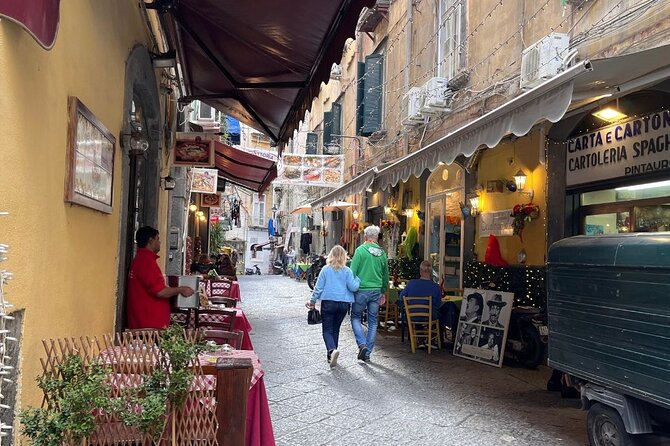
Once you’re in Naples, you don’t take on the logistics. You board a private air-conditioned coach for the drive to the archaeological park, about 30 minutes.
Why this matters for value: Pompeii is remote enough that the “just take a bus” plan turns into a guessing game about timetables, transfers, and where you end up. Here, you get dropped where you need to be and you start the Pompeii visit on schedule.
If you’re the type who hates wasting precious minutes transitioning between locations, you’ll appreciate this structure.
Pompeii Visit: Skip-the-Line Entry and a Guided Walk Through Real Streets
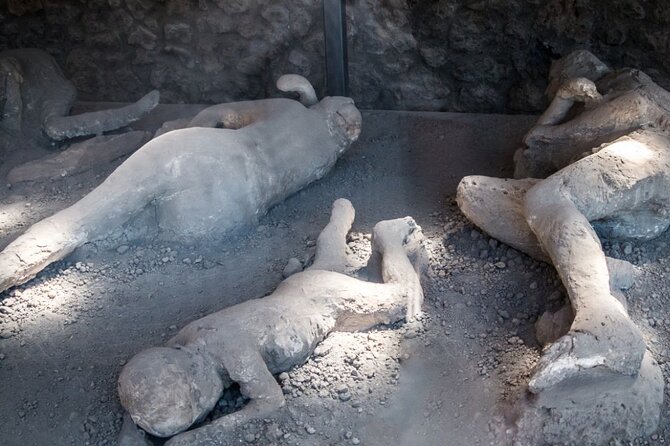
This is the heart of the day: skip-the-line tickets plus your guide leading you into Pompeii. You’re exploring a city frozen by the eruption of Mount Vesuvius, but the guide’s job is to make it understandable. The reviews are full of praise for guides who can explain daily life—how people lived, worked, traded, and used public spaces—without turning it into a lecture you have to survive.
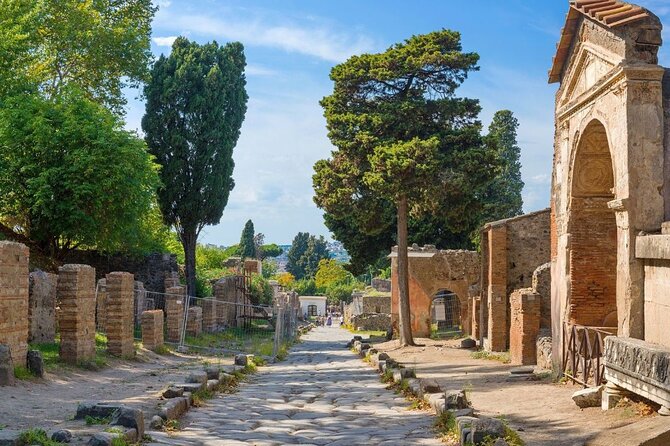
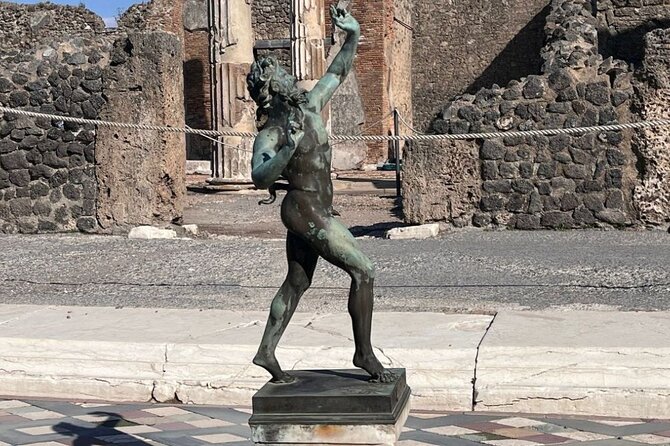
During the guided portion, expect a slow-but-meaningful walk through key areas: cobbled streets, preserved bakeries and shops, homes, and public baths. You’ll also see plaster casts created from ash and pyroclastic material—some of the most haunting visual reminders that this was real people, not just ruins.
A few practical reminders that come straight from the experience details you should plan for:
- Wear comfortable shoes. Pompeii’s ground is uneven and it’s easy to overestimate how steady you’ll feel for hours.
- Bring water. One comment notes warm early-summer conditions and little shade in the park.
- Use the restroom before you head out for Naples. There are cash-only toilets at the entrance (not free), and it’s easier to handle that before you’re rushing.
Also, don’t be shocked if your guide emphasizes where excavations are still underway. Seeing the site as an active archaeological project (not a finished museum set) is one of the reasons Pompeii feels so alive.
Guide Style: Clear English and Strong Group Management
The guides named in the feedback—like Marina, Chiara, Paola, Carla, Rosa, and Federica—are repeatedly praised for organization and clarity. Even when weather or train timing gets messy, the guides are described as patient and good at keeping the group together.
That matters because Pompeii can tempt you to wander. A strong guide keeps you moving toward the highlights while still stopping for the details that make the place click.






Pizza Lunch in Pompeii: A Scheduled Break That Feels Like a Treat
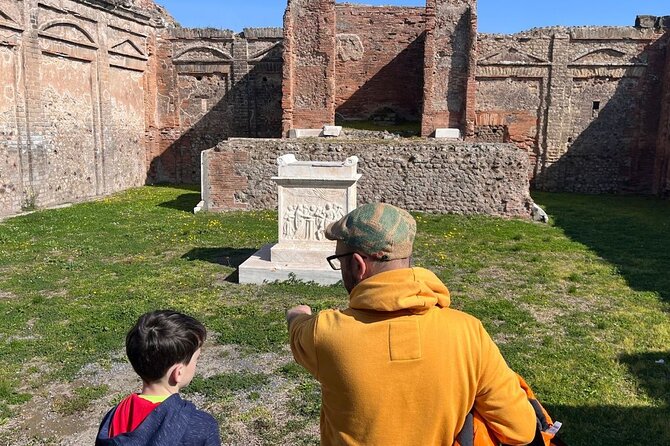
Lunch is built in right after the main Pompeii time: a stop at a historic pizzeria in Pompeii. You’ll get pizza lunch plus 1 drink, and dessert is included.
A couple of details you’ll want to know before you go:
- The pizza setup is described as a tasting menu style at times—multiple pizza types served one at a time, with wine/beer and dessert included in the tour cost.
- There’s often a small-tips moment. One review mentions servers putting out tip bowls, and a few people didn’t have cash (euros). If you want this to go smoothly, bring some cash for small gratuities.
The value here is that lunch is timed so you don’t lose your day to finding food. This is also one of the rare cases where the included meal doesn’t feel like a rushed afterthought. It’s a proper sit-down break.
Naples After Pompeii: Coach Ride, City Highlights, Then Free Time
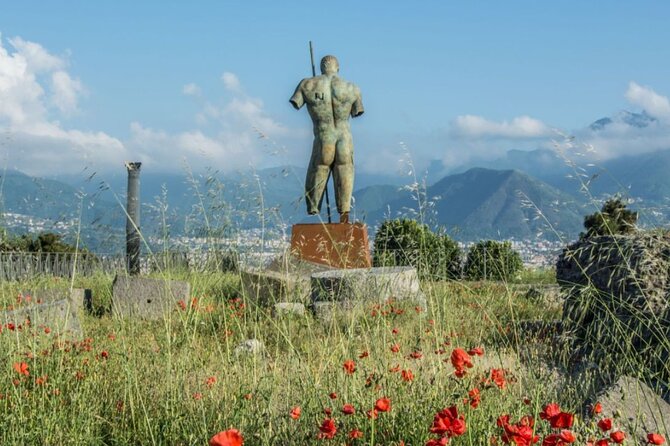
After Pompeii, you head back to Naples by coach. Then you switch gears into a guided Naples tour that includes highlights plus time to breathe and wander on your own.
The tour includes about 2 hours with a local guide in Naples, focused on history, architecture, and street life. After that, you get about 1 hour free time for souvenirs, a café, or just people-watching.
Here’s the key reality check: this isn’t a full Naples day. It’s an overview tacked on to make the region feel connected. If Pompeii is your priority—and it should be—this works well. If you secretly want a lot more Naples wandering, you may find the free time short.
Also, the day can stretch if your train timing shifts. One review notes getting less free time in Naples due to a train delay. If you’re someone who hates losing plans, you should book with flexibility in mind and expect the Naples portion to be the first to feel compressed.
Returning to Rome: Back to Termini, No Late-Night Chaos
Once the Naples portion ends, you head back toward Naples train station, then you board the high-speed train to Rome. The tour finishes back at the original meeting point area.
The appeal is that the return plan is organized. In day trips, the hardest part is usually getting home. Here, the steps are taken care of so you don’t end up stuck searching for the right train platform or figuring out last-minute transport.
What This Day Trip Feels Like: Best For, Not For
This tour is a strong match if you want:
- A guided Pompeii visit without the stress of building a plan
- Round-trip train convenience from Rome
- Lunch included at a pizzeria in the Pompeii area
- A structured Naples taste so you’re not just rushing from ruins to the next city
It’s less ideal if:
- You need minimal walking or perfectly smooth surfaces. Pompeii is rough on shoes and knees.
- You want a long, independent Naples exploration. Your free time is limited.
- You’d rather keep the itinerary purely Pompeii-heavy. Naples is present, but it’s still the side dish.
If you’re traveling with kids, some families mention this tour working well with children around ages 7–9, largely because the group structure helps manage pace.
Price and Value: Is $269 a Good Deal?
At $269 per person, you’re not paying for just a ticket to Pompeii. You’re paying for the whole day’s logistics:
- Round-trip high-speed rail between Rome and Naples
- Private air-conditioned coach between Naples station and Pompeii
- Skip-the-line Pompeii access and guided time in the park
- Lunch in Pompeii, including a drink and dessert
- Guided Naples highlights plus free time afterward
For many travelers, that’s where the value sits: time saved and decisions removed. If you tried to assemble this alone—train tickets, Pompeii entry, a guide, and a reliable transfer—you’d likely spend similar money, then add uncertainty and stress.
So I see this as a “buy peace of mind” price, not just a sightseeing bargain. If your goal is maximum ruins time with minimum admin, it’s a fair deal.
Should You Book This Pompeii and Naples Tour?
Book it if Pompeii is your top priority and you want the day arranged for you: fast train, guided skip-the-line entry, a real lunch stop, and an organized Naples overview to round things out.
Skip it (or choose a different focus) if you’re prone to walking fatigue, hate long outdoor time, or want a deeper Naples experience than the included guided portion and short free time allow.
My practical advice: plan to treat this like an active day. Pack water, wear solid shoes, and keep your expectations realistic about Naples being a bonus—not the main event.
FAQ
How long is the Pompeii and Naples tour from Rome?
The tour runs about 11 hours 30 minutes (approximately).
What is included with Pompeii entry?
You get skip-the-line tickets for Pompeii, plus a fully guided tour of the archaeological park.
Is lunch included, and what do I eat?
Yes. Lunch is at a Neapolitan pizzeria and includes starter, Naples pizza (with 1 drink), and dessert.
Do I need to pay extra for Naples monuments?
Naples monument entry is listed as not included, and the Naples portion is described as guided highlights plus free time.
How do you travel between Naples and Pompeii?
You ride a private air-conditioned coach from Naples Train Station to Pompeii, then back again.
Is there free time in Naples?
Yes. After the guided portion, you get about 1 hour of free time to explore, shop for souvenirs, or relax at a café.
How big are the groups?
The tour has a maximum of 18 travelers.
How physically demanding is it?
The tour calls for moderate physical fitness, and Pompeii involves walking on uneven terrain, so comfortable shoes are important.