REVIEW · TBILISI
Private Walking Tbilisi City Tour (Day Trip)
Book on Viator →Operated by Individual Entrepreneur Vazha Gakharia · Bookable on Viator
Tbilisi reads like a history book in motion. This guided walk gives you multi-faith context and the kind of street-level stories that make the city feel instantly understandable. I especially loved how the route connects big landmarks with the legends behind them, and how the guide keeps you moving from viewpoint to viewpoint with purpose. The main drawback to plan for is simple: it’s a walking day with no transportation included, so you’ll want comfortable shoes and a little stamina.
You also get the practical stuff right away. A professional guide handles the pacing and explanations in English, plus bottled water comes with the group. Many people rate the service highly, with guides like Teimuraz and Temo specifically praised for being informative and attentive.
How much you enjoy it depends on your expectations for time inside places. Several highlights are quick picture-and-look stops, so if you want long chapel time, you may still want extra independent sightseeing later.
In This Review
- Key things I’d plan around
- A Six-to-Seven-Hour Walk That Makes Tbilisi Make Sense
- Narikala Fortress Area: Big Views and a Cluster of Beliefs
- Sulfur Baths and the Metekhi Plateau Legend
- Rustaveli Avenue: The City’s 20th-Century Face
- Abanotubani and the Hot Springs Origin Story
- The Great Synagogue: A Late 1800s Eclectic Landmark
- Metekhi Cathedral: A Palace-Adjacent Fortress Church
- Bridge of Peace, Rike Park, and Kartlis Deda: Symbols You Can See
- Anchiskhati and Sioni: Two Orthodox Anchors from Different Eras
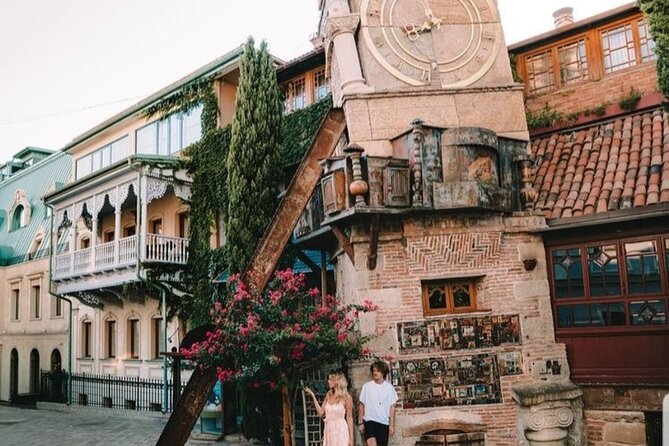
- Leselidze Street and Rezo Gabriadze Marionette Theater
- Leghvtakhevi Waterfall: The Sulfur Surprise
- Price and Value for a Guided City Sweep
- What Kind of Traveler Should Book This?
- Should You Book This Tbilisi Walking Tour?
- FAQ
- How long is the Tbilisi city walking tour?
- What is the price per person?
- Is transportation included?
- Is the tour in English?
- Are entry tickets included?
- Is bottled water included?
- What group size should I expect?
- What happens if the weather is bad or the tour can’t run?
Key things I’d plan around
- A lot of culture in limited time: short stops mean you’ll see highlights, not linger for hours in every site.
- Multi-faith landmarks close together: mosque, synagogue, and historic churches are all part of one walking route.
- Narikala Fortress takes the lead: this is the big early focus and includes an admission ticket.
- Old Town legends meet modern Tbilisi: you’ll hear origin stories and then cross to newer icons like the Bridge of Peace.
- Bring water habits into your day: bottled water is included, but you’ll still be thankful you brought snacks.
- Group size stays manageable: it runs with up to 100 people, so you won’t be walking alone, but you also shouldn’t feel lost.
A Six-to-Seven-Hour Walk That Makes Tbilisi Make Sense
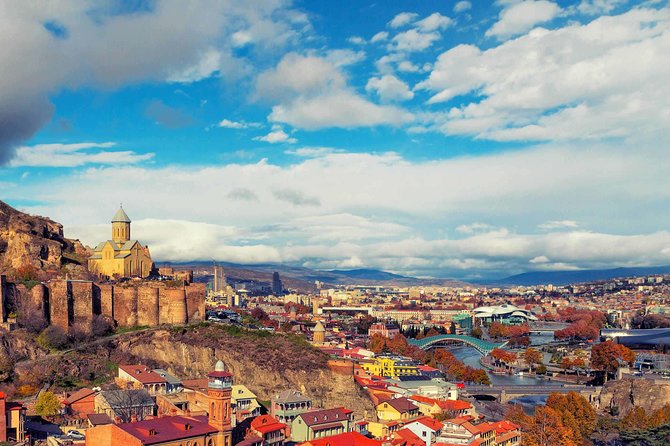
This is built like a guided orientation day. You’ll spend roughly 6 to 7 hours walking through Tbilisi’s layers: fortress views, sulfur-bath origins, Orthodox churches, a synagogue from the late 1800s, and even modern bridges and parks. It’s a shared tour (not just a private chat), and it moves at a pace that works because the stops are strategically placed.
For me, the value comes from the “why,” not just the “what.” You’re not only told what you’re looking at—you get the background that ties the city’s mixed heritage together. If you like cities where religions, empires, and trade routes overlap, this walk is the kind of day that turns random buildings into a story you can repeat.
The “consideration” is that your legs do the sightseeing. There’s no included transport, so if you’re tired from the rest of your itinerary, this tour can feel like a lot. I’d treat it like a workout with excellent rewards: you’ll earn those viewpoints.
You can also read our reviews of more tours and experiences in Tbilisi.

Narikala Fortress Area: Big Views and a Cluster of Beliefs
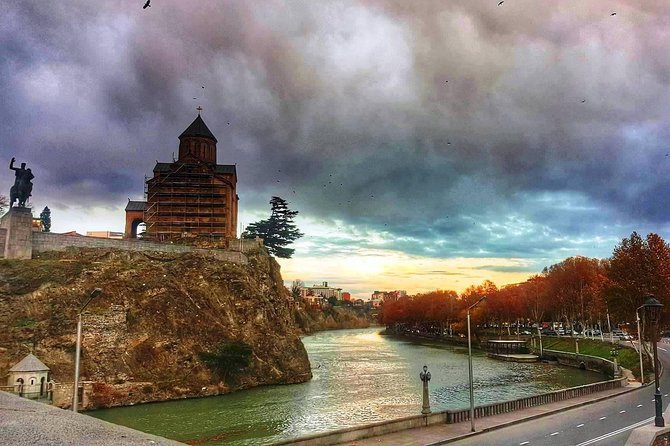
The tour begins at the Narikala Fortress area, the place where Tbilisi looks like it’s built on top of itself. From here you get a sense of why Old Town feels compact and dramatic, with steep streets and balconies stacked along the hillside.
This first segment also concentrates a lot of meaning in one zone. You’ll see typical Tbilisi houses, plus landmarks in the broader Narikala/Old Town complex, including:
- Narikala fortress views
- Anchiskhati church, dating to the 6th century
- Holy Trinity Cathedral
- Catholic and Gregorian churches
- A Muslim mosque (and, per the tour’s stated theme, the Jumah Mosque focus)
- The Ateshga temple of pagans
The tour gives this portion about 50 minutes, and you also get an admission ticket included here. That matters because fortress viewpoints can be a “pay or skip” decision on a self-guided day. Here, it’s already folded in, which is part of the value.
Practical tip: plan to take a slow breath before you reach the viewpoints. The terrain and steps can add up quickly, especially if your day starts early.
Sulfur Baths and the Metekhi Plateau Legend

After the fortress area, you shift toward the sulfur-bath core and the origin story behind the city’s name. The city’s name is tied to a legend involving King Vakhtang Gorgasali (Vakhang Gorgasali), and the key idea is that “tbili” points to something warm—warm springs, warm life, and a city built around geothermal heat.
You’ll get a look toward the sulfur baths area (with the tour’s specific focus on Sulfur Bath 5) and take in the Metekhi plateau area where a king’s sculpture overlooks the baths. The time here is shorter—around 30 minutes—so you’re mostly building understanding and visual orientation, not spending the whole day in tubs.
If you’re hoping for an extended bath experience (soap, soak, and a long sit-down), you’ll likely need to add that separately. This is a “see it, understand it, move on” moment.
Rustaveli Avenue: The City’s 20th-Century Face
Next you move to Rustaveli Avenue, one of Tbilisi’s more formal, wide-street sections. Here the feel changes from steep Old Town lanes to a more “capital city” rhythm, with major cultural buildings and institutions.
You’ll pass or learn about sights such as:
- Rustaveli Drama Theater
- the State Academic Theater of Opera and Ballet named after Zakaria Paliashvili
- a first gymnasium
- art salons and newer city development from after the 20th century
This segment is about 1 hour and the timing suggests a balanced mix of walking, viewpoint breaks, and commentary. It’s useful if your trip includes a day or two where you’d otherwise miss this side of Tbilisi.
My advice: use this portion to pace yourself. If your legs are starting to complain, Rustaveli’s layout can feel easier than Old Town stairs.
Abanotubani and the Hot Springs Origin Story
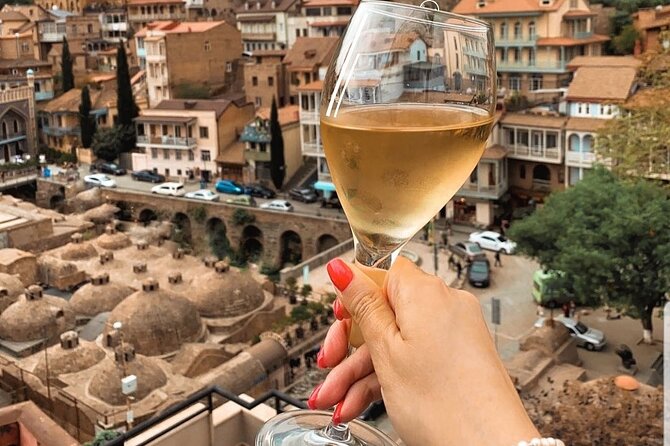
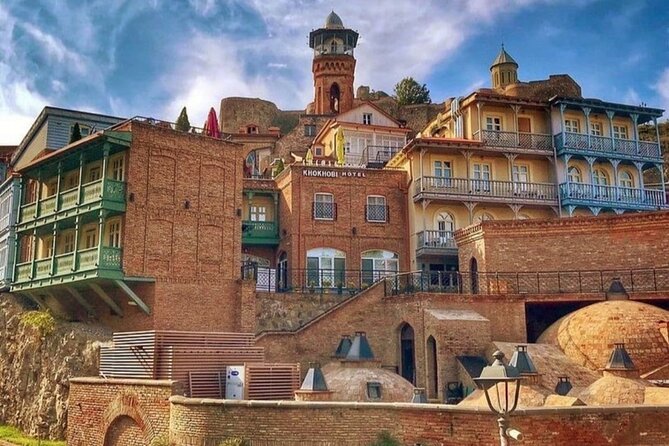
Abanotubani is where legend meets geography. This is the historic area tied to the hot springs, centered on the story of King Vakhtang Gorgasali’s falcon. The legend goes that the falcon fell and something warm was discovered—leading to founding the new capital.
This is a shorter visit (about 15 minutes), but it’s one of the places where a quick stop works because the setting is instantly readable. Steam, stonework, bathhouse vibes, and the sense that this is the engine room of the city’s early life.
If you want photos, this is a good spot to grab them while the guide explains the symbolism and background.


The Great Synagogue: A Late 1800s Eclectic Landmark
One of the tour’s strongest themes is multi-faith heritage, and the Great Synagogue of Tbilisi (also known as the Georgian Synagogue) is a clear highlight. The building was constructed from 1895 to 1903 in an eclectic style.
You’ll learn that the synagogue was built by Georgian Jews from Akhaltsikhe who migrated to Tbilisi in the late 19th century—so it isn’t just a building, it’s a trace of people and movement.
The time here is brief (around 15 minutes), which means you’ll get an overview and context. If you prefer deep architectural time, treat this as a “first look” and plan a return on another day.
Metekhi Cathedral: A Palace-Adjacent Fortress Church
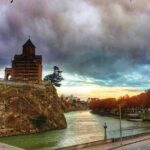
Metekhi Cathedral comes next, tied to the figure of King Vakhtang I Gorgasali. The name Metekhi relates to the area around the palace, and the site historically connected church and fort functions.
This stop is also around 15 minutes. The value is in the framing: you learn why the location mattered and how power was expressed through religious architecture in this part of Tbilisi.
If you like when guides connect buildings to political geography, this is a solid payoff stop.
Bridge of Peace, Rike Park, and Kartlis Deda: Symbols You Can See
Then you cross into the modern-symbol portion of Tbilisi. The Bridge of Peace was constructed in 2009–2010, and the tour notes the architect as Italian Michele De Luci, with the lighting system by French Philip Martino. It’s the kind of detail that makes a new-looking structure feel specific rather than generic.
From there, you head to Rike Park, a popular Old Town gathering place where festivals like Tbilisoba happen. This is a small stop (about 15 minutes), but it gives you a feel for how the city uses public spaces.
Finally, you reach Kartlis Deda, the “Mother of Georgia” statue. The guide’s explanation often lands because it’s simple and memorable: she meets friends with wine and enemies with a sword. It’s national symbolism in one clear visual.
These stops are short, but they help you understand Tbilisi as a place where identity is constantly performed—through architecture, statues, and public festivals.
Anchiskhati and Sioni: Two Orthodox Anchors from Different Eras
The tour returns to older religious landmarks with a focus on Christian heritage and continuity.
Anchiskhati Basilica is described as the oldest surviving church in Georgia, from the 6th century. You’ll also hear about an art studio associated with famous Georgian sculptor Elguja Amashukeli, who created the symbol of Georgia, Kartlis Deda. That connection makes the statue feel less random—more like part of a wider creative and religious tradition.
Then comes Sioni Cathedral Church. It has roots in the 6th and 7th centuries, but it was destroyed by foreign invaders and reconstructed multiple times. The current church is based on a 13th-century version, with changes from the 17th to 19th centuries. You’ll also learn that Sioni served as the main Georgian Orthodox Cathedral and seat of the Catholicos-Patriarch of All Georgia until the Holy Trinity Cathedral was consecrated.
Time here is brief (about 15 minutes each area), so you’re getting the “map” version of the story. If you want to sit quietly for prayer or long reading of details, you’ll want additional time outside the tour.
Leselidze Street and Rezo Gabriadze Marionette Theater
At this point, the walk becomes more atmospheric. You’ll pass through Leselidze, a street that combines Old and new parts of the city. It’s one of those “you feel the transition” areas, where the city doesn’t neatly separate eras.
Then you reach the Rezo Gabriadze Marionette Theater, one of Tbilisi’s most recognizable sights. The tour notes that there is a show every day, and you’ll see why people plan around it. The time is short—around 10 minutes—so think of this as a photo-and-impression stop unless your schedule lines up perfectly for a performance.
A small practical note: if you’re the type who loves theater culture, consider checking showtimes later in the day. This tour sets the context, but it doesn’t give you full performance time.
Leghvtakhevi Waterfall: The Sulfur Surprise
The final highlight is the Dzveli Tbilisi Sulphur Waterfall, also called Leghvtakhevi. The waterfall is 22 meters tall, and the name comes from the Georgian word for fig, because there were fig trees around the area.
This is again a quick stop (about 20 minutes). But the payoff is that it’s unusual. Not many cities have a waterfall like this in the middle of an urban Old Town setting, and it reinforces the tour’s central theme: Tbilisi’s natural geothermal energy keeps shaping the city.
Price and Value for a Guided City Sweep
At $59 per person, this isn’t priced like a bargain bus tour, but it also isn’t priced like a private guide day with car transfer. The value comes from what’s included: a professional guide and bottled water for everyone, plus at least one meaningful paid admission (Narikala fortress ticket included). Many of the other major stops are described as admission-free during your visit, which helps keep costs controlled.
The big thing to watch is that transportation isn’t included. Since this is a walking tour, you’ll be responsible for getting to the start point and staying comfortable throughout the day. If you’re staying close to Old Town, that’s less of an issue. If you’re farther out, you’ll want to plan your arrival so you don’t waste energy.
Overall, I think this is good value if you want the city’s context stitched together in one day. If you already know Tbilisi’s history and you’re more “just point me at locations,” you might prefer a self-guided plan. But for first-timers or anyone returning and wanting better context, this price often feels fair.
What Kind of Traveler Should Book This?
This tour fits best if you:
- want a guided overview that connects landmarks to stories
- like multi-faith and multi-era sights without needing to plan each one
- prefer walking with frequent orientation moments rather than long museum sessions
- appreciate clear explanations from professional guides
It’s also a good pick for travelers who want structure. Many comments highlight guides being friendly, professional, and on time, with specific praise for guides named Teimuraz and Temo for being informative and helpful.
If you’re someone who hates stairs, needs lots of wheelchair-style time, or wants long indoor visits, you might find the short stop times and walking pace limiting.
Should You Book This Tbilisi Walking Tour?
I’d book it if you want one day to do the heavy lifting: get your bearings, understand the city’s mixed heritage, and see both iconic and smaller-story landmarks without spending hours researching. The combination of multi-faith sights, origin legends (hot springs and city name), and quick modern-to-old contrasts (Bridge of Peace to sulfur waterfall) is a smart way to use limited time.
Skip it or add a buffer day if you know you’ll want prolonged time inside churches, synagogues, or any museum-level experience. This walk is about breadth and connection, not deep study.
If you’re comfortable walking 6 to 7 hours, like guided storytelling, and want a well-priced way to see major Tbilisi highlights in one go, this is a strong choice.
FAQ
How long is the Tbilisi city walking tour?
It runs about 6 to 7 hours.
What is the price per person?
The price is $59.00 per person.
Is transportation included?
No. Transportation is not included, so you’ll need to handle getting to and from the meeting area yourself.
Is the tour in English?
Yes. The tour is offered in English.
Are entry tickets included?
Narikala Fortress has an admission ticket included, while the other listed stops on the route are marked as free during the tour.
Is bottled water included?
Yes. Bottled water is included for each participant.
What group size should I expect?
The tour has a maximum of 100 travelers.
What happens if the weather is bad or the tour can’t run?
The experience requires good weather. If it’s canceled due to poor weather, you’ll be offered a different date or a full refund. It also requires a minimum number of travelers, and if that minimum isn’t met, you’ll be offered a different date/experience or a full refund.