REVIEW · TEL AVIV
Jerusalem Half-Day Tour from Tel Aviv: Holy Sepulchre and Western Wall
Book on Viator →Operated by Bein Harim Ltd · Bookable on Viator
One-way Jerusalem in six hours. This half-day run from Tel Aviv strings together the Mount of Olives panorama, the Old City walk, and the big three holy stops: the Western Wall, Via Dolorosa, and the Church of the Holy Sepulchre.
What I like most is the practical structure: hotel pickup (morning start) and an air-conditioned coach that keeps you moving without the headache of organizing transport. I also like that entrance fees are handled, so you’re not stuck hunting tickets right when you’re trying to take it all in.
One possible drawback: the tour is one-way. It ends in the Old City around early afternoon, and there’s no return drop-off back to Tel Aviv.
In This Review
- Key things that make this tour worth your time
- Tel Aviv Pickup to Old Jerusalem: how the half-day really plays out
- Getting your bearings: Mount Scopus views before you hit the Old City
- Gethsemane and the Kidron Valley: a driving stop with big atmosphere
- The Old City walk: quarters, lanes, and fast orientation
- Western Wall and Jewish Quarter: prayer, cobblestones, and the Cardo
- Via Dolorosa and the Christian Quarter: a guided route with limited time
- Church of the Holy Sepulchre: where time feels shorter than it should
- Muslim Quarter wrap-up: finishing with more Old City texture
- Price and value: what $60 buys you (and what it doesn’t)
- Group pace, comfort, and dress code: the real make-or-break items
- One-way ending in Jerusalem: how to plan your return without stress
- Shabbat timing: why Friday and Saturday can change everything
- Should you book this Jerusalem half-day from Tel Aviv?
- FAQ
- How long is the Jerusalem half-day tour from Tel Aviv?
- What time does the tour start?
- Does the tour include hotel pickup?
- Are entrance fees included?
- Is this tour round-trip back to Tel Aviv?
- Where does the tour end?
- Does the tour include food and drinks?
- What dress code do I need for religious sites?
- How much walking should I expect?
- Is the tour suitable for young children?
Key things that make this tour worth your time
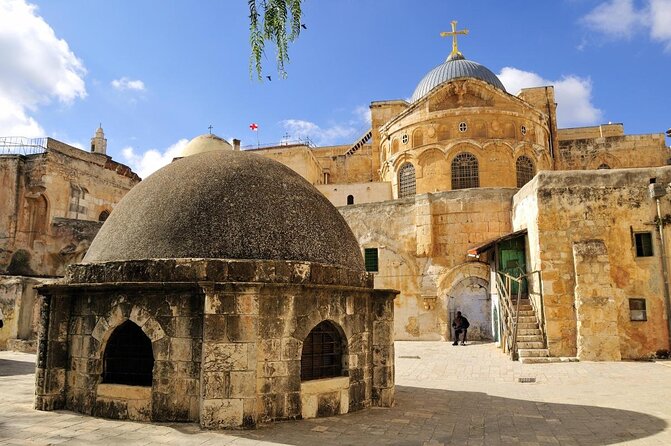
- Mount of Olives + quick orientation: You get the wide views first, then the walking route makes more sense.
- Big “high demand” sites in one slot: Western Wall, Via Dolorosa, and Holy Sepulchre are packed into a manageable half-day.
- Entry fees included: Saves time and keeps your spending predictable once you’re on the ground.
- Moderate dress code and worship spaces: You’ll be going places where shoulders and knees matter.
- Group size stays capped: Up to 40 people, so you usually won’t feel like a moving stadium.
- Ends in Jerusalem: Great for exploring afterward, stressful if you assumed it was round-trip.
Tel Aviv Pickup to Old Jerusalem: how the half-day really plays out
This starts early. The pickup begins around 7:15 am, with a morning drive from central Tel Aviv to Jerusalem on an air-conditioned coach. It’s designed for first-time visitors who want the highlights without committing an entire day.
Plan for about 6 hours total, with the end time around 1:00 pm in the Old City area. That timing is part of the value: you can see the core sites and still have the afternoon to wander, shop, pray, or just decompress.
The tour runs with a professional guide and a group cap of 40 travelers. Expect a “move as a unit” rhythm—helpful when you’re trying to keep track of multiple quarters and holy sites, but not ideal if you want long, slow stays at every stop.
Also note the practical stuff: you’ll want comfortable walking shoes. The tour includes a reasonable amount of walking through tight lanes and uneven surfaces, especially inside the Old City.
You can also read our reviews of more tours and experiences in Tel Aviv.

Getting your bearings: Mount Scopus views before you hit the Old City
Before you get buried in lanes, you get to look out. The morning includes a stop at Mount Scopus National Botanical Garden. Admission is listed as free, and the time there is about 30 minutes.
Why this matters: Old Jerusalem can feel like it’s all stacked on top of itself. A view from higher ground helps you understand where the Old City sits, and it makes later sights feel connected instead of random.
From there, you’ll head toward viewpoints that frame what you’re about to see. The tour highlights include seeing landmarks such as the Dome of the Rock from the Temple Mount area (from a viewing perspective, not by entering everywhere).
If you’re the kind of traveler who likes context—where things are relative to each other—this “look first, walk later” approach is one of the best uses of a half-day.
Gethsemane and the Kidron Valley: a driving stop with big atmosphere
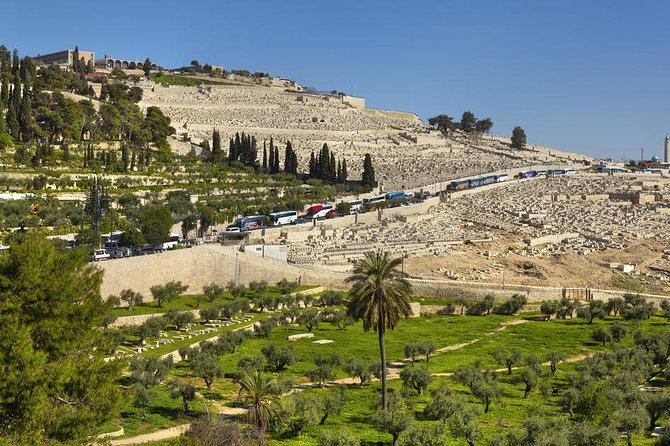
Once you’re on the Jerusalem side, the route includes a drive along the Kidron Valley and a look at Gethsemane, known for the setting where many faith traditions place Jesus’ night before the crucifixion.
This is one of those moments where a short photo stop works better than you might think. You’re not only seeing a location; you’re also seeing how Jerusalem’s geography channels movement—valleys, walls, and the way the city wraps around itself.
The tour also includes stops that give you a sense of the timeline of beliefs that all overlap in this area: Jewish, Christian, and Muslim heritage all mark these places. Your guide’s job here is to connect the scenery with the story you’ve heard your whole life, but now it’s in real space.
Don’t expect hours here. This is a half-day tour. You’re meant to absorb the key image, then move on.
The Old City walk: quarters, lanes, and fast orientation
The heart of the experience is inside the walled Old City. You’ll spend around 2 hours walking in the Old City itself, guided through key areas such as the Armenian and Christian quarters and then onward.
What you’ll notice is how quickly the city shifts. Streets can feel like they change “mood” block to block—architecture, signs, languages, the mix of religious life, and the rhythm of daily foot traffic.
This is also where your guide matters most. A good guide helps you read what you’re seeing—why one quarter looks and feels different, and how historical layers sit on top of each other.
You also get a structured route so you don’t waste your time asking, Am I near the right place? That’s the hidden value in a guided Old City walk: you move with purpose.
Western Wall and Jewish Quarter: prayer, cobblestones, and the Cardo
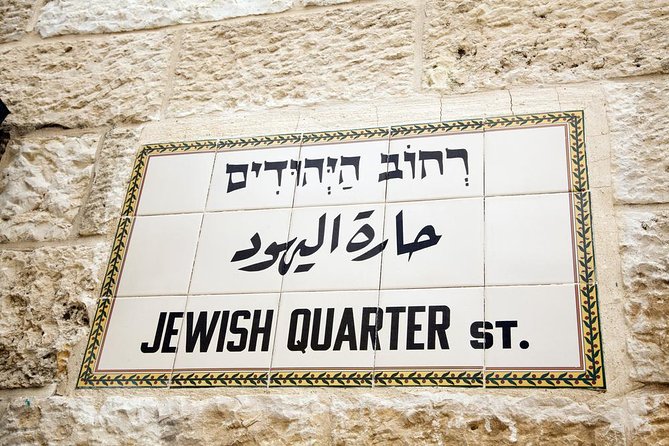
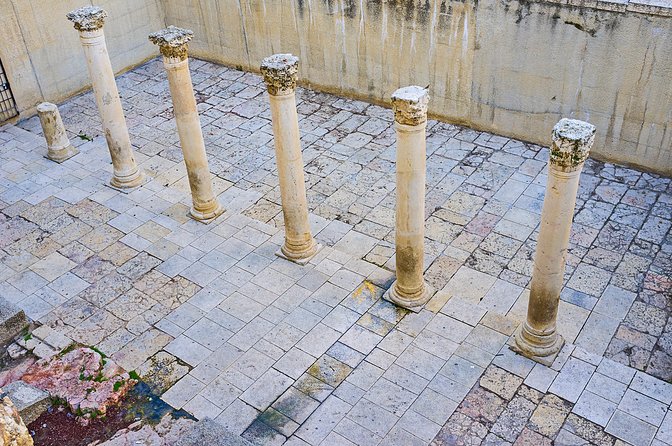
After the broader Old City walk, you shift into the Jewish Quarter and the Byzantine Cardo area. This segment is short—about 30 minutes—but it’s one of the best ways to understand how central that main thoroughfare once was.
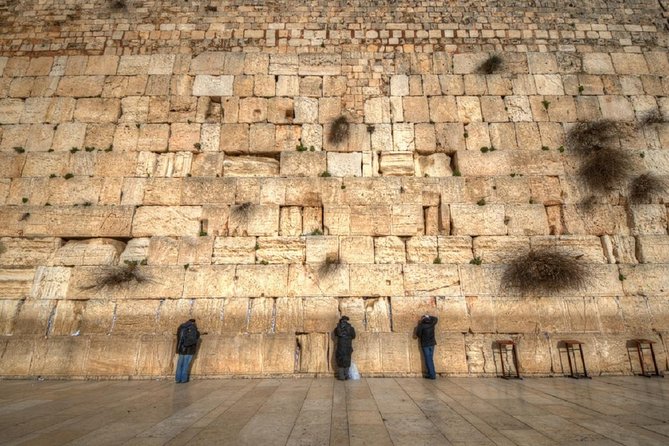
Then you’ll reach the Western Wall (Wailing Wall), with about 20 minutes on site. This is not just a monument stop. It’s a worship stop, and you’ll see that in how people behave—quiet reverence, prayer, and a steady flow of visitors.
A practical note: if you want to stand and pray for a long time, this tour’s pacing can feel a bit tight. The schedule works best if you can do a meaningful visit without needing to stay indefinitely.
There’s also a “Temple Mount view” moment built into the flow, letting you connect what you’ve heard in guide explanations with what you can actually see from the area.





Via Dolorosa and the Christian Quarter: a guided route with limited time
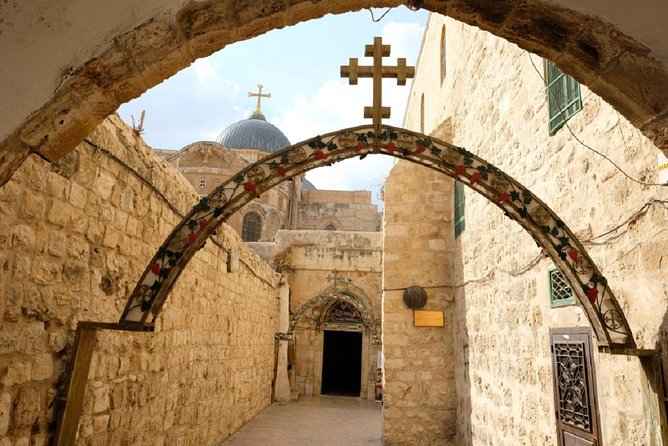
Next comes the Christian Quarter and the Way of the Cross (Via Dolorosa). You’ll walk the Christian quarter for about 30 minutes and then see some of the Stations of the Cross with roughly 30 minutes for this segment.
This part tends to move fast for a reason: the route is long, crowded at times, and it’s hard to do justice to every station in only half a day. The guide’s role is to select the meaningful stops and keep the group together.
Dress code matters here too. Places of worship often require covered shoulders and knees, and shorts can get you turned away. If you come prepared, you save time and avoid the awkward scramble to fix it at the entrance.
If you’re traveling with the expectation that you’ll feel a deep, slow devotion at each station, adjust your mindset. This is more of a guided orientation plus partial route, not a full reenactment-style pilgrimage.
Church of the Holy Sepulchre: where time feels shorter than it should
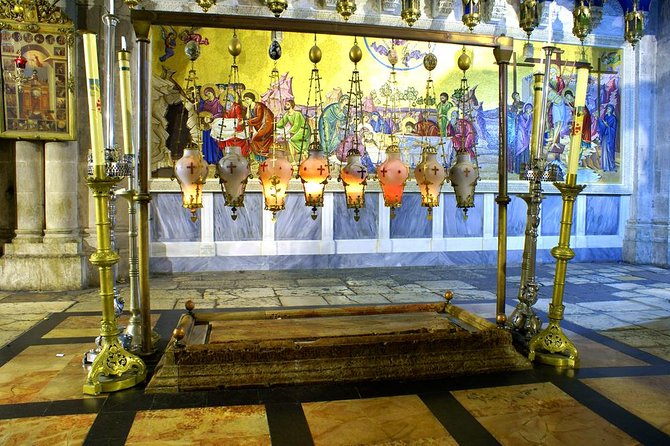
The day’s big indoor stop is the Church of the Holy Sepulchre, with about 40 minutes inside. This is one of the most layered holy sites in the world, and even within a relatively short visit, you’ll sense why it attracts constant attention.
Expect a mix of quiet worship, sightseeing, and the classic Old City “everyone is trying to fit into the same narrow space” reality. With limited time, the experience depends heavily on how smoothly your guide keeps the group moving while still giving you a chance to look.
Also, be ready for crowd energy. Even if your group is orderly, the church itself is active and busy. If you’re sensitive to that kind of atmosphere, this stop can feel intense—just go in knowing the clock is part of the deal.
Muslim Quarter wrap-up: finishing with more Old City texture
After Holy Sepulchre, the route continues through the Muslim Quarter with about 30 minutes of walking. This is a good way to end on something less “single-site focused” and more like the living city side of Jerusalem.
You’ll notice the Old City here isn’t just monuments. It’s streets, trade, daily movement, and a constant sense that the city is inhabited, not frozen.
It’s also a helpful breather from the most crowded religious anchor points. By now you’ve got the big landmarks in your head, so the quarter feels like a human-scale close.
Price and value: what $60 buys you (and what it doesn’t)
At $60 per person, this is positioned as an efficient highlights package: transport from Tel Aviv, guide support, and entrance fees included. For a half-day that hits the Western Wall, Via Dolorosa, and Holy Sepulchre, that bundled value can be tough to beat.
Here’s what it doesn’t include: food and drinks, and hotel drop-off back to Tel Aviv. That last one is the part that changes the math for many people. If you were planning to book this thinking it’s round-trip, you’ll feel the cost hit twice—once in the surprise logistics, then again in the cost of getting home.
If you plan well, though, the price still makes sense. You’re paying for a structured guided day that reduces decision fatigue in a complicated city.
My practical tip: budget for lunch on your own near where you end, and plan your return transport in advance.
Group pace, comfort, and dress code: the real make-or-break items
This tour involves enough walking that shoes matter. You’re also moving through dense areas with uneven surfaces, plus churches and sacred sites where you may be standing in lines at times.
The dress code is a firm one: avoid shorts, and keep knees and shoulders covered for both men and women. If you ignore that, you risk being refused entry and wasting a chunk of your limited time.
Pace is another consideration. Even with a good guide, group tours have strict schedules. That can feel frustrating if you move slowly or if you want to pause often for prayer, photos, or extra reading. If you know you’ll need more time at one stop—like the Wall or Holy Sepulchre—this is where you’ll want to plan an extra independent visit after.
On the plus side, a good guide can keep the day smooth and meaningful. Names you may see associated with this tour include Udi, Avi, and Amir Call Or—guides who tend to manage the group efficiently and explain the significance of what you’re seeing.
One-way ending in Jerusalem: how to plan your return without stress
This is the big logistics detail: the tour ends around 1:00 pm in the Old City area, with no return transport back to your Tel Aviv hotel. You’re meant to continue exploring independently and then make your own way back when you choose.
So, before you book, ask yourself two questions:
- Where are you staying in Tel Aviv?
- How will you get back from Jerusalem at around early afternoon?
If your hotel is far from transport links, or if you planned a relaxed evening in Tel Aviv, this “end in Jerusalem” setup can be a nuisance. If you’re happy to keep exploring in Jerusalem after the tour, it can actually be a bonus—less backtracking, more time in the places that grabbed you.
Shabbat timing: why Friday and Saturday can change everything
If you’re traveling on Friday or Saturday during Shabbat, it can get tricky. Public transportation can be closed until later in the day, and since the tour ends around early afternoon, you may not have the same easy ride options back to Tel Aviv.
If you’re set on this timing, plan your return route and backup options early. A little extra preparation can prevent a stressful end-of-day scramble.
Should you book this Jerusalem half-day from Tel Aviv?
I’d book it if you want the major Jerusalem highlights in one guided push, you’re comfortable walking in the Old City, and you like the idea of ending in Jerusalem so you can explore more on your own afterward.
I’d skip or rethink it if you need a round-trip hotel drop-off, you’re traveling during Shabbat with unclear transport plans, or you know you want long, slow time at each holy site. In those cases, a different format—or a full day—often fits better.
Also, be honest about expectations: this isn’t a deep study of every corner. It’s a smart sampler with enough structure to get your bearings and enough time at key sites to make it feel real.
FAQ
How long is the Jerusalem half-day tour from Tel Aviv?
The tour runs about 6 hours approximately.
What time does the tour start?
The start time is 7:15 am.
Does the tour include hotel pickup?
Yes, hotel pickup is included.
Are entrance fees included?
Yes, entrance fees are included.
Is this tour round-trip back to Tel Aviv?
No. The tour ends around 13:00 in the Old City of Jerusalem, and there is no return to your hotel.
Where does the tour end?
It ends in the Old City of Jerusalem, so you will continue exploring independently.
Does the tour include food and drinks?
No. Food and drinks are not included.
What dress code do I need for religious sites?
You need a moderate dress code. Avoid shorts and make sure your knees and shoulders are covered for both men and women.
How much walking should I expect?
The tour includes a reasonable amount of walking, so comfortable walking shoes are recommended.
Is the tour suitable for young children?
It is not suitable for children under age 4.