REVIEW · TEL AVIV
Bethlehem, Jericho, and Qasr El Yahud Day Trip from Tel Aviv
Book on Viator →Operated by Bein Harim Ltd · Bookable on Viator
Palm trees and holy sites, all in one day. This Bethlehem, Jericho, and Qasr El Yahud day trip strings together major biblical locations with expert commentary, plus hotel pickup and an air-conditioned coach to keep the long hours tolerable. When the guide is great (Itamar is a standout in group feedback), the stories land fast and you start seeing the land the way the texts describe it.
I also like how you get multiple layers at each stop: Jericho isn’t just a photo stop, and Bethlehem isn’t just a church exterior. One possible drawback: this is a long 11-hour day with border timing, queues, and the real-world challenge of staying focused when the itinerary keeps moving.
In This Review
- Quick Take: Key Things You’ll Actually Notice
- From Tel Aviv to the Judean Desert: The Drive That Sets the Mood
- Jericho: Palm Trees, Trumpets, Springs, and One Tree With a View
- Mt. Temptation: The Photo Stop With a Serious Backdrop
- Bethlehem: Manger Square to the Church of the Nativity
- Shepherds’ Field: When the Tour Slows Just a Bit
- Qasr El Yahud: Baptism on the Jordan River
- Timing, Transfers, and Why 11 Hours Feels Like a Marathon
- Practical Tips: Passport, Dress Code, and Staying Close
- Value for Money: What $135 Gets You (and What It Doesn’t)
- Who This Tour Fits Best
- Should You Book This Bethlehem and Jericho Day Trip From Tel Aviv?
- FAQ
- How long is the Bethlehem, Jericho, and Qasr El Yahud day trip?
- Where do you start and end?
- What time does the tour start?
- How much does the tour cost?
- Is hotel pickup included?
- What’s included in the ticket price?
- What is not included?
- Do I need a passport?
- What dress code is required for the holy sites?
- Is access to the Nativity cave always guaranteed?
- Is it suitable for young children?
Quick Take: Key Things You’ll Actually Notice
- Early start from Tel Aviv (7:15am) means you’ll be beating the crowds, but you should plan on a very full day.
- Jericho’s “set pieces” include Elisha’s Spring and Zacchaeus’ tree, not just a drive-by.
- Church of the Nativity time is limited, and access down to the Nativity cave can depend on visitor load.
- Qasr al-Yahud gives you a baptism-site stop on the Jordan River, tied to John’s story.
- Bethlehem cross-border handoff may involve a Palestinian guide and a vehicle change, adding time.
- Moderate dress code is non-negotiable for worship sites: knees and shoulders covered.
From Tel Aviv to the Judean Desert: The Drive That Sets the Mood
A lot of people think this tour starts in Bethlehem. In practice, it starts on the highway, while your guide is doing the storytelling warm-up.
You’ll board an air-conditioned coach with hotel pickup from central Tel Aviv, typically around a 7:15am start. The early departure matters. It’s not just to be efficient—it helps you reach the first sites before crowds thicken and before the day turns into one long queue.
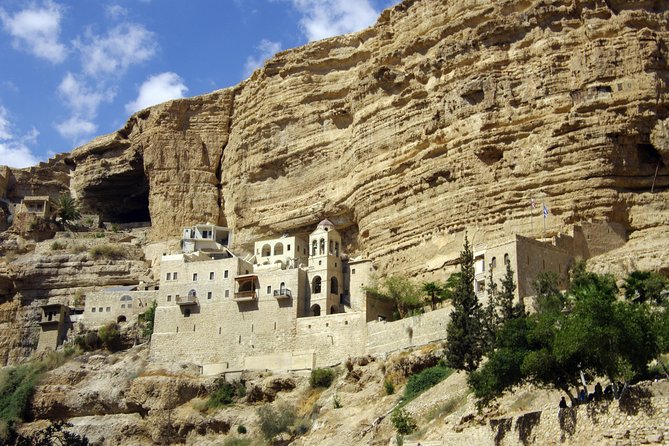
As the bus heads through the Judean desert, you’ll get the big visual context: Jordan Valley views, the stark terrain, and the sense that these biblical events happened in landscapes that look nothing like Mediterranean Israel. You’ll also pass the area connected with the Inn of the Good Samaritan, which is one of those moments where the guide ties road geography to the parable’s message.
If you’re the type who likes to “get your bearings” before the doors open, this opening stretch is a good use of time. If you’re tired or prone to motion sickness, pack something for that. The day moves.
You can also read our reviews of more tours and experiences in Tel Aviv.
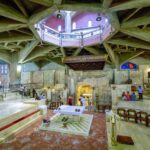
Jericho: Palm Trees, Trumpets, Springs, and One Tree With a View
Jericho is often treated like a single stop. Here, it’s handled like a timeline—plus a few archaeology-style anchors.
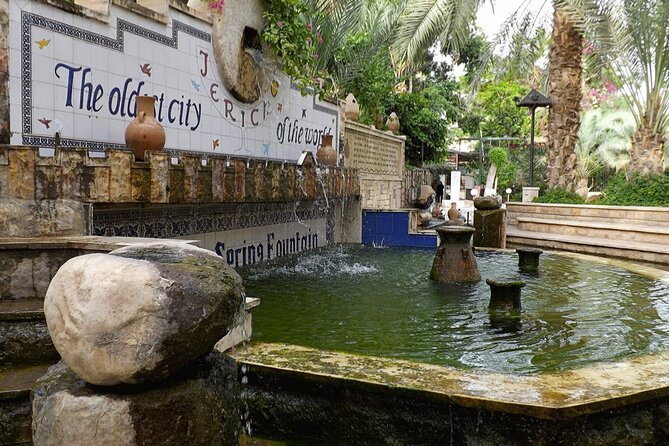
You’ll spend about 1 hour 30 minutes in Jericho’s old-city area. This is where the tour earns its keep. You’re not just looking at ruins; you’re hearing how the place shows up in the Hebrew Bible and how later layers built on earlier ones. One of the guide’s most useful framing points is the story of how Jericho’s walls fell (the trumpets of Israelite victory), and the poetic label of Jericho as the City of Palm Trees—linked to lush palms and oases.
Then you’ll zoom in on specific sites that help the stories feel real:
Tell es-Sultan (the earliest settlement mound). This is the kind of place that makes “ancient” feel less like a vibe and more like evidence. Even if you don’t love archaeology, it helps you understand that Jericho was continually inhabited, not frozen in time.
Elisha’s Spring. Water sites are huge in the Bible because they shape settlement and survival. This is one of those stops where you’ll get a historical explanation for why it’s remembered.
Zacchaeus’ tree (sycamore). This one is short—about 30 minutes—but it’s a memorable moment. The guide connects it to the tax collector who climbs to see Jesus. It’s a simple scene, yet it ties back to the idea that you can’t fully grasp the gospel scenes without picturing the local geography.
A practical note: the timing is tight. You’ll have just enough time to absorb what matters—before you’re whisked onward to the next “must-see.”
Mt. Temptation: The Photo Stop With a Serious Backdrop
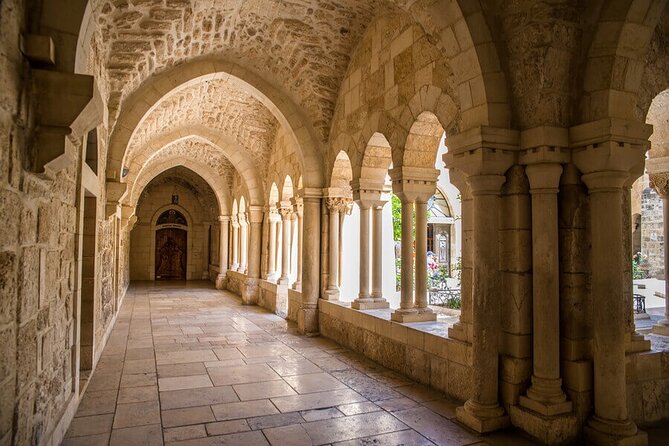
Between Jericho sites, you’ll pause to spot Mt. Temptation. This is one of the quick stops that still feels important, mostly because the views remind you how exposed and dramatic this region is.
Think of it as a mental breather. Your guide will use the pause to tie the mountain setting to the biblical narrative about temptation. You don’t spend hours here, but you do get the kind of perspective that makes the land-situated stories click.
If you’re a photographer, treat this as your chance to capture the skyline and the valley angles—because later, your time will focus on enclosed sites (and queues).
Bethlehem: Manger Square to the Church of the Nativity
Bethlehem is where the day becomes emotional for many people, even if you’re not traveling for religion. It’s a place of sound, symbols, and packed sacred space.
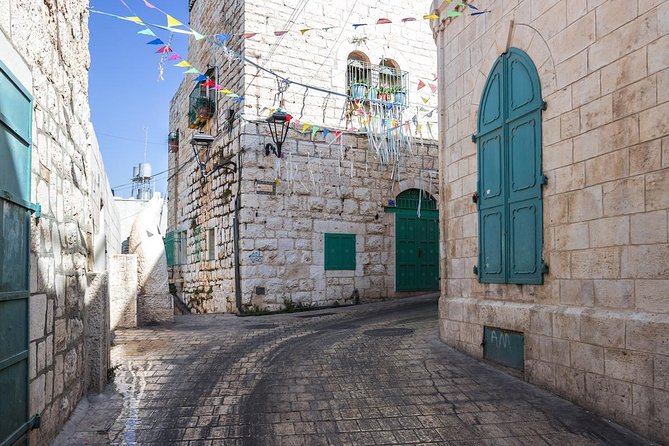
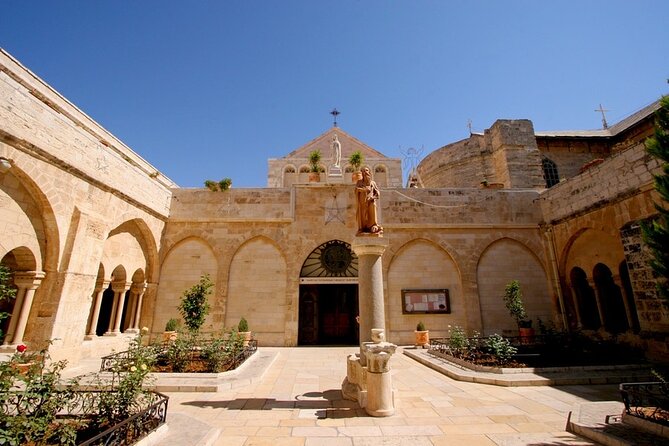
You’ll start with Manger Square, the religious hub. From there, you’ll head inside the Church of the Nativity. This is not a “look from outside and move on” stop. You’ll get a guided visit and then see the Grotto of the Nativity, where a star marks the believed birth location.
Now, here’s the part you should plan for: due to visitor overload, access down to the Nativity cave isn’t always possible. The tour still aims to give you the key experience inside, but crowd pressure can affect how deep you go into specific areas. I’d treat this as a “possible bonus,” not something you can demand.
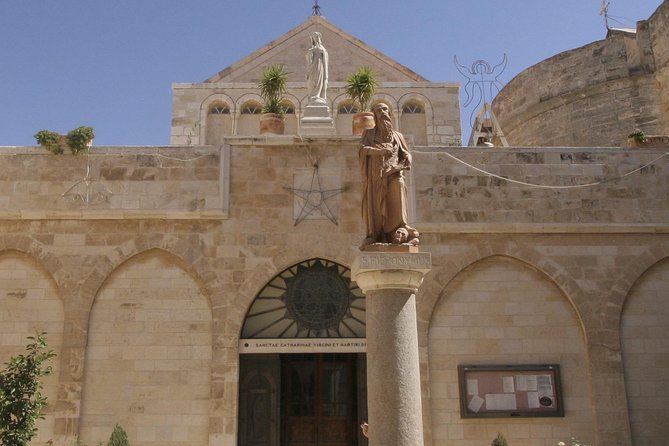
After the Nativity area, you’ll also pass the Church of St. Catherine of Alexandria. Time is short—about 20 minutes—so don’t expect a long sit. It’s more like a visual and historical connection point, helping you understand that Bethlehem’s sacred map has multiple churches serving different traditions.
Shepherds’ Field: When the Tour Slows Just a Bit
Near the end of the Bethlehem sequence, you’ll stop at Shepherds’ Field, where a church marks the place associated with the shepherds seeing the Star of the Nativity.
This is one of the nicer moments to exhale. It’s still part of the “holy sites circuit,” but it feels less compressed than the church interiors. You’ll likely get a short explanation of why it matters and how the site is remembered, then you move on—because the day isn’t done.
If you want a slower, less hectic experience of Bethlehem, you’ll feel that urge here. But for a one-day format, this stop gives you variety.
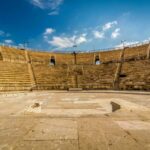
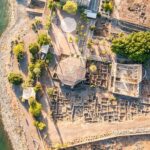

Qasr El Yahud: Baptism on the Jordan River
After Bethlehem, you’ll continue to Qasr al-Yahud (also called Qasr al-Yehud, Castle of the Jews). This is a baptismal site on the Jordan River, located in the Palestinian Authority of the West Bank, about 15 km from the northern end of the Dead Sea and southeast of Jericho.
The connection here is clear: the site is believed to be where John baptized Jesus, symbolizing spiritual birth. That’s not just a historical factoid. It changes how you look at the river bank. Instead of seeing it as scenery, you’ll see it as a location with meaning attached across generations.
Expect about 30 minutes at Qasr al-Yahud. It’s enough for photos, a guided explanation, and a personal moment if you want one. Not enough to treat it like a long stay.
Timing, Transfers, and Why 11 Hours Feels Like a Marathon
This is an 11-hour full-day trip, and your experience will depend a lot on how you handle the moving parts.
Two things can stretch the day:
- Queueing and security around sacred sites, especially Bethlehem’s busy areas.
- Logistics at the border/within Bethlehem, where you’re met by a Palestinian guide and may require a vehicle change.
Some days run smoothly. Other days involve slower group management and waiting. You should plan to be flexible. If you hate time spent “in transit,” this might test your patience.
Group size is capped at 40 travelers, which is big enough that you’re not getting personal attention every second, but small enough that you can still hear the guide. Still, in a crowd-heavy region, that size affects how quickly the group flows through entrances.
Also, language can vary in practice. While the tour is described as English, there have been cases where narration ran English with Spanish, so don’t count on perfect consistency.
In short: you’ll cover a lot of ground, but you won’t feel like you’re “living” anywhere for long.
Practical Tips: Passport, Dress Code, and Staying Close
Before you go, read these details like they’re your checklist, because they can affect whether you walk in or get turned away.
- Bring a valid passport. You’ll need it for travel days to these areas.
- Dress code: for places of worship and selected museums, you need knee and shoulder coverage. That means no shorts, for men or women.
- Stay together: your best friend on this tour is the guide’s instructions. In areas with multiple entry points and security steps, wandering off is the fastest way to lose time.
- Consider meals: food and drinks are not included unless specified. The day is long, so plan your snacks. If you skip food, you’ll feel it.
If you’re prone to early mornings, try to sleep the night before. Starting at 7:15am means you’ll be grateful for caffeine early and grateful you’re not trying to plan extra activities afterward.
Value for Money: What $135 Gets You (and What It Doesn’t)
At $135 per person, you’re paying for a very structured day: hotel pickup/drop-off, an expert guide, air-conditioned transport, and entrance fees.
The value part is straightforward:
- You’re not doing the logistics yourself for a West Bank day trip.
- Entrance fees are included, which matters once you add up sacred-site costs.
- The guide’s job is to connect each location to the story and history, turning “I saw a building” into “I understood why this spot matters.”
The cost part is also real:
- Food isn’t included.
- The time squeeze is real—some portions of the day are necessarily about travel, queues, and group timing rather than walking slowly and lingering.
If you’re the kind of traveler who wants maximum time on-site and minimal bus time, you might feel like this tour is “efficient” rather than “relaxed.” If you’re happy to trade a bit of leisure for seeing multiple top sites in one go, the price starts to look more fair.
Who This Tour Fits Best
This day trip is a strong match if you:
- Want a guided, story-driven day focused on biblical sites.
- Like seeing archaeology-anchored places (Jericho’s ancient mound and springs).
- Prefer coach comfort over DIY navigation across a complex region.
- Can handle a packed schedule without needing long, independent shopping breaks.
It’s also a good fit for first-timers to the region who want a safe, organized introduction. You’ll learn what to expect, how to move through holy spaces, and how the route flows.
If you’re traveling with very young kids, note that the tour is not suitable for children under age 4.
If your goal is purely Bethlehem, you might wish this were shorter or more focused. If your priority is Jericho only, you’ll likely feel the day is weighted toward Bethlehem’s heavy sacred schedule.
Should You Book This Bethlehem and Jericho Day Trip From Tel Aviv?
Book it if you want one day that covers the biggest biblical hits with a guide and included entry fees. It’s especially worth it when you get a strong guide—people often remember the stories as much as the sites.
Skip or reconsider if you hate long travel days, dislike unpredictable queues, or want lots of free time at each place. The tour works best when you can think of it as a guided highlights circuit, not a slow, independent exploration.
If you go, go prepared: cover up, bring your passport, eat before you get hangry, and keep your group timing tight. Then you’ll get what this day is designed to deliver: a guided sweep through Bethlehem, Jericho, and the Jordan River sites that shaped generations of belief.
FAQ
How long is the Bethlehem, Jericho, and Qasr El Yahud day trip?
The duration is approximately 11 hours.
Where do you start and end?
You’re picked up at a central Tel Aviv hotel area and dropped off back at your Tel Aviv hotel.
What time does the tour start?
The start time is 7:15am.
How much does the tour cost?
The price is $135.00 per person.
Is hotel pickup included?
Yes. Hotel pickup and drop-off are included.
What’s included in the ticket price?
Included items are a professional guide, an air-conditioned vehicle, and entrance fees.
What is not included?
Food and drinks are not included unless specified.
Do I need a passport?
Yes. A current valid passport is required on the day of travel.
What dress code is required for the holy sites?
A moderate dress code is required. Avoid shorts, and cover knees and shoulders for both men and women.
Is access to the Nativity cave always guaranteed?
No. Due to visitor overload, a visit down to the Nativity cave is not always possible.
Is it suitable for young children?
No. The tour is not suitable for children under age 4.