REVIEW · TEL AVIV
Old and New Jerusalem Day Trip from Tel Aviv
Book on Viator →Operated by Bein Harim Ltd · Bookable on Viator
Old and New Jerusalem, packed into one day.
I love the guided walking rhythm through the Old City’s quarters and major stops like the Western Wall, and I love how the day pivots from prayers and pilgrims to the hard truth inside Yad Vashem’s Hall of Names. The main thing to consider is the pace: you’ll cover a lot, and free time for wandering, eating, or shopping stays tight.
You start early from central Tel Aviv by air-conditioned coach, with a guide talking history as you drive. The route is built for seeing the big religious anchors across Jewish and Christian Jerusalem, plus one major modern stop in New Jerusalem. Expect a moderate dress code too: no shorts, and knees and shoulders should be covered.
If you go on Fridays, Saturdays, or Jewish holidays, the Holocaust Museum won’t be open. On those days, your museum time is swapped for a visit that includes Mt Zion (King David’s tomb and the hall of the last supper) and the Gethsemane church.
In This Review
- Key Things I’d Prioritize on This Tour
- A One-Day Old City and Yad Vashem Combo, Without the Guesswork
- The Early Coach Start: Tel Aviv to Mount Scopus in the Morning Light
- Mount of Olives and the Kidron Valley: Views Plus Garden of the Names
- Entering the Old City: Zion Gate, Quarter Hops, and the Byzantine Cardo
- Western Wall and Via Dolorosa (Stations 5–14): Two Sacred Routes in One Stretch
- The Muslim Quarter Bazaar Stop: See It, Then Move On
- Yad Vashem in New Jerusalem: Hall of Names and the Cost of Memory
- Dress Code, Comfort, and Group Flow (Where the Day Can Feel Tight)
- Price and Value at $95: What You’re Really Paying For
- Should You Book This Day Trip?
- FAQ
- How long is the Old and New Jerusalem day trip from Tel Aviv?
- What time does the tour start?
- Is hotel pickup and drop-off included?
- Does the price include entrance fees?
- Are food and drinks included?
- What dress code is required?
- Is the Holocaust Museum always open on this tour?
- Is Yad Vashem allowed for children?
- How big is the group?
Key Things I’d Prioritize on This Tour

- Mount of Olives viewpoint with famous Old City panoramas and sightlines toward the Temple Mount
- Old City routing that strings together Zion Gate, Armenian Quarter, Jewish Quarter, the Cardo, and multiple gates/markets
- Christian Quarter route via Via Dolorosa (stations 5–14) plus time at the Church of the Holy Sepulchre
- Yad Vashem’s Hall of Names and the museum galleries built around artifacts and personal testimonies
- Holiday swap plan if Yad Vashem is closed (Mt Zion and Gethsemane church instead)
- Group size stays capped at 40, which helps movement through the Old City
A One-Day Old City and Yad Vashem Combo, Without the Guesswork
This is the kind of day trip I like when you only have one shot at Jerusalem. You get a guided sweep through Old Jerusalem’s signature sites, then you move to New Jerusalem for Yad Vashem, where the tone shifts from sacred landmarks to documented human tragedy.
The value here is not just the headliner stops. It’s the way you’re guided through a place where getting your bearings takes time. With a coach, a structured route, and a guide who keeps everyone moving, you spend less mental energy figuring out logistics and more time actually looking.
Still, this is not a slow “wander and linger” day. The schedule is designed to fit many stops into about 10 hours, and that means some parts feel like a quick walk-through rather than a deep, flexible visit. If you’re the type who wants long pauses to shop, pray, or just sit with a view, plan to be a little strategic.
You can also read our reviews of more tours and experiences in Tel Aviv.

The Early Coach Start: Tel Aviv to Mount Scopus in the Morning Light

The day kicks off at 7:15 am, boarding an air-conditioned coach in central Tel Aviv. The drive is around 1.5 hours, and that travel time is used for context. The guide explains Jerusalem’s layered past and why the same walled city holds sacred meaning across Jewish, Christian, and Muslim traditions.
Before you even reach the Old City walls, there’s a stop at Mount Scopus National Botanical Garden. You’ll have about 30 minutes, and the goal is simple: get your first real look at the Old City from above. That helps later, because once you see the city’s outline from a distance, the walk inside feels less confusing.
One practical note: mornings can feel easier for the Old City walking. Even on hot days, starting early gives you better odds of comfortable temperatures during the busiest foot sections.
Mount of Olives and the Kidron Valley: Views Plus Garden of the Names
From the coach, you head toward the Mount of Olives for panoramic views over the walled Old City. This is where you can take in landmarks like the Dome of the Rock in the Temple Mount area, and it gives you a mental map for what you’ll trace later on foot.
Then the route moves along the Kidron Valley, passing key sites tied to Christian tradition. You’ll see the area around Garden of Gethsemane and also pass the Church of All Nations. Some depictions on a postcard are one thing. Seeing the setting in real light is another, especially with a guide pointing out how these spots connect to the city’s geography rather than only to a story.
If you want one takeaway from this portion, it’s that the day isn’t only about entering the Old City. It’s also about understanding the surrounding valleys and elevations that shape what you see and where you stand.
Entering the Old City: Zion Gate, Quarter Hops, and the Byzantine Cardo
Once you’re in, the walking becomes the heart of the experience. You enter the Old City through the Zion Gate, then the route flows through the Armenian Quarter and onward to the Jewish Quarter.
A quick highlight here is the Byzantine Cardo—time is short (around 10 minutes), but it’s worth it. The Cardo is the kind of detail that turns a generic walk into a sense of historical depth: you’re walking along a main thoroughfare linked to Byzantine-era city life.
The Old City walk also has a built-in logic. You’re not just popping into isolated attractions. You’re moving quarter-to-quarter, so you see how the city’s different communities shaped streets, markets, and worship spaces.
The drawback is also built in: with limited time at each stop, you’ll need to accept a “look and learn” pace. This is great for a first-timer. It’s less great if you already know the city well and want long independent time.
Western Wall and Via Dolorosa (Stations 5–14): Two Sacred Routes in One Stretch
The Western Wall (Wailing Wall) is next, with about 20 minutes there. This is one of the most visually powerful pauses on the route because of scale: you see worshippers gathered in a continuous flow. As a visitor, you don’t have to understand every custom to feel the focus.
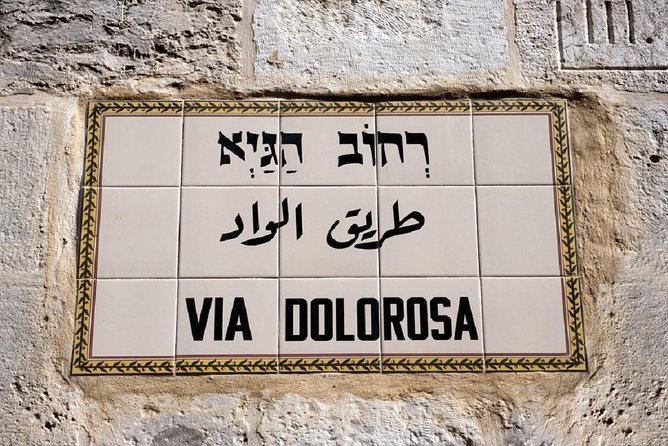
After that, you continue through the Christian Quarter, and then comes the walk section of the Via Dolorosa, specifically stations 5 through 14. This is a practical way to experience the route without trying to cover every station in an overly long day. You’ll spend about 30 minutes on that section, which is enough to get the feel of the route’s tight streets and the density of small chapels and signs.
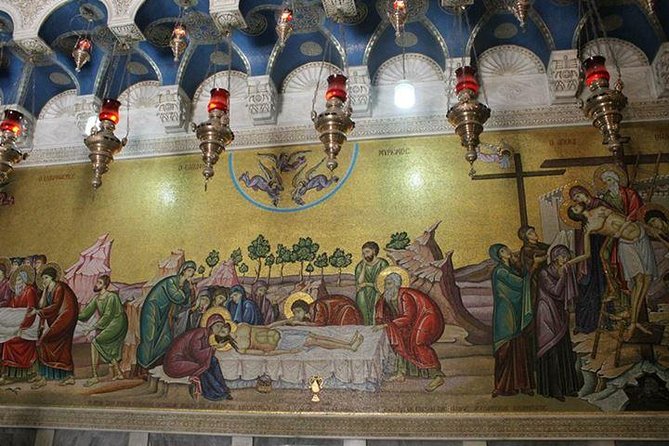
Then you reach the Church of the Holy Sepulchre, tied to the Calvary crucifixion site tradition. You’ll have about 30 minutes inside. Because this church is central to Christian pilgrimage, it’s often busy. You’ll want to be ready for crowd flow and for the fact that time inside is constrained.
If you care about visiting these sites respectfully, the dress code matters. This tour requires covered knees and shoulders for places of worship and selected museums. It’s not optional.


The Muslim Quarter Bazaar Stop: See It, Then Move On
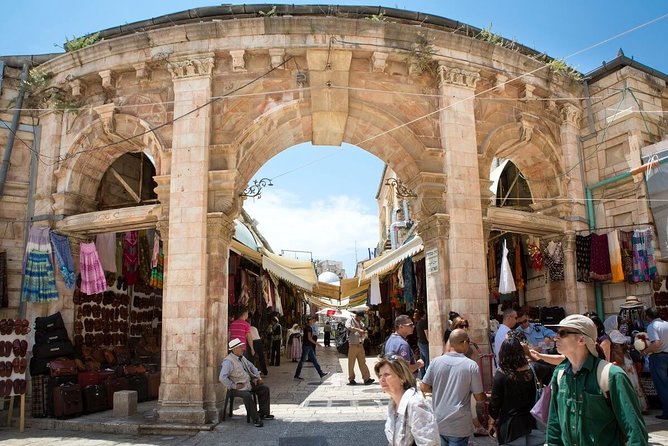
Not every Old City stop is a monument. Some are marketplaces. You’ll spend about 30 minutes in the Muslim Quarter, including time in the lively bazaar area.
This is where I’d manage expectations. You’ll get a taste of the shopping streets, but the time is not designed for hours of browsing. In reviews, one recurring theme is that shopping and food choices can feel limited when the group must stay on schedule.
So here’s how to use this stop wisely:
- Have a short souvenir target in mind before you arrive.
- Buy if you see something you truly want, not because the store is open.
- Don’t wait for later if later is uncertain.
If you’re hoping for free-form Old City time, this tour isn’t built for that. It’s built for seeing key places in a single coherent day.
Yad Vashem in New Jerusalem: Hall of Names and the Cost of Memory
Once you move to New Jerusalem, the tour tone changes sharply. You visit Yad Vashem – The World Holocaust Remembrance Center, with about 1 hour 30 minutes inside.
This is the part I think many people remember most clearly, even if they didn’t plan to feel much at the start. The museum galleries use artifacts and survivor testimonies to map the Holocaust through personal stories. Then you end at the Hall of Names, where biographies are memorialized. That final stop is designed to make the scale feel human instead of statistical.
A big logistical detail: Yad Vashem is closed on Fridays, Saturdays, and Jewish holidays. If that’s your travel date, the museum visit is replaced by a trip to Mt Zion (including King David’s tomb and the hall of the last supper) and the Gethsemane church.
There’s also an important age rule. The entrance to Yad Vashem is not permitted for children under 10. And the tour itself isn’t suitable for children under age 4.
If you’re bringing kids, you’ll need to decide whether this museum day is appropriate for your family, not just whether it’s allowed.
Dress Code, Comfort, and Group Flow (Where the Day Can Feel Tight)

This tour is generally manageable for most people, and the group size tops out at 40. That matters because crowding in Jerusalem can get intense fast, especially inside older stone streets.
The dress code is the one rule that can stop you at the door. You need moderate coverage: knees and shoulders must be covered for both men and women. Shorts can cause refused entry.
Comfort-wise, you should plan for a day that includes multiple walking blocks inside uneven Old City streets plus time at several viewpoint and worship locations. Good shoes aren’t a luxury on this trip; they’re your best insurance against a day that feels longer than it should.
Also, pace depends on your guide. This tour has a strong track record with guides getting top marks in multiple categories. Names that show up positively include Amir Call Or, Itamar Buk, Dima, Eyal, and Salomon. When the guide is on point, the day feels like a guided story with clean transitions.
But pace and commentary can vary. Some experiences in feedback complain about being rushed, limited shopping time, or the guide focusing less on the sites. In at least one case, a guide’s time management was criticized for cutting short planned time at key places. Translation for you: choose your expectations based on time. This is a schedule-following group tour, not a choose-your-own-adventure.
Price and Value at $95: What You’re Really Paying For
At $95 per person, the price buys you more than transportation. You’re paying for:
- A full-day coach ride with pickup and drop-off in Tel Aviv
- A professional guide to connect the dots between quarters, routes, and religious sites
- Entrance fees included (so at least the major ticket items aren’t a surprise)
- A structured day that covers Old Jerusalem plus Yad Vashem
Could you do it cheaper by going on your own? Maybe. But DIY in Jerusalem costs time. You’d still need to plan transportation, figure out routes through quarters, and manage tickets for a museum that takes emotional energy to process.
For many visitors, $95 feels fair for the time you save and the smoother movement through the Old City’s navigation puzzle. If you’re short on time in Jerusalem, this kind of organized day often wins.
What you’re not buying is relaxed pacing or total freedom on meals and shopping. If you want maximum choice, budget extra time and consider a more flexible plan.
Should You Book This Day Trip?
Book it if you want a structured first visit to Jerusalem that hits the big sites across Old and New Jerusalem in one day. It’s especially worth it if you’d rather have a guide handle the order of stops and the navigation through the Old City’s quarter maze.
Skip it or adjust expectations if you’re hoping for long independent time in the Old City. This is a “see the essentials” tour with limited room for wandering, meals where the schedule dictates choices, and a pace that can feel rushed if you’re the type who likes to take your time at every stop.
Also, think carefully if you’re traveling with children under 10 because Yad Vashem entry isn’t permitted for that age group, and the tour isn’t suitable for under age 4.
FAQ
How long is the Old and New Jerusalem day trip from Tel Aviv?
It’s about 10 hours (approx.).
What time does the tour start?
Start time is 7:15 am.
Is hotel pickup and drop-off included?
Yes. You get hotel pickup and drop-off by coach.
Does the price include entrance fees?
Yes. Entrance fees are included.
Are food and drinks included?
Food and drinks are not included unless specified.
What dress code is required?
You need moderate dress: no shorts, and knees and shoulders must be covered for places of worship and selected museums.
Is the Holocaust Museum always open on this tour?
No. The Holocaust Museum (Yad Vashem) is closed on Fridays, Saturdays, and Jewish holidays. Those days include a visit to Mt Zion and the Gethsemane church instead.
Is Yad Vashem allowed for children?
Children under 10 are not permitted to enter Yad Vashem. The tour is also not suitable for children under age 4.
How big is the group?
The tour has a maximum of 40 travelers.