REVIEW · TEL AVIV
Caesarea, Rosh Hanikra and Acre Day Trip from Tel Aviv
Book on Viator →Operated by Bein Harim Ltd · Bookable on Viator
Four coastal stops in one day sounds intense. This route hits Caesarea National Park and the Rosh Hanikra grottos with a guide who helps you read the ruins instead of just snapping photos. I also like the hotel pickup plus air-conditioned coach, and that entrance fees are included so you can focus on the sights. The main drawback is the pace: it is a long, packed day, and some stops are brief when the heat is on.
One thing that makes or breaks this tour is the guide’s timing and style. I like that the professional guiding quality seems to vary by day, with names like Aviva, Avi Shetel, Itamar, Aharon, Isaac, and Martin popping up in strong feedback. You’ll still want to be ready for a full itinerary, and you may see optional add-ons in places like Acre if your guide stops for shopping or a meal break.
In This Review
- Key Things I’d Bet You’ll Remember
- Price and What You’re Really Paying For
- Morning Logistics from Tel Aviv: 7:15 Start and a 40-Person Group
- Stop 1: Caesarea National Park and Herod’s Harbor
- The Caesarea Amphitheater Stop: Short, But Worth It
- Haifa and the Baha’i Gardens: What a 20-Minute View Really Means
- Rosh Hanikra: Cable Car, Sea Caves, and the Border View
- Acre (Akko): UNESCO Old City + Crusader Underground City
- A quick heads-up on optional stops and extra spending
- Pacing and Comfort: How to Survive a Jam-Packed 10 Hours
- Is This Tour Worth It for You?
- Should You Book This Caesarea, Haifa, Rosh Hanikra and Acre Day Trip?
- FAQ
- What time does the tour start?
- How long is the day trip?
- Are hotel pickup and drop-off included?
- What stops are included on this trip?
- Are entrance fees included?
- Is food and drinks included?
- How much time do you spend at Caesarea National Park?
- How much time is planned for the Baha’i Gardens?
- Do I pay for the cable car at Rosh Hanikra?
- Is this tour suitable for children?
- Can I cancel for a full refund?
Key Things I’d Bet You’ll Remember

- Herod’s Caesarea port ruins plus a Roman amphitheater stop that frames the story fast
- Baha’i Gardens viewpoint only (short and photo-friendly, not a long guided visit)
- Rosh Hanikra cable car leading straight to sea caves you can actually walk into
- Acre’s underground Crusader city with tunnels tied to the Knights of St John
- A fast-moving day where good shoes and water matter more than extra sightseeing plans
Price and What You’re Really Paying For

At $120 per person, you are buying convenience and access, not just sightseeing. You get an air-conditioned coach, hotel pickup and drop-off, a professional guide, and entrance fees across multiple major sites. That combo is a real value when you consider that driving yourself means more time on the road and more ticket wrangling.
You should also expect a “four stops, one loop” approach. Caesarea, Haifa, Rosh Hanikra, and Acre are all different in feel, but the trade is that you cannot linger. If you love slow wandering and deep museum time, you’ll likely want to pair this with a second day on your own in one or two places.
You can also read our reviews of more tours and experiences in Tel Aviv.
Morning Logistics from Tel Aviv: 7:15 Start and a 40-Person Group
The tour starts at 7:15am, which is the smartest way to handle northern coastal sites. You’ll meet up near central Tel Aviv and board an air-conditioned coach, with hotel pickup and return included.
Group size is capped at 40, so you’ll get enough structure to stay efficient, but it won’t feel like a private tour. Most tours like this run on tight meet-up times, and the best guides keep the whole group moving without leaving people behind.
One practical perk to look for: a smooth ride with comfort features. A number of participants mention the bus having helpful tech like plugs and Wi‑Fi, which matters when the day stretches and you want your phone alive for photos and maps.
Stop 1: Caesarea National Park and Herod’s Harbor
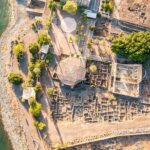
Caesarea National Park is where the day gets its big “how did they build this” energy. You walk through ruins tied to a port city built by Herod the Great, and you can see how this coastline supported power, trade, and control.
This is also where the tour gives you the story behind the place. You’ll hear why the port is connected to the Roman emperor Caesar Augustus, and you’ll get context that turns the stones into a map in your head. You spend about 1 hour here, which is enough time to get your bearings and understand what you’re looking at without rushing every single detail.
What I like about this stop: it feels concrete. You are not just reading history from a sign—you’re standing in the layout of the harbor zone and understanding why the location mattered.
What to consider: it can be warm and exposed. Bring water and wear shoes that can handle uneven ground, because you’ll be walking on ancient surfaces that were never made for modern comfort.
The Caesarea Amphitheater Stop: Short, But Worth It

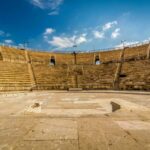
Right after the main park time, there’s a theater stop that lasts about 20 minutes. It’s the Roman amphitheater area, tied to the 1st century AD.
The value here is that it gives you a quick “culture layer” on top of the port-and-military story. You can picture public life: crowds, performances, and the civic side of an empire-run city. Even with limited time, you leave with a stronger sense that Caesarea wasn’t only about shipping—it was about entertainment and status too.
Haifa and the Baha’i Gardens: What a 20-Minute View Really Means
Haifa is scheduled for a viewpoint visit to the Baha’i Gardens, about 20 minutes. This is more about seeing the site from key vantage points than doing a long, inside-style visit. You’ll get the look of the terraced gardens and the gold-domed shrine to the founder of the faith, Bab.
I like this stop because Haifa’s layout makes views part of the experience. The gardens’ terracing and the way the complex works visually from above help you understand why they are so famous.
Important expectation check: this is described as an overview. If you are hoping for extended time inside the gardens, a longer tour, or a detailed guided visit there, you may end up disappointed because this portion is intentionally short.
Rosh Hanikra: Cable Car, Sea Caves, and the Border View

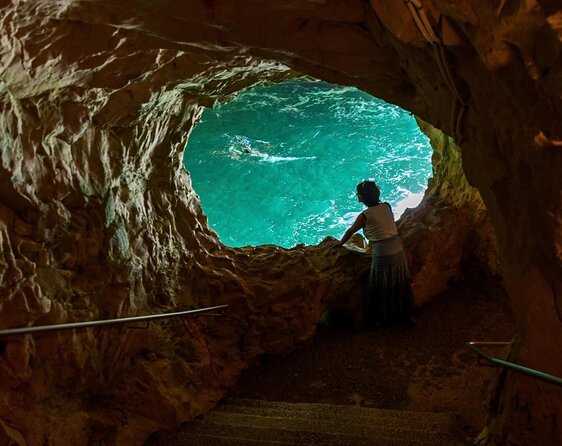
Rosh Hanikra is one of those stops where the scenery does half the work for you. You ride up by cable car toward the summit, with about 1 hour set aside for the route and high points.
Then you move into the Grottos area for about 40 minutes. Here, the sea has carved caves into the white cliffs, and you’ll be standing in a landscape shaped by waves over time. The water is turquoise in the descriptions, and the area is protected, so you might even spot wildlife like loggerhead turtles or bats if timing and conditions line up.
There’s also a separate moment to view the Lebanese border from Rosh Hanikra. Even if you do not want political talk, the geography alone helps you understand why this coastline feels strategically important.
What I’d watch for: the grottos area involves walking and time on paths that can feel damp. If you are sensitive to slippery footing, wear grippy soles and take it slow.
Acre (Akko): UNESCO Old City + Crusader Underground City
Acre brings the day into a denser, more layered past. You’ll spend about 1 hour exploring the City of Acre area, with time in the UNESCO-listed Old City.
You’ll hear how Akko means until here, tied to the idea that it marked the farthest point of the land of Israel. Then the story expands: Greek, Roman, Crusader, and Ottoman roots all show up in how the city developed and how different groups left their mark.
Next comes the underground experience: the Citadel of Acre and the Underground Crusader City. This lasts about 1 hour and focuses on tunnels connected to the Knights of St John. It’s the kind of stop that changes how you picture Acre. Instead of only street-level history, you get the underground layer where people could move, hide, and defend.
Then you’ll have time around the Old City Market. This is where you can browse spices, herbs, and small trinkets.
A quick heads-up on optional stops and extra spending
This is the part where you should stay alert. Some experiences reported extra time spent on shopping or a crafts demonstration, and a few mentioned surprise lunch-style costs. Food and drinks are not included in the tour price, so any longer meal break or paid lunch is on you if it happens during your day.
If you prefer to keep costs predictable, ask your guide early what is optional and what is truly built into the schedule. A good guide will keep you informed and help you make choices without pressure.
Pacing and Comfort: How to Survive a Jam-Packed 10 Hours

This tour is marketed as about 10 hours, but real life includes road time and timing adjustments. Reviews also mention that the day can feel longer, especially when the weather is hot or traffic slows the coach.
So plan for a full walking day across four major stops. Bring comfortable shoes, water, and something to handle sun. Even when the stops are time-limited, you’ll be moving enough that your feet notice.
Also, pack for both “city” and “coast.” Caesarea and Acre can involve uneven stone paths and sun exposure. Rosh Hanikra involves steps and grotto footing that can feel cooler or damp.
If you get motion-sick easily, consider taking your usual prevention before you head out—morning departure means less time to adapt.
Is This Tour Worth It for You?
This is a strong fit if you want one day to connect multiple coastal chapters of Israel without renting a car. It’s especially good for first-time visitors based in Tel Aviv who want an efficient, structured route.
You’ll probably enjoy it most if you:
- Like big “site-to-site” variety in one day (port ruins, gardens, sea caves, underground history)
- Prefer guided context so the ruins make sense fast
- Don’t need long breaks inside each attraction
You might think twice if you:
- Want long time at the Baha’i Gardens or a full, slow visit inside the complex
- Hate shopping-style detours or surprise meal costs
- Need a very relaxed pace with minimal walking and no tight meet-up timing
Should You Book This Caesarea, Haifa, Rosh Hanikra and Acre Day Trip?
Yes, with two conditions: you should be ready for a packed schedule, and you should manage expectations about short stops—especially Haifa. If you show up for the big highlights, you’ll likely love the variety: Herod’s Caesarea setting, the Roman amphitheater atmosphere, the Baha’i Gardens views, the sea caves at Rosh Hanikra, and Acre’s underground Crusader world.
If you want a slow, deep visit of one single place, this won’t be that. But if you want one very full day of coastal history and viewpoints from Tel Aviv, this tour is a solid way to make the most of limited time.
FAQ
What time does the tour start?
The tour starts at 7:15am.
How long is the day trip?
It is listed as approximately 10 hours.
Are hotel pickup and drop-off included?
Yes. Hotel pickup and drop-off are included.
What stops are included on this trip?
You visit Caesarea National Park (including the amphitheater stop), Haifa’s Baha’i Gardens viewpoint, Rosh Hanikra (cable car up and grottos), and Acre (including the Citadel/Underground Crusader City and time in the Old City Market).
Are entrance fees included?
Yes. Entrance fees are included.
Is food and drinks included?
No. Food and drinks are not included.
How much time do you spend at Caesarea National Park?
You have about 1 hour at Caesarea National Park.
How much time is planned for the Baha’i Gardens?
The Baha’i Gardens stop is about 20 minutes, described as a view from the top.
Do I pay for the cable car at Rosh Hanikra?
The cable car ascent is listed as admission ticket free.
Is this tour suitable for children?
It is not suitable for children under age 4.
Can I cancel for a full refund?
You can cancel up to 24 hours in advance for a full refund.