REVIEW · JERUSALEM
Jerusalem: Half-Day Tour from Tel Aviv
Book on GetYourGuide →Operated by Bein Harim Israel Tours · Bookable on GetYourGuide
Old Jerusalem in half a day is a sprint. I like the Mount Scopus panoramic stop and the focused, guided walk through the Old City core. One watch-out: the schedule is tight, so you may feel rushed—especially around shopping stops and the transition between Christian sites.
You’ll start with a smooth air-conditioned coach pickup in Tel Aviv, then spend the afternoon inside Jerusalem’s Old City area before wrapping up around 1:30 PM. Modest dress matters, and plan to handle your own way back after the tour ends.
In This Review
- Key takeaways before you go
- Price and Logistics: Is $60 worth it for a 5-hour Jerusalem hit?
- Tel Aviv Pickup: The day starts with convenience (and a short ride)
- High-Point Orientation: Mount Scopus (or nearby) for the big-picture view
- Kidron Valley views: Gethsemane and the city walls from the bus
- Armenian Quarter and Western Wall Square: Where the route gets real
- Bazaar and Christian Quarter: Shopping, walking, and the pace question
- Via Dolorosa and Church of the Holy Sepulchre: the emotional center (and the time crunch)
- The Cardo and the renovated Jewish Quarter: beyond the headline sites
- Getting Back After 1:30 PM: don’t leave this part to chance
- Who this tour suits best (and who should skip it)
- Should you book this Jerusalem half-day from Tel Aviv?
- FAQ
- How long is the tour, and when does it end in Jerusalem?
- Where are the pickups in Tel Aviv?
- Is there a guide during the whole experience?
- What language is the tour guide available in?
- What major sights are included during the tour?
- Does the tour include entrance fees?
- Are food and drinks included?
- How do I get back to Tel Aviv after the tour?
- What should I wear?
- Is the tour suitable for children or wheelchair users?
- Should you book this Jerusalem half-day from Tel Aviv?
Key takeaways before you go
- Panoramic viewpoint stop gives you quick orientation over both Old and New Jerusalem
- Old City route hits the big names: Armenian Quarter, Western Wall Square, Via Dolorosa, and Church of the Holy Sepulchre
- Kidron Valley pass-by views help connect what you see inside with what you’ve read about nearby sites
- Cardo walk adds context with the ancient main street and the renovated Jewish Quarter
- Tour ends in the Old City so you’ll need a plan for getting back to Tel Aviv
Price and Logistics: Is $60 worth it for a 5-hour Jerusalem hit?
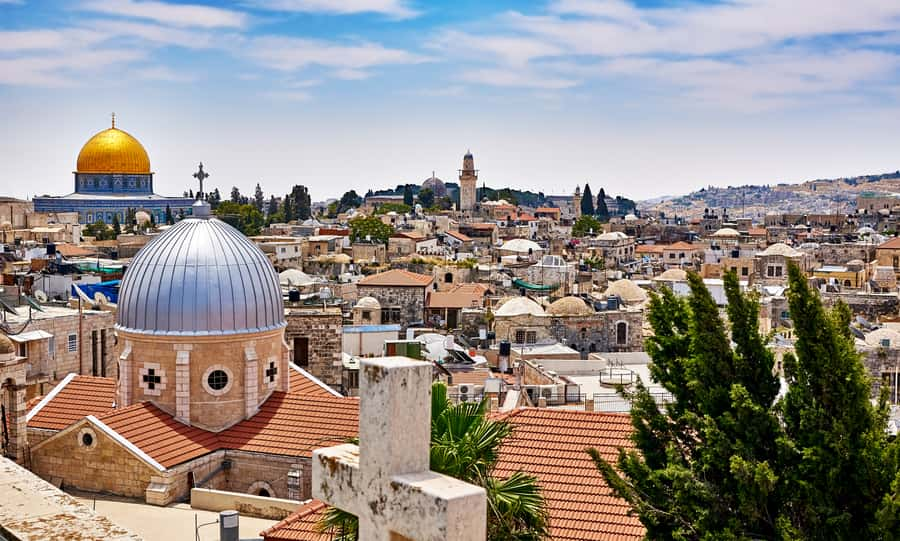
At $60 per person for about 5 hours, this tour is best viewed as a “greatest hits, guided” option rather than a slow, deep, wander-at-your-own-pace day. The value is in three places: you get round-trip-style convenience up to Jerusalem, a professional guide for context, and entry fees included. In other words, you’re paying to skip the hard part—figuring out what to see and how to connect the sights efficiently.
The catch is what’s not included. You don’t get food and drinks, and—most importantly—you don’t get a return drop-off back to Tel Aviv. The tour ends in the Old City at about 1:30 PM (approx.), so you’ll need to decide how you’ll get back on your own. One review specifically complained about this point and mentioned a small-bus cost around 35 shekels per person to reach the center (from there, you’d still need your own way onward). Bottom line: budget both time and money for the ride back.
If you want a calm day with lots of optional detours, this won’t be that. If you want to get your bearings fast and see the key holy sites with a guide who can explain what you’re looking at, it can be a solid use of half a day.
You can also read our reviews of more tours and experiences in Jerusalem.


Tel Aviv Pickup: The day starts with convenience (and a short ride)
The experience begins with pickup at one of several Tel Aviv hotels—spots like Sheraton Tel Aviv, Dan Tel Aviv Hotel, Grand Beach Hotel, and others. You’ll ride in an air-conditioned coach with a guide onboard, heading via Highway 1 toward Jerusalem.
That first leg matters more than it sounds. Jerusalem is compact, but getting there from Tel Aviv takes real time. Having the transport handled lets you spend your mental energy on what you’ll see once you arrive.
Also, the guide language options are English, French, German, and Spanish, so you should be able to pick the experience that matches your comfort level. (And from past experiences on this exact kind of route, guide quality can make or break the day—some guides have been praised for clear explanations; others for rushing or pushing a specific purchase stop.)
High-Point Orientation: Mount Scopus (or nearby) for the big-picture view

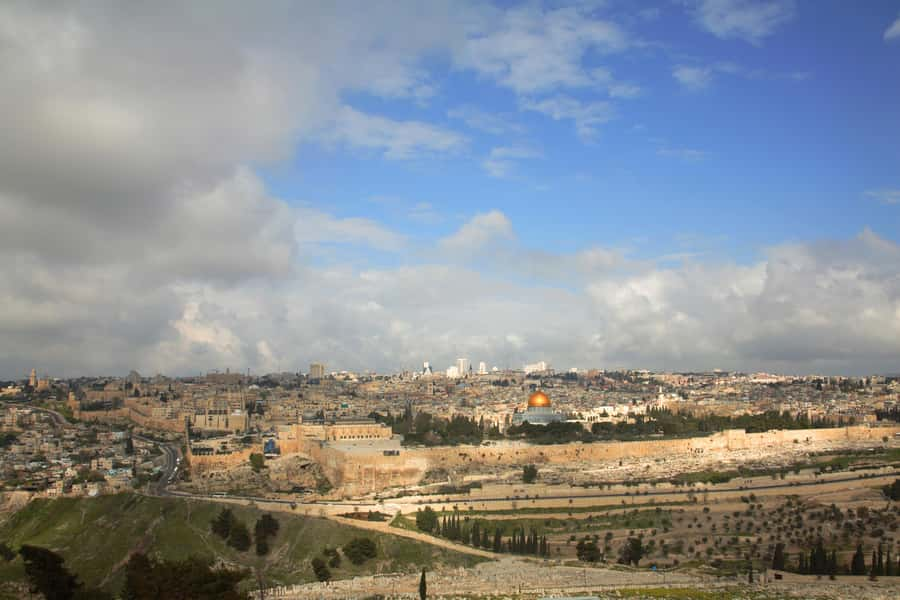
Before you get absorbed in the Old City, you get a viewpoint stop. The route description highlights a stop at Mount Scopus for panoramic views over Old and New Jerusalem. Meanwhile, the schedule also references a Mount of Olives photo stop.
Either way, the point is the same: you stand somewhere high enough to understand the geography quickly. You’ll get a sense of where the Old City sits, what surrounds it, and how different quarters connect. This is one of those “I’m glad I did this first” moments—especially if it’s your first time in Jerusalem.
Time is limited—think around 30 minutes for this segment—so dress for the conditions. Even if it’s comfortable, you’ll likely be out long enough to want a layer you can put on and off.
Kidron Valley views: Gethsemane and the city walls from the bus
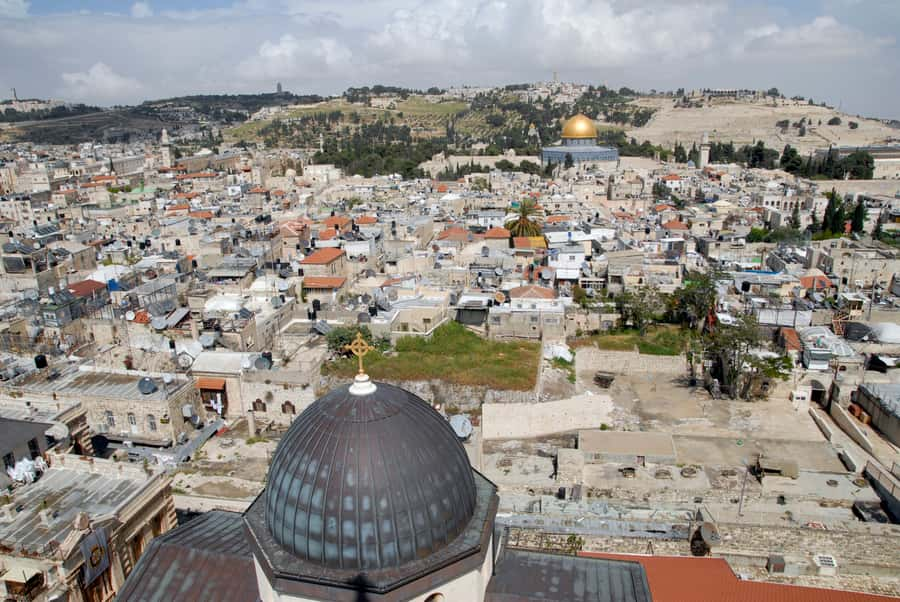
Once you’re rolling, you take the scenic route along the Kidron Valley. This is one of those practical stops that doesn’t require ticket lines or major walking—just eyes and context. You’ll see the Garden of Gethsemane area and the city walls from the approach.
Why it’s worth it: it helps connect your day. When you later walk through the Old City and hit the Stations of the Cross and Holy Sepulchre area, you’re not working purely from names in a book. You have a mental map.
This is also where the pacing starts to matter. If your tour day feels like it’s moving quickly, the bus ride with valley views is your chance to enjoy the scenery rather than just “getting from stop to stop.”
Armenian Quarter and Western Wall Square: Where the route gets real
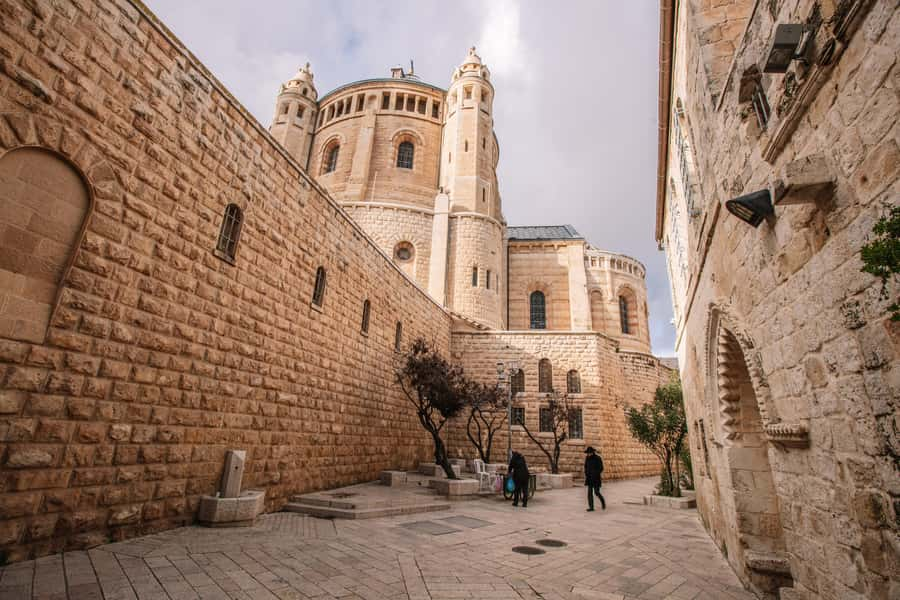
Your next cluster of stops centers on the Old City’s religious and cultural core.
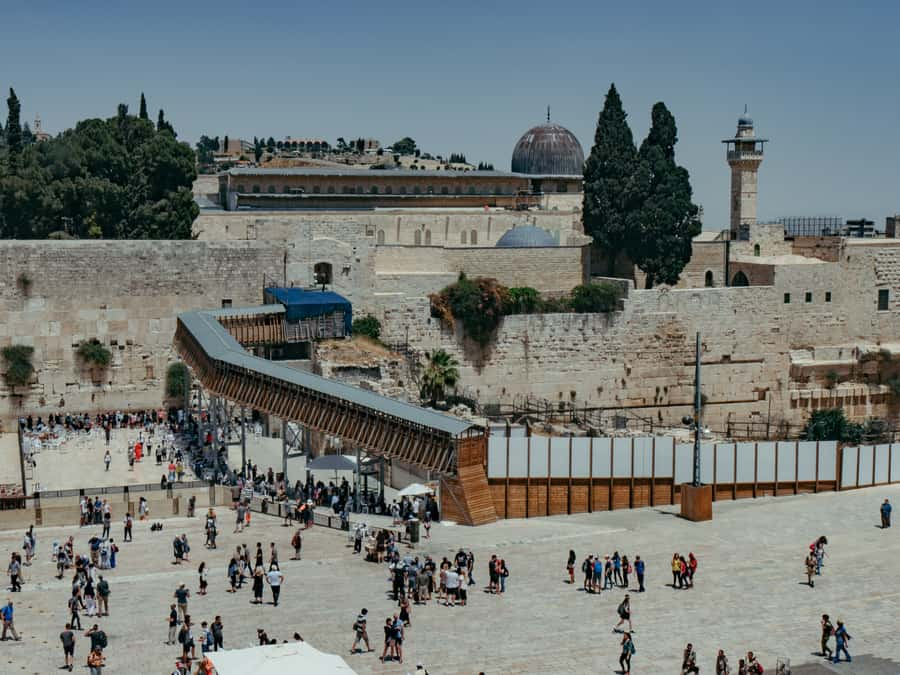
You’ll visit the Armenian Quarter and make time at Western (Wailing) Wall Square. This square is where Jerusalem’s spiritual pull is impossible to ignore. You’re surrounded by people who came to pray, not to photograph a landmark, so it helps to keep your behavior respectful and your expectations simple: you’re there to witness, not to speed-run.
What I like about this part of the route is that it sets the tone. From the bus and viewpoints you’re getting orientation; at the Western Wall you get meaning. Even if you’ve been before, it’s a good checkpoint for what’s happening in real time around you.
Practical note: the guide may also steer the timing of crowds and entry points. If you have strong preferences about when and how long you want to stand, you may need to adapt on the spot, because you’re in a group schedule.






Bazaar and Christian Quarter: Shopping, walking, and the pace question

After the Western Wall area, the tour moves into the local bazaar and the Christian Quarter. This is the part of the day that can feel like two different experiences at once: you’re walking through living streets, but you’re also on a clock.
In the best case, a good guide helps you read what you’re seeing—why these streets developed, how the neighborhoods overlap, and what each area is known for. In the weaker case, the tour can feel like it’s prioritizing stops that don’t match your interests.
Some feedback from earlier bookings flagged a pattern: the group was pushed toward a specific souvenir shop, with a sense of being time-restricted once people were inside. The lesson for you is straightforward. If you want souvenirs, decide ahead of time how much time you’ll spend. And if you feel the group is being funneled, you can still buy later if you find better pricing—Jerusalem has plenty of options nearby.
Via Dolorosa and Church of the Holy Sepulchre: the emotional center (and the time crunch)
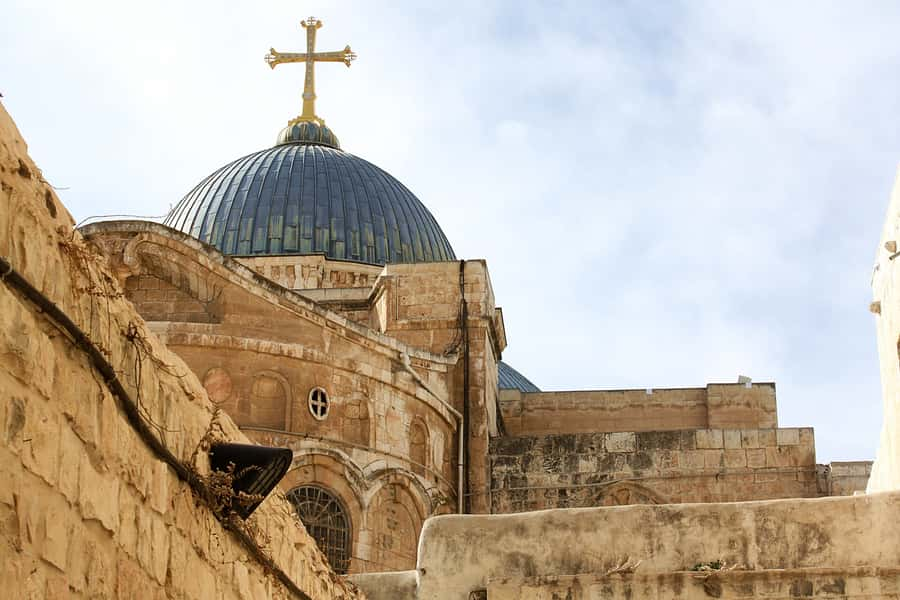
This is the stop that most people come for. You’ll go along the Stations of the Cross (Via Dolorosa) and then visit the Church of the Holy Sepulchre, which commemorates the crucifixion site.
Here’s the honest truth: this area is both deeply meaningful and physically intense. You’ll deal with crowds, tight turns, and a constant flow of people. The tour length is only half a day, so your time inside can feel shorter than you hoped if you’re the type who likes to slow down.
Why the guide matters here: the church’s complexity can overwhelm you if you don’t know what you’re looking at. A strong guide helps you follow the story and find the main highlights without turning it into a checklist.
A word of caution based on prior experiences: a few people complained that the day felt rushed through the Christian side compared to the Jewish-focused stops, and one booking said they felt key areas weren’t fully covered during the half-day window. That doesn’t mean it will happen to you. It does mean you should go in knowing this is a “see the core” tour—if you want extended time in every sacred spot, you may want a different format (or plan extra independent time afterward).
The Cardo and the renovated Jewish Quarter: beyond the headline sites
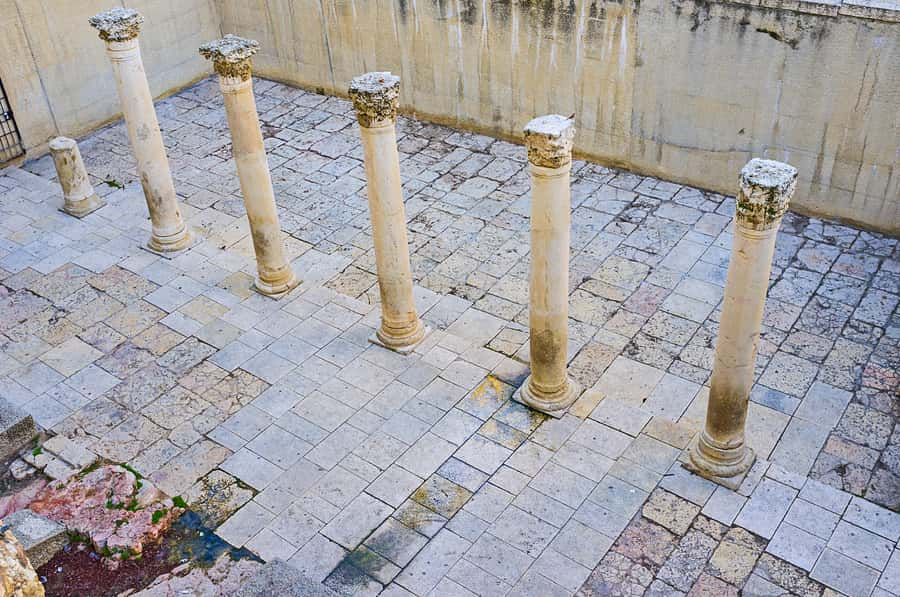
After the heavy hitters, the tour adds something that many first-timers appreciate: a walk along the Cardo, described as a 1,700-year-old Byzantine main street. This stretch gives you texture. You see Jerusalem as a city built in layers, not just as a set of single-point attractions.
You’ll also see the renovated Jewish Quarter, which helps balance the day. Instead of everything being strictly about the most famous holy sites, you get a sense of daily urban history and how neighborhoods are shaped and restored.
This is also a good moment to slow down a touch and notice the feel of the streets—because if the earlier sections felt like “stop, look, move,” this one often feels more like a walk.
Getting Back After 1:30 PM: don’t leave this part to chance
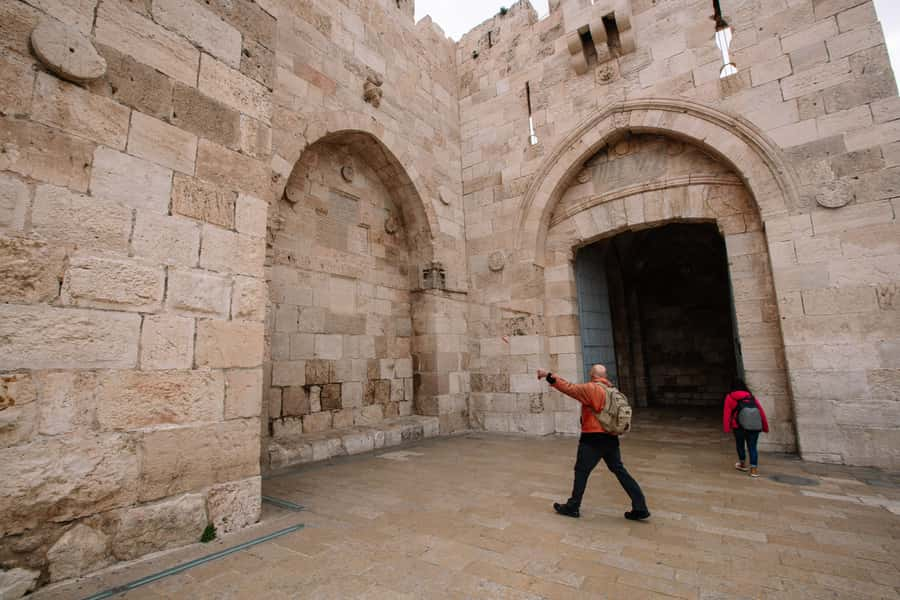
The tour ends in Jerusalem’s Old City at about 1:30 PM. That means you should plan your return before you start the day—especially if you’re connecting to dinner, a hotel, or another activity later.
Because the tour does not include hotel drop-off back in Tel Aviv, you’ll need to use whatever public transport or taxis work best for your schedule. One review noted the added hassle and cost of figuring out the return by small buses after the tour.
My practical advice:
- Decide where you’ll aim to be by the end of the afternoon (Old City area vs. moving toward a larger transport hub).
- Keep your phone charged and have a simple backup plan.
- If you’re trying to hit more Jerusalem sights after the tour, pick those that are close to where you end, so you’re not losing more time in transit.
Who this tour suits best (and who should skip it)
This tour is a good fit if:
- you want the main holy sites of Jerusalem in one guided half-day,
- you value a coach-to-Old-City plan that removes logistics stress,
- you’d like a high-point orientation stop so the geography makes sense quickly.
It may not be the best fit if:
- you hate shopping-pressure moments and want total control of your schedule,
- you want lots of quiet time inside major sacred sites,
- you need wheelchair access (the tour is noted as not suitable for wheelchair users),
- you’re traveling with young kids (it’s not suitable for children under 4).
Also, if you’re sensitive to pacing, this tour’s structure is something you should take seriously. Half a day can feel like a lot when you’re excited, and like a blur when you’re trying to absorb everything slowly.
Should you book this Jerusalem half-day from Tel Aviv?
If your goal is to hit the essentials with a guide and you’re okay with a brisk pace, I think it’s worth considering. At $60 with transport from Tel Aviv, a professional guide, and entry fees included, the math can work well—especially if you’re trying to maximize limited vacation time.
I’d pass (or switch to a different format) if you strongly prefer unhurried time, worry about group pressure in busy areas, or need a built-in return to Tel Aviv. The biggest decision factor is simple: you’re ending inside the Old City, so make sure you’re comfortable managing your own afternoon and getting back.
FAQ
How long is the tour, and when does it end in Jerusalem?
The tour lasts about 5 hours and ends in Jerusalem’s Old City at approximately 1:30 PM.
Where are the pickups in Tel Aviv?
Pickup is offered at multiple Tel Aviv hotel locations, including places such as Sheraton Tel Aviv, Dan Tel Aviv Hotel, and Grand Beach Hotel. The exact pickup time and hotel are sent by the provider after booking.
Is there a guide during the whole experience?
Yes. You’ll have a professional guide with you throughout the tour.
What language is the tour guide available in?
The live guide is available in German, French, Spanish, and English.
What major sights are included during the tour?
You’ll see and visit major sites including Mount Scopus (panoramic stop), Western Wall Square, the Via Dolorosa, and the Church of the Holy Sepulchre, plus other Old City areas such as the Armenian Quarter and nearby streets.
Does the tour include entrance fees?
Yes. Entry fees are included.
Are food and drinks included?
No. Food and drinks are not included.
How do I get back to Tel Aviv after the tour?
The tour ends in Jerusalem’s Old City and return travel and hotel drop-off are not included, so you’ll need to arrange your own way back.
What should I wear?
Modest dress is required.
Is the tour suitable for children or wheelchair users?
It is not suitable for children under 4 and is not suitable for wheelchair users.
Should you book this Jerusalem half-day from Tel Aviv?
If your priority is guided access to the big Old City sites—Western Wall Square, Via Dolorosa, and Church of the Holy Sepulchre—this can be a practical half-day. Just go in expecting a time-tight route, and plan your return from the Old City so you’re not stressed when the tour ends around 1:30 PM.