REVIEW · JERUSALEM
Caesarea, Acre & Rosh Hanikra Day Trip from Jerusalem
Book on Viator →Operated by Bein Harim Ltd · Bookable on Viator
A day trip that hits four ancient powerhouses in one go. This full-day route from Jerusalem strings together Caesarea’s Roman port and theater, Haifa’s famous Baha’i Gardens, plus the caves at Rosh Hanikra and the underground Crusader city in Acre. It’s the kind of trip where the geography matters, because each stop explains a different chapter of Israel’s coastline history.
Two things I really like: the schedule is built around a guided walkthrough at major sites (so you don’t just stare at ruins), and you get hotel pickup and drop-off plus an air-conditioned coach to connect it all. One drawback to plan for: it’s a long day with a fair bit of walking, plus a tight rhythm at each stop—so if you like slow museum-style browsing, this may feel rushed.
In This Review
- Key highlights you’ll care about
- A 6:00 a.m. start for a northern coastline day
- Caesarea National Park: Herod’s Roman port, then the theater
- Haifa’s Baha’i Gardens: tiered views with a quick stop
- Rosh Hanikra: cable car ride and sea-carved chalk grottoes
- Acre above and below: Crusader tunnels under the old city
- The real value of this $139 day trip
- Logistics that can make or break the day
- Should you book the Caesarea, Acre & Rosh Hanikra day trip?
- FAQ
- What time does the tour start?
- How long is the Caesarea, Acre & Rosh Hanikra day trip?
- Which stops are included?
- Is hotel pickup and drop-off included?
- Are entrance fees included?
- Is food or lunch included?
- Do I take a cable car at Rosh Hanikra?
- Is this tour suitable for children?
- What should I bring for the day?
Key highlights you’ll care about
- One long guided loop that covers Caesarea, Haifa, Rosh Hanikra, and Acre in about 12 hours
- Caesarea National Park on foot, including time at the large Roman theater
- Baha’i Gardens views in Haifa, with quick access and strong photo payoff
- Rosh Hanikra by cable car before you explore the grottoes
- Acre’s underground Crusader city plus an above-street look at the old city
A 6:00 a.m. start for a northern coastline day
This tour begins early—start time is 6:00 am—because you’re driving north to several sites spaced across the region. The full day runs about 12 hours, and that long stretch is the trade-off for seeing multiple highlights without arranging separate transport.
You’ll travel in an air-conditioned coach, and pickup and drop-off are included from your Jerusalem hotel. The group is capped at 40 travelers, which usually means you can still hear the guide without it feeling like a moving crowd of hundreds.
Plan for walking time and warmth changes. Even if it’s cool in the morning, places like Haifa and the coast can feel different once the day is rolling.
You can also read our reviews of more tours and experiences in Jerusalem.

Caesarea National Park: Herod’s Roman port, then the theater
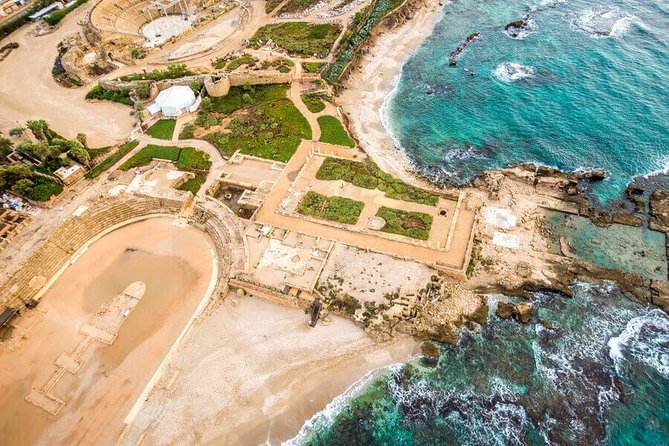
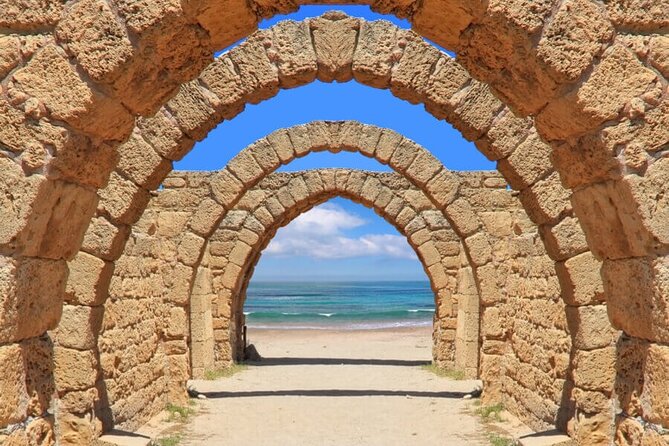
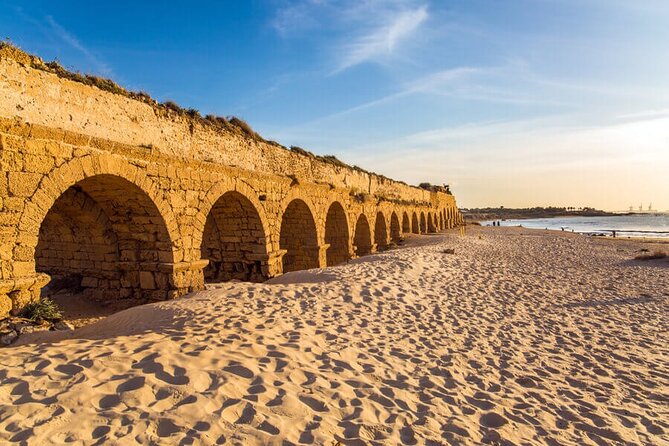
The day’s first anchor is Caesarea National Park, a major Roman-era site built by Herod the Great and tied to the Roman world (Caesar Augustus is part of the story). You get about 1 hour here, and it’s enough time to get your bearings, look at the archaeological excavations, and understand how this port city functioned.
What I like about this stop is that it’s not just ruins in a field—it’s structured for visiting. You’re walking through an ancient port environment and seeing how the layout supported shipping, power, and daily life.
Then you move to the theater at Caesarea. Time is shorter—around 20 minutes—but the payoff is focused: this is a big Roman amphitheater from the 1st century AD. Even with a quick visit, it’s one of those places where the scale helps you understand what public life looked like back then.
Consideration: this first stretch can feel like a warm-up marathon. If you’re prone to getting tired early, start the day hydrated and keep your camera strap or phone pouch easy to reach—people often miss details when they’re fumbling for gear.
Haifa’s Baha’i Gardens: tiered views with a quick stop
After Caesarea, you head to Haifa and the Baha’i Gardens. This visit is brief—about 20 minutes—but it’s designed around the main idea: the terraces and panoramas.
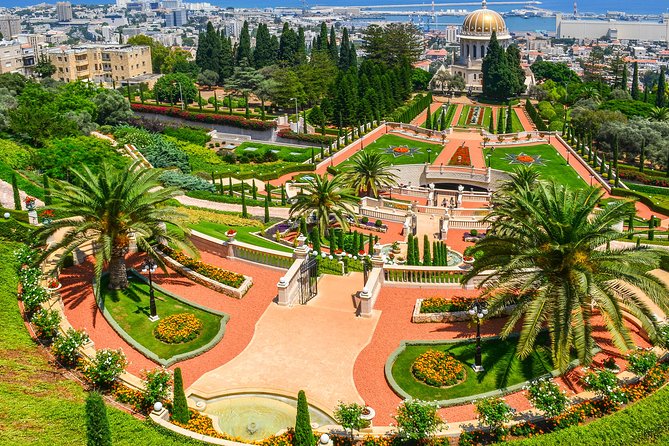
Haifa’s gardens are laid out in 19 terraces, stepping up the slope from the Mediterranean. The experience here is as much about perspective as it is about plants: from the viewpoints, you can take in Haifa, the Galilee hills, and the sea.
You’ll also see the Shrine of the Báb from below, identified as the final resting place of the prophet of the Baha’i faith. The tour description emphasizes groomed paths, hedges, and flower beds that are cared for in a very deliberate way—this is a site made for calm movement, even if your time window is short.
What to watch for: the stop is mainly about views. If you were hoping for a long garden wander, this isn’t that kind of visit. You’ll get the key sightlines, then you’re on your way.
Rosh Hanikra: cable car ride and sea-carved chalk grottoes
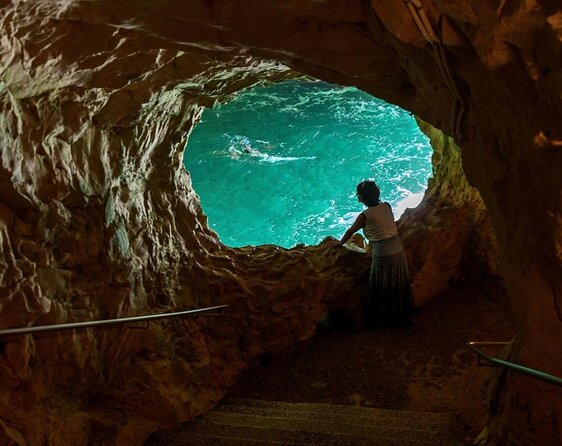
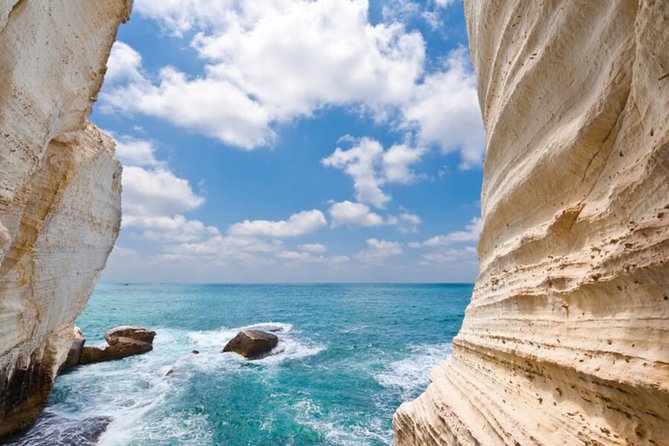
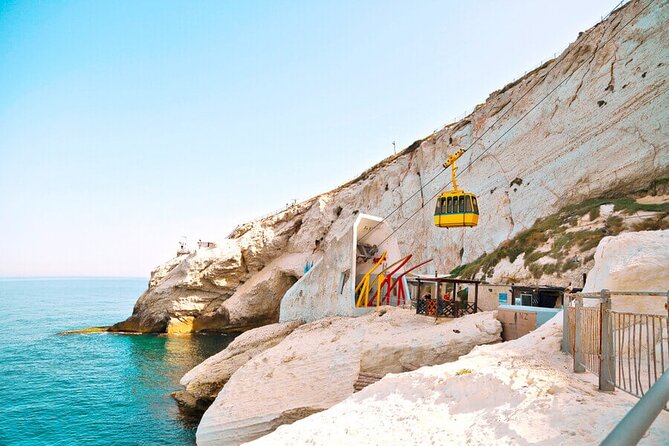
Next comes Rosh Hanikra, on the Mediterranean coast in Western Galilee. If you like geology, this is a rare mix: the grottoes are formed by sea activity against soft chalk rock, which is exactly the kind of process that makes a place feel “earned,” not just constructed.
You’ll ascend by cable car to the summit area as part of the visit, then spend about 40 minutes exploring the grottoes. The tour also includes a viewpoint from Rosh Hanikra where you can see the Lebanese border from the coast-side vantage.
Here’s a practical truth: grotto experiences can be lighting-dependent. On bright days, you tend to get stronger visual contrast in the caves; in drizzle or low sun, the effect may not hit as hard as you hoped. You might still enjoy the formations, but the photos may look flatter.
Consideration: this is not a slow stroll. The route moves you through the main points, and with stairs plus uneven cave surfaces, comfortable shoes really matter. If you have any mobility limits, plan to go carefully through the grotto area.
Acre above and below: Crusader tunnels under the old city
The final major city stop is Acre (Akko), often noted as one of the oldest cities in the world. You’ll have about 1 hour to explore, which gives you a chance to get context and wander the old-street feel.
Then you visit the Citadel of Acre and the Underground Crusader City. This is the signature “two-level” part of the day: medieval-era tunnels and halls built beneath the city, hidden under centuries of rubble, are still present and visitable.
You’ll spend around 1 hour here, including access to the underground network and crypt-like spaces associated with the Crusader-era remains. This stop can be especially memorable because it flips your expectation. Instead of only seeing what a city looked like on the outside, you see how people lived with protection, storage, passageways, and power underground.
The tour also includes time to walk back through the Old City Market to pick up souvenirs. That sounds minor, but it’s a useful closing act: you leave with something tangible that feels connected to the places you just walked through.
Consideration: Acre can feel like sensory overload at the end of a long day. If you want more time for photos or a deeper market browse, keep your priorities tight because the itinerary is built around moving.
The real value of this $139 day trip
At $139 per person, the value depends on how you travel and what you normally pay to get between sites. This price includes round-trip hotel pickup and drop-off, an air-conditioned coach, a professional guide, and entrance fees.
If you were doing this on your own, you’d need separate transport to Caesarea, Haifa, Rosh Hanikra, and Acre, plus tickets for the sites that charge admission. You’d also need to figure out timing so you don’t miss the cable car or spend time hunting for the most efficient routes. This tour wraps all of that into one schedule.
The main “cost” isn’t money—it’s time. It’s a full day, with short stop windows like 20 minutes in the Baha’i Gardens and 20 minutes at the Caesarea theater. If your travel style is slow and spontaneous, you may feel the schedule. If your travel style is structured and history-focused, you’ll likely appreciate the planning.
Who this is best for:
People who want a high-impact day without logistics headaches. Also good for first-timers who want a clear overview of northern coastal heritage—Roman, Islamic/medieval layers, and dramatic coastal geology in one loop.
Logistics that can make or break the day
This is where I’d pay attention before you go. Even with hotel pickup, some travelers report confusion if the process involves vehicle changes (for example, transfers in the region for operational reasons). In real life, that can mean extra waiting or a slightly awkward start, even when the main tour run is fine.
Also, language comfort matters. Some reviews mention guide language balance, including guides who may switch between languages rather than sticking to one nonstop. If English is your only comfort language, it’s worth checking what your confirmation states for the guide language format.
The day’s rhythm can be fast, and the walking can add up. Bring comfortable walking shoes and water. Keep expectations realistic: this tour is about the main sights, not about lingering at each one for an hour of independent exploring.
Finally, remember that the experience requires good weather. If conditions are poor, you may be offered another date or a full refund.
Should you book the Caesarea, Acre & Rosh Hanikra day trip?
Book it if you want one structured day that combines four standout parts of northern Israel: Roman Caesarea (including the theater), a Haifa viewpoint stop at the Baha’i Gardens, sea-cut grottoes at Rosh Hanikra, and Acre’s above-and-below Crusader sites.
Skip it (or switch plans) if you hate early mornings, dislike tight time windows, or need a slow pace with lots of flexibility at each stop. Also think twice if you’re sensitive to potential pickup or transfer bumps—rare, but they can happen.
If you’re the type who likes your sightseeing with context—how the places connect across centuries—this itinerary fits. I’d call it a strong value for the sights and the guidance, as long as you’re ready for a long, active day.
FAQ
What time does the tour start?
The tour starts at 6:00 am with pickup from your Jerusalem hotel.
How long is the Caesarea, Acre & Rosh Hanikra day trip?
The total duration is about 12 hours (approx.).
Which stops are included?
You’ll visit Caesarea National Park (including the Roman theater), the Baha’i Gardens in Haifa, Rosh Hanikra (including the cable car and grottoes), and Acre (including the underground Crusader city/Citadel).
Is hotel pickup and drop-off included?
Yes. Hotel pickup and drop-off are included.
Are entrance fees included?
Yes. Entrance fees are included for the sites listed on the itinerary.
Is food or lunch included?
No. Food and drinks are not included.
Do I take a cable car at Rosh Hanikra?
Yes. The itinerary includes ascending to the summit of Rosh Hanikra by cable car before visiting the grottoes.
Is this tour suitable for children?
It’s not suitable for children under age 4.
What should I bring for the day?
Bring comfortable walking shoes and water, since the tour includes walking and several active stops.