REVIEW · JERUSALEM
Masada and the Dead Sea Day Trip from Jerusalem
Book on Viator →Operated by Bein Harim Ltd · Bookable on Viator
You can feel two worlds in one day. This trip pairs Masada’s cable-car ruins with the Dead Sea float for a rare mix of big-history visuals and pure physical weirdness. I love how the day stacks iconic sites without you having to plan logistics. I also like that you get a guided walkthrough on the ground, not just drop-off and wander. The main drawback to plan for is the group-tour pace: the timetable is tight, so you won’t have endless time to roam.
The ride itself is set up for comfort. You leave central Jerusalem in an air-conditioned coach, usually with hotel pickup and then a hotel drop-off, with a start time around 8:30am and a maximum group size of 40.
In This Review
- Key highlights to know before you go
- Masada by cable car: what the climb-and-ruins combo gives you
- The Judean desert drive: Good Samaritan, Ein Gedi views, and Qumran caves
- Herodium palace ruins: quick, sharp, and for the detail-minded
- Dead Sea floating and mud bath: how to make it comfortable
- Lunch and shopping reality near Qumran
- Jericho and the Roman road views on the way back
- Price and logistics: is $111 worth your time?
- Should you book this Masada and Dead Sea day trip?
- FAQ
- What time does the tour start?
- How long is the Masada and Dead Sea day trip?
- Is hotel pickup and drop-off included?
- Do I need to pay for entrances or the cable car?
- Is the Dead Sea float time long enough to enjoy it?
- Is a mud bath included?
- What should I bring for the Dead Sea?
- Is the tour guided?
- Is this tour suitable for children?
- What if weather is bad?
Key highlights to know before you go
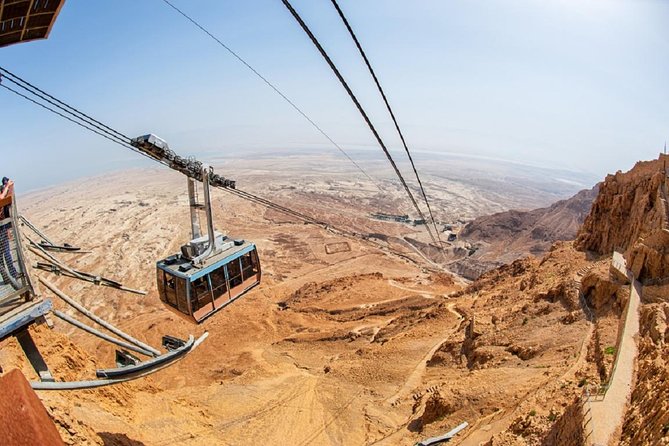
- Masada by cable car: fast access to the mountaintop, where the views do a lot of the storytelling.
- Guided time on-site: you explore with a local expert, with famous guides sometimes named like Dorit, Orion, Erez, Dan Porges, Mati, and Michael.
- Qumran caves stop: you’ll pass the area tied to the Dead Sea Scrolls discovery in the 1940s and 1950s.
- Dead Sea time for floating: around 90 minutes on a mineral beach, plus an optional therapeutic mud bath.
- Pass by Good Samaritan and Jericho: you see biblical landmarks and drive parts of the route that connect the region’s key cities.
Masada by cable car: what the climb-and-ruins combo gives you
Masada is one of those places that hits fast. The mountaintop feels remote the moment you arrive, and the ruins are dramatic even before you hear the story. On this day trip, the cable car gets you up to the top of the plateau so you can spend more energy looking and listening, not climbing stairs.
At Masada, the guiding matters. You get a guided tour of the national park, and that’s the difference between seeing scattered stone and understanding why it’s famous. King Herod picked this isolated spot about 2,000 years ago for major fortified palaces. Even if you’re not a deep history person, it’s hard not to get the scale: you’re standing on a site that was built for power, survival, and control.
One practical point: the day can get hot. Wear a hat, use sunscreen, and plan to drink water. A few reviews mention extreme heat, and that tracks with Masada’s desert setting. Also, don’t assume the museum film is your favorite part. There’s a film/exhibit at Masada that some people find politically slanted; if you’re sensitive to one-sided storytelling, you can treat it as optional rather than mandatory.
How long you get on the mountain: roughly 1 hour 15 minutes is allocated to explore Masada with the group. That’s enough to hit the major viewpoints and understand the arc of the story, but it can feel rushed if you like to linger over every detail.
You can also read our reviews of more tours and experiences in Jerusalem.

The Judean desert drive: Good Samaritan, Ein Gedi views, and Qumran caves
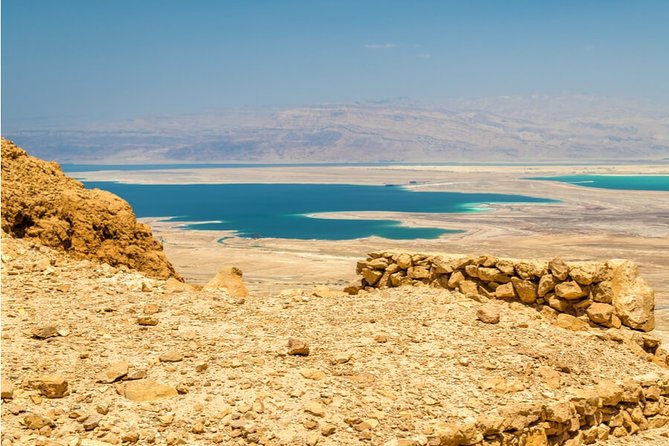
Between Jerusalem and the Dead Sea region, the coach ride does real work. You pass through the Judean Hills and desert terrain, and you also get several “on the way” stops that connect modern travel with ancient geography.
First comes the biblical breadcrumb trail. You’ll pass the site linked to the parable of the Good Samaritan, including the area known as the Good Samaritan Inn. It’s not the kind of stop where you’ll leave with a souvenir. It’s more like a “get your bearings fast” moment—so later, when you see Jericho and the desert terrain, the region feels less random.
Then you move toward the Dead Sea corridor where nature and history overlap. You’ll pass Ein Gedi natural reserve, a famous oasis area. Even if you don’t spend time inside it, the views help you understand why people settled where they did.
The Qumran caves stop is a highlight for anyone who likes religious history and archaeology. You’ll see the caves area tied to the Dead Sea Scrolls discovery in the 1940s and 1950s—around 900 ancient parchments of religious manuscripts were found there. Even a quick stop helps because it gives you a sense of place: these aren’t museum objects sitting in a glass case. They come from a harsh landscape where the scrolls’ story makes literal sense.
Timing note: the cave stop is brief. This isn’t an hours-long archaeology tour. It’s a “see the ground you’re reading about” break, then back on the coach.
Herodium palace ruins: quick, sharp, and for the detail-minded
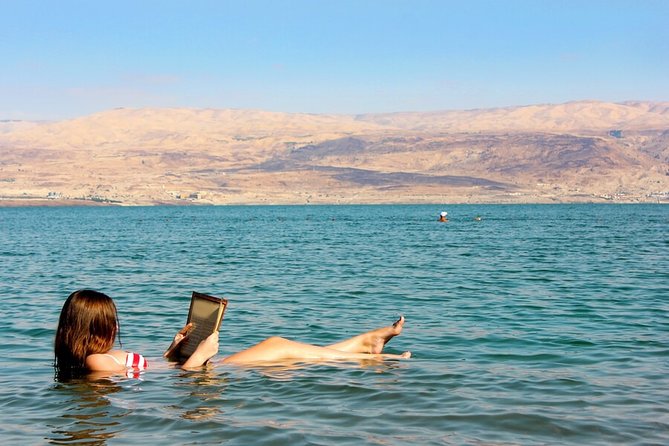
On the way between Masada and the Dead Sea area, you’ll also see Herodium—remains of Herod’s palace complex. This is a good stop if you want one extra layer of “how Herod built his world.” The site’s big idea is simple: Herod didn’t just rule from a city; he chose remote, fortified places and shaped them for status and security.
You get about 1 hour here. That’s long enough to take in the main remains and hear the basic story. It’s not long enough to treat it like a stand-alone day. If you’re the type who loves tracing every wall and corridor, you’ll probably wish for more time. If you’re more about the big narrative, you’ll likely find it a satisfying add-on.
Dead Sea floating and mud bath: how to make it comfortable
The Dead Sea is the star of the “feel it” part of the day. It sits about 400 meters (1,312 feet) below sea level. That odd geography is exactly why the water is so hard to sink in. When you step in, it feels like you’re floating on your own body’s ego.
This tour gives you around 1.5 hours to relax at the mineral beach. Some days feel closer to two hours depending on the rhythm of the group and how quickly people get organized. Either way, you’ll have time to:
- float in the salt-rich water
- rinse off and reset between swims
- do the optional mud bath if you want the therapeutic layer
The mud bath option is part of the experience flow. Some people love it. You can also think of it as “finish the Dead Sea theme” before you go. Just know you’ll likely come out covered. Plan for that. Bring a towel and expect to feel a little sticky once the mud dries.
Beach comfort matters. The Dead Sea shoreline at these facilities can be rocky. Several tips from guides and fellow travelers point the same way: wear water shoes. Flip-flops usually don’t survive the sharp ground well, and your feet will tell you that quickly. The good news: there are showers and lockers available, and you’ll be able to rinse off before getting back on the coach.
If you want Dead Sea skincare products, there’s often a chance to buy items on-site, sometimes described as duty-free prices. That’s optional. The real value here is time in the water and the mud experience—not shopping.
Lunch and shopping reality near Qumran
Food and drinks are not included. That’s the big thing to know for budgeting. You’ll need to plan to buy your own meal during the day.
On a day like this, there’s usually a practical stop where everyone can grab something close to the route. Some people find the convenience comes with a price tag, and the easiest food can be the most crowded option. If you’re picky, or you want a calmer meal, you’ll do better if you bring snacks and water you can handle independently (as long as your tour rhythm allows).
Also, keep your expectations realistic on timing. The itinerary is designed to cover multiple major stops in one day. That usually means lunch is more about efficiency than lingering.
Jericho and the Roman road views on the way back
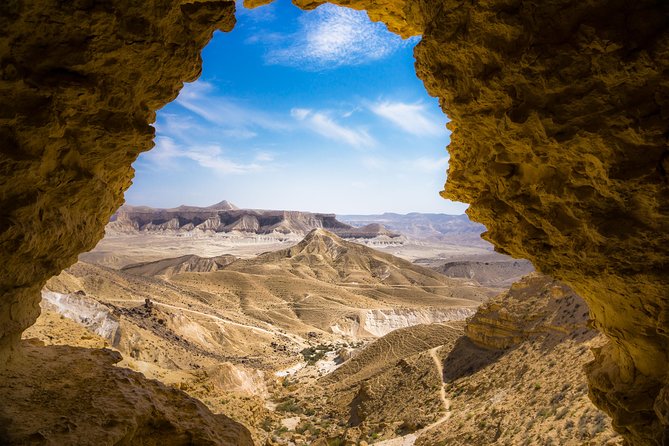
The return drive ties it together. As you head back toward Jerusalem, you’ll pass Jericho and follow a route that traces part of the old Roman road toward the city. It’s a classic “now vs. then” moment: you’re sitting in a modern coach, but the terrain is the same corridor that mattered for armies, trade, and pilgrims.
Jericho is a quick-view kind of moment on this format. You’re not checking into a hotel or wandering for hours. Still, seeing Jericho in the context of the desert landscape makes the earlier Good Samaritan reference land better.
You end with hotel drop-off in Jerusalem, wrapping up a full day that’s heavy on sites and light on downtime.
Price and logistics: is $111 worth your time?
For about $111 per person, you’re paying for a full-day package that includes:
- hotel pickup and drop-off
- a professional guide
- air-conditioned coach transport
- cable car access up to Masada
- entrance fees
That’s the value math. If you tried to stitch this together yourself—transportation, entry tickets, a guide for context, and the cable car—you’d likely spend more time and often more money. Here, you’re buying convenience plus guided storytelling.
What you’re not buying is flexibility. The schedule is built for group efficiency, and some parts feel “just enough” rather than “stay as long as you want.” If you want a long, slow Masada walk, or you want extra time to explore the Dead Sea facilities at leisure, this may feel like a tight squeeze.
Who gets the most value from this tour
- You want major landmarks in one day and don’t want to drive.
- You like guided context (especially at Masada and Qumran-related areas).
- You’re okay with a busy itinerary and want the Dead Sea float experience without planning.
Who should consider another option
- You hate group pacing and rushed stops.
- You’re very sensitive to extra-value pressure around food or shopping stops.
- You’re traveling with small kids (this tour isn’t suitable for children under age 4).
Should you book this Masada and Dead Sea day trip?
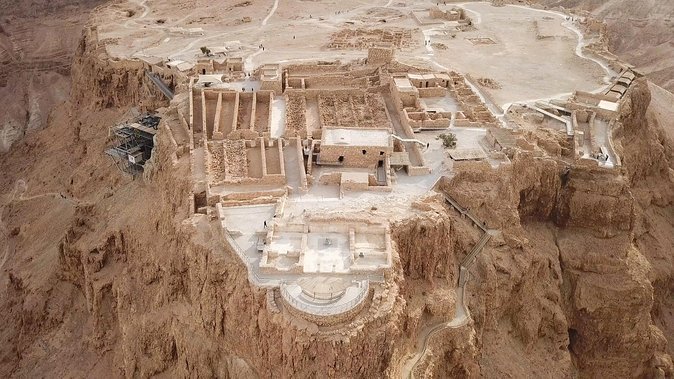
Book it if you want a high-impact day with the two biggest hitters of the region: Masada from the mountaintop and the Dead Sea’s “how is this even real” floating. The cable car access and included entrance fees are a big part of the value, and a strong guide can make the history feel alive. If you’re heat-ready with a hat, water, and water shoes, the physical experience is worth the effort.
Skip it, or switch to a smaller/private format, if you know you’ll get frustrated by time limits—especially if you want more time walking Masada slowly or more breathing room at the Dead Sea beach. This is a well-structured day, but it’s still a full-day sprint.
FAQ
What time does the tour start?
The start time is listed as 8:30am, with hotel pickup arranged from central Jerusalem.
How long is the Masada and Dead Sea day trip?
It runs for about 9 hours total.
Is hotel pickup and drop-off included?
Yes. The tour includes hotel pickup and drop-off in Jerusalem.
Do I need to pay for entrances or the cable car?
Entrance fees and the cable car up to Masada are included.
Is the Dead Sea float time long enough to enjoy it?
You get about 1.5 hours to float and relax at the Dead Sea, which is typically enough time for at least one real swim and time to reset.
Is a mud bath included?
The itinerary says you can choose to take a therapeutic mud bath. The exact inclusions for the mud bath aren’t detailed, so treat it as an optional add-on at the site.
What should I bring for the Dead Sea?
Bring a bathing suit, towel, sun protection (hat/sunscreen), and sturdy water shoes since the beach area can be rocky.
Is the tour guided?
Yes. You travel with a professional guide.
Is this tour suitable for children?
No, it’s not suitable for children under age 4.
What if weather is bad?
This experience requires good weather. If it’s canceled due to poor weather, you’ll be offered a different date or a full refund.