REVIEW · AGADIR
Sahara Day Trip from Agadir
Book on Viator →Operated by enjoy sun · Bookable on Viator
Four wheels, desert air, and mint tea. I like the real road-trip feel, because you’re in a 4×4 most of the day, not stuck on a single viewpoint. I also like the mix of history and everyday life, especially Tiznit with its Berber silver-jewelry craft. One heads-up: the day is packed with driving, so lunch and transfers can feel stretched.
Guides can make or break a day like this, and the names you might hear—Muhammad, Hatim, Hassan, and Mohamed—fit the same pattern: lots of explanation, plus a friendly effort to keep the pace fun. The group stays small (up to 24), and pickup is offered, which helps if you want less hassle and more time outside the bus.
Here’s the trade-off I’d plan for: you’ll trade comfort for access. It’s worth it for the views and village stops, but if you hate long seats and road time, pick your expectations carefully.
In This Review
- Key things to know before you go
- A 7.5-hour 4×4 circuit from Agadir
- Wild beach and Sousse Valley: the scenery warm-up
- Tiznit, the Silver City: ramparts and silver jewelry making
- Yusuf Ibn Tachfine dam: engineering views near the Anti-Atlas
- Lunch with families: tagine, homemade couscous, and mint tea
- Tifnit fishing village and Massa: small stops, real rhythm
- Sahara free time: silence, photos, and optional camel ride
- Riding back through views: last stop at the water tank
- Price and value: is $44.20 a fair deal?
- Who this day trip suits best
- The main practical snag to watch
- Should you book this Sahara day trip from Agadir?
- FAQ
- What time does the Sahara day trip from Agadir start?
- How long is the tour?
- Does the tour include pickup and hotel drop-off?
- Is lunch included?
- What does lunch include?
- Do I need to pay admission at the stops?
- Is there time to enjoy the Sahara on your own?
- Can I ride a camel?
- What’s included in the price, and what’s not?
- What’s the maximum group size?
Key things to know before you go
- 4×4 tracks to the Sahara: you get out into the region, not just a drive-by.
- Tiznit’s Silver City stop: ramparts, local craft, and a clear story of the town’s founding.
- Youssef Ibn Tachfine water structures: dam scale and panoramic Anti-Atlas/Sahara views.
- Lunch in a local home setting: tagine and homemade couscous, plus Moroccan mint tea.
- Sahara free time: quiet moments for photos, with camel ride as an optional add-on.
- Small group size (max 24): easier questions, less crowding at stops.
A 7.5-hour 4×4 circuit from Agadir
This is a day trip with a clear goal: get you from Agadir into southern Morocco’s lived-in places, then back again the same day. The schedule starts at 8:30 am and runs about 7 hours 30 minutes total, so you should treat it like a full outing, not a half-day wander.
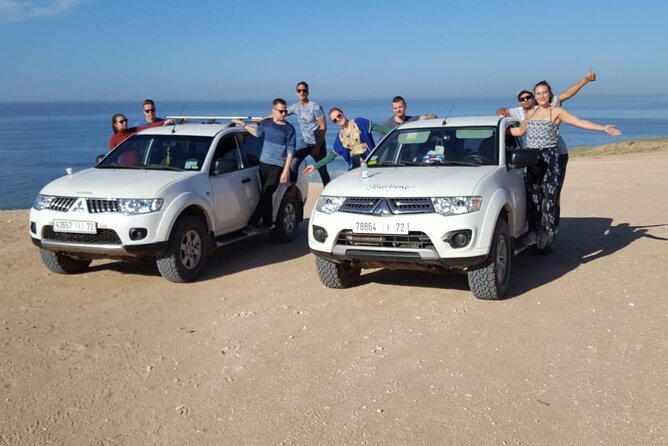
The transport is a 4×4 vehicle, and that matters. It means the route can reach places that feel more remote and more “off the main track.” In practice, this also means the ride can be bumpy on piste sections, so it’s a good idea to sit where you feel most comfortable and settle in for the motion.
Your day includes pickup (when offered by your booking) and a drop-off back at your hotel at the end. Mobile tickets are used, which is handy when you want to keep things simple on the morning start.
You can also read our reviews of more tours and experiences in Agadir.


Wild beach and Sousse Valley: the scenery warm-up
Before the desert feeling fully kicks in, the route gives you a sensory warm-up. You’ll stop at a wild beach area first, with scenery that’s more rugged and less “resort postcard.” It’s a nice contrast: you’re still near the coast, but the land already looks like it’s turning into something harsher.
Next comes the Sousse valley area, where the emphasis shifts from scenery to people. This is where you’ll explore the local Berber way of life and meet residents. It’s not just a look-from-the-road kind of stop. The value here is that the day starts answering the question Morocco asks all the time: how do people live where the land is doing most of the work?
Tiznit, the Silver City: ramparts and silver jewelry making
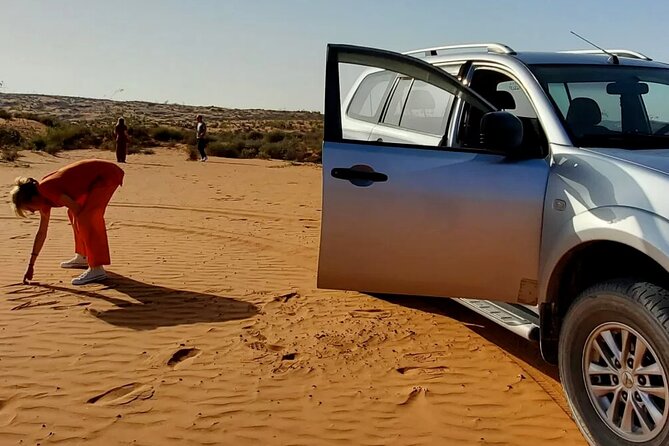
If you remember one stop from this day trip, make it Tiznit, often described as the Silver City. This is where you slow down for story and craft.
You’ll visit the old medina’s fortified rampart area. Tiznit’s background is tied to the 19th century: the town was founded in 1882 during the reign of Mawlāy Hassan as a military base. That context helps when you walk the defensive feel of the ramparts. It’s not just “old walls,” it’s old walls built for control and protection, tied to expeditions toward the Sous River (Oued Sous) region and the surrounding mountainous areas.
Then you’ll see Berber silver jewelry being made. Watching the process gives you something you can’t get from a shop window: you see the craft work behind the shine. And even if you don’t buy anything, it helps you understand why silver matters here—because it’s skill you can hold in your hands.
One practical note: this is a historic town stop, so wear shoes you can walk in comfortably. If you’re the type who likes to take photos from multiple angles, you’ll appreciate the time here more than if you’re rushing.
Yusuf Ibn Tachfine dam: engineering views near the Anti-Atlas
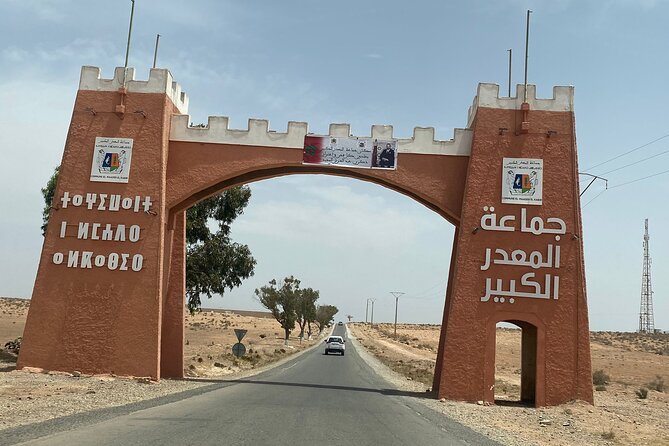
After Tiznit, you head toward the Youssef Ibn Tachfine water structures. This is more than a scenic stop. It’s a reminder that the Sahara region doesn’t run on magic—it runs on planning.
The dam is described as 707 meters long and 85 meters high, built on one of the arms of the Massa wadi. It created an artificial lake that stretches about seven kilometers. In a hot region with limited rainfall, that water reserve is meant to irrigate the Chtouka plain, supporting vegetables and citrus.
In heat, “freshness” can feel like a myth—so don’t expect cool air just because there’s a body of water. What you should expect instead is scale and a strong sense of place: the dam sits leaning against the Anti-Atlas, with big open views when you pause along the edges.
Later in the day, you’ll make another stop connected to the same water system area—this time specifically to enjoy panoramic views of the Anti-Atlas and Sahara. If you’re chasing that classic Morocco panorama feeling, this is one of your best chances.
Lunch with families: tagine, homemade couscous, and mint tea
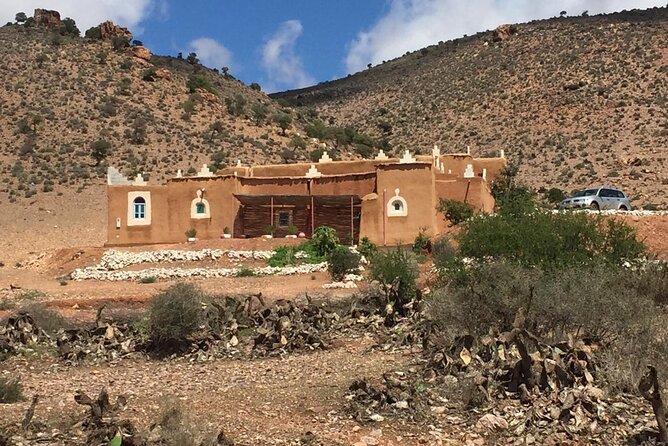
One of the best reasons to pick this day trip is how it handles food. Instead of a generic stop at a roadside place, you’ll have lunch in a local Moroccan house setting.
The meal is described as tagine with homemade couscous, followed after the lunch part by Moroccan mint tea. This is one of those “simple but important” inclusions. Tagine and couscous are comfort foods, yes, but the real value is context: you’re eating in the same day you’re seeing how people live. It turns the meal into part of the experience, not a break from it.
That said, this is one of the moving-parts moments in the schedule. If you’re sensitive to long waits, plan for a slightly flexible lunch window inside the overall flow of the day. A good strategy: come hungry, go with a relaxed attitude, and don’t mentally count minutes.
Also, soda/pop is not included. If you usually drink more than water, keep a little money aside so you aren’t stuck mid-meal.




Tifnit fishing village and Massa: small stops, real rhythm
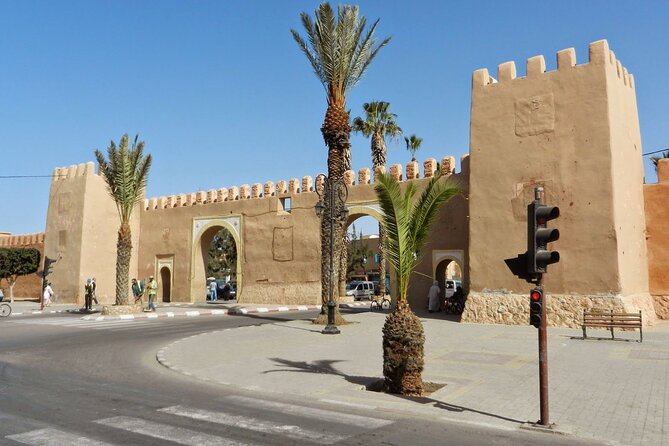
Between the major historic and desert-focused moments, you’ll pass through a couple of smaller stops that add texture.
You’ll visit Tifnit, a fishing village stop (about an hour). It’s a chance to see coastal work and local life tied to the sea, even while the day is gradually trending inland.
Then there’s a Massa meal with inhabitants of a Berber village. That’s listed as 1 hour 15 minutes, and it’s another food-and-people moment. Combined with the main lunch and mint tea earlier, the day leans hard into eating and meeting rather than pure sightseeing.
This structure can be great if you like culture through daily routines. It’s less ideal if you’re hoping to minimize time spent waiting or repeating the same kind of experience (house, food, tea) back-to-back. The pace is the trade.
Sahara free time: silence, photos, and optional camel ride
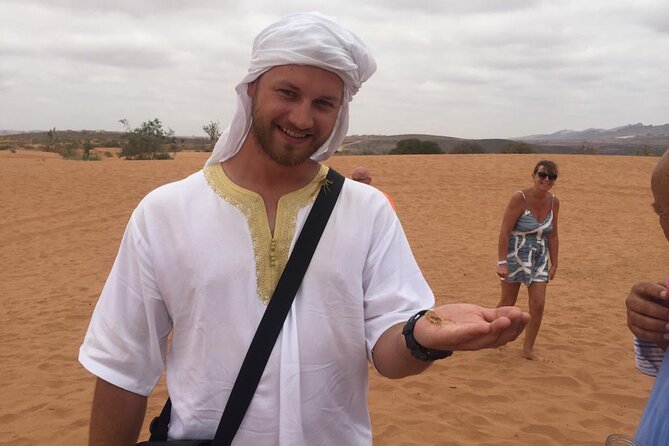
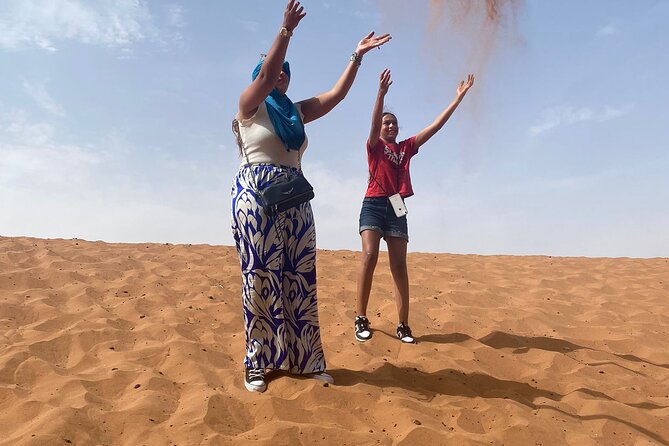
The highlight for many people is the Sahara free time part of the day. The plan is to return toward the desert region and give you time to enjoy the silence, take pictures, and reset your senses.
This is where the value of the earlier 4×4 ride pays off. You’re not just passing the Sahara; you’re getting a moment to actually feel it. When the day’s noise drops, you notice how the space behaves—light changes, shadows lengthen, and the horizon becomes the main character.
You’ll also have an option for a camel ride. Since it’s described as optional, treat it as a bonus, not a requirement. If you choose to ride, go in with realistic expectations: it’s not a theme park loop, and it’s part of how the desert is experienced.
If you’re mostly there for photos, this free time is still a win. Bring a calm mindset. The best shots usually come after you stop moving and start watching.
Riding back through views: last stop at the water tank
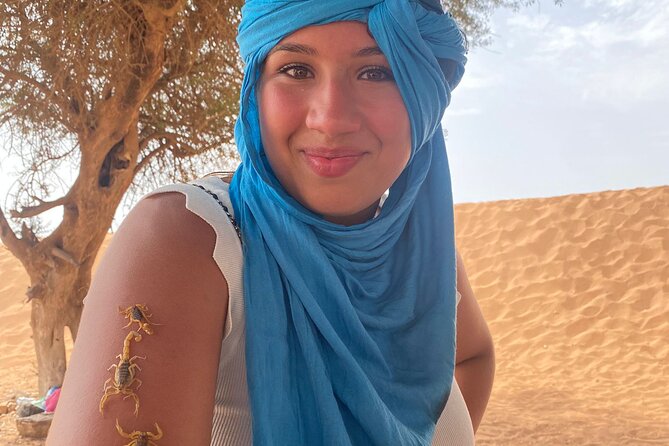
On the way back to Agadir, the itinerary includes one last scenic stop at the Yusuf Ibnu Tachafin water tank area. The purpose is straightforward: you get panoramic views of the Anti-Atlas and Sahara before you head home.
This final viewpoint can be a good emotional bookend. You started with the wild beach and the valley life, and now you’re closing with the desert-scale visual. It also helps fill the “distance blur” that comes from a long day of stops. Even if you were tired earlier, this kind of horizon view can wake you up again.
The drop-off back at your hotel is the last piece. It makes the day trip feel complete rather than like you got stranded somewhere far from your bed.
Price and value: is $44.20 a fair deal?
At $44.20 per person, this is positioned as a budget-friendly way into a big day of contrasts. The price isn’t just for transportation—it’s built around several meaningful components:
- 4×4 vehicle time (not a standard bus shuffle)
- A lunch included in a local house setting
- A second mint tea moment later
- Multiple stops: historic Tiznit, water structure viewpoints, village visits, fishing village time, and Sahara free time
- A small group limit (up to 24), which usually helps with quality of attention
Would I call it luxury? No. It’s built for access and variety. But for travelers who want a one-day sampler of southern Morocco—silver craft, villages, dam views, and Sahara stillness—this price-to-experience ratio can feel solid.
What you should plan for financially: soda/pop is not included, and if you want the optional camel ride, you’ll likely handle that during the day.
Who this day trip suits best
This works especially well for you if:
- you want a single day with multiple authentic stops rather than just one “big ticket” site
- you like guided context—Tiznit’s founding story and silver-jewelry craft are part of the payoff
- you’re comfortable with a long, active day and aren’t planning to treat it like a relaxed spa schedule
It may be a less perfect fit if:
- you dislike long drives and bumpy roads (4×4 piste sections are part of the deal)
- you’re picky about strict timing at lunch
- you prefer free time to be mostly your own, since this itinerary is stop-heavy
The main practical snag to watch
The day is designed for variety, but that means logistics are inevitable. Pickup order can vary, and seats can end up feeling less fair than you’d like in a smaller vehicle. Also, the pace means you’ll want to accept that the guide’s attention has to rotate across the group and multiple locations.
Based on how the day typically runs, the best way to avoid frustration is to go with a flexible mood. If you’re the kind of person who needs exact minute-by-minute programming, this kind of cultural loop can feel slightly loose around the edges.
The other simple thing: bring your own hydration and energy mindset. Water and snacks aren’t listed as included, so treat the included meal as the main food stop and plan your drinks accordingly.
Should you book this Sahara day trip from Agadir?
I’d book it if you want one day that mixes the Sahara with real Moroccan stops: Silver City Tiznit, Berber silver jewelry making, dam panoramas, village life, and real food moments. At $44.20, the overall value is strong for how far and how many different places the day covers.
I wouldn’t book it if your ideal day is slow and quiet with lots of control. The route is active, the day is long, and the best experience comes from going with the flow, not demanding everything to feel like a museum timeline.
If you’re excited by the idea of getting beyond Agadir for a big chunk of the region, this is a worthwhile way to do it—especially if you like guides who actually talk, not just drive.
FAQ
What time does the Sahara day trip from Agadir start?
The start time is 8:30 am.
How long is the tour?
It lasts about 7 hours 30 minutes.
Does the tour include pickup and hotel drop-off?
Yes. Pickup is offered, and the tour ends with a drop-off at your hotel.
Is lunch included?
Yes. Lunch is included.
What does lunch include?
Lunch is described as tagine and homemade couscous, plus Moroccan mint tea after lunch.
Do I need to pay admission at the stops?
Some stops list admission ticket free, but the tour overall includes visits and activities; admission is not described as a separate paid item.
Is there time to enjoy the Sahara on your own?
Yes. After lunch and during the desert portion, you’ll have free time to enjoy the silence and take pictures.
Can I ride a camel?
Yes, a camel ride is optional.
What’s included in the price, and what’s not?
The price includes the tour and lunch. Soda/pop is not included.
What’s the maximum group size?
The tour has a maximum of 24 travelers.