REVIEW · MARRAKESH
Marrakech to Zagora Desert: 2-Day trip via Ait Benhadou
Book on GetYourGuide →Operated by sahara for you · Bookable on GetYourGuide
You’ll see Morocco change fast. I love the drive over Tizi n’Tichka Pass and the chance to explore Ait Benhaddou in depth, both of which make the route feel like more than just a straight line to the desert. The desert camp side of the trip is what ties it together.
One key consideration: the travel days are long, and the ride can feel a bit bumpy in spots. Plan for a couple of hours of sitting even though the bus is air-conditioned, and keep your expectations flexible for where you’re dropped off on the return.
Key moments I’d circle on your map
- Tizi n’Tichka Pass panoramas on the way out of Marrakech
- Ait Benhaddou UNESCO kasbah time with a guided visit (some groups get a guide named Chafir)
- Draa Valley palm groves and kasbahs as you head toward Zagora
- Sunset photo stop before you reach the camp
- Berber camp dinner, drums, and music by the fire after camel time
- Camel ride at sunrise on Day 2 (ATV only if available)
In This Review
- A fast desert gateway from Marrakech (the 2-day sweet spot)
- Day 1: High Atlas roads, Ait Benhaddou kasbah, then Draa Valley to camp
- Crossing the High Atlas via Tizi n’Tichka Pass
- Ait Benhaddou: time inside Morocco’s most famous kasbah
- Down into the Draa Valley (palms, kasbahs, and long views)
- Sunset photography stop and your first camp welcome
- Day 2: Sunrise in the desert, camel ride (or ATV), and the ride back
- Breakfast, then camel ride back to the bus
- Scenic stops on the way back to Marrakech
- Desert camp reality: dinner, music, tents, and how the night is paced
- The food and the tea ritual
- Music system plus live camp energy
- Camp staff names you might hear
- Cleanliness expectations
- Price and logistics: what $89 buys, and what it does not
- Transport comfort: how to make the bus ride feel easier
- What to pack for Zagora dunes and Ait Benhaddou
- Who should book this Marrakech to Zagora route via Ait Benhaddou
- Should you book it? My honest take
- FAQ
- What does the Marrakech to Zagora desert trip include?
- Is lunch included on the tour?
- Are drinks included?
- What is included for the desert experience?
- Is the camel ride only on one day?
- Can I do an ATV instead of a camel ride?
- How long is the trip?
- What stops are part of the route?
- What languages is the tour offered in?
- Can I cancel for a refund?
A fast desert gateway from Marrakech (the 2-day sweet spot)
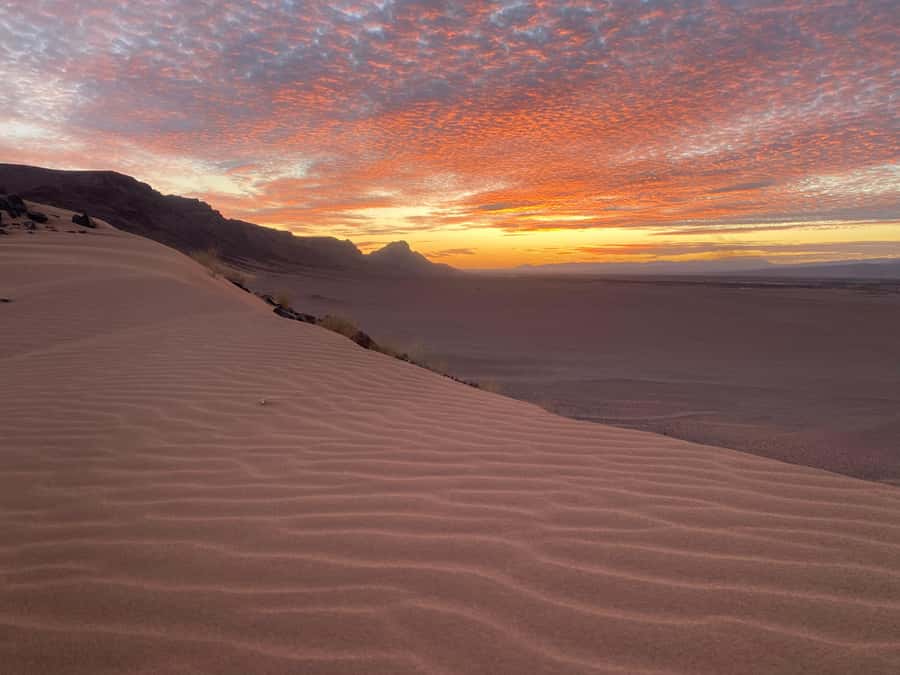
This is the kind of desert trip that makes sense when you want real Sahara energy but you do not have a week to spare. You start in Marrakech, cross dramatic High Atlas scenery, pause for UNESCO-grade culture in Ait Benhaddou, then head down into the Zagora area for a camp night under the stars.
Why this works: you get two very different kinds of wow. First is the mountain-to-desert shift, where the road itself becomes part of the story. Second is the camp night: dinner, tea, music, and stargazing feel like the core memory you came for.
The trip is also built as a smooth on-ramp to the desert. Even though dunes here are described as smaller than in the deep Sahara, you still get the classic rhythm: camel ride, sunset, sunrise, and a real desert camp experience with Berber hospitality.
Day 1: High Atlas roads, Ait Benhaddou kasbah, then Draa Valley to camp
Your Day 1 starts with a morning departure from your hotel. In one reported schedule, the meet-up time was around 7:20 a.m., and the goal is clearly to leave early so you can hit the best daylight for each stop.
Crossing the High Atlas via Tizi n’Tichka Pass
You’ll drive through the High Atlas Mountains, with Tizi n’Tichka Pass as the headline view. This is where the scenery turns big and steep fast. Even if you have seen mountain passes elsewhere, the scale here is special because you feel the elevation change and the road curves give constant new angles.
Tip: bring a warm layer even in warmer months. Mountain air can feel cooler on the bus, especially in the morning.
Ait Benhaddou: time inside Morocco’s most famous kasbah
Next comes Ait Benhaddou, a UNESCO World Heritage site and Morocco’s best-known kasbah setting. You’ll have time to explore the kasbah and enjoy lunch in the area.
What makes this stop more than a quick photo break is that you do not just pass by. In some groups, the visit is led by a local guide named Chafir, which can make the place feel more readable—what’s where, how people lived in the structure, and why the kasbah layout matters.
One more practical note: the kasbah area can have entry fees depending on where you walk, so it helps to assume some small extras.
Down into the Draa Valley (palms, kasbahs, and long views)
After Ait Benhaddou, you continue to the Draa Valley, described as Morocco’s longest valley and known for palm groves and ancient kasbahs. This is a quieter kind of scenery stop than the pass—less dramatic slopes, more slow horizons and the sense that the desert approach has started.
Sunset photography stop and your first camp welcome
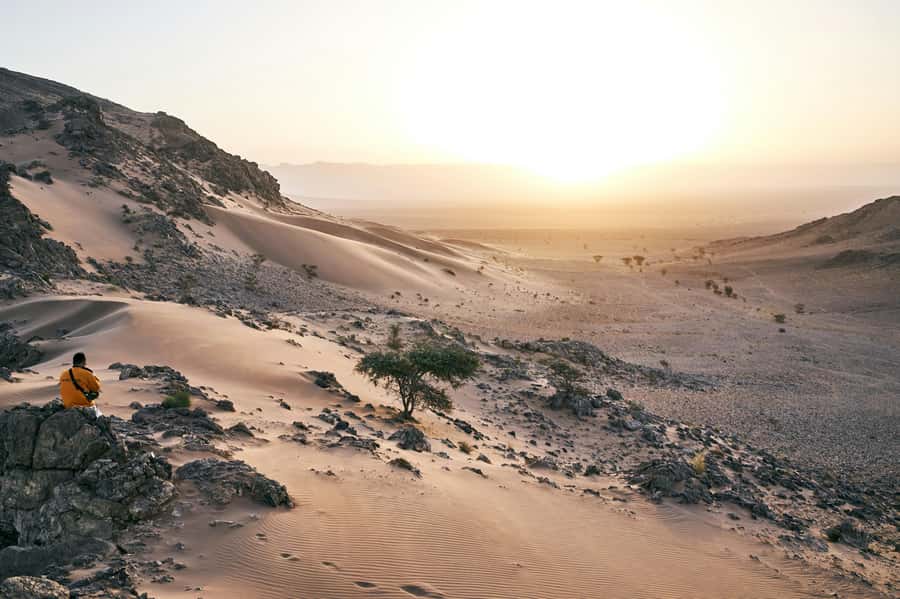
Before reaching camp, you get about an hour for sunset photography. This is when the light turns gold and everything looks more cinematic than it does at midday. Your timing matters here, so keep your camera ready and do not wait until the last minute.
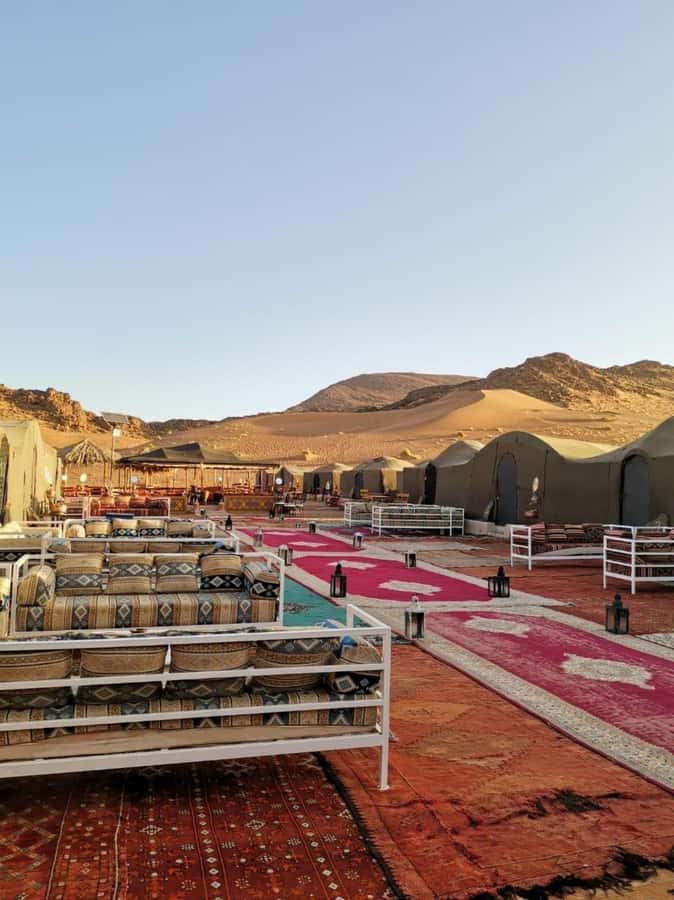
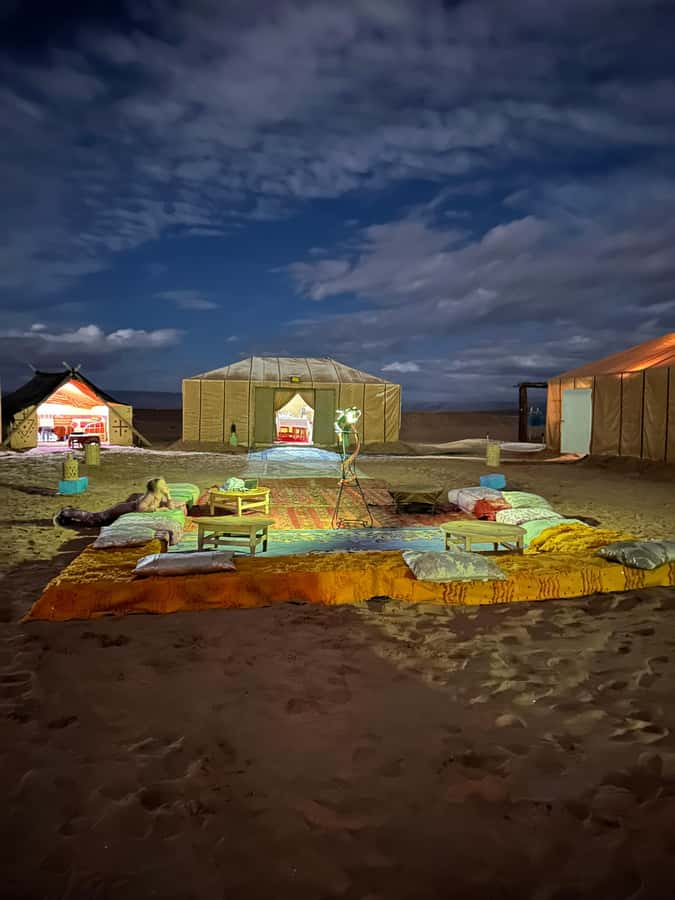
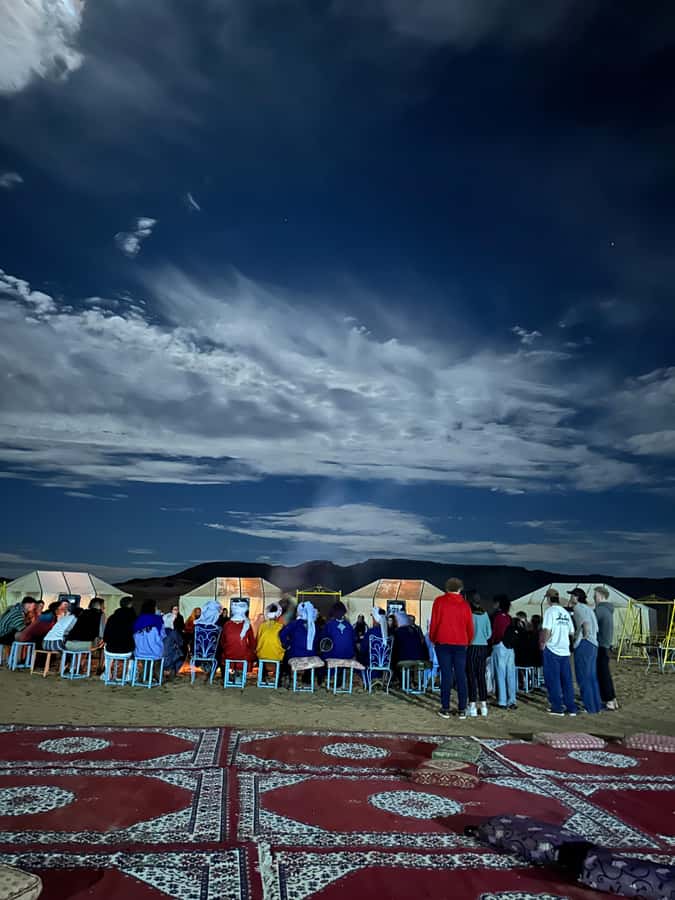
Then you arrive at camp and get welcomed with traditional Moroccan tea—a simple moment, but it sets the tone. After that comes dinner, plus local music and storytelling around the campfire. You sleep in a traditional desert camp setup for the night.
What you’ll be doing overnight: you’re set up for stargazing under a wide sky. If you are the kind of person who usually scrolls at night, this is one of those experiences that pulls you away from your phone.
Day 2: Sunrise in the desert, camel ride (or ATV), and the ride back
Day 2 starts with sunrise. Waking up early is not everyone’s favorite plan, but the payoff is the feeling of stillness before the day gets busy.
Breakfast, then camel ride back to the bus
After breakfast, you’ll do a camel ride through the desert back to your bus. The itinerary notes that an ATV ride may be possible instead, depending on what’s available—so ask when you arrive at camp if you are hoping for the option.
Either way, this is the moment most people remember most clearly: the slow pace, the way the ground texture changes, and the fact that you’re moving through a space that feels open and quiet.
Scenic stops on the way back to Marrakech
You then drive back to Marrakech with several scenic stops, and you’ll be dropped off at your desired location.
One thing to keep in mind: return logistics can vary. Some people have reported being dropped off farther than expected, so if your riad is hard to reach on foot, it helps to plan a simple meetup point or confirm what drop-off means for your exact address.
Desert camp reality: dinner, music, tents, and how the night is paced
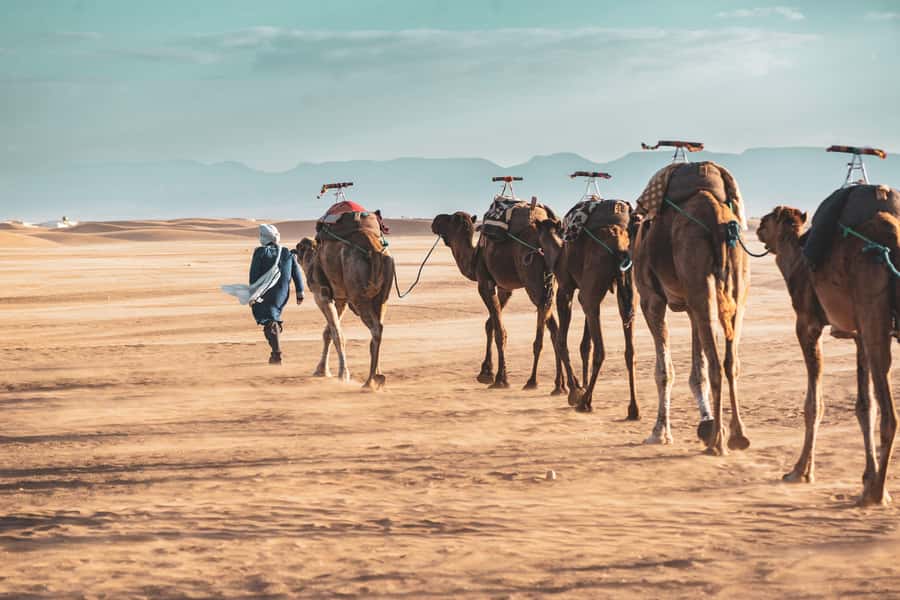
The camp is the heart of the value here. You are not paying just for a bed; you’re paying for a full evening routine.
The food and the tea ritual
Dinner is included, and it tends to be a highlight. One person specifically called out a standout tagine as one of the best they had. Even if your favorite Moroccan dish is something else, you should expect a filling meal meant for a long day of travel.
You also get moroccan tea as part of the welcome. It sounds basic, but it gives you a break from travel mode and a chance to settle in before the music starts.
Music system plus live camp energy
You’ll have live music and storytelling around the fire. Some groups also mention a lively rhythm with traditional drums, and there can be dancing around the fire.
A practical perk: the tour includes a music system to choose your music. That matters because the vibe is not only passive. You can help steer what the evening feels like, within reason.
Camp staff names you might hear
Camp teams can vary, but you may hear welcoming names like Simoh and Smaïl, and in some cases the energy is supported by staff like Mohammad and Idir who are described as friendly and fun.
Cleanliness expectations
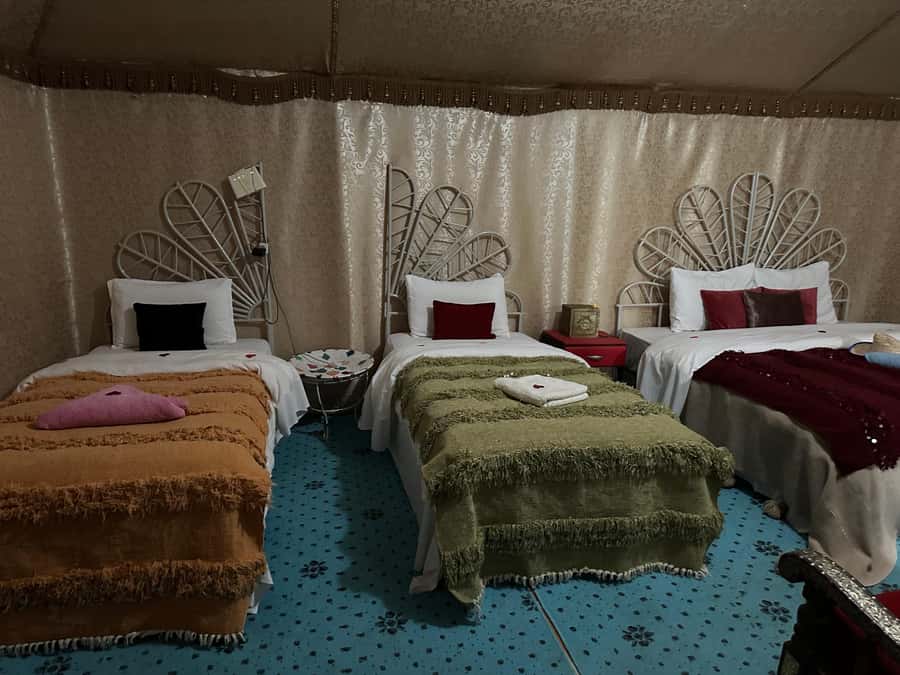
The camp setup is described as comfortable, and at least one person highlighted clean washrooms and clean tents. In other words: this is not a roughing-it-only situation.
Still, desert camp means it’s outdoors and rustic by nature. Do not expect a hotel. Do expect warmth, dinner, and a sky that feels close.
Price and logistics: what $89 buys, and what it does not
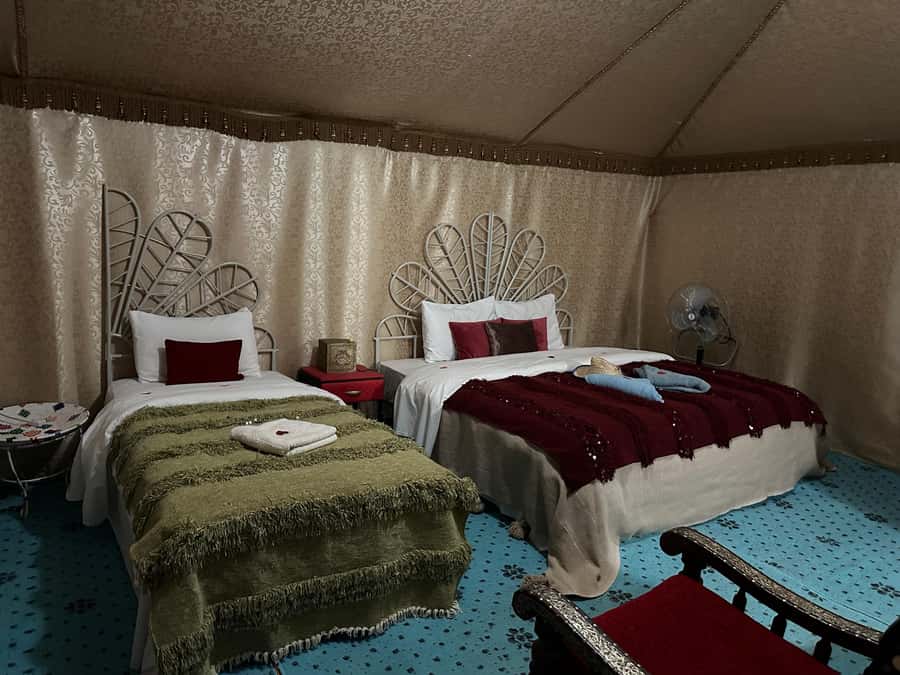
At $89 per person, this is a competitive “gateway desert” option because it bundles several things that would cost you separately: hotel pickup, a camp night, breakfast, dinner, Moroccan tea, and a camel ride.
What you should budget extra for:
- Lunch is not included
- Drinks are not included
- You’ll likely want to pay for small extras such as entrance fees (depending on the stop) and water/snacks
- Sunglasses and sunscreen are not included, but you will feel grateful you brought them
A smart way to think about it: the price covers the big pieces and the emotional core (camp + camel + sunrise/sunset). Your extra spending is mostly to keep you comfortable and to cover optional site costs.
Transport comfort: how to make the bus ride feel easier
You’re on the road for a full travel day. That part is non-negotiable.
Good news: the bus is described as air-conditioned and comfortable, with one tip—avoid the seats near the wheels if you want the smoothest ride. That is a small detail, but it can change your whole mood by late afternoon.
Pack like you’re on a day trip plus a night out: a layer, water if you can buy it, and something to cover your eyes during brighter stretches.
What to pack for Zagora dunes and Ait Benhaddou
This trip mixes mountain roads, kasbah walks, and desert time. You’ll want gear for all three.
Bring:
- Sunglasses and sunscreen (not included)
- A light warm layer for early morning and camp night
- Comfortable shoes for kasbah walking
- A camera or phone with a charged battery for the sunset photo hour and sunrise
Since lunch and drinks are not included, keep cash or a card handy for small purchases. Also consider that you might want extra water during long drives.
Who should book this Marrakech to Zagora route via Ait Benhaddou
This fits best if you:
- Want a real desert camp experience without committing to the deep Sahara
- Love a packed itinerary that combines culture (Ait Benhaddou) and desert moments (camel ride, campfire dinner)
- Like early mornings if it means you get sunrise in the dunes
You might skip it if:
- You hate long days on the road
- You expect hotel-level comfort and exact door-to-door drop-offs every time
- You want tons of free time at each location (this route is paced, not slow)
Should you book it? My honest take
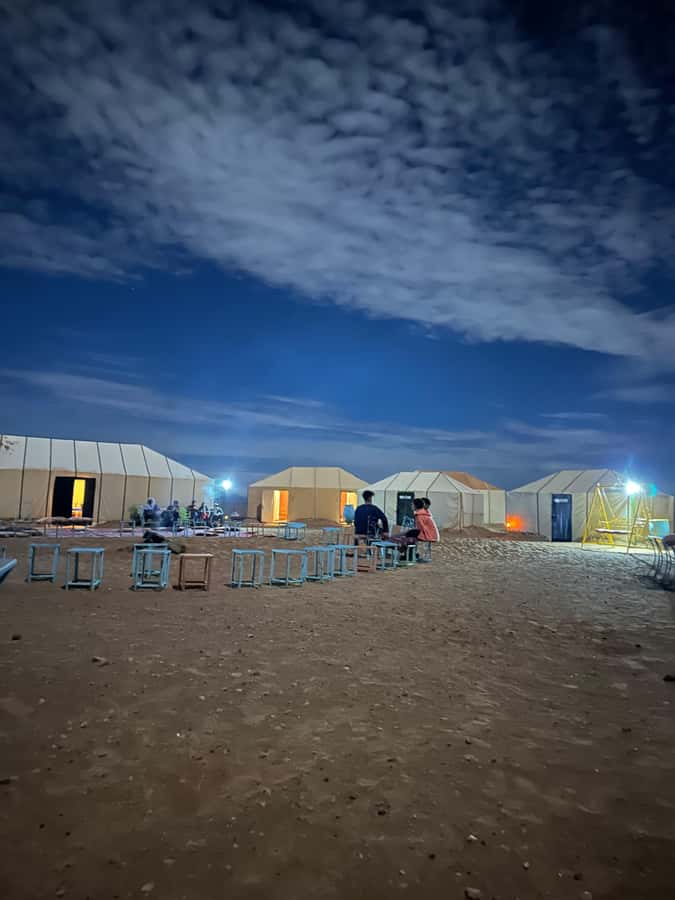
If you want one of the best “time-efficient” ways to get from Marrakech into desert life, I think this route is a solid pick. You get High Atlas views, a meaningful stop at Ait Benhaddou, and the desert night is set up around real camp rituals—tea, dinner, music, and stargazing—plus the camel experience at both the emotional high point (sunset) and the fresh start (sunrise).
Just go in with the right expectations: it is not a lazy day trip. It’s a road-and-ritual tour. If you can handle the long drive and plan for small extra costs like lunch and water, you’re likely to feel like your money bought you more than transportation.
FAQ
What does the Marrakech to Zagora desert trip include?
It includes hotel pickup, camping for the night, breakfast, dinner, Moroccan tea, a camel ride, and a music system to choose your music.
Is lunch included on the tour?
No, lunch is not included.
Are drinks included?
No, drinks are not included.
What is included for the desert experience?
You get a desert camp experience in Zagora, including dinner with music and storytelling, plus a camel ride. You also get time for sunset photography and a sunrise experience on Day 2.
Is the camel ride only on one day?
You’ll do a camel ride on Day 2 after breakfast (and the desert-camp arrival experience includes camel-related activities as part of the desert routine).
Can I do an ATV instead of a camel ride?
The itinerary notes that an ATV ride may be possible instead of the camel ride, depending on availability.
How long is the trip?
The journey is described as taking about seven hours on the main travel day, with two days total.
What stops are part of the route?
You pass through the High Atlas and Tizi n’Tichka Pass, visit Ait Benhaddou, continue toward Draa Valley, then reach a desert camp near Zagora. On the return you’ll have scenic stops before drop-off in Marrakech.
What languages is the tour offered in?
The tour is offered in English, French, and Spanish.
Can I cancel for a refund?
You can cancel up to 24 hours in advance for a full refund.