REVIEW · BAYEUX
Private guided American D-Day Tour from Bayeux
Book on Viator →Operated by Allied Victory Tours · Bookable on Viator
D-Day in Normandy is big. This one is personal. With a private guide in an air-conditioned vehicle, I love how the day blends logistics with human stories that make the sites click. I also like the timing at the American Cemetery, which helps you catch the flag ceremony moments without feeling rushed. One drawback to plan around: it’s a long day, and it isn’t suitable for kids under 8.
You’re not bouncing with a crowd. You’re moving from village to beach in a calm rhythm, with stops that range from a tiny church first-aid post to the blunt reality of Omaha and the quiet weight of the American Cemetery. English is handled, pickup is arranged in the Bayeux area, and the guide can adjust to your interests along the way.
If you want a checklist tour with zero emotion, this won’t match your style. If you want the places to make sense, with names, decisions, and consequences, you’ll get a lot out of it.
In This Review
- Key highlights worth your attention
- Private D-Day from Bayeux: why this style of tour makes sense
- Pickup, vehicle comfort, and the start of your Normandy day
- Angoville Church: the small first-aid post with big consequences
- Sainte-Mère-Église: the crossroads where the story sticks
- Utah Beach: why one American sector succeeded
- Point du Hoc: 100-foot cliffs, Rangers’ mission, and bunker scale
- Omaha Beach: the heaviest casualties and the thin line between failure and success
- The Normandy American Cemetery: reflection, flags, and Taps
- How flexible is this tour in real life?
- Price, what you get, and what you’ll need to pay extra
- What to wear, bring, and how to pace yourself
- Who this tour is best for
- Should you book this private American D-Day tour from Bayeux?
- FAQ
- How many people are in the private group?
- How long is the American D-Day tour from Bayeux?
- What areas do you pick up from?
- What languages is the tour offered in?
- Does the price include transportation?
- Is lunch included?
- Are admission tickets included for the sites?
- What sites are visited?
- Is the tour suitable for children?
- Do you use a mobile ticket?
- What if I need to cancel?
Key highlights worth your attention
- Private group of up to 8: easier conversation, more back-and-forth, less time staring at a brochure
- English guide, pickup in Bayeux area: you start with less hassle and more actual Normandy
- Angoville church first-aid story: a small site with an unusually strong WWII connection
- Point du Hoc access to German bunkers and bomb craters: a rare chance to see the battlefield features up close
- Omaha Beach paired with the American Cemetery: the day ends where reflection is the point, not an afterthought
- Flag ceremony timing at the cemetery: your schedule may line up for the ceremony and Taps
Private D-Day from Bayeux: why this style of tour makes sense
A D-Day tour can go two ways: you either speed-run the sites, or you actually understand them. This private format leans hard toward the second option. I like that you’re not negotiating a bus schedule, and you’re not stuck listening to one lecture voice while you hunt for your own photo angles.
At $659.36 per group (up to 8), the math looks different than most “per person” tours. For a family or small group, it can land in a reasonable zone because you’re paying for a guide and transportation together. The real value is how much you can ask, how quickly you can pause, and how the day stays connected instead of turning into separate stops you forget two days later.
And the tone matters here. The guide, Mike, is repeatedly praised for making the day feel respectful and human. That means you spend time on decisions, courage, and cost—not just facts.
You can also read our reviews of more tours and experiences in Bayeux.
Pickup, vehicle comfort, and the start of your Normandy day
Your day begins with pickup from hotels, B&Bs, guest houses, gîtes, and Airbnb-style stays in the Bayeux area. If you’re staying outside the standard area, other pickup points can be arranged by asking first. This matters because Bayeux traffic and timing can eat your energy. When you start in the right spot, you can spend the day watching and listening, not timing your own route.
The tour uses an air-conditioned vehicle, which sounds basic until you’re on a summer day in Normandy. It’s also private transportation, so you’re not doing the awkward group scramble at the curb.
You’ll typically be out for about 8 to 9 hours. That’s long enough to visit several major sites and still finish at the cemetery, but short enough that you’re not trapped in a multi-day program. Build in water, plan for walking at the beaches and memorial grounds, and wear shoes that don’t mind uneven terrain.
Angoville Church: the small first-aid post with big consequences
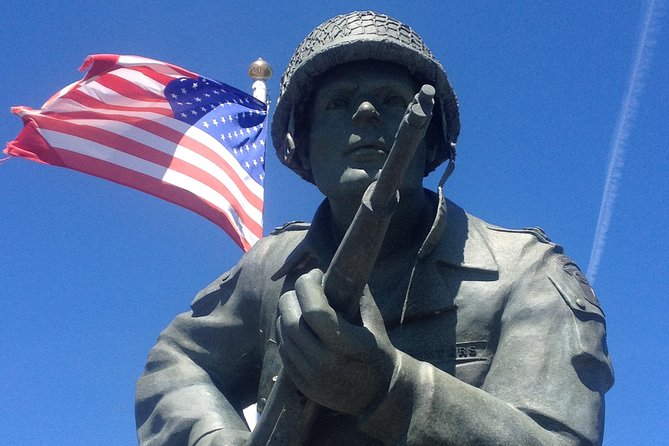
The first stop is the Eglise Saint-Come-et-Saint-Damien d’Angoville-au-Plain, a tiny church in a small village. What makes it stand out is what happened inside. Two medics from the 501st Parachute Infantry Regiment, 101st Airborne Division, used the church as a first-aid post. They saved injured American soldiers and also treated German casualties.
I like this stop because it sets the tone early. D-Day isn’t only explosions and beach lines. It’s also triage, improvisation, and the awful speed that turns a normal building into a wartime lifeline. You get a focused 45-minute window here, and the admission ticket is free.
Practical note: churches can be cool inside, but the area around them can still require steady footing. If you have mobility needs, this private format is useful because your guide can work with your pace.
Sainte-Mère-Église: the crossroads where the story sticks
Next comes Sainte-Mère-Église, often called the first town liberated by American troops in WWII. It’s a strategic crossroads town, captured early on June 6 by the 505th Parachute Infantry Regiment of the 82nd Airborne Division. This is the place you’ve probably heard of from The Longest Day, but the tour ties the film-level fame to the actual men and the actual chaos.
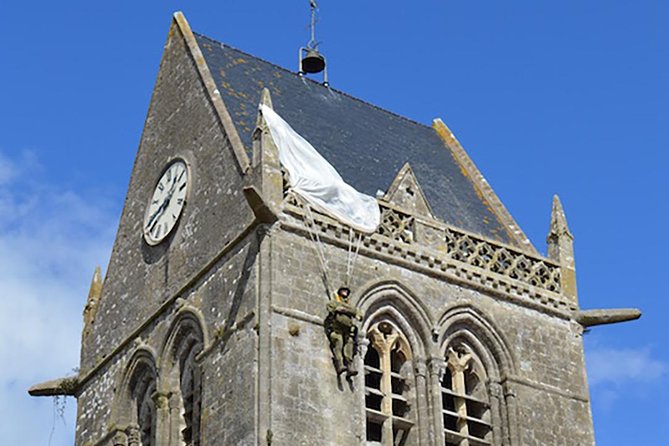
A standout detail here is the story of John Steele, who got caught on the town steeple. That kind of personal detail is exactly why private touring works. Instead of just looking at a location, you’re tracking what could have happened to one person, then another, then an entire unit.
You’ll spend about 45 minutes, and admission is free. The stop’s value is that it connects the parachute drop narrative to the terrain and timing—how early actions ripple outward.
Utah Beach: why one American sector succeeded
Then you move to Utah Beach, one of the two American sectors on D-Day. Here, the landings were the most successful. Your guide explains the factors that contributed to that result, which is important because “success” on June 6 still meant danger, confusion, and injuries. It’s just that the pieces aligned better than at the other sector.
You’ll also see monuments dedicated to the units involved and look at German bunkers nearby. The time here is about 45 minutes. One thing to plan for: admission tickets are not included for this stop, so there may be a fee depending on what you want to access or view on-site.
This is a good moment to reset your brain. After the parachute-and-town start, Utah Beach helps you see how operations and planning can still break toward success even when everything is under stress.
Point du Hoc: 100-foot cliffs, Rangers’ mission, and bunker scale
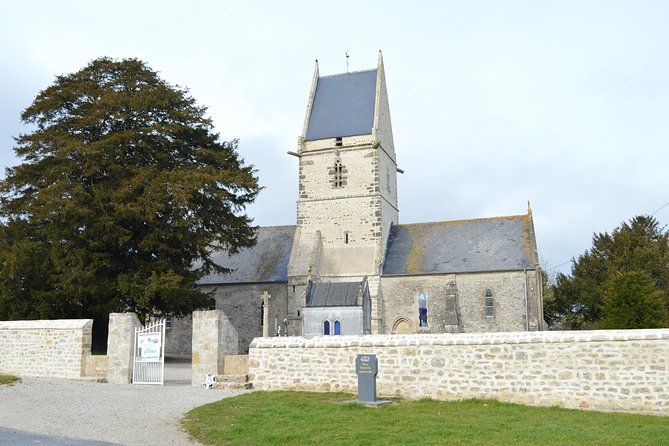
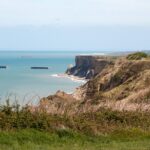
Now we hit one of the most dramatic sites in the whole region: Pointe du Hoc. On top of cliffs around 100 feet high, the Germans built a long-range gun battery. The mission for U.S. Army Rangers was direct and brutal: assault the position, scale the cliffs, and destroy the guns.
This stop is preserved as a battlefield. You can go into the German bunkers and see the hundreds of bomb craters, plus the cliffs the Rangers scaled. The planned time is about 1 hour, and the admission ticket is free.
I like Point du Hoc because it’s not abstract. You see structure and damage. You also feel the difference between “watching the story” and standing where the story unfolded. The cliffs force your imagination to slow down: how do you move up, under fire, with limited time and no easy cover?
If you’re the kind of person who likes to connect terrain to tactics, you’ll enjoy this stop a lot.
Omaha Beach: the heaviest casualties and the thin line between failure and success
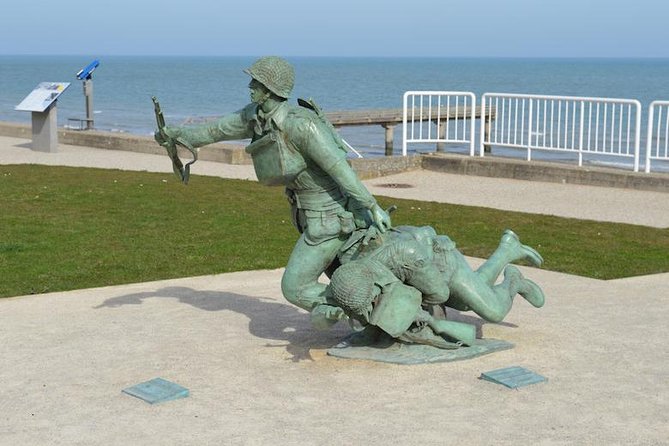
After Point du Hoc, you go to Omaha Beach—the second American sector where the casualties were the heaviest on D-Day. The tour focuses on the portion of the beach that was used in the opening scenes of Saving Private Ryan. That pop-culture connection is handy, but the bigger payoff is the explanation of what went wrong and why it went wrong, along with the leadership and initiative that helped units recover.
This stop is about 45 minutes, and admission is free. Omaha Beach can feel overwhelming, especially because you’re standing in a place that represents loss. A good guide matters here, because otherwise it’s easy to reduce the story to a few dramatic images. With Mike, you get unit-level context and the idea that survival and progress were often messy, not heroic-photo-perfect.
Practical tip: bring patience for your senses. Wind off the water, wide flat areas, and crowds at some times can make it hard to concentrate. A private guide helps because you can linger where the story lands for you.
The Normandy American Cemetery: reflection, flags, and Taps
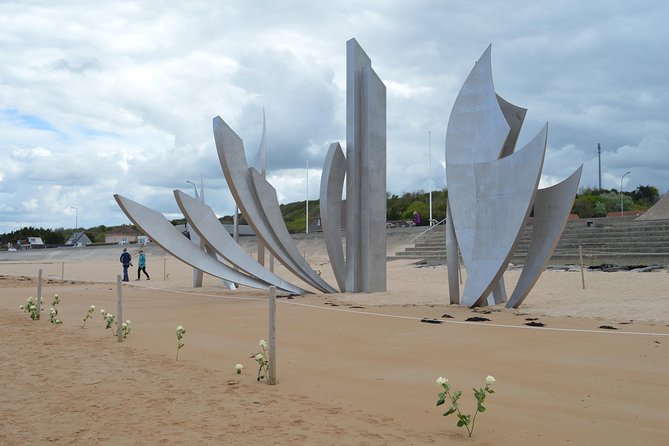
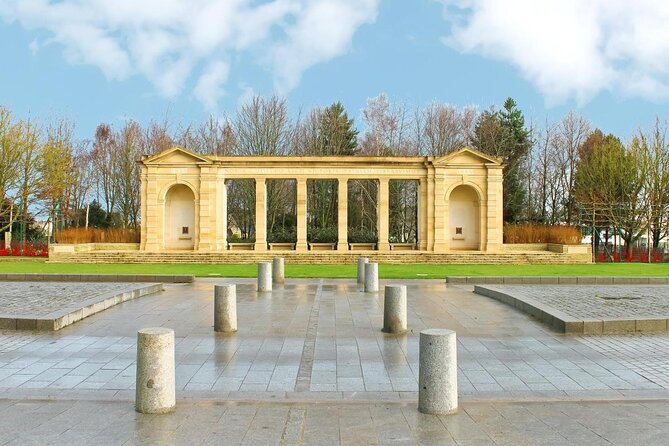
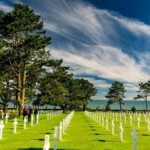
The day ends at the Cimetiere Americain de Colleville-sur-Mer, also called the Normandy American Cemetery. It’s on high ground overlooking the eastern side of Omaha Beach and covers more than 170 acres. Here you’ll find the final resting place of 9,380 American servicemen and women from the Normandy campaign. The grounds are maintained by the American Battle Monuments Commission.
You’ll spend about 1 hour. Admission is free. This stop is about more than viewing. You have the chance to pay your respects, witness the lowering of the flags, and take in the scale of the sacrifice without needing extra interpretation.
One reason people love finishing here is timing. In particular, the ceremony and the moment tied to it (Retreat and Taps) can happen in the late afternoon. If your schedule lines up, you’ll be there when the day turns quiet.
I think that ending works because your brain has already processed the beaches. Only then does the cemetery tell you what all that terrain really means. It’s the difference between learning history and facing the human cost.
How flexible is this tour in real life?
The structure is solid: a logical set of stops that covers parachutes, beaches, battle terrain, and the cemetery. But the private part is the flexibility. In practice, you can steer the focus slightly toward what you care about—movie connections like Saving Private Ryan, unit stories, or more emphasis on one battlefield location.
Mike is also described as adjusting plans based on what the group wanted to see. That’s a big deal if you have mobility limits or if you’re traveling with a mix of ages. One family aspect that comes up often is how the day is kept engaging across generations, without turning into a watered-down version for kids.
If you’re worried about getting stuck in a rigid script, you probably won’t. If you prefer a very tightly timed itinerary with no changes, you can also ask for that vibe up front and your guide can match it.
Price, what you get, and what you’ll need to pay extra
Let’s talk straight about value. At $659.36 per group for up to 8, you’re paying for:
- private transportation in an air-conditioned vehicle
- a guided route through the major American D-Day sites
- all fees and taxes for the tour itself
What’s not included:
- lunch
- optional museum entry ticket
- and admission is specifically marked as not included for Utah Beach monuments
That “not included” part matters, but it’s not a deal-breaker. It’s more about planning: budget for a sit-down lunch and any on-site ticketed elements you choose to add. If you’d rather just view the key sites without extra museum stops, you can likely keep costs controlled.
One more practical point: bring cash or card for food and any extra admissions you decide to add on the day. Then you won’t be scrambling if you want a longer look at something.
What to wear, bring, and how to pace yourself
This is a full-day tour with beach terrain and memorial grounds. You’ll do some walking, including possibly uneven ground around bunkers and coastal areas.
I’d suggest:
- comfortable walking shoes with grip
- a light layer for wind (Normandy weather changes fast)
- water
- a small daypack so you can keep hands free for photos and notes
Also, be ready for emotional moments. The cemetery and the stories behind the first-aid and casualties can hit harder than you expect. A private pace helps here because you can take a minute without derailing the whole schedule.
Who this tour is best for
This is a great fit if you want:
- an American-focused D-Day route with Omaha Beach, Utah Beach, Point du Hoc, and the American Cemetery
- a guide who ties terrain to tactics and names to human stories
- a calmer experience than group bus tours
It’s also a strong option if you’re visiting from the U.S. and want the day shaped around places tied to American units and leaders. The stories of medics at Angoville, the early liberation at Sainte-Mère-Église, and the Ranger mission at Point du Hoc give you a full arc.
One caution: the tour is not suitable for children under 8. So if you have younger kids, you’ll want to pick a different plan.
Should you book this private American D-Day tour from Bayeux?
If you want Normandy D-Day to feel like a real story with real stakes, I’d book it. The biggest reasons are the private pacing, the mix of major sites and smaller emotionally powerful stops, and the way the day can end with the flag ceremony and Taps if timing works out.
Go for it if you’re okay with a long day and you want someone else handling the route. Pass on it if you only want quick photo stops and you don’t care about context, units, and decisions.
For most people, this is the kind of tour where you come away tired in a good way: knowing more, feeling more, and remembering the places because someone explained them with care.
FAQ
How many people are in the private group?
The tour is private and can accommodate up to 8 people per group.
How long is the American D-Day tour from Bayeux?
The duration is approximately 8 to 9 hours.
What areas do you pick up from?
Pickup is offered from all hotels, B&Bs, guest houses, gîtes, and Airbnb locations in the Bayeux area. Other pickup locations can be arranged by enquiry.
What languages is the tour offered in?
The tour is offered in English.
Does the price include transportation?
Yes. Air-conditioned vehicle and private transportation are included.
Is lunch included?
No. Lunch is not included.
Are admission tickets included for the sites?
All fees and taxes for the tour are included, but admission ticket details vary by stop. Utah Beach has admission tickets not included, and an optional museum entry ticket is also not included.
What sites are visited?
The tour includes Eglise Saint-Come-et-Saint-Damien d’Angoville-au-Plain, Sainte-Mère-Eglise, Utah Beach, Pointe du Hoc, Omaha Beach, and the Normandy American Cemetery (Cimetiere Americain de Colleville-sur-Mer).
Is the tour suitable for children?
The tour is not suitable for children under the age of 8.
Do you use a mobile ticket?
Yes, a mobile ticket is offered.
What if I need to cancel?
Free cancellation is available. You can cancel up to 24 hours in advance for a full refund.