REVIEW · PARIS
Normandy D-Day Sites & Cemetery Day Trip from Paris with Lunch
Book on Viator →Operated by City Wonders Ltd · Bookable on Viator
Normandy’s D-Day sites feel bigger in person, and this all-in-one trip from Paris keeps the day moving in the right order. You’ll start at Utah Beach with a museum stop in an old German bunker, then continue to Pointe du Hoc, Omaha Beach, and the American Cemetery at Colleville-sur-Mer.
Two things I really like are the way the day is guided start-to-finish (so you’re not guessing what you’re looking at) and the built-in lunch at L Estran, so you spend less time hunting for food. One thing to consider is that it is a long day—coach time from Paris is a big chunk, and some stops are time-boxed.
In This Review
- Key highlights worth planning for
- A One-Day D-Day Route From Paris: The Reality Check on Timing
- Coach Comfort, Long Sitting, and How to Prepare
- Utah Beach Museum: Old Bunker, Real Artifacts, and the B-26
- Utah Beach Itself: Scale You Can Actually Feel
- L Estran Lunch Stop: The Value of an Included Break
- Pointe du Hoc: 100-Foot Cliffs and the Fight You Can See
- Omaha Beach: Why a Shoreline Walk Matters
- Colleville-sur-Mer American Cemetery: Rows, Names, and Quiet Scale
- What a Great Guide Changes in a Day Like This
- Price and Value: Is $120.93 a Good Deal?
- Who Should Book This Normandy Day Trip
- Should You Book This Normandy Day Trip From Paris?
- FAQ
- How long is the trip, and what time does it start?
- Is the tour in English?
- Which D-Day sites are included?
- Is lunch included, and what’s provided?
- Do I need to pay for entrance fees at the sites?
- How big is the group?
- What cancellation options do I have?
- How physically demanding is it?
Key highlights worth planning for
A full D-Day storyline, not a random beach tour so the places connect instead of feeling like checkboxes.
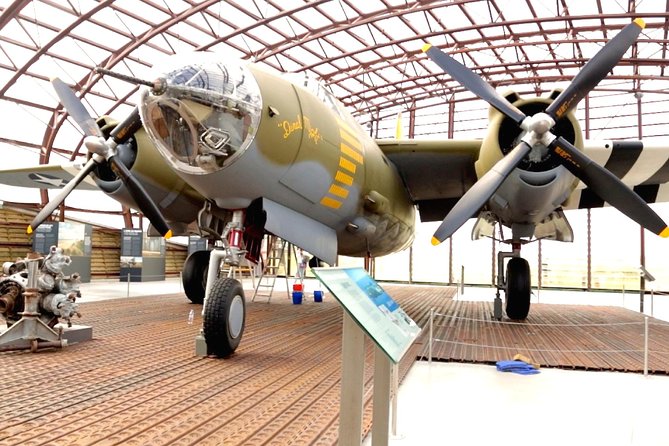
Utah Beach Museum in a bunker, with strong exhibits including soldiers’ letters and an original B-26 airplane on display.
Pointe du Hoc’s “100-foot cliffs” viewpoint gives you a clear sense of why Rangers had to climb under fire.
Time to walk Omaha Beach on your own, which helps you process what the site looks and feels like now.
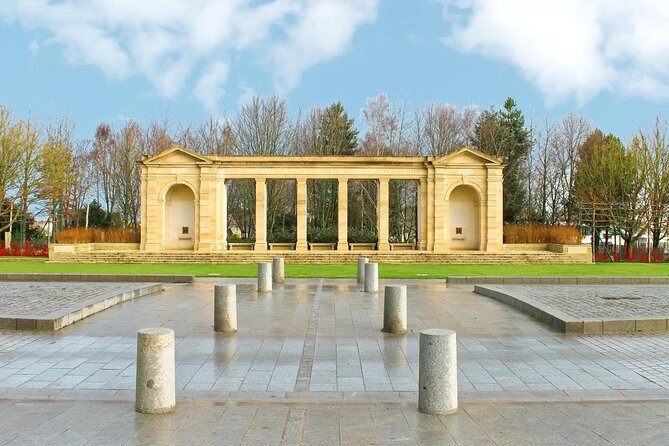
American Cemetery at Colleville-sur-Mer, one of the most moving WWII memorials in France, overlooking the sea and Omaha Beach.
A One-Day D-Day Route From Paris: The Reality Check on Timing

This is a 14-hour day, starting at 7:00 am in Paris and ending at Porte Maillot. You’ll be on an air-conditioned coach for a lot of the day, and the drive is long enough that you should plan to travel with patience (and layers).
The upside is you get a strong overview without needing to sleep in Normandy. If you’re short on days in France, this is a practical way to see the core sites in one go. Just know it’s also a high-output itinerary. You won’t get a slow, linger-at-everything pace.
Group size is capped at 50, which generally helps keep the day from feeling chaotic. Still, you’ll want to be ready for some walking between stops and time spent standing in places that can be windy, cold, or both.
You can also read our reviews of more tours and experiences in Paris.


Coach Comfort, Long Sitting, and How to Prepare
The tour uses a comfortable private coach with an expert English-speaking guide. That matters because the drive time is not wasted—you’ll get explanations on the operation and what each location means.
Here’s the practical part: coach temperatures can be unpredictable. Some people report it running hot at first, then getting turned down due to complaints, while others feel cold if they’re layered lightly. I’d treat this like any long-ride European coach situation: bring a light jacket, and don’t rely on the bus heating/cooling to be perfect for you.
Pack small extras that pay off:
- Bring a reusable water bottle (you may want it during long gaps between stops).
- Consider a light snack even though lunch is included, especially if you’re prone to getting hungry late in the day.
- Wear comfortable shoes. Pointe du Hoc and cemetery grounds involve real walking, uneven terrain, and standing.
Even the best schedule can feel rushed if you show up under-dressed or hungry. A little prep keeps the focus on history instead of comfort.
Utah Beach Museum: Old Bunker, Real Artifacts, and the B-26
Utah Beach is the start point for the day’s strongest context-building. You’ll spend about 45 minutes at the Musee du Debarquement Utah Beach, located in an old German bunker on the landing beach itself. That setting is part of the power: you’re not just looking at a model. You’re inside the kind of structure that shaped how the defenses operated.
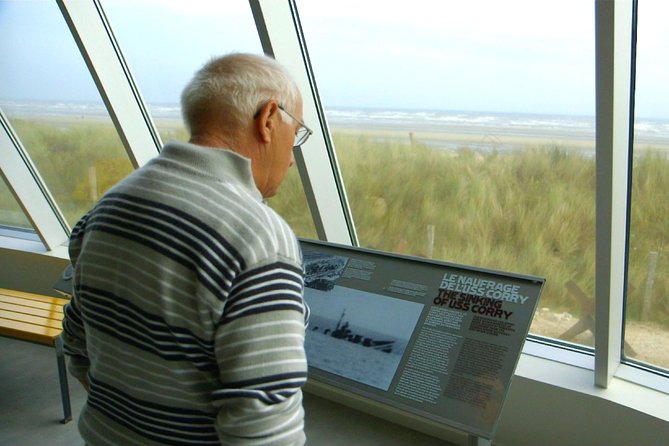
What makes this stop memorable is how it connects big strategy to human stories. The exhibits include letters from soldiers home, which helps you feel the personal cost behind the operations you’ll hear about on the bus. There’s also an original B-26 airplane on display—one of those objects that makes the day feel more real because it’s not a replica.
A guided visit here is a big value for first-timers. Without a guide, it’s easy to miss what you’re seeing or focus only on the most obvious artifacts. With a guide, you’re more likely to leave with a clearer sense of what Utah Beach contributed and why it worked as a landing area.
Possible drawback: you only get about three quarters of an hour. If you’re the type who wants to read every label and study maps for extra time, you may feel a little pressed. For most people, it’s still enough to make the later stops hit harder.
Utah Beach Itself: Scale You Can Actually Feel
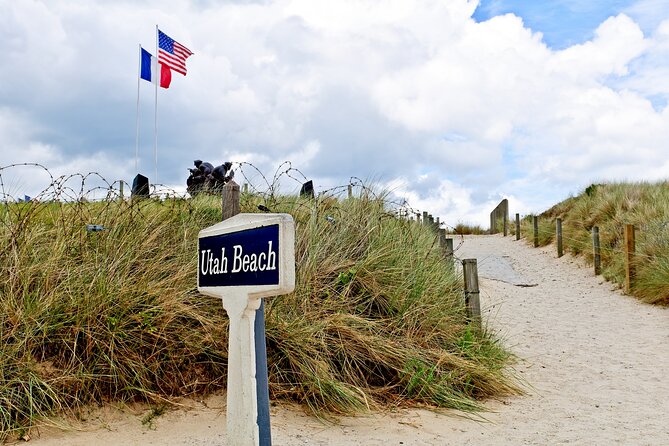
After the museum, you’ll have about 30 minutes to visit Utah Beach itself. The time isn’t long, but it’s long enough to get your bearings and experience the coastline where people fought and died.
Utah Beach was the westernmost landing site on D-Day, and one reason it’s taught as a key success story is that resistance was lighter compared to some other sectors. Standing there now, with open views to the sea, you get a sense of how exposed and exposed-to-decision the shoreline was.
This is also the first moment in the day when you can absorb the atmosphere without constant talking. I like that the schedule doesn’t keep you locked into the coach for the whole morning. A short walk on the sand gives you that grounding in place.
L Estran Lunch Stop: The Value of an Included Break

You’ll have about one hour for lunch in the port town area of L Estran. Lunch is included as a two-course meal, plus a glass of Norman cider.
The real value here is not just the food—it’s time management. Normandy towns can have limited dining options, and a day like this can fall apart if you’re trying to find a restaurant while buses queue up and schedules tighten. By planning lunch in advance, you keep the day from becoming a scramble.
That said, lunch is also where opinions vary. Some people loved that it was convenient and enjoyable; others found the meal disappointing or not served at the quality level they expected. Since extra drinks aren’t included, you’ll want to plan around that if you’re drinking beyond the included glass.
If you’re picky about meal quality, I’d treat lunch as a helpful pause rather than the highlight of your day. And if you’re traveling with kids, bringing a small backup snack can keep the mood steady if the restaurant stop is less than ideal.




Pointe du Hoc: 100-Foot Cliffs and the Fight You Can See
Pointe du Hoc is one of those places that makes the history feel physical. You’ll get about one hour here, with a guided battlefield walk.
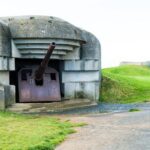
This site was a heavily fortified German position on steep cliffs overlooking the English Channel. The key story you’ll hear is the June 6, 1944 assault by U.S. Army Rangers, who scaled roughly 100-foot cliffs under relentless fire to seize the position.
What I like about a guided visit is that you don’t just walk along a dramatic viewpoint—you understand what you’re looking at: original bunkers, bomb craters, and broken fortifications that remain largely as they were left after the battle. It’s rugged terrain, and the cliffs shape everything—what attackers could see, how defenders could respond, and why the location was so strategically threatening.
Possible consideration: because the terrain is uneven and exposure to wind can be real, you should dress for weather and move carefully. If you have mobility limits, this stop may be the hardest part of the day aside from walking through the cemetery grounds.
Omaha Beach: Why a Shoreline Walk Matters
You’ll also spend time at Omaha Beach, with about 30 minutes to wander. This is where you feel the scale of the invasion on the ground more than in any single museum room.
Omaha is known for the fiercest resistance and the heavy casualties on June 6, 1944. Walking the shoreline helps you process the distance and the vulnerability of people moving across open sand. You see how little cover existed and how fast decisions had to be made.
A guided explanation earlier in the day sets the stage. The self-guided time here then lets you reflect in your own way—without being rushed through the meaning. For many people, Omaha is the emotional turning point of the trip, because you’re not just observing history. You’re standing where it happened.
Possible drawback: the time is short. If you want to sit, watch the horizon longer, and really think, this stop can feel too brief. It’s still worth it, but it’s not a replacement for a longer stay in Normandy.
Colleville-sur-Mer American Cemetery: Rows, Names, and Quiet Scale

The American Cemetery at Colleville-sur-Mer is the capstone for many visitors, and it’s easy to see why. You’ll spend about 1 hour 15 minutes there, with a guided tour plus free time.
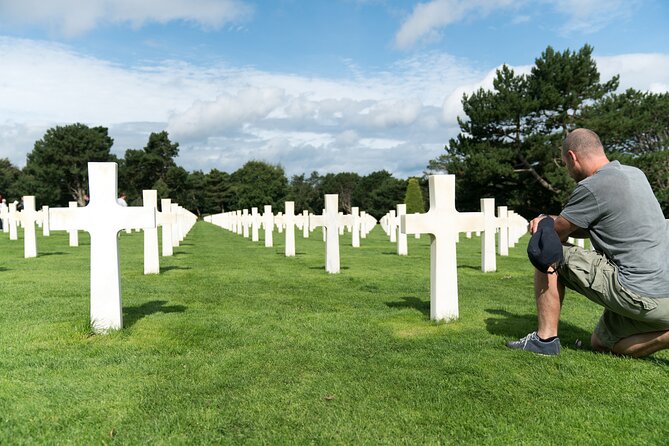
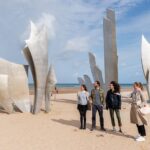
This cemetery overlooks Omaha Beach and honors nearly 10,000 U.S. soldiers who died during the Normandy landings. The setting is solemn and open, with rows of white crosses and Stars of David stretching across the grounds. It also includes a memorial reflecting pool and a chapel, which add to the quiet, respectful mood.
I especially appreciate that you get both guidance and silence. The guide helps you understand what you’re seeing—why the cemetery is laid out the way it is and what it represents. Then you get time to walk and pause on your own, which is crucial here. Some monuments make you read; this one lets you feel your way through the scale.
For anyone who plans to visit WWII sites in France, this cemetery visit is the moment you remember later, even after you forget the details of when you ate lunch or which bus stop was next.
What a Great Guide Changes in a Day Like This
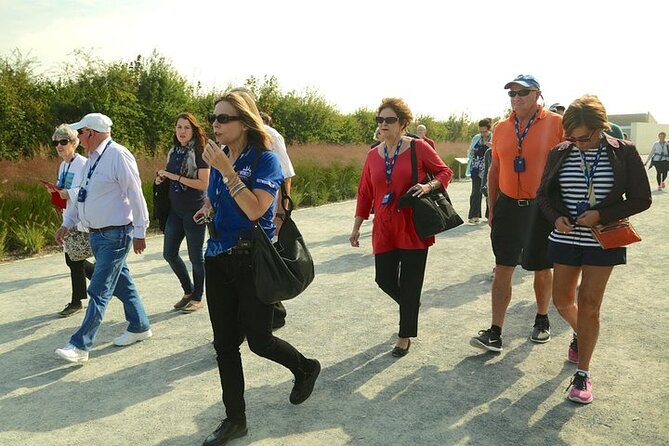
A tour like this lives and dies by the guide. The guide is with you the whole day, speaking English and connecting events across multiple locations. When the storytelling clicks, the sites stop feeling separate and start feeling like a single unfolding chapter of history.
From past tours, several guide names come up in a positive way, including Sam, Raymond, Maja/Maia, John, and Thelma. If you’re lucky enough to get a guide like that, you’re more likely to get the emotional and strategic threads right—not just dates, but why decisions mattered.
Even if your guide isn’t the one you’ve heard about, the guide role here is central. You’ll be listening during the long coach drive, and you’ll rely on the guide at key spots like Pointe du Hoc and the cemetery where context makes the views more meaningful.
One practical tip: ask questions when you can. If you’ve got a curiosity about how the landings were planned or why one beach worked differently than another, this is the day to use it.
Price and Value: Is $120.93 a Good Deal?
At $120.93 per person, this is not cheap, but it can be a good value if you’re comparing against the cost of building it yourself.
You’re paying for:
- Return transportation by air-conditioned coach from Paris
- An English-speaking expert guide for the whole day
- Utah Beach Museum admission and guided/structured time there
- A guided Pointe du Hoc battlefield visit
- Guided visit and time at the American Cemetery
- A 2-course lunch with a glass of Norman cider
- Free time at Utah Beach and Omaha Beach
If you were to plan similar stops on your own, you’d spend time figuring out schedules and local transport between sites. The guide and coaching make the day efficient, and that efficiency is what you’re buying.
If you care deeply about slow exploration, you might feel the squeeze on time. But if you want a focused, emotionally powerful overview with meals handled, the price lines up with what you get.
Who Should Book This Normandy Day Trip
This is a strong choice for:
- WWII history buffs who want the key sites in one day
- People with limited time in Paris and no desire to manage day-by-day logistics in Normandy
- First-timers who want a guided storyline across Utah Beach, Pointe du Hoc, Omaha Beach, and Colleville-sur-Mer
It may not be the best fit if:
- You hate long coach rides and want a relaxed pace
- You need lots of time at each museum or viewpoint to read and linger
- You’re very sensitive to cold and expect perfect temperature control on shared transport
Should You Book This Normandy Day Trip From Paris?
If you want a single, organized day that takes you to the core D-Day locations, I’d say yes—as long as you accept the trade-off: time boxing and a big day of sitting on a coach.
Book it if you’re the type who wants the story connected, with a real guide and a guided cemetery experience. Pass or consider an overnight approach if you know you’ll feel frustrated by short stops and a fast pace.
Either way, go in dressed for weather, with comfortable shoes, and with the mindset that this is a meaningful overview day. The emotional payoff at Colleville-sur-Mer makes the long hours worth it for many people.
FAQ
How long is the trip, and what time does it start?
The experience runs about 14 hours. It starts at 7:00 am in Paris and ends at Place de la Porte Maillot.
Is the tour in English?
Yes. The tour includes an English-speaking expert guide for the whole day.
Which D-Day sites are included?
You’ll visit Utah Beach Museum, Utah Beach, Pointe du Hoc (guided), Omaha Beach (free time), and the American Cemetery at Colleville-sur-Mer (guided).
Is lunch included, and what’s provided?
Lunch is included as a two-course meal with a glass of Norman cider. Extra drinks are not included.
Do I need to pay for entrance fees at the sites?
You have entrance and visit to the Utah Beach Museum included. The other stops listed are described as free time or visits without stating paid admission.
How big is the group?
The tour has a maximum group size of 50 travelers.
What cancellation options do I have?
You can cancel for a full refund if you cancel at least 24 hours before the experience’s start time.
How physically demanding is it?
The tour asks for moderate physical fitness, and you should expect some walking as you move between viewpoints and memorial grounds.