REVIEW · PARIS
Normandy D-Day Landing Beaches Small-Group Day Trip from Paris
Book on Viator →Operated by Paris TRIP · Bookable on Viator
Few places hit harder than Normandy.
This small-group day trip takes you from central Paris to the key D-Day sites—without you renting a car—so you can focus on the places and the stories. The tour runs about 12 hours and starts early, with a guided, 8-person max format designed to keep things personal instead of chaotic.
What I like most is the easy round-trip transport from a central meeting point in Paris, plus the fact that major entrances are handled for you with admission tickets included. You’ll also spend real time at each stop (instead of a quick drive-by), including a museum visit and a solemn cemetery moment.
One thing to consider: it’s a long day with a lot of road time, and the vibe at each site can depend heavily on the guide’s style and how chatty they are. If you want constant, detailed storytelling at every single stop, you may need to set that expectation before you book.
In This Review
- Quick hits before you go
- Why a Normandy D-Day day trip works so well from Paris
- Pointe du Hoc: the 90-foot cliffs where the Rangers went in
- Omaha Beach: what to notice when you’re finally there
- Colleville-sur-Mer American Cemetery: the place you won’t forget
- Overlord Museum (45 minutes): the context booster before you head back
- Getting there and back: early start, minivan comfort, and real pacing
- Price and value: what $344.27 buys you (and what it doesn’t)
- Who this tour is best for (and who should think twice)
- Should you book this Normandy D-Day small-group tour from Paris?
- FAQ
- What time does the tour start from Paris?
- How long is the trip to Normandy?
- What group size should I expect?
- Is transportation included from Paris?
- Are tickets included for the sites?
- Is food or drinks included?
- Is the tour offered in English?
- Where does the tour meet in Paris?
- Is the tour affected by weather?
- What if I need to cancel?
- Can children join?
Quick hits before you go
- 8 travelers max in an air-conditioned minivan, not a bus packed with strangers
- Skip-the-line access built in for the major sites
- Four high-impact stops: Pointe du Hoc, Omaha Beach, the American Cemetery, and Overlord Museum
- Morning cliffs can get windy—plan for cool air and sea-breeze gusts
- American Cemetery scale: 9,000+ crosses across 170 acres, plus chapel and memorial
Why a Normandy D-Day day trip works so well from Paris
A Normandy day from Paris is basically an all-day “transfer + impact” plan. You trade sleep for proximity: being in France’s north, then standing on the same stretches of coast where the landing unfolded. If you’ve only got a few days in Paris, this is one of the most direct ways to make Normandy happen without spending the day negotiating French roads and parking.
The small-group setup matters more than you’d think. With a max of 8 people, you’re more likely to actually hear the guide clearly, ask questions without waiting, and keep an unhurried rhythm at each stop. Several guides mentioned by name in past groups—like Fabrice, Nikola, Nicolas, Regis, and Sébastien—are described as friendly and tuned to the pace of the day, which is exactly what you want here. This isn’t the place for a rushed “next, next, next” tour.
You can also read our reviews of more tours and experiences in Paris.


Pointe du Hoc: the 90-foot cliffs where the Rangers went in
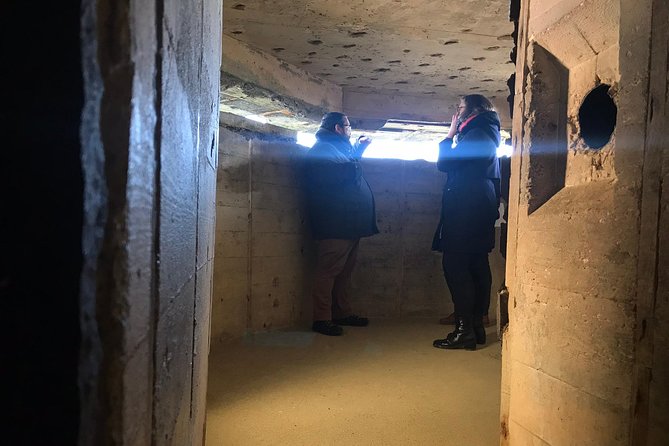
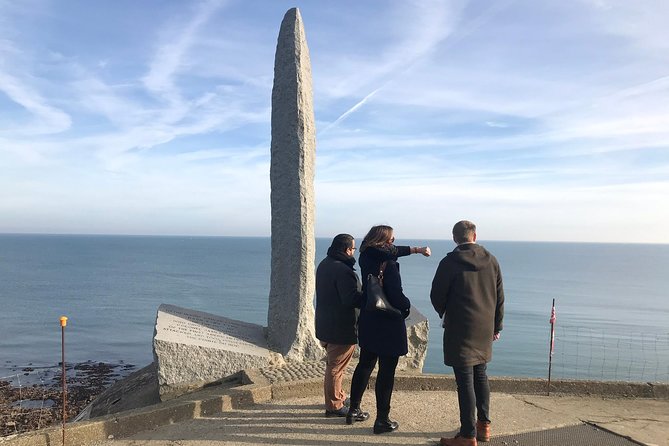
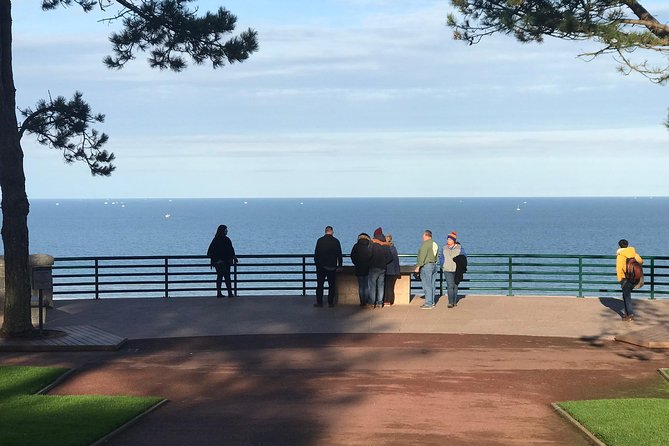
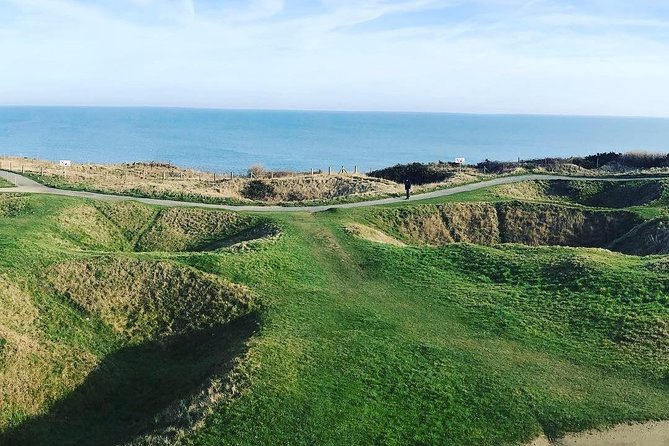
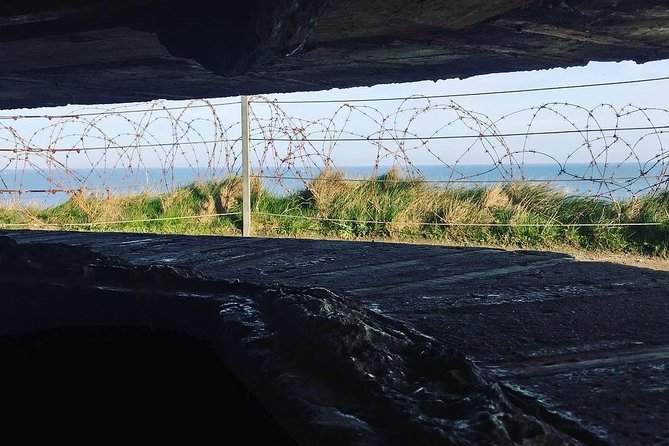
Pointe du Hoc is the kind of stop that changes your brain’s scale. The point is defined by height—those 90-foot (27-meter) cliffs—and by the mission: 225 rangers landed there on the morning of June 6, 1944. When you look out from that coastline, you can start to grasp why the approach and timing mattered so much.
Practically, this is also one of the most weather-sensitive stops. You’re on exposed ground. Even if the forecast says decent weather, the wind can cut. One traveler advice line you can borrow: check conditions ahead of time and dress for wind, not just temperature. If you’re planning a trip outside summer, bring layers you can zip on and off fast.
Some guides add extra context at this stop—like connecting what you’re seeing to the way the rangers moved under fire—and that sort of “connect-the-dots” approach helps. If you’re the type who wants a guide to explain what you’re looking at instead of just pointing, Pointe du Hoc is often where that pays off most.
Omaha Beach: what to notice when you’re finally there
Omaha Beach is both huge and specific. It’s easy to feel overwhelmed because you can’t take in “the whole battle” in one glance. But what you can do is notice the coastline features and the layout logic. The beach isn’t just a postcard; it’s a real stretch of terrain where every decision had consequences.
This stop also benefits from the tour structure. You’re not doing this alone, and you’re not coordinating your own ticketing or moving between sites. You arrive, you get the context, you walk and look, and you move on with a planned pace. The tour also includes admission for Omaha Beach, which saves time and keeps you from spending the day solving logistics.
One more tip: give yourself a moment to switch from “tour mode” to “quiet mode.” You’ll be surrounded by other visitors, but the site naturally encourages reflection if you step aside and let it hit. That’s where a small-group format helps—you’re less likely to feel like you’re being dragged forward.
Colleville-sur-Mer American Cemetery: the place you won’t forget
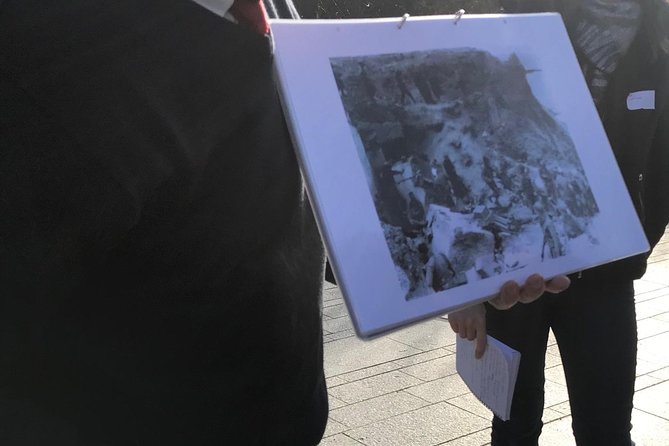
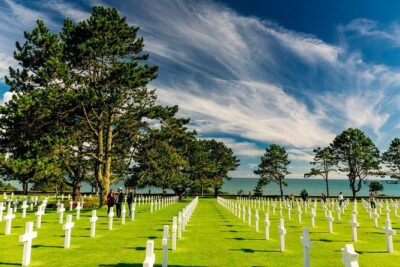
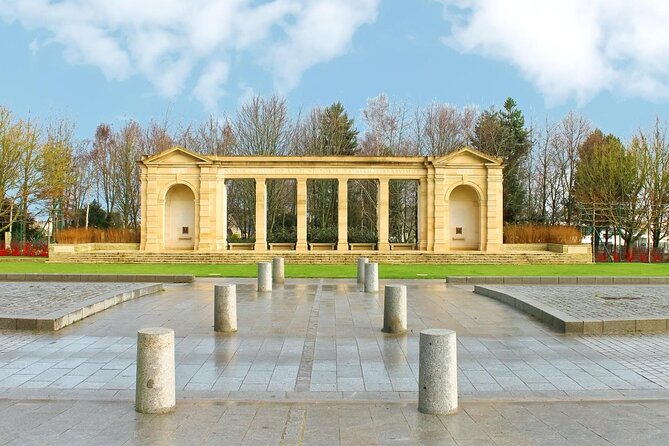
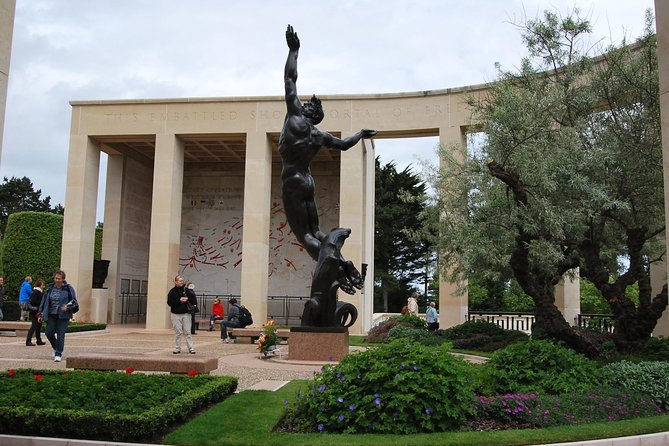
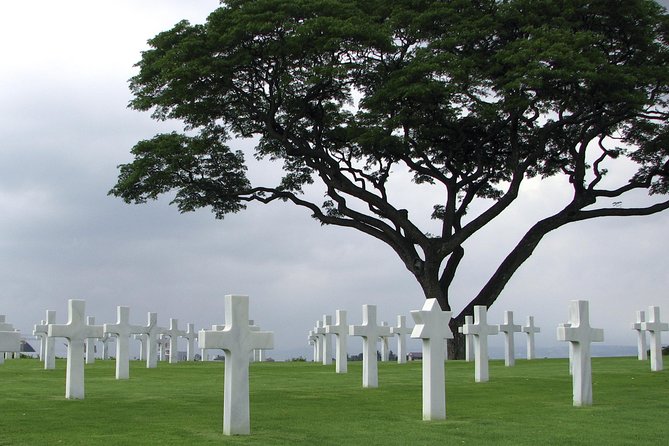
If Omaha is where you visualize the landing, the Normandy American Cemetery and Memorial at Colleville-sur-Mer is where you feel the cost. The scale is clear fast: it’s home to more than 9,000 white crosses, aligned across 170 acres, with a chapel and memorial that complete the emotional arc of the visit.
I find this kind of site works best when you’re allowed to process. Many groups reported that their guides gave them time to take in what they were seeing without pushing the next movement. That matters here because the goal isn’t to “finish the tour”—it’s to pay respects, absorb the layout, and let the place do its job.
Practical note: expect to spend meaningful time here and dress appropriately. Even if it’s warm in the car, cemetery grounds can feel cooler and more exposed. Also, bring a mindset of respect. This is the stop where talking less often feels better.
Overlord Museum (45 minutes): the context booster before you head back
After the cemetery, you get a different kind of learning: Overlord Museum. The visit is set for about 45 minutes, which is a sweet spot for most people. You’ll leave with a clearer picture of the operation and why the landings unfolded the way they did—without turning your day into a multi-hour classroom session.
This is where skip-the-line access helps. When you’re on a tight schedule—about 6:50 am start and returning to the same Paris meeting point later—any time saved from ticket lines makes the rest of the day feel less squeezed.
Even if you think you already know D-Day history, the museum often reframes details through photos, objects, and explanations. The best use of your time here is to pick one or two themes you want to understand better—like the overall plan, the timeline, or what came next—and let the museum fill in the gaps.

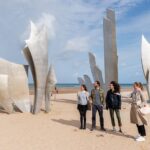



Getting there and back: early start, minivan comfort, and real pacing
The day begins early—start time 6:50 am—because Normandy is far enough that you’ll lose most of the daylight if you start later. That means you’ll likely spend the first part of the trip riding through the countryside while the morning wakes up outside the window.
For many people, the long drive isn’t a problem because the minivan experience makes it feel like shared time rather than a waiting room. Small groups can chat with each other and with the guide on the way, and guides often use that ride time to preview what you’ll see next with photos or D-Day context. If you’re curious about the story arc, that “setup talk” can make later stops click faster.
Comfort is part of the deal. It’s an air-conditioned minivan, which is good news. Still, one caution from past experiences: if your guide focuses more on driving than guiding, you can feel like you’re spending more time in transit than learning. That’s not guaranteed, but it’s worth keeping in mind if your personal goal is heavy narration. If you’re unsure, look for a guide description style that promises active commentary rather than passive transportation.
Price and value: what $344.27 buys you (and what it doesn’t)
At $344.27 per person for a day trip (about 12 hours), you’re paying for time, convenience, and guided access—not just for a seat on a vehicle. The big value levers are:
- Small-group size (max 8), which tends to make the day feel less crowded and more adjustable
- Round-trip transport from a central Paris meeting point at Le Duplex2 bis Av. Foch
- Admission tickets included for the main sites, which saves time and avoids last-minute ticket logistics
- A structure that includes all the major stops without you planning the road connections
What you should plan for: food and drinks are not included. That means you need a budget for lunch and snacks, even if the day includes a lunch break. Some past experiences included great restaurant stops, but the only reliable approach is to assume you’ll need to pay for your own meals.
So, is it worth it? If you want Normandy in one day and you don’t want to drive yourself, yes—especially with the small-group setup and included site tickets. If you’d rather go at your own pace and spend extra time at just one beach area, then you might compare this with a multi-day plan or a self-drive approach.
Who this tour is best for (and who should think twice)
This is a strong match if you fall into one of these categories:
- You’re a history buff or you have a personal WWII connection
- You want to visit multiple D-Day sites in one day, without driving
- You prefer a small minivan over big groups and loud buses
- You like guided context at key stops (especially Pointe du Hoc and the museum)
It may be less ideal if:
- You need long, detailed commentary at every single moment. This day is packed and sometimes guides vary in how much narration they deliver at each stop.
- You’re very sensitive to early mornings. The 6:50 am start means you’ll feel the long day even if everything goes smoothly.
Should you book this Normandy D-Day small-group tour from Paris?
If your main goal is to experience the D-Day landing beaches and the American cemetery in a single day—and you want it managed for you with included tickets and small-group comfort—I think you should strongly consider booking.
Do it with two expectations set correctly: it’s a long day, and the emotional weight is real. Pack for wind and changing conditions, plan to buy your own food, and go in ready to stand still for a moment at the cemetery. With the small-group format and consistent site structure, it’s the kind of trip that can genuinely stick with you long after you’re back in Paris.
FAQ
What time does the tour start from Paris?
The tour starts at 6:50 am at the meeting point in Paris.
How long is the trip to Normandy?
The total duration is about 12 hours.
What group size should I expect?
This is a small-group tour with a maximum of 8 people.
Is transportation included from Paris?
Yes. The tour includes round-trip transport from central meeting points in Paris using an air-conditioned minivan.
Are tickets included for the sites?
Yes. Admission tickets are included for Pointe du Hoc, Omaha Beach, the Normandy American Cemetery and Memorial, and the Overlord Museum.
Is food or drinks included?
No. Food and drinks are not included.
Is the tour offered in English?
Yes, the tour is offered in English.
Where does the tour meet in Paris?
The meeting point is Le Duplex2 bis Av. Foch, 75116 Paris, France.
Is the tour affected by weather?
The tour operates in all weather conditions. You should dress appropriately for the day.
What if I need to cancel?
You can cancel for a full refund up to 24 hours in advance of the experience start time.
Can children join?
Children must be accompanied by an adult.