REVIEW · HIROSHIMA
Miyajima Half-day Trip Historical Walking Tour
Book on Viator →Operated by MagicalTrip Inc. · Bookable on Viator
Torii views change your mood fast on Miyajima. This half-day walk is a practical way to connect the island’s most important sacred spots with great photo viewpoints and real local food, all without you playing detective. You get that iconic Itsukushima atmosphere right away, plus a small-group pace that keeps things easy.
I particularly like that the tour is built around the key sites in a tight loop, so you spend your energy looking up instead of figuring out where to go next. I also like the included Hiroshima local lunch with fresh or grilled oysters and momiji dumplings, which makes the day feel complete, not like a snack stop in between sights.
One consideration: it’s mostly outdoors and involves coastal walking and temple stairs, so summer heat can feel intense. Bring water and a hat, and wear shoes with solid grip.
In This Review
- Key highlights you will feel right away
- First steps on Miyajima start with the ferry view
- Ōtorii and Itsukushima Shrine: the tide-and-time effect
- Daishō-in Temple and Momijidani Park: religion with real stairs
- Senjokaku and Omotesando: sacred ends, food starts
- The lunch deal: oysters and momiji dumplings (and limits)
- Price and value: why $109.43 can make sense here
- Why the max 6-person group feels different
- Weather, crowds, and the one thing you should not skip: shoes
- Who this Miyajima half-day walk is best for
- Should you book this tour?
- FAQ
- FAQ
- How long is the Miyajima half-day walking tour?
- What is included in the tour price?
- Do I need to pay for the ferry to Miyajima?
- What’s for lunch on this tour?
- Are there vegetarian or vegan options?
- Is gluten-free lunch available?
- How big is the group?
Key highlights you will feel right away
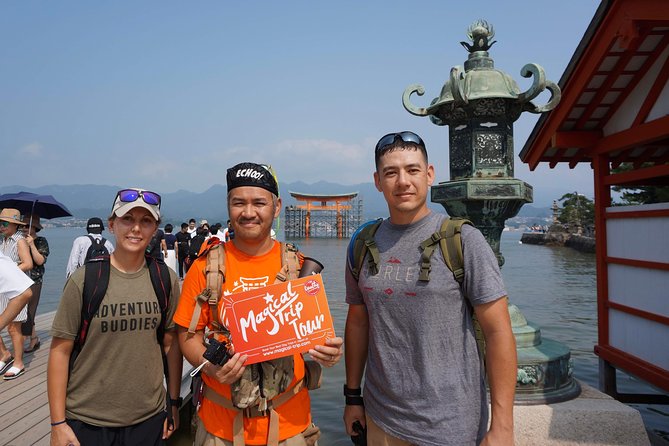
- Up-close torii and shrine photo moments guided for the best angles and timing
- Six-person maximum so your questions and pace actually matter
- Included oyster lunch plus momiji treats instead of leaving it to chance
- A focused sacred-site route: Itsukushima, Daishō-in, Senjokaku, and more
- Local street-food time on Omotesando for grilled oysters and souvenirs
- Weather-managed planning with enough structure to enjoy a rainy or overcast day
First steps on Miyajima start with the ferry view
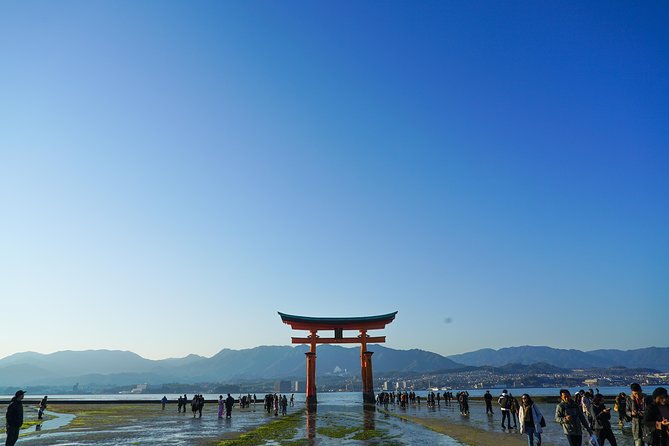
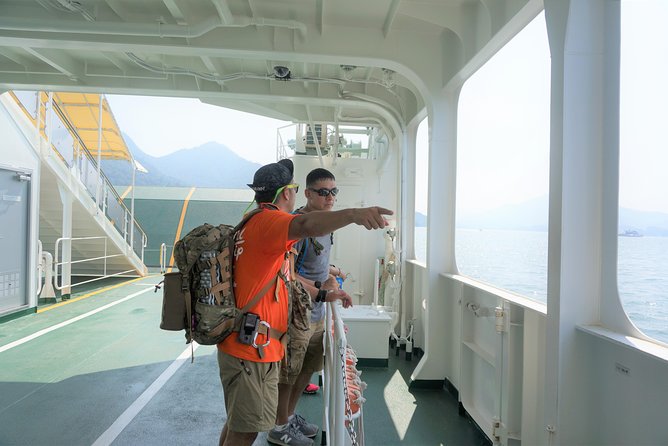
Most people start Miyajima by stepping off a ferry and immediately noticing how the scenery changes. Even before you reach the island’s main sacred area, the boat ride sets the tone with Seto Inland Sea views and that famous Ōtorii silhouette. It’s not just pretty. This is the island’s “why” in one glance—sanctuary-style, coastal, and built around tides.
You’ll also get the advantage of being guided from the start. You don’t have to worry about which side of the pier to stand on or how long transfers take. The tour ends back at the meeting point, so you can plan the rest of your Hiroshima day without mystery.
And because it’s a half-day (about 5 hours 30 minutes), you’re not stuck in transit for most of it. You get the classic Miyajima feeling in a timeframe that works even if you have other Hiroshima plans.
You can also read our reviews of more tours and experiences in Hiroshima.
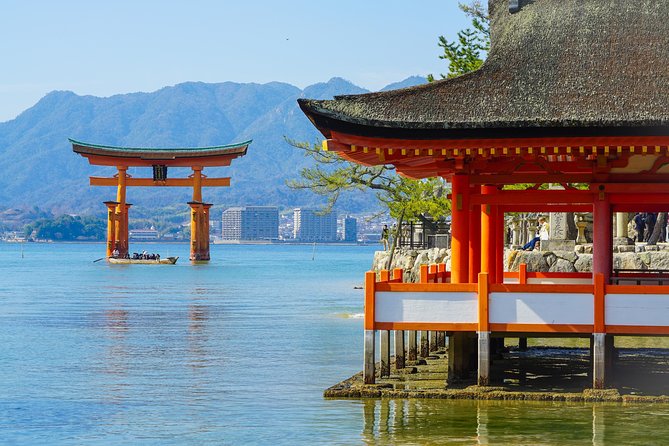
Ōtorii and Itsukushima Shrine: the tide-and-time effect
The coast walk toward the Ōtorii gate is where Miyajima starts looking like a postcard—but up close, it’s more than that. The guide brings you along to the shoreline viewing areas, so you can keep your camera ready without hunting.
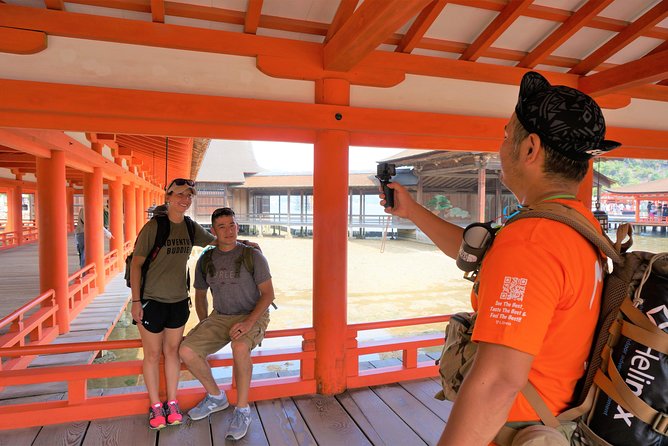
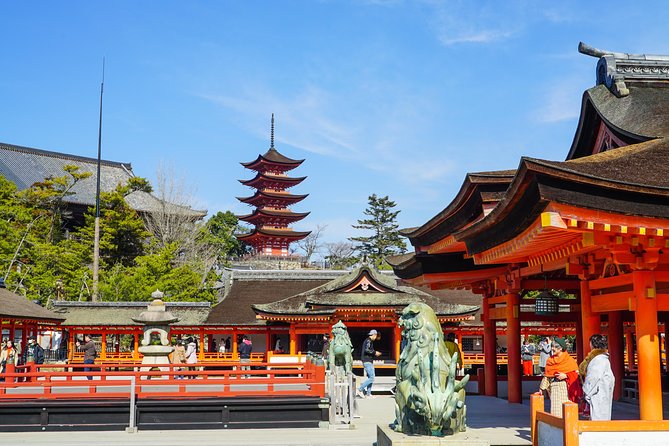
Then you reach Itsukushima Shrine, the island’s spiritual center. Here’s what makes the stop special: the shrine’s architecture was built in the Heian period (794–1192), and it’s known for withstanding the ebb and flow of tides. You’re not just looking at buildings. You’re seeing a system that learned to live with moving water.
Expect a calm, reverent rhythm at the shrine. The tour includes time to take photos with the shrine as your backdrop. If you get the right conditions—some days even allow rare closeness to the Ōtorii area at low tide—you’ll understand why Miyajima has the reputation it does. Even without that extra moment, the design and setting do the work for you.
Practical note: don’t plan on rushing. The best shrine moments come when you pause. The tour structure helps you do that instead of sprinting between landmarks.
Daishō-in Temple and Momijidani Park: religion with real stairs
After Itsukushima, the walking shifts from coastal icons to temple grounds. Daishō-in Temple is the stop where Buddhism becomes more than a word. Your guide explains key ideas and points out the statues, giving you context for what you’re seeing.
This is also the part where you feel the island’s vertical character. Temple routes often mean stairs and short climbs. Many visitors love this stop most because it’s visually striking and less crowded than the main shrine area, but it demands comfortable footwear. If your legs are okay with stairs, you’ll enjoy it more than you might expect.
Right after that, you get Momijidani Park with time for photos. It’s a shorter pause, but it helps break up the day so you’re not just moving from one serious site to the next. This is where you reset your eyes: greenery, angles, and a little space to breathe.
Senjokaku and Omotesando: sacred ends, food starts
The tour continues with Senjokaku, explained in a way that helps you understand how it fits into the Itsukushima complex. The information you get matters here, because without context, big halls can feel like just another building. With context, it becomes part of the story of worship and shrine tradition on the island.
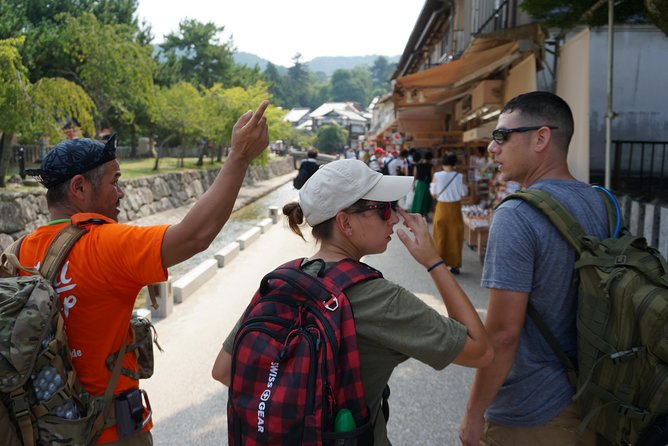
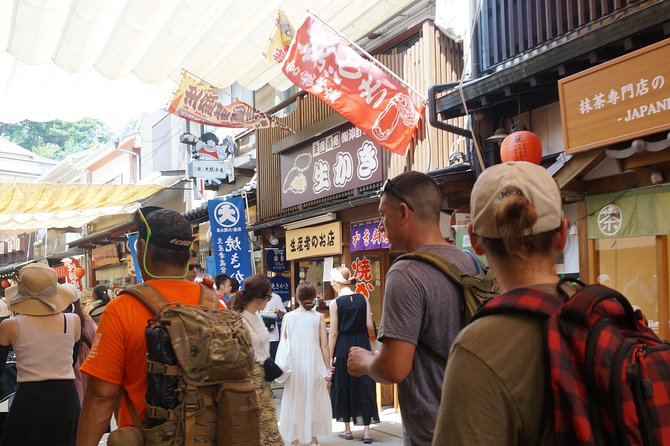
Then you pivot to something very Miyajima: Miyajima Omotesando Shopping Street. This is your practical reward for walking—snack time, souvenir hunting, and the kind of casual food atmosphere that makes an island day feel lived-in.
Omotesando is lined with souvenir shops and food stalls, and grilled oysters are a common star. The tour doesn’t end at just one bite, either. You’re given about an hour here, which is enough time to grab something small, compare treats, and still browse without feeling rushed.
It’s also a smart way to end your day if you want keepsakes that actually connect to the places you just saw, not random imports with no story behind them.
The lunch deal: oysters and momiji dumplings (and limits)
The best part of this tour’s value is that lunch is included: a Hiroshima local lunch featuring fresh or grilled oysters and momiji dumplings. If you have ever been stuck on a trip thinking you’ll find good food later, this fixes that. The lunch is scheduled so you don’t spend your sacred-time day choosing between sights and hunger.
How to think about dietary needs:
- Vegetarian and vegan lunch options are available, but they are limited.
- Gluten-free lunch is not available.
- Allergy-free meals can’t be guaranteed, and food is prepared in kitchens that are not run by the tour provider.
If you have dietary requirements, tell them at least a day ahead. Requests made on the day of the tour may not be possible. That’s important, because seafood-based dishes are common on Miyajima, and you’ll want the best chance at a safe substitute.
Also remember: the tour notes additional foods and drinks are available to purchase. So the included lunch is a solid base, not a full buffet plan. Bring water, and pace your eating around the walks.
Price and value: why $109.43 can make sense here
At $109.43 per person, this isn’t the cheapest way to get around Miyajima. But it can be strong value if you want structure and context.
Here’s what your price covers:
- Entrance fees to shrines, temples, and museums visited on the tour
- A certified guide
- Tour photos
- The included local lunch
What costs extra:
- The ferry fee to Miyajima (500 yen round-trip)
So you’re paying for more than “someone to point things out.” You’re paying to reduce decision fatigue. You’re also paying for a guide who helps you connect what you see—especially with the shrine and temple stops where timing and context change the experience.
If you’re comfortable navigating and don’t mind reading on your own, you could do Miyajima independently. But if you want the day to feel smooth, the cost can feel fair. The small group size (max 6) also helps justify the price because you get more attention than you would on a huge bus tour.
Why the max 6-person group feels different
The group limit is more than a marketing line. With a maximum of six passengers, you get a day that tends to run with more breathing room.
From the kinds of experiences people share, guides often adjust pacing based on what the group needs—especially around stairs and hills. That matters on Miyajima because the island is scenic, but it isn’t flat.
It also helps you ask questions without feeling like you’re interrupting. And it helps with photo time: you’re not constantly fighting for a spot at the edge of a viewpoint.
You may even end up with something close to a private tour if the group is small that day. When that happens, the tour stops feel less like a checklist and more like a guided walk with conversation built in.
Weather, crowds, and the one thing you should not skip: shoes
Miyajima can be great in overcast weather and rainy days, and this tour style holds up because it’s structured around fixed stops rather than “wandering until you find something.” The guide can keep you moving so the day doesn’t turn into a series of missed photo chances.
But rain also changes the ground. Temple stairs and stone paths can get slick. Wear shoes that grip. You’ll thank yourself during the Daishō-in portion.
Now for the bigger seasonal issue: summer heat. The tour notes Japan summers can be extremely hot and humid, with potential summer highs around 40°C (110°F). Bring water and wear a hat to reduce heat stroke risk.
Even if you aren’t there in peak heat, good advice is good advice. Hydrate, take your breaks, and don’t treat stairs like a workout challenge.
Who this Miyajima half-day walk is best for
This tour fits best if you:
- Want a guided way to see Ōtorii + Itsukushima Shrine + additional temple stops without stitching the route yourself
- Love photography and want help getting the right angles and time to take pictures
- Appreciate cultural context, not just landmark names
- Prefer a small group pace over loud, crowded tours
- Want lunch handled for you, especially with oyster and momiji dumplings included
If you already know Miyajima well and you prefer free-form wandering, you might find the route too structured. But for most first-timers to the island, the tour does a smart job of hitting the meaningful parts without turning the day into logistics.
Should you book this tour?
If your goal is a smooth, meaningful Miyajima day—especially if you’re short on time—this is an easy yes. The included entrance fees and lunch are a big part of the value equation, and the small group cap makes the day feel calmer.
Book it if:
- You want the spiritual sites explained as you go
- You’d rather spend time looking at the scenery than planning the next turn
- You don’t want to gamble on finding a good oyster-and-momiji lunch on your own
Skip it (or reconsider) if:
- You need guaranteed allergy-safe or gluten-free meals, since gluten-free lunch is not available and allergy-free meals can’t be guaranteed
- You hate walking and stairs. There are temple steps, and this is a walking-focused day
FAQ
FAQ
How long is the Miyajima half-day walking tour?
It runs about 5 hours 30 minutes.
What is included in the tour price?
Entrance fees to shrines, temples, and a museum, a certified guide, tour photos, and a Hiroshima local lunch.
Do I need to pay for the ferry to Miyajima?
Yes. The ferry fee is 500 yen round-trip and is not included.
What’s for lunch on this tour?
The lunch is a Hiroshima local meal that includes fresh or grilled oysters and momiji dumplings.
Are there vegetarian or vegan options?
Yes, vegetarian and vegan lunch options are available but limited.
Is gluten-free lunch available?
No. Gluten-free lunch is not available.
How big is the group?
The tour has a maximum of six travelers.
If you want, tell me your travel month and any dietary needs, and I’ll help you judge how comfortable the day will be and what to plan around.