REVIEW · HIROSHIMA
Hiroshima and Miyajima Day Trip with Itsukushima Shrine & Ferry
Book on Viator →Operated by Amigo Tours Japan · Bookable on Viator
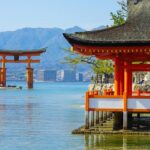
Seeing the floating torii is a sure way to reset your brain. I like that this tour handles the logistics for you, so you’re not wrestling transit schedules from Hiroshima Station. I also like that you get ferry tickets plus Itsukushima Shrine admission in the price. One thing to consider: it runs with a bilingual English and Spanish guide, and a few departures have audio/pacing issues if you’re not close to the front.
You’ll also get a real contrast in one day: Miyajima’s shrine-and-deer mood, then Hiroshima’s sobering monuments and museum experience.
In This Review
- Key highlights that matter
- Price and Logistics: what $45 really buys
- Starting in Hiroshima Station: meet the guide and get moving fast
- The drive to Miyajima: scenic views plus cultural context
- Ferry ride to Miyajima: short crossing, big payoff
- Itsukushima Shrine: the floating torii experience
- Tip for your photos and pacing
- Miyajima streets and deer: the island side of the day
- Optional choice: skip Hiroshima Peace Park if you want a lighter day
- Hiroshima Peace Memorial Park: monuments you can’t unsee
- How to handle the museum time pressure
- The bilingual guide setup: get the most by standing right
- Group size and crowd reality: plan for busy walking
- Value breakdown: included items vs what you handle yourself
- Who this day trip suits best
- Practical expectations: timing, free time, and how to enjoy it
- Should you book this Hiroshima and Miyajima day trip?
- FAQ
- How long is the Hiroshima and Miyajima day trip?
- Where does the tour start in Hiroshima?
- Which parts are included in the price?
- Is the ferry included?
- Is Itsukushima Shrine admission included?
- Is Hiroshima Peace Memorial Park included in every option?
- Is admission to Hiroshima Peace Memorial Park included?
- How many people are in the group?
- Is the tour ticket mobile?
- What happens if the weather is bad?
Key highlights that matter
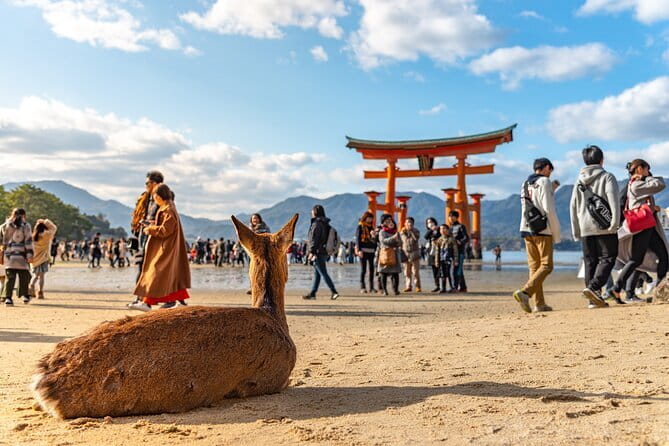
- Ferry to Miyajima without transit stress: you ride the bus out of the city, then take a short ferry crossing.
- Itsukushima Shrine ticket is included: you’re not hunting down admissions while the day is moving.
- Three hours on Miyajima: enough time to see the shrine area and also wander the island streets.
- Optional Hiroshima Peace Park add-on: choose Miyajima only, or Miyajima plus Peace Memorial Park.
- Small group size (max 30): easier to stay together, especially on crowded days.
- Peace Memorial Park visit time is set: some people feel it can feel rushed at the museum stage.
Price and Logistics: what $45 really buys
At $45 per person for an ~8-hour day, the value is in what they already bundle. You’re paying for transportation from the Hiroshima Station area, a ferry ticket to Miyajima, and the entrance fee to Itsukushima Shrine. Those are the parts that usually slow people down when they DIY it—getting the ferry right, arriving on time, and figuring out which ticket covers what.
What’s not included is food and drinks, and the Hiroshima Peace Memorial Park site admission is not included. So think of this as: you’re covered for getting there and seeing the main Miyajima shrine experience, then you handle any Peace Memorial entry/museum costs once you’re in the park area.
The tour is also built around a “group day” pace. That can be a plus if you want structure. It can be a drawback if you’re the type who wants long, quiet time inside museums.
You can also read our reviews of more tours and experiences in Hiroshima.
Starting in Hiroshima Station: meet the guide and get moving fast
Most departures start at Hiroshima Station, with two possible meeting setups depending on your option.
- If you choose Miyajima + Hiroshima Peace Park, you meet your guide outside the Hiroshima Station Shinkansenguchi Hiroba Bus Berth, between bus stops 8 and 9.
- If you choose Miyajima only, you meet the guide outside Hiroden–Miyajimaguchi Station at Hiroshima Station.
Either way, the point is simple: you’re out of the station quickly. That matters in Hiroshima, because once you’re standing around trying to figure out platforms and lines, the day starts to feel like work.
One practical tip: when the day begins, take a moment to confirm the meeting sign (Amigo Tours is what the guide uses). It’s a small step, and it saves you from the classic Japan-station panic.
The drive to Miyajima: scenic views plus cultural context
The bus ride has a purpose. It’s not just transport time. The guide shares background about Miyajima and Itsukushima Shrine as you travel, and you get a heads-up about what you’re about to see once you hit the coast.
This is one of the spots where a guided day can feel worth it. Miyajima isn’t hard to reach on your own, but the shrine meaning and the island rhythm can get lost if you show up cold.
You’ll also be reminded that Miyajima is popular. If you’re traveling around busy weeks, you’ll feel it later.
Ferry ride to Miyajima: short crossing, big payoff

From the ferry terminal, you board a boat for a scenic ride to Miyajima Island. It’s not long, but it does two helpful things:
- You physically arrive ready to slow down.
- You start to notice the “island mood” before you hit the crowds.
This is also where the included ferry ticket earns its keep. When you DIY, you’re juggling timing—ferry frequency, queue lines, and route changes. Here, you’re just following the plan.
Itsukushima Shrine: the floating torii experience
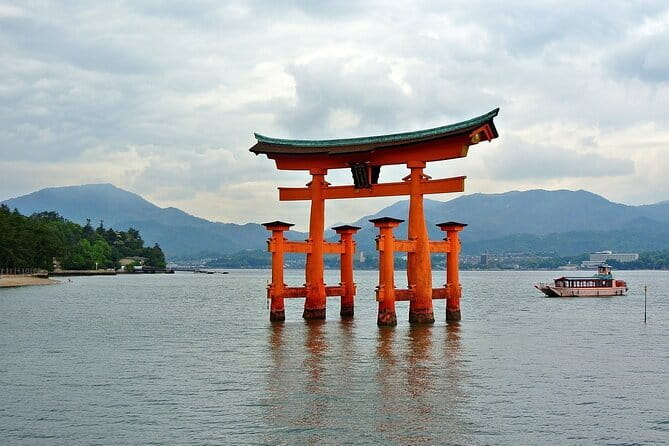
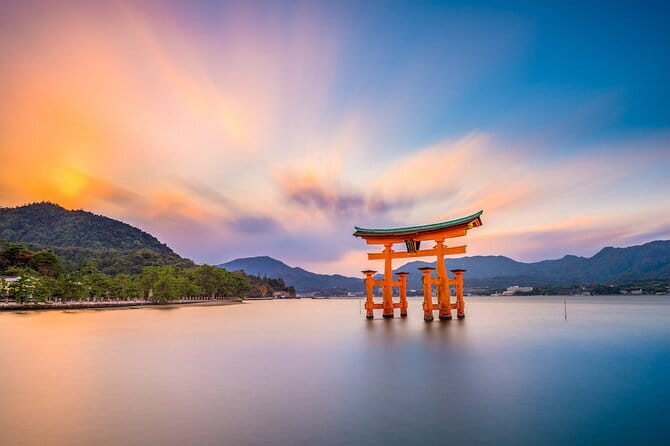
This is the headliner. Itsukushima Shrine is known for its famous setting, and the star moment is the torii gate that looks like it’s floating over the water.
Even if you’ve seen photos, it lands differently in person because your perspective changes as you move around the approach. The shrine area is structured for visitors to experience it in stages: sightlines open up, the water becomes part of the composition, and you can feel how the site works as both a religious place and a visitor destination.
What you’ll love most is the combination of calm and spectacle. It’s calm because the shrine sits in a coastal setting. It’s a spectacle because Miyajima is built for walking and photographing, and the “floating torii” is one of Japan’s most recognizable scenes.
Tip for your photos and pacing
Go at the pace of the lines, not against them. If you try to sprint to the best photo point, you’ll end up stress-scanning for strangers’ angles. Let the flow move, then step into your turn.
Miyajima streets and deer: the island side of the day
Miyajima isn’t just Itsukushima Shrine. The island is known for charming streets and free-roaming deer, and your time on the island is built to let you experience that.
You get about three hours on Miyajima. That’s enough to:
- see the shrine area,
- walk the surrounding lanes,
- and still have time to enjoy the island atmosphere without feeling like you’re backtracking constantly.
A quick reality check: Miyajima can be crowded. You’ll feel it when you’re near the shrine and the main walking routes. Crowds don’t ruin it—they just mean you’ll enjoy it more if you plan on shoulder-to-shoulder walking during peak times.
Optional choice: skip Hiroshima Peace Park if you want a lighter day
One smart feature of this tour is the option to only visit Miyajima. If you prefer not to spend the afternoon in a heavy historical setting, you can take the lighter route and keep your day centered on shrine views, sea air, and island walking.
If you do want the full arc—Miyajima beauty followed by Hiroshima remembrance—then the “+ Hiroshima” option is the one that fits.
This choice matters because it changes the emotional tone of the day. Hiroshima is not casual sightseeing. It’s remembrance, and it deserves the time it’s given.
Hiroshima Peace Memorial Park: monuments you can’t unsee
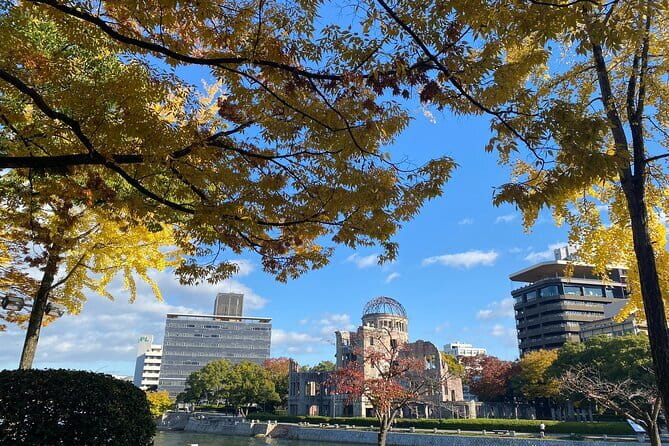
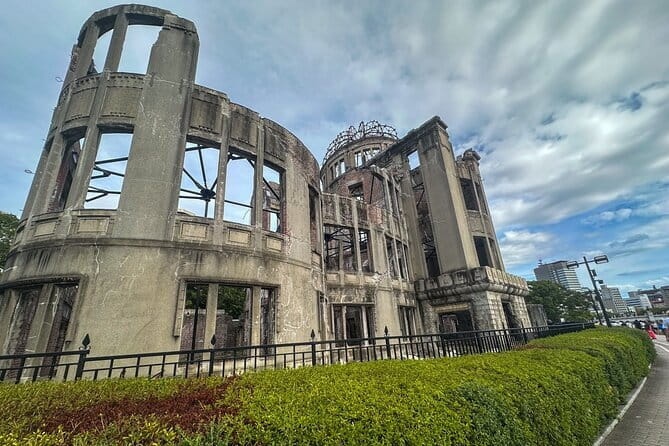
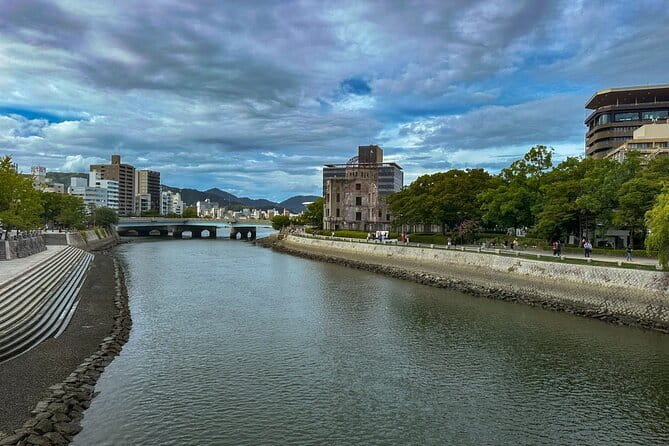
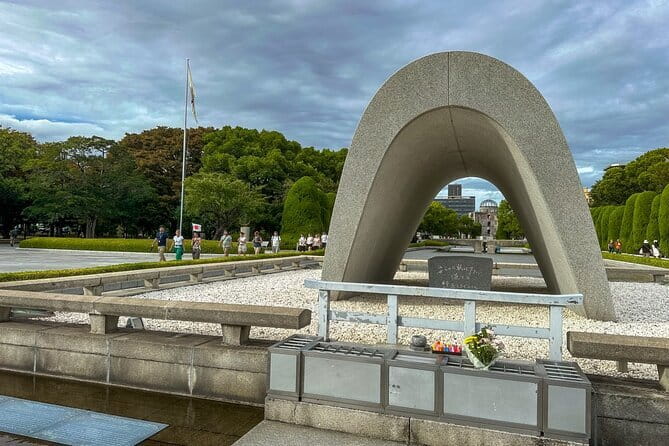
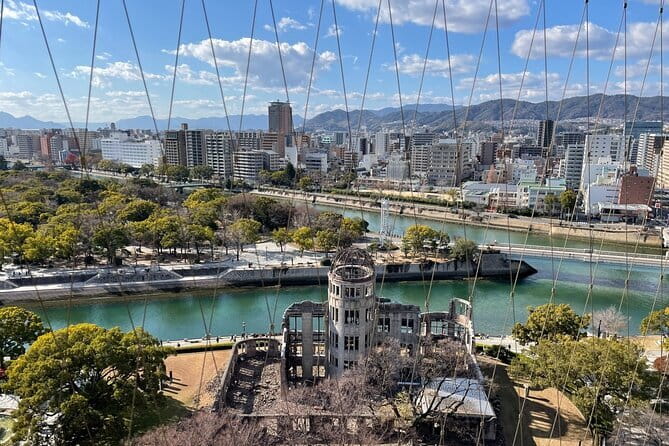
After Miyajima, the tour returns to Hiroshima for Hiroshima Peace Memorial Park. This is the portion of the day focused on the 1945 nuclear bombing, and you’ll be walking among memorials that include the Atomic Bomb Dome and other monuments honoring what happened.
The park experience hits in layers. Outdoors, the memorials and surroundings can feel open and quiet. Indoors, the museum materials force the topic into a clearer and sharper focus. For many people, this isn’t the kind of stop you rush through casually.
Your scheduled time at the Peace Memorial Park is about three hours. That might sound like plenty, but it’s also the part where pace complaints show up—mainly around museum time. If you want slow reading and long reflection, you might feel the time limit more than you expect.
How to handle the museum time pressure
If the museum area is what you care about most, don’t spend your entire time only outside. Once you enter, focus on the sections that connect to what you most want to understand. If you leave the museum too late in your time window, you’ll feel squeezed.
The bilingual guide setup: get the most by standing right
The tour includes a bilingual guide in English and Spanish, and the guide’s role is to keep everyone oriented and explain what you’re seeing.
Here’s the practical consideration: a few people have said the bilingual format can be tricky if the guide doesn’t clearly separate languages or if you’re not close enough. Others have praised guides who did a great job managing both languages, even with crowds.
So the “how to make it work” is straightforward:
- Stay close to the guide when explanations start.
- If you miss a segment, don’t guess—watch what the guide points at, because the physical cues matter a lot in shrine and memorial areas.
- If you’re sensitive to audio, pick a spot near the front of the group when the guide speaks.
Guide names that have been highlighted on past departures include Alan and Astrid (including comments about their clarity and ability to manage the day). Different guides can change the feel of the explanations, but the structure is similar.
Group size and crowd reality: plan for busy walking
This tour caps at 30 travelers, which helps. You don’t feel like you’re in a massive bus-fight, and it’s easier for the guide to keep track of everyone.
Still, Hiroshima and Miyajima are popular. Expect crowds—especially around the shrine approach and main walking routes. The upside of a guided day in crowds is that you’re not constantly making micro-decisions. The downside is that your “free time” becomes mostly “walk time,” because you’re moving with the group and around other visitors.
That’s why this tour tends to work best for people who want:
- a clear plan,
- guided context,
- and a stress-reduced day.
Value breakdown: included items vs what you handle yourself
Included:
- Itsukushima Shrine entrance
- Ferry ticket to Miyajima
- Transportation from the meeting point
- Bilingual guide in English and Spanish
- Mobile ticket
Not included:
- Food and drinks
- Hiroshima Peace Memorial Park admission (and museum entry needs, where applicable)
So what you’re really buying is not just transport. You’re buying the “correct path” through the main sights of Hiroshima Prefecture. That can save you time and frustration—especially if this is your first trip to the area.
If you do the math in your head, you’re already paying for ferry access and shrine entry either way. The guide and bus are what round out the cost, giving you structure and explanations.
Who this day trip suits best
This works well if you:
- want a one-day overview that connects Miyajima and Hiroshima without planning every step,
- like having someone explain context as you move,
- and are okay with a set schedule (including a museum time window that might not feel long enough).
It’s also a good choice if you’re traveling with a partner or family who wants to avoid logistics stress. Everyone stays together, and the day flows.
If you’re the type who wants hours alone to read every plaque in a museum without any time pressure, you may find this schedule a bit tight at Hiroshima. In that case, you might prefer a slower plan where you control how much time you spend indoors.
Practical expectations: timing, free time, and how to enjoy it
Even when the day is well managed, you should expect some moments where you’re not lingering as long as you’d like. The itinerary gives about:
- ~50 minutes of bus time early in the day,
- ~3 hours on Miyajima,
- ~3 hours at Peace Memorial Park,
- then back to Hiroshima Station to wrap up.
A good mindset is: use your time on Miyajima for walking and shrine sights, then use Hiroshima time for what matters most to you (outside memorials vs museum vs both).
Also, start with your priorities in mind. If your priority is the Atomic Bomb Dome and museum context, plan to spend more attention there and not let your time outside the museum area eat the clock.
Should you book this Hiroshima and Miyajima day trip?
Book it if you want an efficient, guided day where the main pieces are already taken care of: bus out of the city, ferry to Miyajima, and shrine admission included, then a structured visit to Hiroshima’s memorial sites.
Skip it (or at least consider a different style of trip) if you want long, uninterrupted museum time at Hiroshima or if bilingual audio format is a deal-breaker for you. In that case, you might prefer a private or single-language experience.
If you do book: arrive on time at the meeting point you chose, stand near the guide when they explain, and decide ahead of time whether you care more about outside memorials or museum reading. That one decision will make the whole day feel like it fits your style.
FAQ
How long is the Hiroshima and Miyajima day trip?
The duration is about 8 hours.
Where does the tour start in Hiroshima?
It starts at Hiroshima Station. If your option includes Hiroshima and Miyajima, you meet at Hiroshima Station’s Shinkansenguchi Hiroba Bus Berth. If your option includes only Miyajima, you meet outside Hiroshima Station Hiroden–Miyajimaguchi Station.
Which parts are included in the price?
The tour includes entrance to Itsukushima Shrine, a ferry ticket, transportation from the meeting point, and a bilingual guide in English and Spanish. Food and drinks are not included.
Is the ferry included?
Yes, the ferry ticket is included.
Is Itsukushima Shrine admission included?
Yes. Entrance fee to Itsukushima Shrine is included.
Is Hiroshima Peace Memorial Park included in every option?
No. There is an option to visit only Miyajima and skip the Peace Park. Another option includes Hiroshima and Miyajima.
Is admission to Hiroshima Peace Memorial Park included?
Admission for Hiroshima Peace Memorial Park is not included.
How many people are in the group?
The tour has a maximum of 30 travelers.
Is the tour ticket mobile?
Yes, it uses a mobile ticket.
What happens if the weather is bad?
This experience requires good weather. If it’s canceled due to poor weather, you’ll be offered a different date or a full refund.