REVIEW · ROME
From Rome: Ostia Antica Guided Half-Day Trip by Train
Book on GetYourGuide →Operated by City Wonders Ltd. · Bookable on GetYourGuide
Roman street life, far calmer than Pompeii.
A half-day train trip from Rome brings you to Ostia Antica, a former Roman harbor town where everyday life in the Republic still shows through in streets, shops, and public buildings.
I love how the guide steers your eyes to the details you’d miss on your own, especially the Baths of Neptune mosaic and the communal Forica public washrooms. I also like the value math: for about $58 you get the return train, entry, and a live English-speaking guide for the key hours on site. One real consideration: it’s a walking-heavy ruins visit, and it’s not suitable for wheelchair users, with baby strollers not allowed.
In This Review
- Key highlights you’ll feel during the walk
- Getting to Ostia Antica from Rome: Piramide station and the easy rhythm
- The guided 3 hours that make the ruins click
- Decumanus Maximus: the main street that feels like a Roman spine
- The Baths of Neptune: when a mosaic turns into a story
- Amphitheater energy: the roar you can almost hear
- The Forica public washrooms: the most human stop
- What happens after the tour: modern Ostia and an optional beach
- Value for about $58: what you’re really buying
- Who should book this half-day Ostia Antica trip
- Should you book this guided trip from Rome to Ostia Antica?
- FAQ
- Where do I meet for the Ostia Antica guided trip?
- How long is the tour from Rome to Ostia Antica?
- What’s included in the price?
- What language is the guide?
- How big is the group?
- Is there a toilet break during the trip?
- What should I bring?
- Are baby strollers allowed?
- Can I stay in Ostia after the guided part?
Key highlights you’ll feel during the walk
- A quick train ride from central Rome that keeps the day simple and low-stress
- Small group size (max 12) for easier pacing, questions, and breathing room in the ruins
- Decumanus Maximus street walk along the main thoroughfare with statues and storefront life
- Baths of Neptune mosaic with the sea god scene, including the four-horse chariot idea
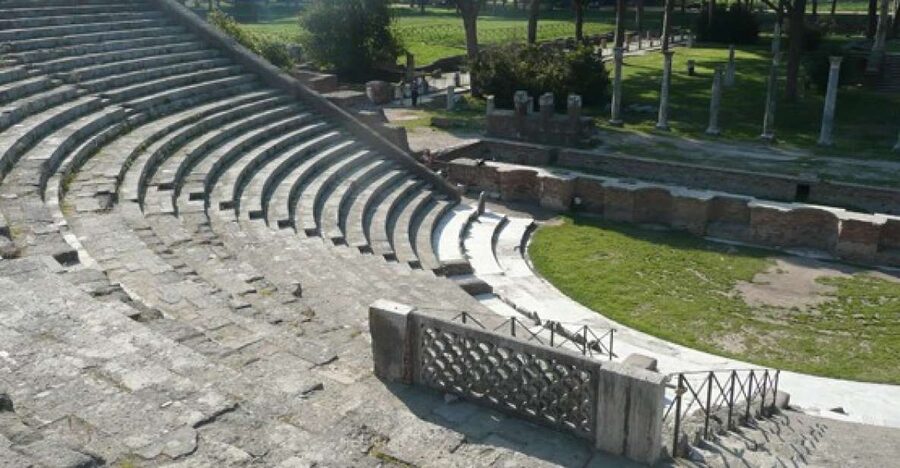
- Amphitheater scale built in 12 BC for around 3,500 spectators
- The Forica public washrooms where the design is meant for real, human use, not just viewing
Getting to Ostia Antica from Rome: Piramide station and the easy rhythm
This trip is built around one big win: you don’t have to figure out complicated transport on your own. You meet at Cafe Piramide near the Piramide Metro stop (Line B, the blue line). If you face the metro station, stand so the metro is in front of you; the café is on your right side in clear view of the tracks, and you’ll spot it by the white umbrellas outside.
Then it’s the train. The ride to Ostia Antica is short—around 15 minutes—so your day doesn’t feel like a half-day spent commuting. Once you’re at Ostia, the guided portion takes over, which matters because the site is large and spread out across a park.
At the end, the tour service finishes in Rome at the Piramide Metro Station (around 1:00 PM). You can stay in Ostia after the tour if you want, but if you do return to Rome, the return journey is unescorted even though the train tickets are provided.
Practical tip: give yourself a little extra time if you’re coming in from Termini or a busier route—getting to Piramide can feel crowded at peak times, and meeting points are tight.
You can also read our reviews of more tours and experiences in Rome.

The guided 3 hours that make the ruins click
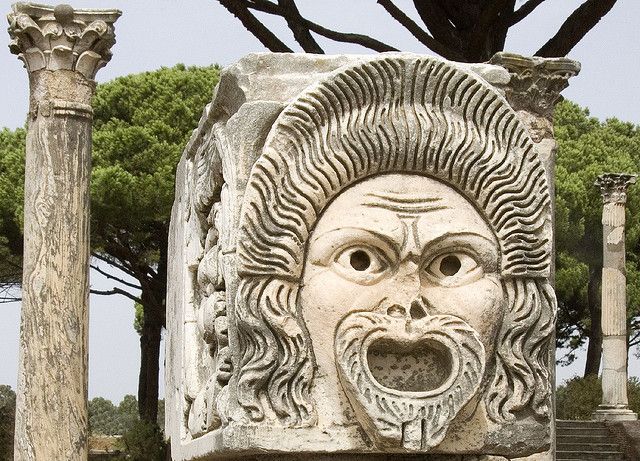
You’re going to walk and you’re going to learn, but the best part is how the guide connects the physical remains to daily Roman life. Ostia Antica was founded in the 4th century BC and grew into a major port town with more than 100,000 residents at its peak. On the ground, you’re not staring at isolated monuments—you’re moving through a functioning urban layout: streets, commercial zones, bath complexes, and public venues.
Most of the payoff comes from watching the guide’s order. You start with the main thoroughfares and the buildings that show how people worked and spent time. Then you shift into the big public spaces: the baths, the amphitheater, and the communal facilities. The tour also emphasizes the rise and fall of Ostia, so you leave with more than a list of stops—you understand why this mattered to Rome.
Because the group is limited to 12, the pacing feels humane. There are short opportunities to step out of the flow, plus a toilet break with time for a snack or drink at a snack bar.
Why this matters for your visit: Ostia is less crowded than some other Roman sites, so you can actually hear explanations and see details without constantly fighting crowds.
Decumanus Maximus: the main street that feels like a Roman spine
Your guide walks you along Decumanus Maximus, the main north-south thoroughfare, the kind of street that would have shaped how a city moved. Along this route, you see statues that line the walkway. That’s a big part of why the street walk works: it’s not just an outdoor museum path. It reads like a real civic corridor where public art and everyday movement overlapped.
This is where the port-city angle really comes through. Ostia’s identity wasn’t only political; it was practical. The surviving remains include areas that resemble taverns, warehouses, and other commercial spaces tied to shipping and trade. You also get the sense of Roman urban planning, because the street system helps you picture where people lived versus where commerce ran.
If you’ve visited big-name sites before, you might expect Ostia to feel like a collection of ruins. With a guide, it turns into a map of habits: walking patterns, where people would pause, and how public spaces connected to daily needs.
One note: this part is mostly outdoors. Wear shoes that can handle uneven ground, because the park surface is archaeological, not park-path smooth.
The Baths of Neptune: when a mosaic turns into a story
The Baths of Neptune are a highlight for a reason. You’re not just looking at faded decoration—you’re seeing a mosaic scene described around the sea god, with an image concept tied to a four-horse chariot. That kind of intact, high-status artwork gives you a mental jump from ordinary streets to elite leisure and civic pride.
Bath complexes in Rome weren’t only about cleanliness. They were places for social time, discussion, and status. On this stop, the guide ties the architecture and decoration to the lifestyle that surrounded port wealth. Ostia wasn’t a backwater; it helped feed Rome and profit from its movement of goods, and that prosperity shows in buildings like these.
One more reason the baths hit: because this part sits in a preserved setting, you can actually grasp scale. The walls and floor areas stay coherent enough that you can visualize circulation and where people likely gathered.
Practical angle: keep an eye on shade and rest spots here. Some guides are praised specifically for finding shade on hot days, which is exactly the kind of comfort detail that keeps the tour enjoyable rather than grueling.
Amphitheater energy: the roar you can almost hear
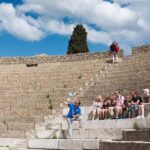
Next up is the amphitheater, and it’s a big psychological moment in the tour because it changes your scale of thinking. The amphitheater was built around 12 BC and would have seated about 3,500 spectators when it opened. Standing in the arena space (and taking your place in the stands viewpoint the guide sets you up for) helps you understand how performance and civic life were linked.
This stop isn’t only about the structure. The guide asks you to imagine crowd noise and event timing. That’s where Ostia starts to feel like a living city again, because the amphitheater shows a Roman need that’s universal: people gather to watch and to belong to a shared moment.
Also, this is a useful counterpoint if you’ve mainly associated Roman entertainment with the Colosseum. You get a quieter, smaller-feeling version closer to daily life, without the massive scale pressure.
Photo note: amphitheater views are great, but don’t spend your whole time photographing. Listen to the guide’s framing first, then take a few quick shots once you know what you’re looking at.





The Forica public washrooms: the most human stop
If the tour had one stop that feels personal rather than monumental, it’s the Forica, the communal public washrooms. The design is what makes it stand out: a marble bench lined with 20 well-spaced holes across four walls in a large open room.
Yes, it’s public. Yes, it’s practical. But what you remember afterward is the realism. The guide encourages you to sit and experience the Forica as something built for everyday Roman behavior, not just an artifact to admire from a distance.
It’s also a clever way to learn Roman life, because it moves the focus away from politics and high art. You learn how a crowded port city managed hygiene and public routine.
This stop can surprise you—in a good way. It’s one of those places that makes history feel less distant because the experience maps to something bodily and ordinary.
What happens after the tour: modern Ostia and an optional beach
One of the nicest features of this experience is what you can do at the end. When the guided portion wraps up in Rome, you also have options. You can stay in Ostia to explore the modern town at your leisure, or you can head to the beach.
If you want to add time on your own, the tour gives you the context so you’re not wandering in the dark. A few practical pointers help here. For example, there’s an on-site museum you might want to time well: in winter season, it can close early (around 1:30 PM), so plan accordingly if your goal includes museum time.
Also helpful: the walk from the Ostia train station to the archaeological site is short—less than 5 minutes—so extending your day doesn’t automatically become a long hike.
Finally, if you choose to go back to Rome, you’ll use the provided train tickets, but you’ll travel unescorted. That’s fine if you’re comfortable with the station and trains, and it means you should double-check that you’ll recognize the correct return stop.
Value for about $58: what you’re really buying
The price point only feels fair when you look at what’s included. You’re paying for three main pieces:
- Return train ticket between Rome and Ostia Antica
- Entry ticket for the archaeological site
- A live English guide for the core learning hours
For a half-day, that bundle matters because the guide is the difference between seeing ruins and understanding them. Without help, you can still explore Ostia, but you may miss the why behind the structure—like how Decumanus Maximus connects to commerce, or how public architecture like the Forica signals daily routine.
You also get a small-group setup, which helps the guide keep the pacing right and allows for questions without constantly pulling back into a big crowd dynamic.
If you’re deciding between self-guided and guided, ask yourself one question: do you want the site to feel like a walk through a city, or a checklist of stops? With this format, you get the city feeling.
Who should book this half-day Ostia Antica trip
This works best if you want a Roman port-city experience without spending all day in transport or getting stuck in dense crowds. Ostia is repeatedly described as quieter than the blockbuster sites, which is exactly what makes the guide’s storytelling easier to absorb.
It also suits people who like architecture and urban life—street layout, baths, amphitheater design, and the practical public spaces where ordinary Romans spent time. If you’re the type who loves the details (mosaics, statues, floor plans, the way buildings are arranged), you’ll enjoy how the tour points you to the right features.
What to watch for:
- Expect a walking-heavy experience over archaeological ground.
- It’s not suitable for wheelchair users.
- Baby strollers are not allowed.
- Bring comfortable shoes and follow the provided packing list, including a towel and beachwear if you might add a beach stop.
Should you book this guided trip from Rome to Ostia Antica?
I’d book it if you want an efficient, high-value way to see Roman life beyond the usual big names. The biggest reason is the guide-led structure: it turns streets, baths, an amphitheater, and the Forica into a coherent story about how a port city functioned.
Skip it only if you strongly prefer fully accessible routes, need stroller access, or can’t handle archaeological walking surfaces. Otherwise, this is one of the smarter half-days you can add to a Rome trip—close enough to make the day feel easy, different enough that you won’t just be repeating what you already saw downtown.
If you like to plan for a little freedom after the tour, this one is extra appealing because you can extend your time in modern Ostia or add a beach break without losing the context the guide gives you.
FAQ
Where do I meet for the Ostia Antica guided trip?
Meet at Cafe Piramide near the Piramide Metro stop (Line B – the blue line). Facing the Piramide metro, stop on your right-hand side; the café is visible near the train tracks and you can recognize it by the white umbrellas outside.
How long is the tour from Rome to Ostia Antica?
The total experience is about 4 hours, with around 3 hours on the guided tour at Ostia Antica.
What’s included in the price?
You get a return train ticket from Rome to Ostia Antica, the Ostia Antica entry ticket, and a live English guide.
What language is the guide?
The guide provides the tour in English.
How big is the group?
The tour is a small group with a limit of 12 participants.
Is there a toilet break during the trip?
Yes. There is a toilet break, with time for a snack and/or drink at the snack bar.
What should I bring?
Bring comfortable shoes. The tour also suggests packing a towel and beachwear (plus sports shoes if you have them).
Are baby strollers allowed?
No, baby strollers are not allowed.
Can I stay in Ostia after the guided part?
Yes. After the tour, you can remain in Ostia Antica and the modern town for your leisure, or head to the beach. If you choose to return to Rome, you’ll use the provided train tickets but your return journey is unescorted.