REVIEW · KYOTO
From Kyoto: Nara, Osaka & Kobe Day Trip – 3 Cities in 1 Day
Book on GetYourGuide →Operated by AMIGO TOURS JAPAN GK · Bookable on GetYourGuide
A day that hops three cities sounds like chaos, but it can work. This Kyoto-to-Nara-Osaka-Kobe trip strings together Nara Park deer and Osaka Dotonbori neon with just enough guided structure to keep you from wasting time.
What I really like is the mix of calm and energy: 2.5 hours in Nara Park to slow down, then a guided walk in Dotonbori where you can grab snacks and still hear the story behind the streets. The one drawback to plan for is the long day and the fact that some sightseeing points are a short walk from the bus stop.
You’ll be moving most of the time, so comfy shoes matter more than your best outfit. And because food is on you (not included), you’ll want a simple plan so you don’t end up hunting for something right when everyone’s hungry.
In This Review
- Key highlights to expect
- From Kyoto to three cities: why this format actually makes sense
- Meeting at Hotel Keihan Kyoto Grande: the start that sets the tone
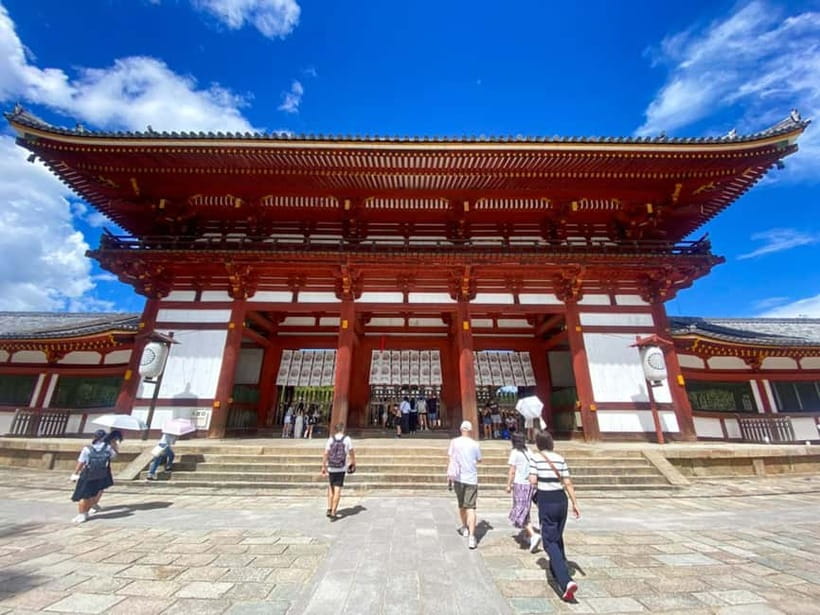
- Nara Park: deer time plus temple-and-garden calm
- A practical way to use your Nara time
- Osaka: Dotonbori street life and the food-first mindset
- One small warning: Osaka moves fast
- Osaka Castle area: photos, moat views, and a calmer pace
- What to watch for here
- Kobe: Nankinmachi Chinatown and the harbor photo line
- How to avoid feeling shortchanged in Kobe
- Food strategy: meals are on you, so plan the easy wins
- Price and value: what you’re really paying for
- Logistics reality check: the long day and walking distances
- Who this tour suits best (and who should skip it)
- Should you book this Kyoto-to-Nara-Osaka-Kobe day trip?
- FAQ
- Where do I meet the guide?
- How long is the tour?
- What’s included in the price?
- Are food and drinks included?
- Which languages are available for the guide?
- How much time do I get in Nara Park?
- What should I bring?
- Is the tour wheelchair accessible?
Key highlights to expect
- Nara Park, deer on your schedule: A generous block of time in the park where deer are part of the scenery, not a separate attraction.
- Dotonbori with guided orientation: You get a guided introduction, then free time to follow your own cravings.
- Osaka Castle with room to breathe: Photo time plus a walk around the castle area, not just a quick pass-by.
- Kobe Chinatown and harbor views: Time in Nankinmachi, then a harborfront stroll with skyline photo stops like Kobe Port Tower and Meriken Park.
- Bilingual support in English and Spanish: Guides like Cesar, Angeles, and Paula come through in the feedback, helping make the day smoother across language barriers.
- Strong transport score: The bus experience lands very well for comfort and punctuality.
From Kyoto to three cities: why this format actually makes sense
Kansai is dense. Kyoto is its own world, but Osaka and Kobe are close enough to do as day trips if you don’t want the stress of trains, transfers, and last-minute ticket decisions. This tour leans into that: one morning departure, organized timing, and one guided team handling the routing.
I like this approach because it protects your energy for the places that matter most. Nara doesn’t need you to be a logistics expert. Osaka does need you to manage crowds and directions. Kobe is usually easier once someone shows you the order of sights. With a schedule that links the cities, you get the best kind of “see a lot” day: you’re not skipping the essentials just to stay on time.
Price-wise, $129 isn’t just “a cheap bus ride.” You’re paying for transportation plus a bilingual guide (English and Spanish), and the day is paced so you’re not stuck waiting for long stretches between stops. Since food and drinks are not included, you should treat the tour cost as covering the structure, not your meals. That makes it easier to budget.
One more practical detail: the tour runs for 630 minutes (about 10.5 hours). That’s a full day, so it’s great if you enjoy movement and short sightseeing windows. If you hate rushing, this may feel like “one big marathon.”
You can also read our reviews of more tours and experiences in Kyoto.
Meeting at Hotel Keihan Kyoto Grande: the start that sets the tone
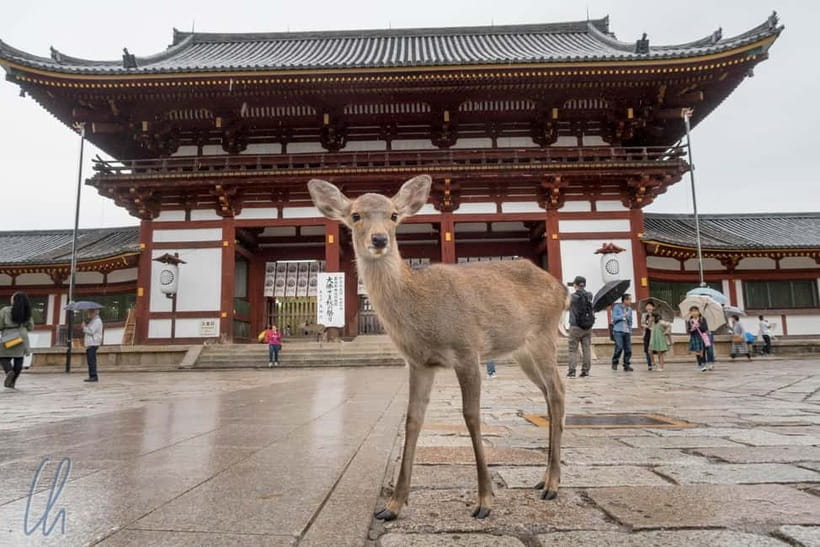
Your day begins outside Hotel Keihan Kyoto Grande. Plan to arrive at least 10 minutes early for check-in. That small buffer matters with group tours because everyone needs to regroup before departure, and you don’t want to be the person sprinting with a suitcase slung over one shoulder.
You’ll ride by bus between cities. Comfort matters here. In the feedback, there’s strong support for transport quality (an 85% perfect score from a large chunk of people), and multiple drivers and guides are praised for smooth, safe rides. In plain terms: you’re less likely to spend the journey feeling wrecked before you even reach Nara.
Also, the tour is not designed for wheelchair users. If accessibility is a concern, it’s better to look for a different format rather than hoping you can “make it work” on the day.
Nara Park: deer time plus temple-and-garden calm
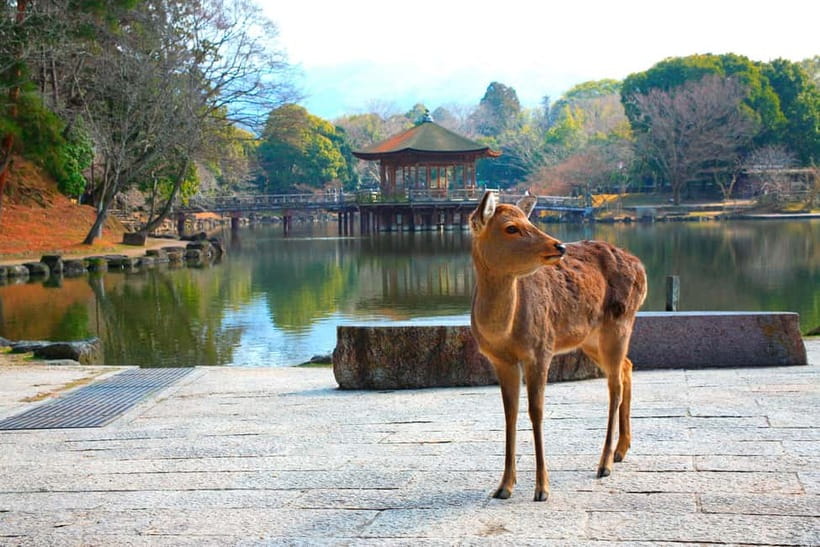
Nara Park is the reason many people come to Nara. The deer aren’t a side show. They’re part of the park’s daily rhythm, roaming through the open areas where you’ll be walking.
You’ll get about 2.5 hours in Nara Park. That’s enough time to do more than snap photos and move on. It lets you stroll the spacious grounds at an easy pace, take in the nearby temple atmosphere, and still have time to step back from the busiest paths when you want quiet.
This stop works well because Nara is naturally organized for wandering. The deer add a lively element, but the park also gives you breathing room. It’s a smart contrast to the later city scenes. Osaka and Kobe can feel intense. Nara helps reset your brain.
A practical way to use your Nara time
Aim to do a loop rather than chasing one viewpoint. That way, you’ll catch:
- deer sightings without constantly turning back
- temple views as they appear along your route
- a slower “Kansai morning” vibe before Osaka crowds ramp up
If you want to feed deer, there’s time for it, and you’ll be in the right place for that experience. Just follow whatever the park allows on the day. Deer can be bold, and rules exist for a reason.
Osaka: Dotonbori street life and the food-first mindset
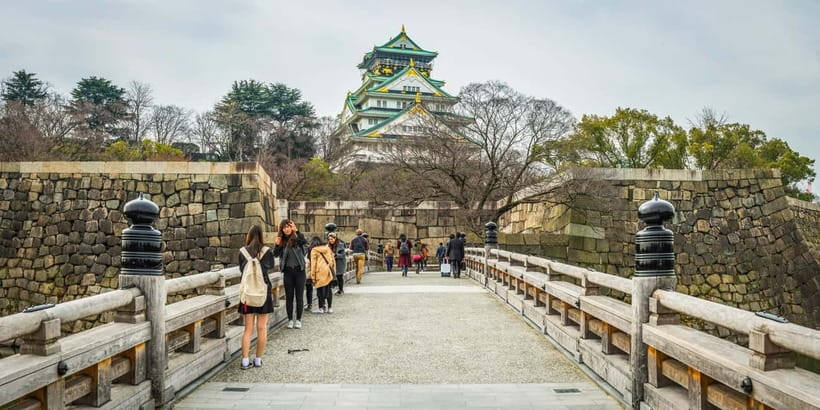
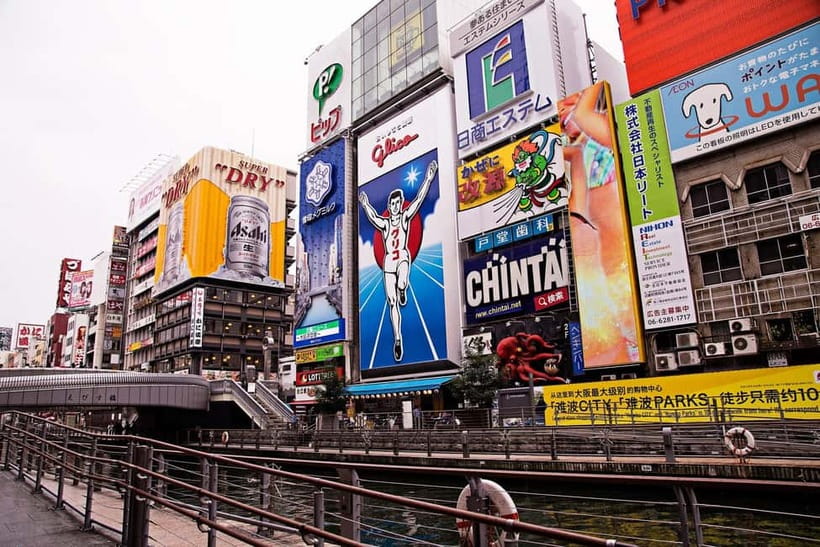
After Nara, you head to the heart of Osaka. The first real taste of Osaka is Dotonbori, a neon-filled entertainment district where the street energy starts the moment you arrive.
You’ll have a guided tour plus about 1.5 hours of free time. That timing is important. A guide helps you understand where to go and what you’re looking at. Then you get the freedom to eat, shop, and wander at your own speed.
This is where you should treat your meal like a mission:
- takoyaki (octopus balls)
- okonomiyaki (savory pancakes)
These two are exactly the kind of foods that make Dotonbori worth your time. They’re easy to order, quick to find, and perfect for eating while standing and people-watching.
One small warning: Osaka moves fast
Dotonbori can be crowded and loud. You don’t need to fight the biggest crowd all day long. Use your guided window to get your bearings, then step a few streets away when you want more comfort.
In the feedback, one person noted that bus stops can be a little farther from the exact viewpoints. In Osaka especially, that means you should expect short stretches of walking on busy sidewalks. Good shoes are your best accessory.
Osaka Castle area: photos, moat views, and a calmer pace
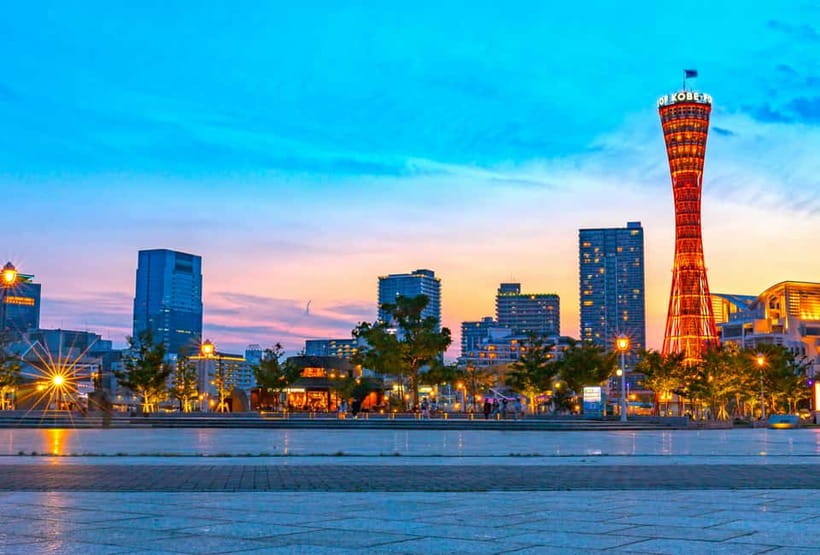
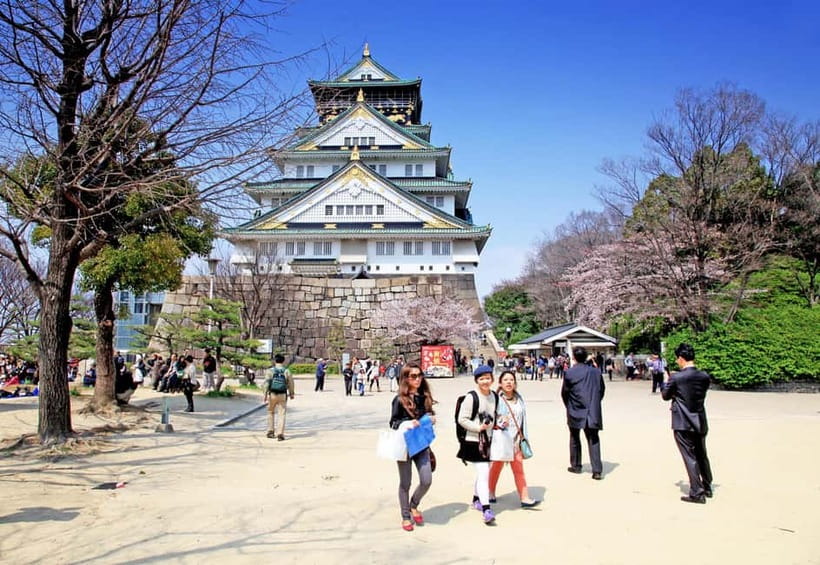
After Dotonbori, you’ll go to Osaka Castle. This is the “take a breath” section of Osaka. The castle sits in a landscaped area with a moat and lots of space for photos.
You’ll get about 1 hour for free time and a walk around the castle surroundings. That’s enough to:
- get the classic castle exterior photos
- enjoy the open area without feeling totally rushed
- slow down compared to the street-food chaos of Dotonbori
Castle grounds can be scenic, and in good weather they’re a strong contrast to the neon everywhere else. Also, Osaka Castle is a natural place to pause and reset before you continue to Kobe.
What to watch for here
Expect walking. Even if you’re not doing deep museum time (not mentioned as a focus), you’ll still need mobility for the grounds and viewpoints. If you’re sensitive to walking distance, this is where you’ll feel it.
Kobe: Nankinmachi Chinatown and the harbor photo line
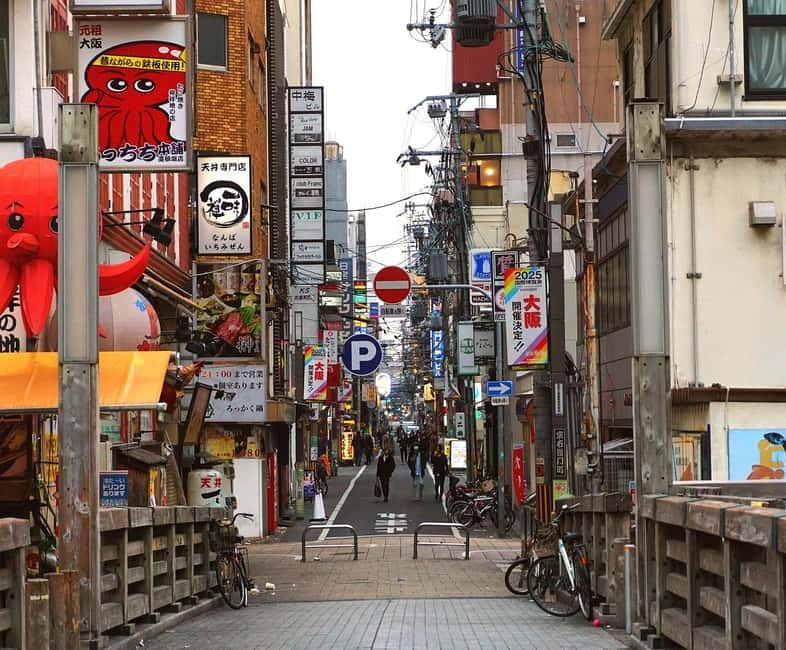
Kobe is the grand finale of the day, and it changes the mood again. You’ll spend time in Kobe’s Chinatown, Nankinmachi, plus a guided tour and free time (about 2 hours total) in the area.
Nankinmachi is perfect for exploring on foot. Think colorful streets, international foods, and a different flavor of Japanese city life than Osaka. It’s also a great place for snacks and quick meals if you want variety from Osaka’s focus.
Then comes the harborfront stretch. Kobe has that “port city” feel where modern structures mix with ocean views. You’ll get photo-friendly stops like:
- Kobe Port Tower
- Meriken Park
and time for a relaxed walk to take in the water.
How to avoid feeling shortchanged in Kobe
Kobe time can feel precious because it’s the last stop. One highlight from the feedback: the guide attention and route choices can make a big difference. Still, if you’re someone who wants to linger in one neighborhood, you may feel the squeeze because there’s a lot packed into the day.
That said, Kobe’s harbor is exactly the kind of place where short walks deliver payoff. Even with limited time, you can still get a satisfying sense of the city’s vibe.
Food strategy: meals are on you, so plan the easy wins

Food and drinks are not included, which means you’ll want a simple approach so this doesn’t become an accidental scavenger hunt.
Here’s how I’d set it up in your head:
- Osaka (Dotonbori): your snack-and-lunch zone
- Kobe (Chinatown): your second bite of the day with more choice
- Keep water in your daypack: the tour explicitly suggests you bring it
The best value move is to eat where the tour already places you, rather than trying to “save money” by walking farther. It’s also worth noting that at least one guide in the feedback, Heli, went out of her way to find vegetarian options. If you have dietary needs, treat the guide as a resource and ask early rather than waiting until you’re hungry and stressed.
If you’re traveling with a group, agree on a “meeting spot” within each food area before you split up, especially in Dotonbori’s crowded lanes.
Price and value: what you’re really paying for
$129 per person sounds straightforward, but the value is in the package:
- Transportation from Kyoto with a comfortable bus
- Bilingual guide support (English and Spanish)
- A day that covers three major destinations without you planning train connections and city routing
You’re paying to reduce mental load. That matters if you arrive in Kyoto with jet lag, if you don’t read Japanese street signs well yet, or if you simply don’t want to spend half your day figuring out which stop is closest.
Is it a bargain compared with self-planning? Sometimes. If you already know the transit system and you’re comfortable navigating, you might spend less. But the tour is typically better value when you value time, explanations, and not getting lost in Kansai crowds.
The tour is also flexible on the booking side with free cancellation up to 24 hours in advance and reserve-and-pay-later options. That’s not the same as value in the sightseeing sense, but it does reduce risk if your schedule is uncertain.
Logistics reality check: the long day and walking distances
This is a long day. Even with a bus between stops, you’ll be on your feet for sightseeing and walking from bus drop-offs to viewpoints.
A common practical note from the feedback: sometimes the bus stops are a bit farther from the exact itinerary spots. You’ll likely do a few minutes of walking more than you expect. Build it into your planning:
- wear shoes you already trust
- bring sunscreen (the tour explicitly suggests it)
- carry water so you can pace yourself
Also, because Kobe is the end of the day, you might want to keep your expectations flexible. One comment pointed out that the time in Kobe’s Chinatown can feel tight, and another mentioned a stretch of downtime near the end. The upside is that you’re not stuck choosing between cities. The downside is you might wish for one more unit of time somewhere.
My advice: pick what you care about most before the trip. If deer are your priority, commit to Nara first. If street food and neon are your thing, let Osaka’s free time be your focus. If you love water views and harbor photos, spend your Kobe free time with that goal.
Who this tour suits best (and who should skip it)
This day trip is a strong match for:
- first-timers who want a broad taste of Nara, Osaka, and Kobe in one day
- people who want guided context without giving up all free time
- travelers who prefer one organized schedule over stitching together public transport
It’s also a decent fit if you’re okay with a pace that’s faster than “slow travel.” The time blocks are designed to cover major highlights, not to let you sink into one city for the entire afternoon.
Skip it if:
- you need wheelchair access (the tour notes it is not suitable for wheelchair users)
- you dislike long days and walking
- you want flexible timing at every stop with no set routing
Should you book this Kyoto-to-Nara-Osaka-Kobe day trip?
If you want a low-stress introduction to Kansai and you’re happy with a full, structured day, I think this is worth booking. The biggest win is the combination of transport + bilingual guidance with enough free time to actually enjoy each place, not just stand in a line and move on.
I’d book it if your ideal day includes deer and temples in the morning, street food and castle photos afterward, and a port-city finish with harbor views. I would think twice if you’re the type who gets cranky after 10 hours of movement, or if food restrictions and long meal sit-down time are non-negotiable.
If you do book, come prepared for walking, plan on spending your own money for meals, and use the guide time wisely. You’ll get the structure you paid for, then you’ll enjoy the freedom to wander where you want.
FAQ
Where do I meet the guide?
Meet the guide outside Hotel Keihan Kyoto Grande. Arrive at least 10 minutes before departure time for check-in.
How long is the tour?
The tour duration is 630 minutes (about 10.5 hours).
What’s included in the price?
The price includes a bilingual guide in English and Spanish, plus transportation from the meeting point.
Are food and drinks included?
No. Food and drinks are not included.
Which languages are available for the guide?
The live guide is available in English and Spanish.
How much time do I get in Nara Park?
You get free time in Nara Park for about 2.5 hours.
What should I bring?
Bring comfortable shoes, a camera, sunscreen, and water.
Is the tour wheelchair accessible?
No. It is not suitable for wheelchair users.