REVIEW · AREQUIPA
From Arequipa: Colca Canyon Day Trip with Transfer to Puno
Book on GetYourGuide →Operated by BABY LAMA · Bookable on GetYourGuide
If you can handle a 3:00 a.m. start, this day trip can reward you with Andean condor sightings and wide-open canyon viewpoints. I like that the tour is built around the Colca route’s best photo stops and includes a guided hike to the canyon’s edge, plus time in hot springs to reset your legs. One thing to think about: you’ll spend a lot of the day on the road, and the ticket does not include some key entrances.
What also stands out is the emphasis on local culture and environmental care, with a tour operator run by native people in the area. You’re not just driving past scenery—you’re stopping in places tied to everyday life: terrace farming, villages with colonial-era charm, and Andean animals like llamas and alpacas along the route.
The one real drawback is the schedule. The pickup is around 3:00–3:30 a.m., you hike for about an hour, and you need to be comfortable with altitude and long transit if you’re moving straight through to Puno.
In This Review
- Key things worth knowing
- Getting moving: the 3:00 a.m. Arequipa pickup and first breakfast
- The road to Colca: terraces, llamas, alpacas, and that sunrise pause
- Chivay: coffee, a dance show, and village rhythm before the canyon
- Cruz del Cóndor: where the hike earns its views
- Colca River photo stop and Maca/Caylloma market time
- Chacapi Hot Springs: the best leg-lift break of the day
- From Colca toward Puno: Salinas, wildlife viewing, and Alto Lagunillas
- The price: what $65 covers and what you should budget for
- Time on the road: comfort, pacing, and altitude realities
- Who this tour fits best (and who should skip it)
- Packing tips that actually matter for this day
- Should you book this Colca Canyon and Puno transfer day trip?
- FAQ
- What time is the pickup in Arequipa?
- Is breakfast included?
- Does the tour include the entrance to the national park?
- Is lunch included in the price?
- Are hot springs included?
- How long is the hike?
- Is there an English-speaking guide?
- How long is the day trip?
- What should I bring?
- Is the tour refundable if plans change?
Key things worth knowing
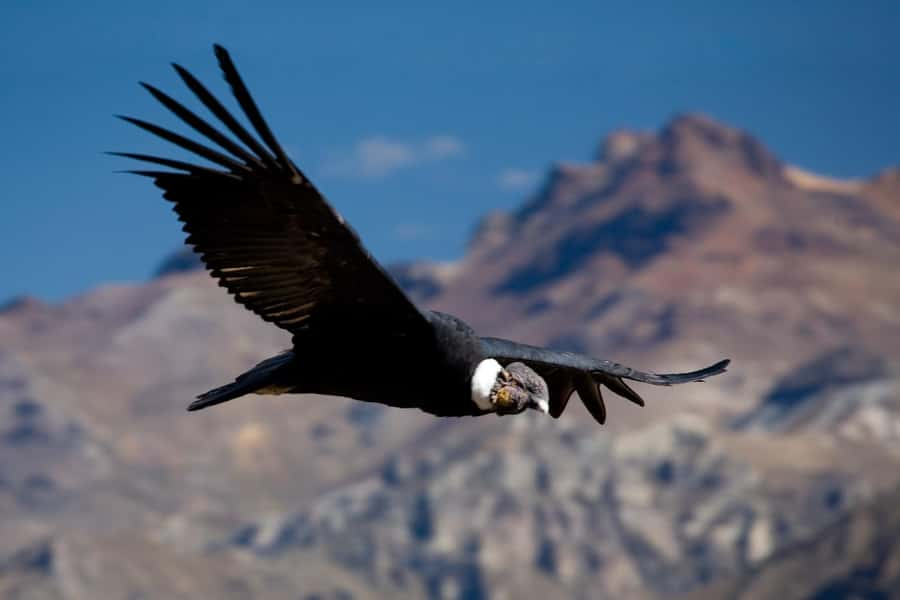
- A 3:00 a.m. pickup: you start before sunrise so the canyon viewpoint lines up with the best chance for condors.
- One-hour hike to Cruz del Cóndor: short on distance, serious on views. Wear real hiking shoes.
- Local culture stops: villages, agricultural terraces still used today, and a Chivay dance show.
- Hot springs time (with paid entry): swimming break is built in, but the entrance fee is not included.
- Colca to Puno transfer: you’ll end in Puno around evening, after more scenic stops on the way.
Getting moving: the 3:00 a.m. Arequipa pickup and first breakfast
This tour runs on a simple rule: the early bird sees the birds. Pickup is between 3:00 and 3:30 a.m., and you need to be ready from 3:00 a.m. at your accommodation reception. No late coffee. No “I’ll just finish packing.” You’ll be stepping into the vehicle while it’s still dark.
Once you leave central Arequipa, the drive covers about three hours before the day’s first big activity. Breakfast happens at the beginning of the excursion, so you’re not starting the canyon portion on an empty stomach. That matters because the day mixes roadside stops, a sunrise moment in the Andes, and then a hike.
After breakfast, you’ll begin moving through the Colca area with guided interpretation. The route is described as including colonial and “from Inca times” villages, plus hundreds of agricultural terraces still used by local people. In plain terms: the scenery isn’t just dramatic. It’s functional—built to farm steep slopes and survive harsh altitude.
The road to Colca: terraces, llamas, alpacas, and that sunrise pause
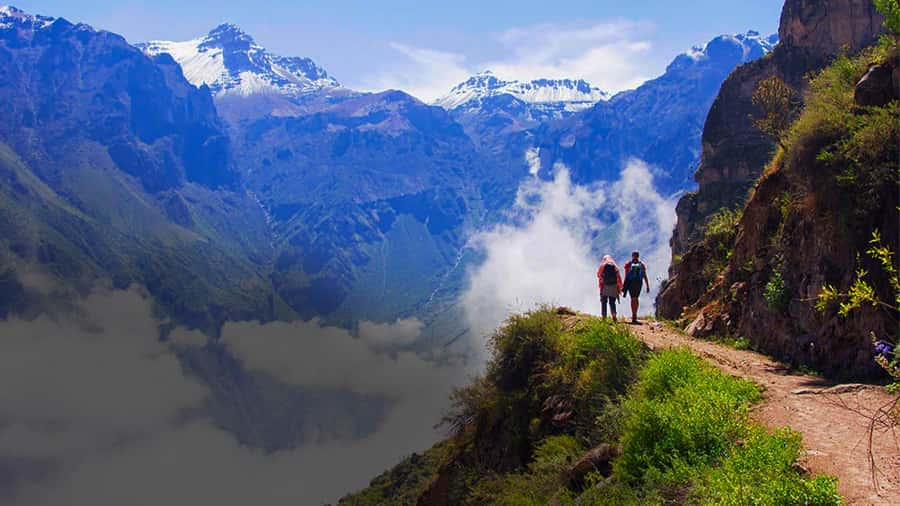
As you head toward the canyon region, the guide’s job is to help you read what you’re looking at. The tour highlights the long human effort behind the landscape: terraces that local families still farm, and villages shaped by multiple eras.
You’ll also see plenty of the animals that define high Andean life. The route specifically mentions llamas and alpacas, which can make the drive feel like a living farm belt instead of a strip of viewpoints.
There’s even a short sunrise moment included on the Andes Mountains portion, about 15 minutes. It’s not a long meditation scene. It’s more like: arrive, look, snap photos, and keep rolling—because the schedule is built around when condors may appear.
Practical note: you’ll likely be cold early on. Dress like you’re stepping out of a freezer and moving fast. Once the day warms, you can remove layers.
Chivay: coffee, a dance show, and village rhythm before the canyon
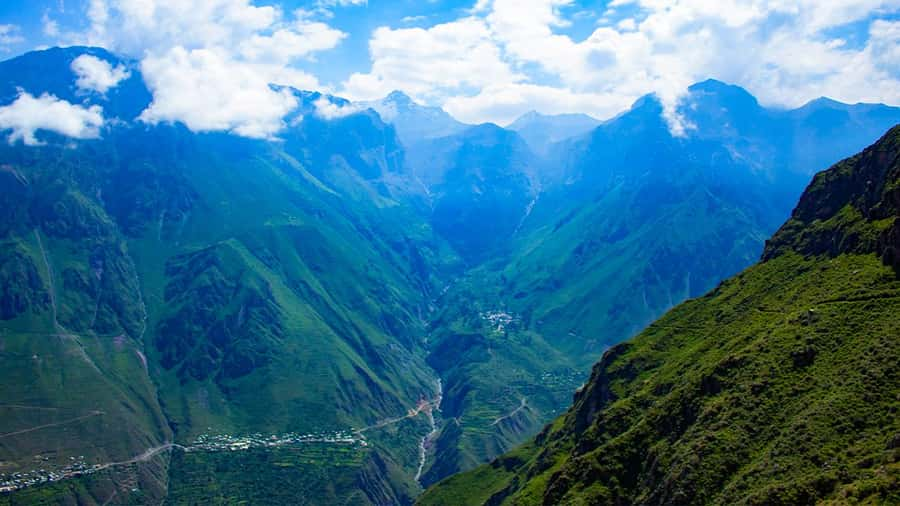
Chivay is your first meaningful stop in the middle of the itinerary. You’ll get coffee and breakfast-type time here, and there’s a traditional dance show listed for about an hour. That’s a key part of the “day trip” that many people skip on faster tours: you’re not only collecting canyon photos. You’re also getting culture and local performance in the middle of the day.
This stop is also helpful for logistics. By the time you reach Chivay, you’ve already been up very early, you’ve been driving, and you’re about to shift into the canyon viewpoint circuit. The dance show gives you a mental reset, and the extra food breaks help you avoid the “hangry + dizzy” combo at altitude.
What I like about this pacing is that it gives context. When you later look down into Colca Canyon, the terraces and villages you saw earlier start making more sense as a place where people still live and work, not just a backdrop for day tours.
Cruz del Cóndor: where the hike earns its views
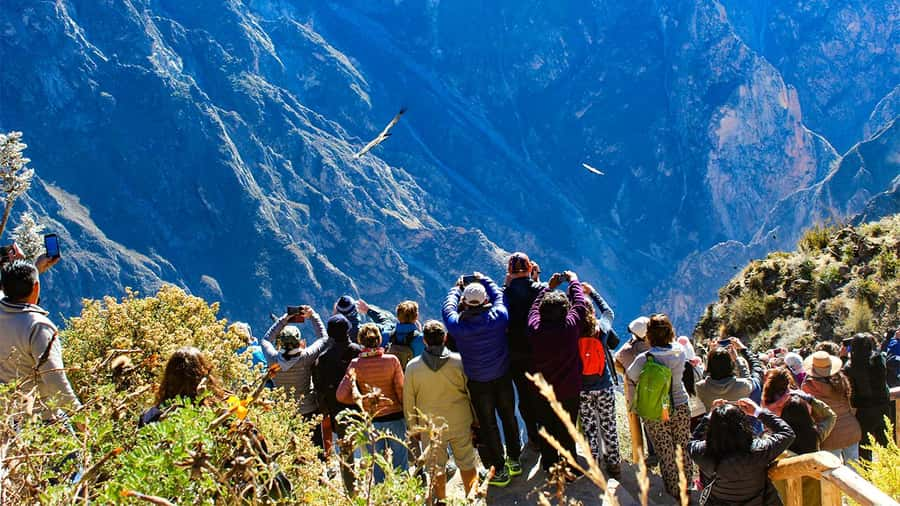
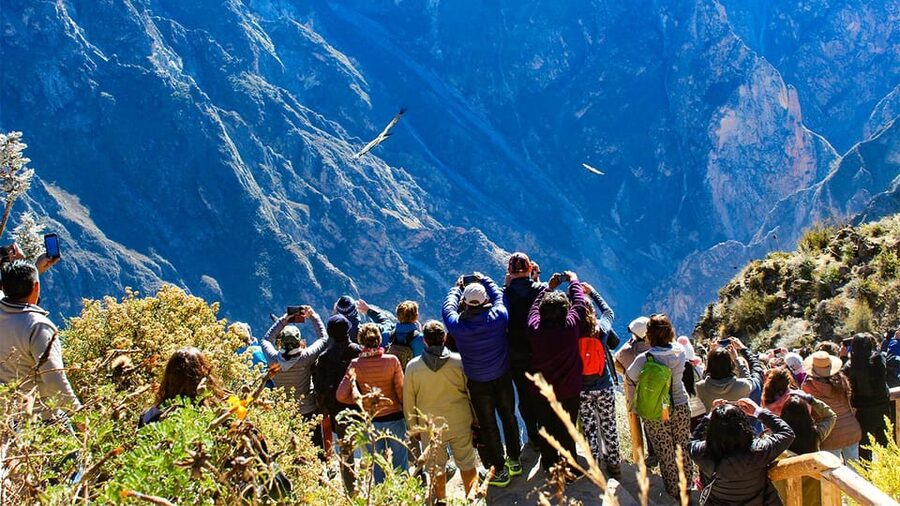
The star moment for most people is the Mirador Cruz del Cóndor. This is where the tour schedules the main canyon viewpoint and where condor sighting chances become real.
You’ll reach this stop after morning travel, and the program includes a mix of guided and self-guided time. The itinerary notes about an hour here, with scenic viewpoints and a visit time window.
The important part: the tour includes about one hour of hiking. That doesn’t mean an all-day trek. It means you should treat the hike as a real effort—especially since you’re starting from high altitude and low morning energy. Wear shoes with grip. Bring a layer. Move steadily.
If condors are flying overhead, you’ll feel why people plan their whole day around this point. Even when you don’t get the big moment, the canyon scale is still a show: deep rock walls, sharp turns in the river area, and a feeling that you’re watching a gigantic system carved over centuries.
A consideration: this isn’t a low-effort tour day. If you have high blood pressure or you’re sensitive to altitude exertion, think carefully about the hike and the early start. The tour also lists not suitable for claustrophobia, which usually matters more for long vehicle time than for the hike.
Colca River photo stop and Maca/Caylloma market time
After Cruz del Cóndor, you’ll keep moving along the canyon area with additional viewpoints. There’s a Colca River photo stop with visit and guided time plus about 15 minutes at the stop. This is where you can often take photos from a slightly different angle than the main mirador.
Then comes Maca, Caylloma, which mixes scenery with local market life. The itinerary includes photo time, a visit, and a cocktail stop plus free time for shopping and local snacks. It also specifically lists a food market visit and food tasting time (around 30 minutes).
This portion is valuable because it breaks the “viewpoint loop.” Instead of only looking outside, you’re briefly participating in the local rhythm of commerce and food. You also get a chance to buy small souvenirs directly tied to the region, rather than generic trinkets.
One note: the tour’s rules say no food in the vehicle and no alcohol/drugs in the vehicle. That’s about safety and cleanliness during transport. At the market stop, you’ll have structured time for snacks/tasting as part of the program.
Chacapi Hot Springs: the best leg-lift break of the day
By the time you reach Chacapi Hot Springs, you’ve already done the long drive, the sunrise, the hike preparation, and the canyon viewpoints. Hot springs are a smart “reset” stop because they help your body feel human again.
The itinerary includes break time and swimming for about an hour. It’s also clearly listed that hot spring entrance is not included (15 soles). Translation: you’ll likely pay on site (cash helps).
The good news is that the tour provides time to enjoy it, not just quick dip-and-go. Bring beachwear as instructed, and consider a light towel you’re comfortable getting wet. Also remember the environmental-friendly direction in your packing list: the tour asks for biodegradable sunscreen and biodegradable insect repellent, which is a good match for sensitive mountain areas.
Whether you swim or just soak your legs, this stop is a key reason the itinerary feels more than “a condor chase.” It gives your muscles a chance to recover before the long road to Puno.
From Colca toward Puno: Salinas, wildlife viewing, and Alto Lagunillas
After the hot springs, you’ll return to Chivay for another break with dessert and lunch time plus regional food. Lunch itself is listed as not included in the price, so treat that as a place to eat on your own, even though the schedule gives you the window.
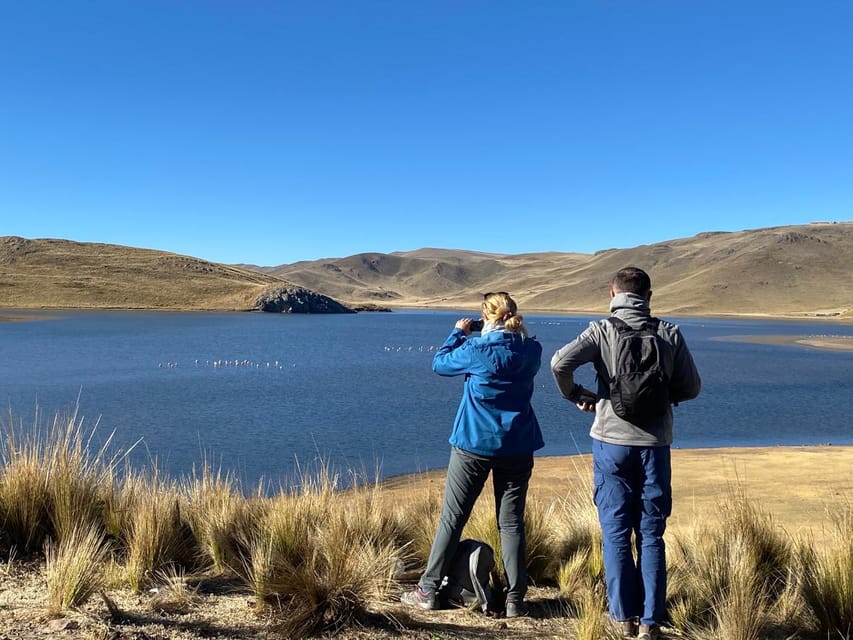
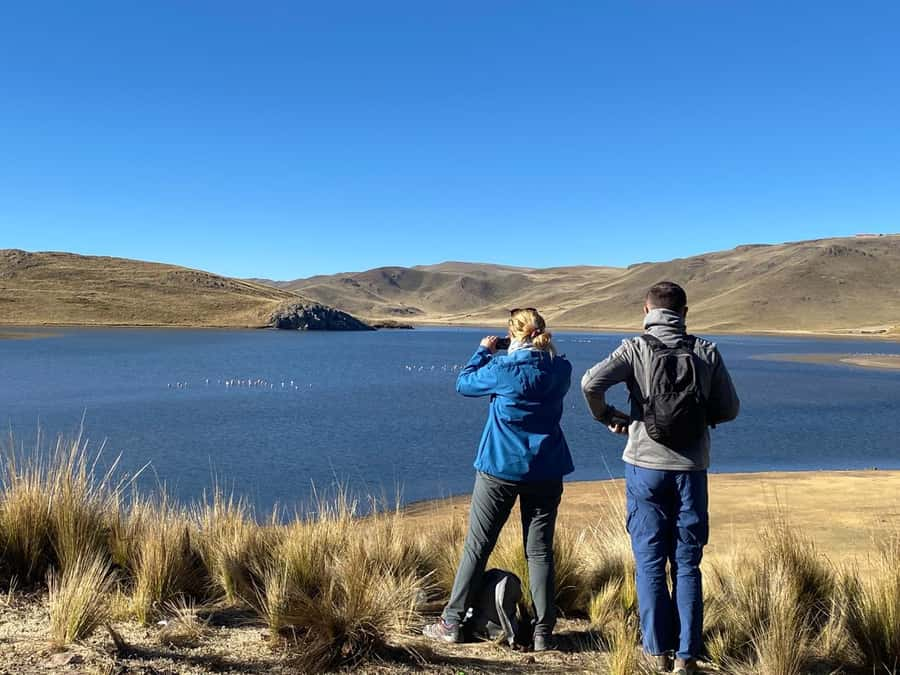
Then the route takes you through an important environment stop: Salinas and Aguada Blanca National Reservation. The itinerary includes a short visit and wildlife viewing (about 15 minutes), with self-guided time and scenic pull-offs.
This is the kind of stop that’s easy to rush if you don’t slow down. Wildlife viewing usually works best when you pause, scan, and don’t treat it like a quick photo sprint. If you like bird-watching or spotting animals from a distance, you’ll get more out of it here.
Next up is Mirador Alto Lagunillas. You’ll have a break with coffee and tea, local snacks, and short market time including arts & crafts and a food market visit. The itinerary gives this stop about 15 minutes, so it’s more “taste and glance” than a full shopping spree.
Still, it’s a nice capper before Puno: a final set of mountain views, a warm drink, and a quick browse for handmade crafts.
The price: what $65 covers and what you should budget for
At around $65 per person, this tour sits in a midrange zone for a one-day pre-dawn canyon experience plus transfer toward Puno. What you’re paying for is not just transport—it’s timing, guiding, and the number of structured stops.
Included items:
- pickup from central Arequipa hotels (central historic area on the way)
- approved tourist transport
- English-speaking tourist guide
- breakfast at the start
- first aid equipment
- personalized assistance
Excluded costs you should expect:
- National park entrance: 70 soles
- Hot spring entrance: 15 soles
- Lunch (listed as not included)
There’s also a “skip the line” note through a separate entrance. That can save you time at busy entry points, especially early.
My advice: treat the advertised price as the base, then plan cash for the 70 + 15 soles entrances and for lunch. If you’re traveling from far away, it’s smart to arrive in Arequipa with some cash already planned for the day.
Time on the road: comfort, pacing, and altitude realities
This itinerary is intense in the best way and in the hardest way. You’ll be up before sunrise, then you’ll spend long stretches in a bus/coach while the guide handles stops and timing. The itinerary shows about two hours of bus/coach later in the day, after the coldest and most active parts are done.
What helps is that you’re not stuck with only driving. You get multiple breaks: breakfast, viewpoint stops, market stops, and hot springs. Still, it’s worth preparing for fatigue.
Also, the tour has clear suitability limits: it’s not suitable for high blood pressure, not suitable for claustrophobia, and it’s not listed for babies under 1 year or for people over 70 years. If any of those apply to you, it’s best to choose a gentler option.
And don’t forget the hike. Even though it’s only about an hour, it’s still a real physical moment during the day. Add altitude and early hours, and you’ll want to pace yourself.
Who this tour fits best (and who should skip it)
This tour fits best if you:
- want one-day access to Colca’s main viewpoint and a good condor chance at Cruz del Cóndor
- don’t mind a very early start for a better schedule
- like a mix of scenery + culture, not only driving past places
- value eco-conscious travel language, since the highlights stress environment care and preserving local culture
- want to finish the day in/near Puno after the canyon route
You might skip it if you:
- need a low-activity day (because the tour includes a one-hour hike)
- struggle with long early-morning starts
- have medical concerns mentioned by the tour like high blood pressure or claustrophobia
Packing tips that actually matter for this day
The tour’s packing list is surprisingly practical here. Use it.
Bring:
- Hiking shoes (for grip on the canyon-edge hike)
- Camera (this is photo-heavy)
- Binoculars (worth it at miradors; condors may be distant)
- Biodegradable sunscreen and biodegradable insect repellent
- Cash (entrance fees and snacks add up)
- Passport or a copy (copy accepted)
- Beachwear (for Chacapi hot springs)
Also, keep in mind what’s not allowed: no food in the vehicle, and no alcohol/drugs in the vehicle. That helps keep the bus clean during long hours.
If you run cold easily, layer up. If you run thirsty, keep water habits in mind at altitude (the tour does not list bottled-water details, so plan around your own needs and local rules).
Should you book this Colca Canyon and Puno transfer day trip?
If your priority is Colca Canyon without wasting extra days, this is a strong fit. You get a packed day with the key mirador, a scheduled one-hour hike, cultural stops in Chivay, and a hot springs break that makes the physical effort feel worth it. The condor-focused viewpoint and the local, native-run operator angle are also exactly the kind of reason to pick this over a generic tour.
Book it if you’re okay with:
- the 3:00–3:30 a.m. pickup and early drive
- a real hike moment
- added costs for park and hot springs entrances plus lunch
Skip it if you want a slower day, dislike early mornings, or have medical limits like the tour specifies. In that case, a gentler Colca option will make more sense than forcing the canyon schedule.
FAQ
What time is the pickup in Arequipa?
Pickup is between 3:00 and 3:30 a.m. You need to be ready from 3:00 a.m. at your accommodation reception.
Is breakfast included?
Yes. Breakfast at the beginning of the excursion is included.
Does the tour include the entrance to the national park?
No. National park entrance is listed as not included (70 soles).
Is lunch included in the price?
No. Lunch is not included, even though the schedule includes a lunch window in Chivay.
Are hot springs included?
Swimming time at the hot springs is part of the program, but the hot springs entrance is not included (15 soles).
How long is the hike?
The tour includes 1 hour of hiking.
Is there an English-speaking guide?
Yes. The tour includes an English-speaking tourist guide (English and Spanish are listed).
How long is the day trip?
It’s a 1-day experience, with the itinerary ending on average around 7 p.m. in the Puno city area.
What should I bring?
Bring camera, hiking shoes, biodegradable sunscreen, beachwear for hot springs, cash, passport (copy accepted), binoculars, and biodegradable insect repellent.
Is the tour refundable if plans change?
Yes. It offers free cancellation up to 24 hours in advance for a full refund.