REVIEW · VIENNA
Day Trip to Budapest and Bratislava From Vienna
Book on Viator →Operated by DV Transfer · Bookable on Viator
Two capitals, one long day. I like the fast highlights payoff: Bratislava Castle for sky-high views and Shoes on the Danube Bank for an honest, unforgettable WWII memorial stop. The biggest catch is time: you’ll spend a lot of the day in the van, and comfort can vary by group size.
I also like how this tour handles the hard part for you. With private transportation, bottled water, and an air-conditioned vehicle, you’re paying for logistics as much as sightseeing—plus a guided walk through both city centers.
One more thing to consider: most of the best moments are look-and-walk rather than inside-ticket attractions. If you’re hoping for deep museum time, you’ll need a return trip.
In This Review
- Key Things You’ll Enjoy Most
- The 14.5-Hour Reality: Timing, Transfers, and When You’ll Walk
- Bratislava First: Castle Courtyard Views and Royal-Era Stories
- Presidential Palace and Old Town Power Centers
- Hlavné Námestie Square, Statues, and the Quirky Bratislava You Can Photograph
- Hviezdoslavovo Namestie and Michael’s Gate: Big Architecture on Short Walks
- The Bratislava Free Time Window: Use It for One Thing Only
- Budapest Arrival: Liberty Square, Cold War Symbols, and Danube Icons
- Shoes on the Danube Bank: A Quiet Memorial That Hits Hard
- Chain Bridge Views and St. Stephen’s Basilica for the “Final Snapshot”
- Budapest Free Time: Go Eat, Not Just Browse
- Price and Value: Why $180.20 Can Make Sense (or Not)
- Group Size and Guides: Why the Right Guide Changes Everything
- What to Pack So the Day Feels Manageable
- Should You Book This Vienna-to-Budapest-and-Bratislava Day Trip?
- FAQ
- What time does the tour start?
- How long is the day trip?
- Do you enter buildings on this tour?
- Is lunch included?
- Is pickup offered?
- Is bottled water included?
- Is the tour in English?
- Are tickets provided on a mobile device?
- What’s the maximum group size?
- Can I cancel for free?
Key Things You’ll Enjoy Most
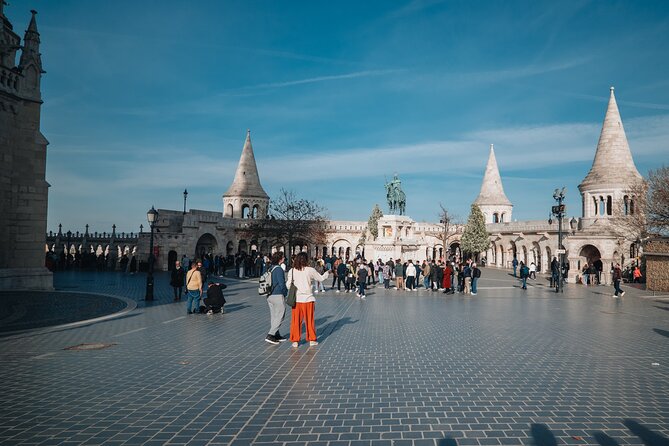
- Panoramic start in Bratislava with castle courtyard views over the Danube and even Austria
- Danube memorial moment in Budapest at Shoes on the Danube Bank, backed by clear storytelling
- Big landmarks without entry lines—you see Parliament, St. Stephen’s Basilica, and other icons from outside
- A guide who can turn history into street-level stories (names like Tomas, Dmitry, Martin, Paul, and Jacob come up often in feedback)
- Door-to-door pickup option in both Vienna and Bratislava, which saves real time
The 14.5-Hour Reality: Timing, Transfers, and When You’ll Walk
This is a “wake up early, stay out late” format. It starts at 8:00am and runs about 14 hours 30 minutes total. The route is built around three main driving chunks: Vienna to Bratislava (about 1 hour), Bratislava to Budapest (about 2 hours 30 minutes), and Budapest back to Vienna (about 3 hours). That means the day is mostly sightseeing plus transfers—less waiting around, more moving.
The walking is real. You’re not sprinting through every photo stop, but you are on your feet repeatedly: castle viewpoints, multiple Old Town streets, then a second walking tour in Budapest. Expect short, efficient segments—then occasional breathing room.
Practical takeaway: plan for a long seated stretch in between. If you’re the type who hates being cramped, bring patience (and if you can, choose a seat that lets you sit comfortably for the long haul). And since lunch and snacks aren’t included, I’d come with a snack plan you control.
You can also read our reviews of more tours and experiences in Vienna.
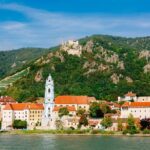
Bratislava First: Castle Courtyard Views and Royal-Era Stories
Bratislava begins with a short transfer from Vienna. Once you’re there, the tour wastes no time with one of the city’s best opening moves: Bratislava Castle. You explore from the outside—courtyard and the Baroque gardens—then take in the front-facing panoramic views. The point is simple: get your bearings fast. From here you can see the city layout, the Danube curve, and the sense that Bratislava always sat at an important crossroads.
This is where the guide storytelling matters most. The castle area is naturally dramatic, but what makes it work on a day trip is how the guide connects it to royalty, invasions, and power shifts. You’re getting the “why” behind the skyline, not just the “what.”
A small drawback to know up front: this stop is about exterior exploring and views, not a full castle interior visit. That’s fine for a single day, but if castle museums are your thing, you’ll want a separate Bratislava day.
Presidential Palace and Old Town Power Centers
After the castle views, you move into the political heart of modern Slovakia with the Presidential Palace. Again, it’s an outdoor-focused stop: admire the Rococo architecture from outside and then take in the calm of the nearby gardens (often called Fountain Park). It’s a nice reset after the high-energy castle viewpoint.
Then you head to the Old Town area with stops along key streets and civic spaces. You’ll pass by Stará Tržnica (Old Market Hall), described as a cultural hub where food markets, events, and exhibitions often happen. Even without a full deep dive, it’s a practical way to see how locals experience the city: not just monuments, but the everyday places where people gather.
Next comes the Primate’s Palace. You’ll see the neoclassical exterior and hear what makes it historically important, including where the Treaty of Pressburg was signed. For a day trip, it’s a great “compressed history” moment: one building, one big event, and then back to street level.
Hlavné Námestie Square, Statues, and the Quirky Bratislava You Can Photograph
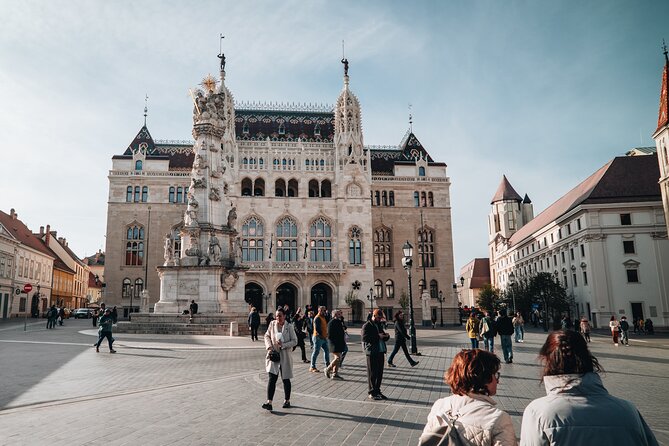
At Hlavné námestie, Bratislava’s Main Square, you get color, cafés, and a classic Old Town feel. The centerpiece is the Maximilian Fountain, built in the 16th century, plus local legends tied to King Maximilian and city celebrations.
Then comes the fun part: two well-loved statues that make the city feel less like a postcard and more like a place with personality. First is Schöner Náci, the well-dressed gentleman who tips his hat, inspired by a real person known for spreading joy. Then you’ll see Čumil—the “Man at Work” peeking from a manhole. It’s the kind of stop that turns a long day into something memorable because it’s unexpected and photogenic.
If you only choose one Bratislava moment to slow down for, I’d pick the combination of the square + those statues. They give you the city’s mood in about 30 minutes.
Hviezdoslavovo Namestie and Michael’s Gate: Big Architecture on Short Walks
Next is Hviezdoslavovo Namestie, a broader, tree-lined square with fountains and historic buildings. At one end is the Slovak National Theatre, a 19th-century neo-Renaissance showpiece. You’re not going inside here, but the outside views still deliver that “capital city” feeling.
After that, the walk turns medieval. You go along Ventúrska Street, one of the older streets in Bratislava, and continue toward Michael’s Gate—the last remaining city gate from the medieval fortifications. The guide points out the gothic tower, its copper spire, and the statue of St. Michael slaying a dragon, plus a famous zero-kilometer marker beneath the gate.
If you like city planning details—how streets evolved and where defenses once stood—this stop is a nice payoff.

The Bratislava Free Time Window: Use It for One Thing Only
Once the walking tour portion finishes, you’ll get about an hour of free time to explore the Old Town on your own. This is the part where you can either recharge or accidentally burn the clock.
My advice: pick one “main idea” for this hour. Maybe it’s a café break plus one extra street you didn’t cover. Maybe it’s a quick souvenir loop. Maybe it’s simply taking photos without the group moving pressure.
This tour can’t give you everything. Using the free hour smartly is how you get the best personal version of the day.
Budapest Arrival: Liberty Square, Cold War Symbols, and Danube Icons
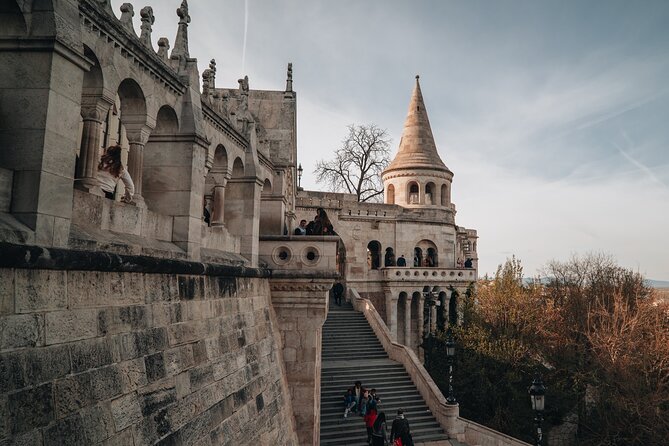
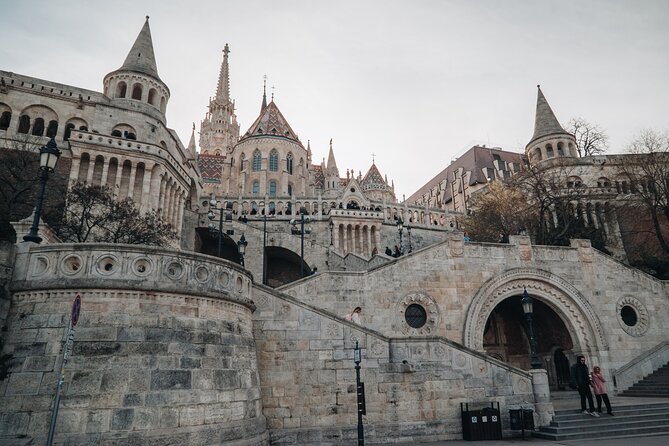
When you head to Budapest, the tone shifts. You still get guided context, but the sights here are more internationally famous.
The tour begins at Szabadság tér (Liberty Square). You’ll see the Soviet War Memorial—a striking monument that still stands in Western Europe—plus nearby life-sized statues of Ronald Reagan and George H.W. Bush, connected to Hungary’s transition away from Soviet influence. The reason this stop works is that it doesn’t just list names. It explains why monuments appear where they do and what story they want to tell.
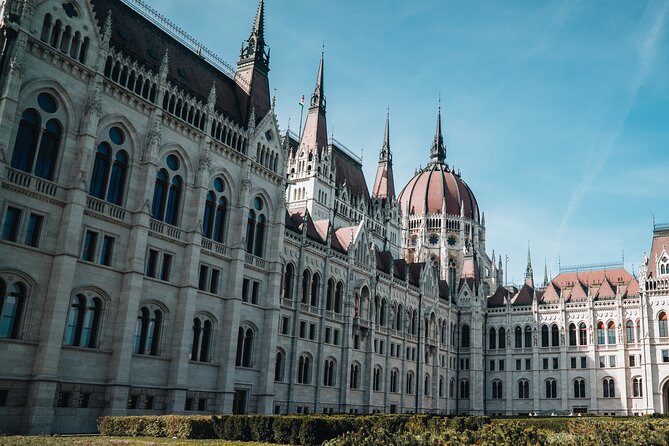
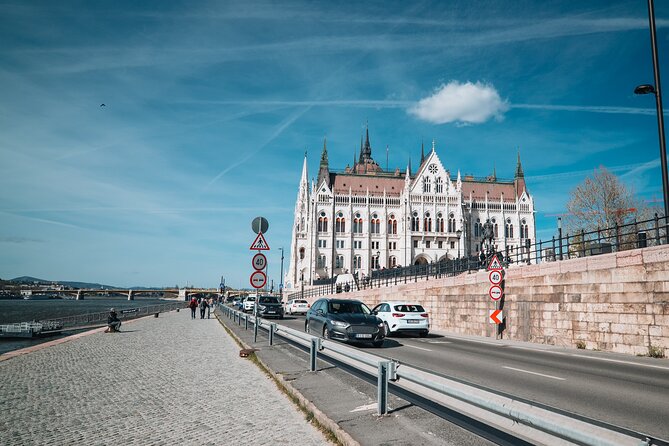
Next is the Hungarian Parliament Building. You admire it from the outside (no interior entry here), but you’re placed around Kossuth Square for photos and context. Expect views toward the Danube and a guided explanation of major figures pointed out in the square. It’s one of those “big capital energy” moments that looks even better once you know the background.
Shoes on the Danube Bank: A Quiet Memorial That Hits Hard
Then you reach Shoes on the Danube Bank. This stop is short—about 30 minutes—but it’s emotionally heavy in the best way. You see the row of iron shoes that commemorate Jewish victims executed along the river during WWII. The guide’s job here is to frame the memorial so it doesn’t feel like a photo prop. Done well, it makes you slow down.
If you prefer tours that stay light, this might feel like a lot in one day. But it’s also one of the clearest examples of how Budapest tells its history in public space.
Chain Bridge Views and St. Stephen’s Basilica for the “Final Snapshot”
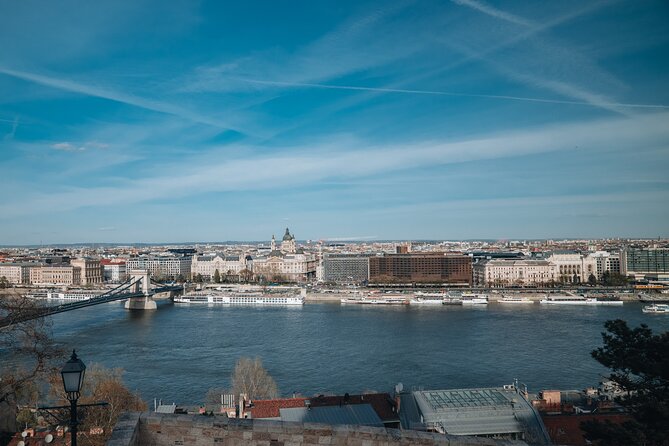
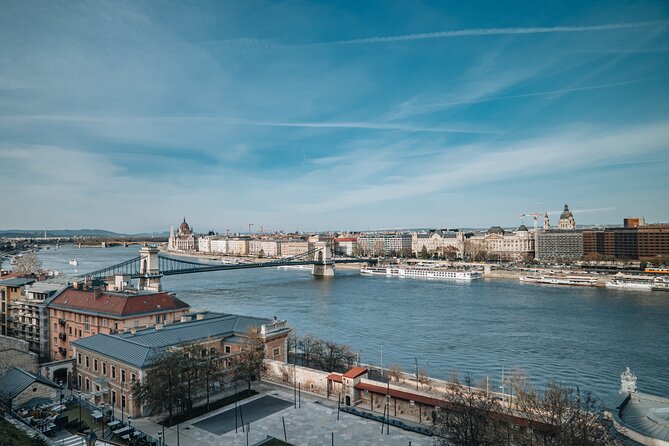
You then walk along Széchenyi Street and see the Széchenyi Chain Bridge from a strong viewpoint. The bridge is a symbol of uniting Buda and Pest, and the guide shares how it was built in the 19th century and why it became such a powerful marker for Hungary’s capital identity.
Your Budapest walking tour ends at St. Stephen’s Basilica from the outside. You’ll learn what it’s dedicated to and why it matters in Hungary’s religious and cultural life. Like Bratislava’s highlights, it’s a big-name stop without the time cost of entry—built for a schedule that has to cover two countries in one day.
Budapest Free Time: Go Eat, Not Just Browse
After the walking tour, you’ll have about 2 hours for Budapest on your own, then you’ll transfer back to Vienna. This is where you should turn sightseeing into something sensory: food, a river-side coffee, or a museum if you’re already motivated.
But don’t over-plan. This day’s main strength is orientation. Use the free time for one good meal and a little wandering. Then you’ll actually have a reason to come back and do the deeper stuff later.
Price and Value: Why $180.20 Can Make Sense (or Not)
At $180.20 per person, you’re paying for two big things: the long-distance door-to-door transportation and guided access to key landmarks in both cities.
What you’re getting that’s hard to DIY fast:
- Private transportation between Vienna, Bratislava, and Budapest
- Air-conditioned vehicle plus bottled water
- A structured, timed route that doesn’t leave you guessing where to start
What you’re not getting:
- Lunch, dinner, or snacks (so you’ll likely spend extra food money)
- Long interior time in major sights
So who is this good value for? It’s best if you have limited days in the region and want a guided “greatest hits” orientation. If you’re the type who loves wandering museums for hours, you may feel rushed.
The comfort question is the other value variable. Some people love the small-group feel. Others mention that van space can get tight for long rides. If you’re sensitive to that, it’s worth mentally preparing for a long seated day.
Group Size and Guides: Why the Right Guide Changes Everything
This tour caps at a maximum of 45 travelers, and it often feels more intimate than huge coach tours because you’re doing lots of short stops rather than one giant theme park line.
The guide quality is a major strength in feedback. Names like Tomas, Dmitry/Dmitrij, Martin, Paul, Jacob, Filip, and others show up as memorable for being engaging, helpful, and good at making history feel connected to what you’re standing in front of.
I’d treat guide quality like this: if your guide leans into clear explanations and keeps you moving smartly, the whole day feels worth it. If the guide is weak, the schedule can feel like a blur of photo stops. That’s not the tour’s fault alone—it’s the real-world travel variable you can’t fully control.
What to Pack So the Day Feels Manageable
Since food isn’t included, I’d pack small comforts:
- A snack you like (for the van)
- Water (even though bottled water is included)
- Comfortable shoes for repeated Old Town walking
- A layer for cold weather if you’re going in the off-season
Also, come ready for a schedule with minimal slack. This is not a “sleep in” day.
Should You Book This Vienna-to-Budapest-and-Bratislava Day Trip?
Book it if:
- You only have a day (or two max) and want an organized snapshot of both capitals
- You like guided walks and learning why landmarks matter
- You want the convenience of not handling cross-city logistics yourself
Skip it (or at least consider another option) if:
- You hate long vehicle rides and need maximum comfort
- You expect lots of interior museum time
- You want a slow, detailed pace in each city
If your goal is to get your bearings fast in Bratislava and Budapest, and you’re okay with the “big day” trade-off, this tour is a strong, efficient way to do it. Just plan your meals, pack snacks, and go in knowing the best use of your time is smart choices during free hours—one meal, one extra street, then enjoy the ride home with sore feet and full photos.
FAQ
What time does the tour start?
The tour starts at 8:00am.
How long is the day trip?
It runs about 14 hours 30 minutes.
Do you enter buildings on this tour?
Many stops focus on exterior views and short walks (for example, you won’t enter at several major landmarks). Some stops also include free time for exploring on your own.
Is lunch included?
No. Lunch, dinner, and snacks are not included.
Is pickup offered?
Yes. Pickup is offered from anywhere in Vienna or Bratislava if you share your address.
Is bottled water included?
Yes, bottled water is included.
Is the tour in English?
Yes, it’s offered in English.
Are tickets provided on a mobile device?
Yes, there’s a mobile ticket.
What’s the maximum group size?
The tour has a maximum of 45 travelers.
Can I cancel for free?
Yes. You can cancel up to 24 hours in advance for a full refund (based on the experience’s local time).