REVIEW · ZURICH
Zermatt & Mt. Gornergrat Small Group Day Trip from Zürich
Book on Viator →Operated by SwissTravelGuide.ch · Bookable on Viator
Cold mornings. Big peaks. One long day that feels worth it. This small-group tour is built around the Swiss rail experience, then hands you front-row access to Zermatt and the Gornergrat viewpoint for the Matterhorn-and-glaciers show.
I like that it’s not just sightseeing. Your guide helps you stay organized through the train changes and key photo stops, and you get real context for what you’re seeing in Zermatt. Names from past trips stick in my head too—guides like Enzo and Michael focused on making the day run smoothly and even helped with little practical details like seating and pacing.
The main thing to consider is the trade-off: it’s a full day with a lot of rail time. If the weather turns foggy or snowy, the Matterhorn can hide, and the schedule still moves on to keep you on track.
Small-group pace, not a bus tour: Maximum 15 people means less stress, more conversation, and easier coordination at stations.
Two train days in one: Zürich → Visp → Zermatt is part of the experience, not a chore you tolerate.
Matterhorn priorities included: You get priority boarding for the Matterhorn railway, plus covered transport costs throughout.
Gornergrat is the payoff: High altitude, snow year-round, and views toward Matterhorn, the Gorner Glacier, and Monte Rosa massif.
Stops in Zermatt between the trains: You’re not only rushing to the summit—you also walk old Zermatt and hit classic landmarks.
Weather decides your photo: Clear skies win. Poor weather can shrink what you see from Gornergrat.
In This Review
- Train-First Zürich to Visp: The Journey Sets the Tone
- The Visp → Zermatt Cogwheel Transfer: Where the Day Becomes Fun
- Zermatt Village Time: Old Wooden Streets and Classic Matterhorn Angles
- Kirchbrücke, Cemetery, Monte Rosa: Small Stops That Carry Big Meaning
- Up to Gornergrat: The Rail Climb That Feels Like Altitude Magic
- Gornergrat Viewpoint Time: When Clouds Are Annoying, You Still Win
- Getting Your Bearings with a Guide: Why the Small-Group Part Matters
- Price and Value: Is This Worth $756+?
- The Day’s Rhythm: What You Gain and What You Sacrifice
- Who Should Book This Zermatt and Gornergrat Day Trip?
- Should You Book This Tour?
- FAQ
- What time does the tour start from Zürich?
- How long is the day trip?
- How many people are in the group?
- What language is the tour offered in?
- What’s included in the ticket price?
- What’s not included?
- Where are the main stops during the day?
- What happens if the weather is bad?
- Is the Matterhorn guaranteed to be visible?
Train-First Zürich to Visp: The Journey Sets the Tone
The day starts in Zürich at the Zürich Tourist Information at Hauptbahnhof, with a departure time of 8:15 am. From there, you take a train ride to Visp that takes about two hours. This matters more than you might think, because this tour is designed so you’re already in Alpine mode before you reach Zermatt.
Along the route, you pass familiar Swiss highlights: Bern (often called the Federal City), Lake Thun, and the Lötschberg Base Tunnel. Even if you don’t memorize tunnel trivia, I like that these are real, physical moments you can point at from your window, which helps break up a long day.
When you arrive in Visp, you change to the Matterhorn-Gotthard Railway. The change is quick on paper, but you still want to stay alert. Guides tend to be the difference here—people have praised guides for staying on top of connections and helping everyone get to the right platform fast.
The Visp → Zermatt Cogwheel Transfer: Where the Day Becomes Fun
After Visp, the cogwheel train carries you to Zermatt in about 55 minutes. This is one of those Swiss details that sounds cute until you ride it: the cogwheel system makes the ascent feel controlled and scenic instead of steep and scary.
You’re also entering the Zermatt rhythm. Once you arrive, the village itself feels like a transition to a slower world—especially since Zermatt is known for being car-free. That’s a big part of why many people consider it worth the effort of getting there from Zürich.
This is also where small-group size pays off. With fewer people, you’re less likely to get scattered at busy stations. And you’ll appreciate having the guide in your ear for the next step.
You can also read our reviews of more tours and experiences in Zurich.
Zermatt Village Time: Old Wooden Streets and Classic Matterhorn Angles
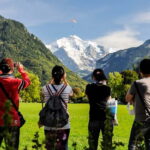
Your time in Zermatt starts with a walk through the old part of the alpine village, with its typical wooden houses. You get around two hours here, which is enough to do more than take one quick loop. I like this pacing because it helps you feel like you actually visited Zermatt, not just passed through on the way to a train platform.
Then you get a series of short, high-impact stops:
- A quick viewpoint at Kirchbrücke bridge for the classic Matterhorn picture setup.
- The Mountaineer’s Cemetery, a small place that adds weight to the story of climbing the Matterhorn—both the dream of success and the risks involved.
- A stop at Hotel Monte Rosa, connected to the first ascent and its history.
These stops are short by design. The goal is to stack meaning into the time you have, so you’re not spending half your day wandering without context. If you’ve only ever seen Matterhorn photos online, these stops help you understand why the mountain is so important to local identity.
One practical tip: in reviews, guides like Enzo were praised for keeping the mood light (yes, there were chocolates mentioned), while also staying focused. That balance is great. It helps when you’re doing a schedule-heavy day and still want it to feel human.
Kirchbrücke, Cemetery, Monte Rosa: Small Stops That Carry Big Meaning
This portion of the day doesn’t look impressive on a headline. In practice, it’s one of the best parts of the whole trip.
Kirchbrücke bridge is the quick-hit moment. You get the classic framing of the Matterhorn with the village context. If the skies are clear, you’ll understand why people go out of their way to stand exactly there.
The Mountaineer’s Cemetery is different. It’s small, but it reminds you that this isn’t a theme park. There are real stories behind the mountain, and this stop makes the whole day feel more grounded.
And Hotel Monte Rosa gives you the first-ascent story connected to the Matterhorn. It’s the kind of detail you wouldn’t know if you just followed a self-guided route. You’ll get a guide’s version of the timeline and why it matters.
Up to Gornergrat: The Rail Climb That Feels Like Altitude Magic
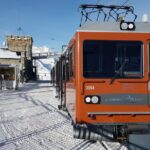
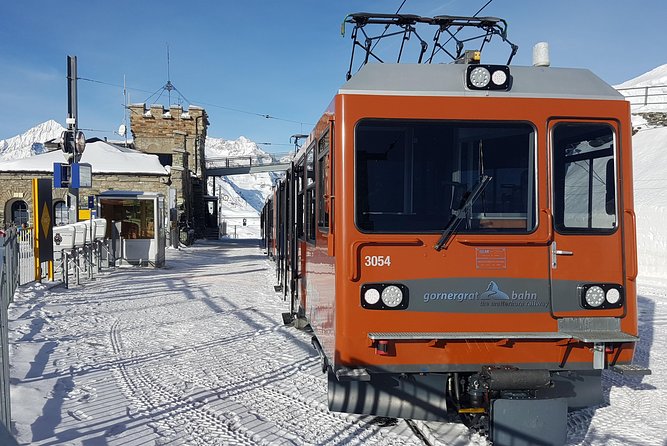
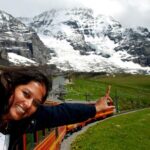
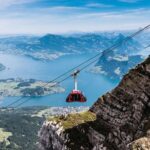
Once you’re done with the village, you take a cogwheel train upward to the high alpine area labeled GGB, taking about 30 minutes. This gets you to around 10,000 feet. Views start changing immediately—more glacier, more distance, and that sense that the mountain world is much bigger than the postcards.
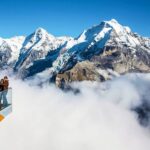
From there, the real anchor is the Gornergrat station and viewpoint. The Gornergrat sits at roughly 3,135 m, and it’s located between the Gorner Glacier and the Findel Glacier. On a clear day, you can see well beyond the Matterhorn toward multiple four-thousanders, including Monte Rosa and Liskamm.
A lot of this is about where you are, not just what you’re looking at. At this altitude, the glaciers and ridges stop being background and become the subject. Your brain has to recalibrate from town-scale to mountain-scale.
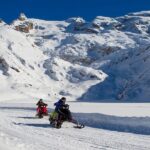
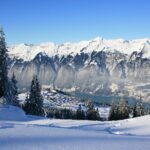
Also, Gornergrat is an all-year snow zone. Even in off-season weather, the look stays dramatic. That matters for photos and for the overall feel of the day.
Gornergrat Viewpoint Time: When Clouds Are Annoying, You Still Win
You spend about two hours at Gornergrat. The viewpoint is the main event, and it’s where the Matterhorn can be stunning—when it’s visible. There’s also an indoor multimedia experience described as showing the Matterhorn and surrounding Alpine world in all dimensions, which is helpful if weather changes mid-visit.
In real-world terms: you want to use your two hours smartly. If the mountain is visible early, get the photos, then slow down. If clouds roll in, don’t panic. Several people have mentioned waiting out shifting conditions, and guides have encouraged them to stick around until the view improved.
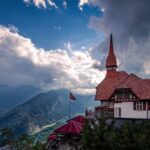
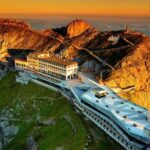
There’s also an infrastructure highlight: the Kulmhotel is at the terminus area at the southwestern tip of the ridge and is the highest mountain hotel in Switzerland. You don’t have to tour it to get the wow factor—just being there makes you feel how engineered and reachable this place is.
Getting Your Bearings with a Guide: Why the Small-Group Part Matters
This tour’s backbone is transport. That can sound boring, until you realize what the guide actually does.
In many positive experiences, guides were praised for doing the unglamorous work:
- keeping the group moving between stations,
- negotiating or handling multiple train connections,
- making sure people ended up with good seats,
- and staying calm when weather or timing shifted.
People have mentioned different guide styles, too. Michael coordinated everything smoothly, helped people get seats, and was described as running ahead to secure positioning. Emil was praised for handling transportation types so the flow stayed effortless. Annie focused on patience and helped an elderly father with a chair so he could still enjoy part of the view experience. Ueli and Andy were also credited with navigation and expert pacing.
So yes, the scenery is the headline. But the guide is the difference between a day that feels like logistics hell and a day that feels like a smooth rail holiday.
Price and Value: Is This Worth $756+?
At $756.31 per person for an 11–12 hour day, this is not a budget trip. You’re paying for three things at once:
1) Long-distance Swiss rail access from Zürich to the Zermatt area
2) Cogwheel climbs and high-altitude transport that would be expensive and time-consuming to coordinate yourself
3) A guide who handles timing, connection changes, and key stops
Also, transportation costs are covered in the tour price, and there’s a priority boarding pass included for the Matterhorn railway. Those small perks add up when your day depends on trains lining up.
Is it still “expensive”? Yes—especially if your own planning skills are strong and you’re comfortable riding independently. But if you know that you don’t want to stress about transfers, platforms, or timing, then paying for the structure makes sense.
The best-fit value is for people who want to maximize their one day and feel confident that the rail plan is being managed for them.
The Day’s Rhythm: What You Gain and What You Sacrifice
Here’s the trade-off in plain language: this tour is built for seeing the big icons fast.
You’ll start early, spend significant time on trains (with a return trip of about three hours), and you’ll get structured stop times in Zermatt and on the mountain. That’s why the itinerary works even with weather uncertainty—it keeps you moving to the next best viewpoint.
The downside shows up when you compare “time spent” to “price paid.” If you were hoping for lots of unstructured wandering in the village or a long hang time at the top, you may feel rushed. Also, connection timing can feel tight. One negative experience pointed out that the day can turn into long travel stretches, and the guide’s role may feel like mostly reminding people where to go. That’s the risk: your enjoyment depends on both weather and how much you personally enjoy transit days.
My advice: go in expecting a fast, rail-focused day. If you want slow hiking or deep café lounging, pick a different Switzerland plan.
Who Should Book This Zermatt and Gornergrat Day Trip?
This is ideal if:
- you want the Matterhorn and Gornergrat as a bucket-list priority,
- you like train travel and don’t want to navigate transfers alone,
- you appreciate short, meaningful stops like the cemetery and historic ascent point,
- you’re traveling with limited time in Switzerland.
It’s less ideal if:
- you need a lot of unstructured free time at each location,
- you dislike paced schedules,
- you get very uncomfortable with rapid station-to-station logistics.
And for weather? You’re not buying certainty. The experience requires good weather, and the Matterhorn can go missing under fog or snow. Still, even when visibility isn’t perfect, the mountain setting and glacier views can remain impressive—and the indoor multimedia option helps you stay engaged.
Should You Book This Tour?
My take: book it if your heart is set on seeing Zermatt and getting up to Gornergrat in one day from Zürich. The value isn’t in a fancy lunch stop; it’s in the full rail package, the high-altitude access, and the guide help that keeps you on track through the connections.
Skip it if you want a relaxed day with lots of downtime, or if you’re planning to rely on perfect weather and can’t handle the idea that clouds might swallow the Matterhorn for part of the visit.
If you do book, I’d base your decision on one practical rule: check the forecast like your trip depends on it. Because on the mountain, it basically does.
FAQ
What time does the tour start from Zürich?
The tour starts at 8:15 am. The meeting point is Zürich Tourist Information at Hauptbahnhof.
How long is the day trip?
Plan on about 11 to 12 hours total, including travel time.
How many people are in the group?
The maximum group size is 15 travelers.
What language is the tour offered in?
The tour is offered in English.
What’s included in the ticket price?
You get a local guide, all transportation fees, and a priority boarding pass for the Matterhorn railway. Included admissions cover the high-altitude part (GGB/Gornergrat). Food and drinks are not included.
What’s not included?
Food and drinks are not included. You can take a lunch break at restaurants along the way.
Where are the main stops during the day?
You’ll travel through Zürich to Visp (passing Bern and Lake Thun), then to Zermatt. In Zermatt you walk the old village and visit short photo/history stops. Then you take the cogwheel train up toward Gornergrat for the main viewpoint time.
What happens if the weather is bad?
This experience requires good weather. If it’s canceled due to poor weather, you’ll be offered a different date or a full refund.
Is the Matterhorn guaranteed to be visible?
Visibility depends on weather. If clouds or fog roll in, the Matterhorn may be hard to see, but the trip still includes scheduled mountain-time and an indoor multimedia option at Gornergrat.