REVIEW · BAKU
Full Day Trip in Baku (Gobustan & Absheron)
Book on Viator →Operated by Guided Azerbaijan · Bookable on Viator
Baku gets a lot of attention, but the real story starts just outside the city. This full-day trip strings together Gobustan’s ancient rock carvings and Absheron’s burning-gas natural wonders in a smooth, guided format with hotel pickup. I especially like how the day is paced for comfort, using a private vehicle and a licensed guide who can explain what you’re looking at.
Two things I come away appreciating fast: the chance to see real petroglyphs at Gobustan instead of just reading about them, and the way the stops build on each other from stone-age art to geothermal weirdness. One possible drawback to plan for: entrance fees are not included, so the add-on costs can surprise you if you’re budgeting tightly.
In This Review
- Key Highlights at a Glance
- From Hotel Pickup to Gobustan: Why This Day Feels Efficient
- Gobustan Rock Art: Where 1939–1940 Meets 3,500+ Carvings
- Mud Volcanoes: Short Ride, Big Personality
- Bibi-Heybat Mosque: A Beautiful Site with a Tough Chapter
- Ateshgah Fire Temple: Natural Gas Flames, Built by People
- Yanar Dag: Watching a Flame Keep Going
- Heydar Aliyev Cultural Center: The Architecture Break
- Price and Value: What $180 Buys You in One Long Day
- Comfort, Timing, and What to Bring
- Who This Tour Fits Best (and Who Might Skip It)
- Should You Book This Gobustan & Absheron Full Day Trip?
- FAQ
- How long is the full day trip from Baku?
- Do I get hotel pickup and drop-off?
- Are entrance fees included for the sites?
- What stops are included in the tour?
- Are meals and drinks provided?
- Is this a private tour or shared group?
Key Highlights at a Glance
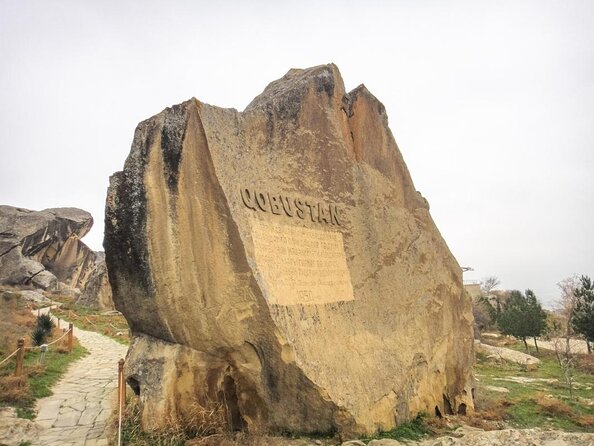
- Gobustan Rock Art and Museum: 1939–1940 discoveries, with thousands of animal and human markings to spot.
- Mud Volcanoes in Soviet Lada Cars: a short, bumpy ride for a hands-on geothermal stop.
- Bibi-Heybat Mosque (13th century): plus the story of how Soviet-era changes affected it.
- Ateshgah Fire Temple: natural gas flames in a site honored across faiths over time.
- Yanar Dag “eternal flame”: burning for an estimated ~4,000 years, even in bad weather.
- Heydar Aliyev Cultural Center photos: Zaha Hadid’s flowing design and the I LOVE BAKU sign.
From Hotel Pickup to Gobustan: Why This Day Feels Efficient
If your goal is to make the most of limited time in Baku, this works because it uses the day like a story, not a checklist. You get hotel pickup and drop-off, then head out in an air-conditioned private vehicle with a professional licensed guide. That means less time figuring out transport and more time learning what you’re seeing.
The route also makes smart use of geography. Gobustan sits about 56 km from Baku, and the Absheron peninsula sites loop you through the coastal-influenced, gas-rich landscape where Azerbaijan’s “fire” phenomena are famous. You’re not just driving to places; you’re moving through a theme: humans drawn to ancient sites, then later people drawn to the earth’s strange energy.
And yes, it’s a private tour. It’s just your group, so you can take photos without feeling rushed and ask questions without the usual squeeze.
You can also read our reviews of more tours and experiences in Baku.
Gobustan Rock Art: Where 1939–1940 Meets 3,500+ Carvings
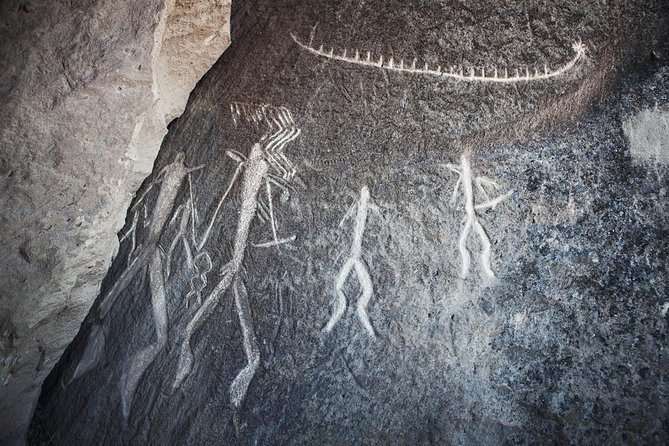
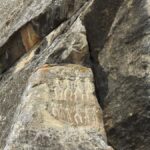
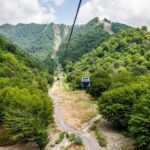
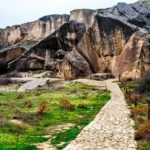
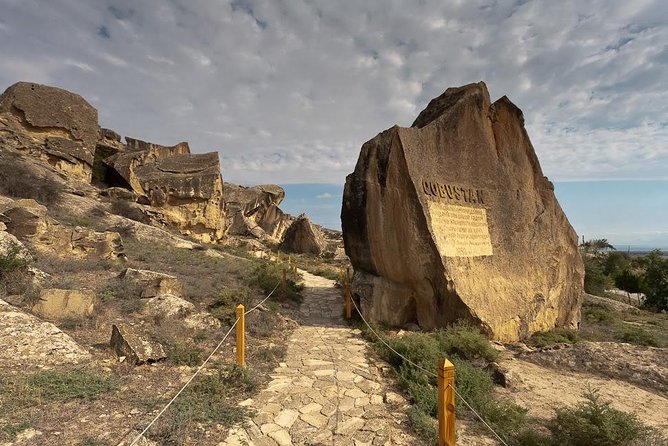
Gobustan is the kind of stop that makes you look slower—in a good way. The Gobustan-archaeological monument is around 56 km from Baku, and the reserve centers on rock art that was discovered around 1939–1940. In total, more than 3,500 human and animal paintings and markings were recorded, including petroglyphs, shelters, and cave features.
Here’s what I think you’ll enjoy most: the Gobustan area is built for observation. You’re not only visiting a museum; you’re also seeing the actual carvings later by moving from exhibits to the rock formations. First comes the Gobustan Museum (2 hours), where the guide can help you connect what you see—tools, shelters, and markings—to the bigger picture of Mesolithic-era life.
Then you head onward to the rock sites themselves to see the carvings where they were made. The descriptions you’ll hear usually focus on everyday animals, human figures, and the marks carved into caves, rocks, and stony surfaces. You’ll also get the sense that this wasn’t one single moment in time—there are structures and shelters that hint at repeated use across centuries.
Practical note: admission tickets aren’t included at this stop, so factor that into your budget. Also, museum time plus rock-site time can mean you’ll be standing or walking longer than you planned. Wear shoes that don’t mind rough ground.
Mud Volcanoes: Short Ride, Big Personality
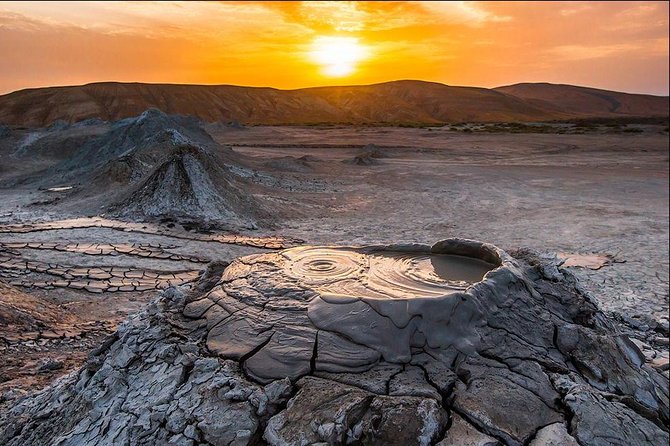
After Gobustan, the mood shifts from ancient stone to something that looks like science class took a wrong turn. The stop at the mud volcanoes is time-limited and intentionally quick—about 10 minutes around the volcanoes, with the full segment lasting around an hour.
One fun detail is the transportation change. Instead of staying in the same vehicle the whole time, you’ll switch to Soviet Lada cars for the mud-volcano area. It’s not about luxury. It’s about getting close and keeping the day moving.
You’ll likely get optional advice from your guide on what to bring. The setup encourages you to bring strong plastic bags if you want to collect some mud. The idea is that it’s good for the skin, though you’ll still want to be practical: keep the mud contained, don’t rush, and don’t treat it like a souvenir you can discard anywhere.
Also remember this: taxi fees to the mud volcanoes are not included. Even though the tour includes transport on paper, this line in the fine print matters. If your operator expects an extra payment for that particular segment, you’ll want cash ready.
Bibi-Heybat Mosque: A Beautiful Site with a Tough Chapter
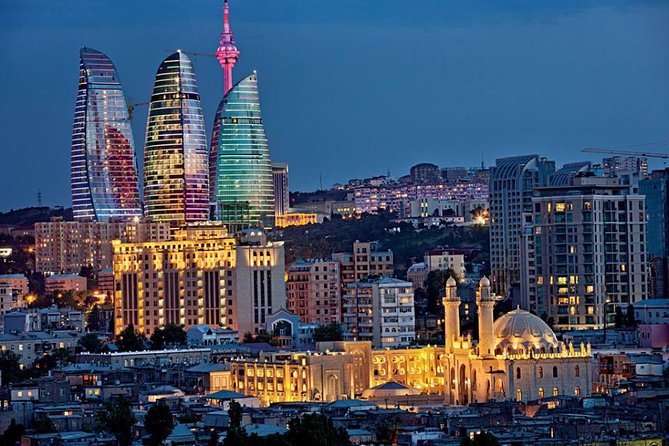
Back toward the city, you’ll stop at the Bibi-Heybat Mosque, and this is one of those places where context matters. The mosque is described as being built in the 13th century, and it had a rough period when it was destroyed during the Soviet-era struggle against religion.
The mosque complex includes graves and tombs of revered people. One specific name you may hear is Ukema khanum, whose tomb is considered a significant monument of Islamic architecture in Azerbaijan.
This stop is short—about 15 minutes—and entry is free, which makes it easy to fit in without turning the day into a long religious itinerary. But even in a short visit, the guide’s framing helps. You’re not just snapping pictures; you’re learning how places survive, change hands, and come back into public life.
If you’re visiting at a time when religious sites require respect (it varies), dress modestly and keep your pace measured. A quick stop can still be a meaningful one.
Ateshgah Fire Temple: Natural Gas Flames, Built by People
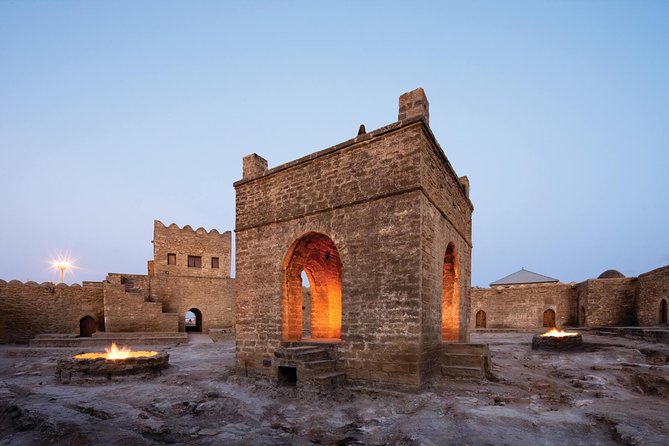
Then you hit the part of the Absheron region that people travel for: fire. The Ateshgah Fire Temple is built where natural gas flames have long been visible. The site is described as dating to the 17th–18th centuries, with the earliest building linked to 1713 and the central temple built in 1810 with funds from a merchant named Kanchanagara.
What makes Ateshgah feel different from a normal “temple visit” is the mix of nature and faith. This area is known for burning natural gas outlets—gas coming up from underground meets oxygen and lights. The site is tied to Zoroastrians, but it’s also described as being sanctified by Hindus and Sikhs at different times.
You might also hear how the physical location relates to a local community story. The fire temple is connected to a Hindu community in Baku that had links to Sikh traditions. That layered background is exactly why this stop pairs well with Gobustan earlier in the day: you’re moving from human marks on stone to human meaning placed onto an active natural phenomenon.
Time-wise, expect around 1 hour here. Entrance fees are not included, so again, plan for extra costs.
If you like photo stops with personality, this is a strong one. The flames and the temple setting work even if you’re not the kind of person who does temples all day.
Yanar Dag: Watching a Flame Keep Going
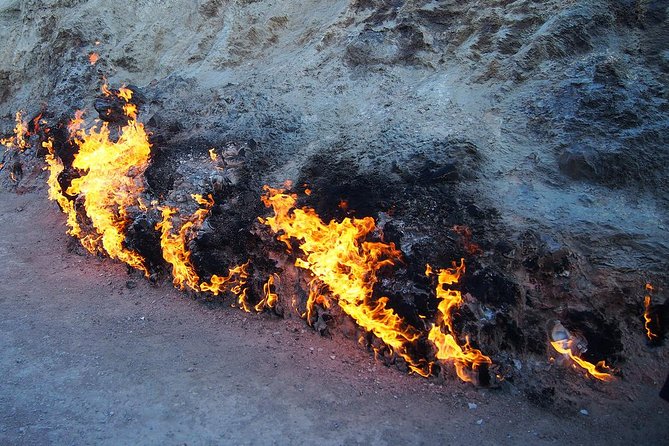
Next comes Yanar Dag, the Fire Mountain. It’s about 25 km north of Baku in Mehemmedi village, and since 2007 it has been declared a state-protected conservation area.
The key detail is the source: natural gas emerging at the foot of the hill feeds a flame that keeps burning. The description you’ll likely hear is that it can burn for around 4 millennia nonstop, even during rain and snow. That’s a wildly long time to rely on one tiny physical process, which is why Yanar Dag tends to grab attention fast.
This stop is about 30 minutes, and that short duration is actually an advantage. You don’t have to stand there for an hour waiting for the perfect moment. You can take your photos, absorb the science-meets-myth vibe, and get back on the route.
Admission isn’t included here either. But because the stop is short, it’s usually easier to make the cost feel “worth it” compared to places with long guided museum hours.
Heydar Aliyev Cultural Center: The Architecture Break
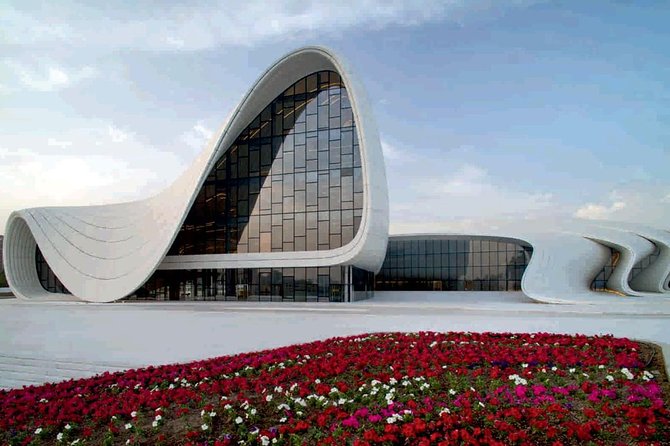
By late in the day, you’ll shift gears with an outside stop at the Heydar Aliyev Cultural Center. This is a quick one—about 10 minutes—mainly for photos.
This building is famous for its flowing, curved design by Zaha Hadid. If you like architecture, you’ll enjoy how the shape is described as an eternal cycle, connecting past and present. The building is also noted for awards, including a London Design Museum award in 2014.
You can also grab a picture in front of the I LOVE BAKU sign, which is exactly the kind of harmless photo moment that makes the whole day feel complete. It’s not a “deep cultural” stop, but it’s a good visual punctuation mark before you return to your hotel.
Price and Value: What $180 Buys You in One Long Day
At $180 per person, the price isn’t cheap. But it’s not random, either. You’re paying for the things that are hard to replicate on your own without extra stress: licensed guide time, hotel pickup and drop-off, and an air-conditioned private vehicle that handles driving between distant sites on a schedule that works.
Where the value equation changes is entrance fees. Most sites on this day are listed as having tickets not included—Gobustan Museum, mud volcanoes, Ateshgah, and Yanar Dag—while Bibi-Heybat Mosque is free.
So I’d treat $180 as the base cost, then mentally add a second budget line for entrance tickets. If you’re planning your day with a tight travel wallet, that’s the big thing to track. If you’re okay with paying for guided access and saving time on transport, this price can feel fair.
Also, consider the total time. A 6 to 8 hour day means you’ll use your energy on the move—standing at sites, getting in and out of vehicles, and managing weather. In return, you get a very concentrated tour of the Gobustan and Absheron theme in one shot.
Comfort, Timing, and What to Bring
This is designed to work for most people, and it’s a private group. That said, your comfort will come down to what you bring and how you handle a long day.
Here’s what I’d pack or prepare based on the stops:
- Comfortable walking shoes for the museum/rock-art area and any uneven ground.
- A light layer. Weather around coastal and open reserves can shift quickly.
- Plastic bags if you want mud from the mud volcanoes. The tour description encourages it.
- Budget for entrance fees and remember that taxi fees to the mud volcanoes are not included.
- Water and snacks are not provided, since meals and drinks aren’t included.
One more small thought: because the mud-volcano stop uses Soviet Lada cars, expect the ride to feel more rustic than the rest of the day. Don’t plan fragile outfits or anything that needs to stay perfectly clean.
Who This Tour Fits Best (and Who Might Skip It)
This is a great fit if you want a day that mixes three kinds of travel curiosity:
- History on stone at Gobustan
- Geothermal oddities at the mud volcanoes
- Natural fire phenomena at Ateshgah and Yanar Dag
It also suits you if you prefer not to coordinate transport across scattered points around Baku. Pickup and drop-off do that work.
You might want to rethink it if your travel style is very slow and you don’t like time-based schedules. With multiple stops and a fixed rhythm, it’s not built for long wandering in one place. Also, if you hate paying extra at each ticketed site, entrance-fee add-ons could frustrate you.
Should You Book This Gobustan & Absheron Full Day Trip?
I’d book this if you’re trying to see Azerbaijan’s “outside the city” personality in one day. Gobustan’s stone carvings plus Absheron’s fire-and-gas story is a smart pairing, and the private vehicle + guide keeps it feeling organized instead of chaotic.
Just go in with eyes open about the one big cost item: entrance fees aren’t included. If you build that into your budget, the $180 price becomes easier to justify.
If your priorities are: ancient rock art, mud volcano weirdness, and real-life flames tied to natural gas, this day trip hits your checklist in the best way—through a connected route, with a guide who helps you make sense of it while you’re standing right there.
FAQ
How long is the full day trip from Baku?
The tour runs about 6 to 8 hours.
Do I get hotel pickup and drop-off?
Yes. Hotel pickup and drop-off are included.
Are entrance fees included for the sites?
No. All entrance fees are not included, and the day includes several stops where tickets are listed as not included.
What stops are included in the tour?
You’ll visit Gobustan (museum and rock art area), mud volcanoes, Bibi-Heybat Mosque, Ateshgah (Fire Temple), Yanar Dag (Fire Mountain), and you’ll stop at the Heydar Aliyev Cultural Center for photos outside.
Are meals and drinks provided?
No. Meals and drinks are not included.
Is this a private tour or shared group?
This is private. Only your group participates.