REVIEW · SIENA
Small-Group San Gimignano and Volterra Day Trip from Siena
Book on Viator →Operated by Tuscan Escapes by Papilio SRL · Bookable on Viator
Eight hours of medieval Tuscany, no driving. This small-group San Gimignano and Volterra day trip layers Via Francigena pilgrim paths, medieval hill towns, and an artisan stop you actually watch up close. I love the hands-on alabaster workshop plus the stop for a farm lunch built around local saffron, and I also like having a guide who can answer questions as you walk. The main tradeoff is it’s a packed schedule, so some town time feels tight if you want to linger.
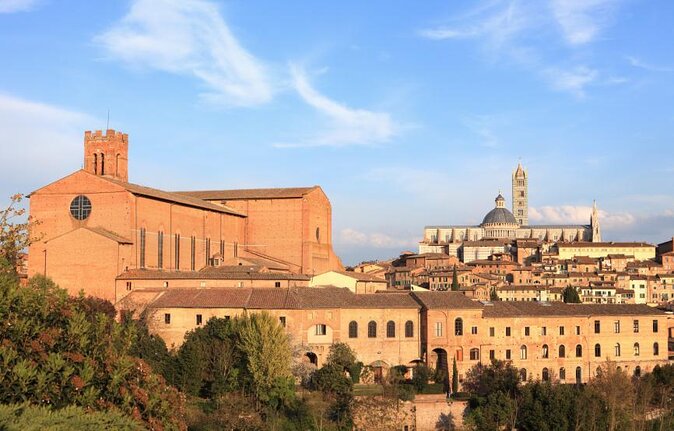
You’ll meet your guide at 9:30am in front of the church of San Domenico in Siena, and the tour runs back to the same spot. Transport is by air-conditioned minivan for up to 8 people, and you’ll get a mobile ticket for the day.
In This Review
- Why This Siena-to-Hill-Towns Route Works
- Monteriggioni’s Wall Walk: Quick, Charming, and Very Siena-Surroundings
- San Gimignano on the Via Francigena (Yes, It’s Really a Pilgrims Road)
- What You Should Do During Your Free Time
- The San Gimignano 1300 Mini-Museum Stop (A Small Time Investment)
- Lunch at a Family-Run Farm: Saffron, Cheese, Prosciutto, and Vernaccia
- Volterra: Alabaster Craft and Etruscan-to-Roman-to-Medieval Layers
- The Alabaster Workshop Visit (Why This Stop Gets Praised)
- Free Time Options in Volterra
- How the Small-Group Van Day Feels in Real Life
- Price and Value: What $217.77 Really Buys You
- Who Should Book This Day Trip
- Should You Book? My Straight Answer
- FAQ
- What time does the tour start, and where do I meet?
- How long is the day trip?
- Is hotel pickup included?
- Is lunch included?
- Do I need a car to do this?
- How big is the group?
- What languages is the tour offered in?
- Can I cancel and get a full refund?
Why This Siena-to-Hill-Towns Route Works
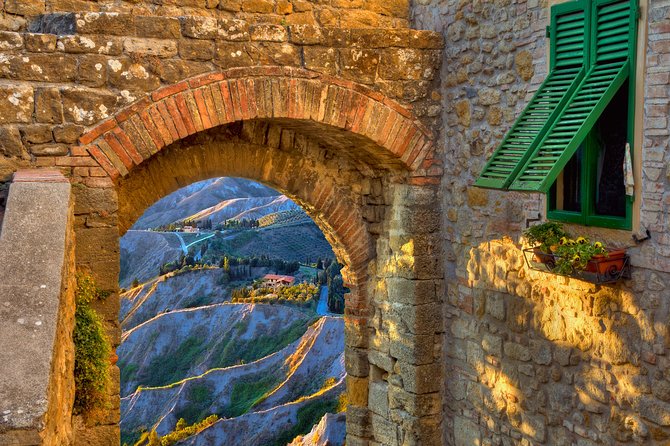
This is a day trip that saves you the real hassle: figuring out parking, hiring multiple tickets, and stitching together three towns on your own time. You’re doing Monteriggioni first, then San Gimignano on foot, then Volterra with a workshop visit—so you get both the big walking towns and a craft stop without needing a car.
The value is in how the stops connect. Monteriggioni sets the medieval-defense mood. San Gimignano is where the walking route and the tower views land. Volterra brings in the Etruscan-and-alabaster angle, which makes the day feel more like a story than a checklist.
Monteriggioni’s Wall Walk: Quick, Charming, and Very Siena-Surroundings
You start with Monteriggioni, a small hill town ringed by an intact medieval wall. It’s the kind of place where you can feel why defense mattered: the walls and turrets sit right on the ridge line, built for people watching the valley below.
You’ll have about 30 minutes here, so treat it like a “get your bearings fast” stop. Walk the lanes, pop into small shops if they’re open, and if you want a photo, aim for angles where the walls frame the countryside.
One nice touch: the town’s wall-and-turret layout is more than scenery. Your guide can put it in context, including the fact that it’s tied to Dante’s Divine Comedy as Siena’s main bastion against Florence.
You can also read our reviews of more tours and experiences in Siena.
San Gimignano on the Via Francigena (Yes, It’s Really a Pilgrims Road)
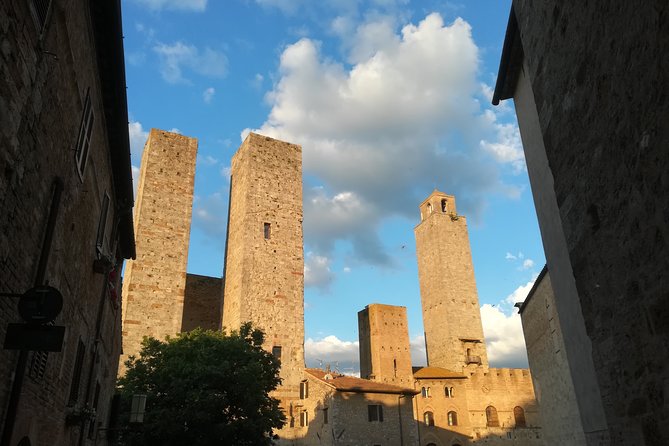
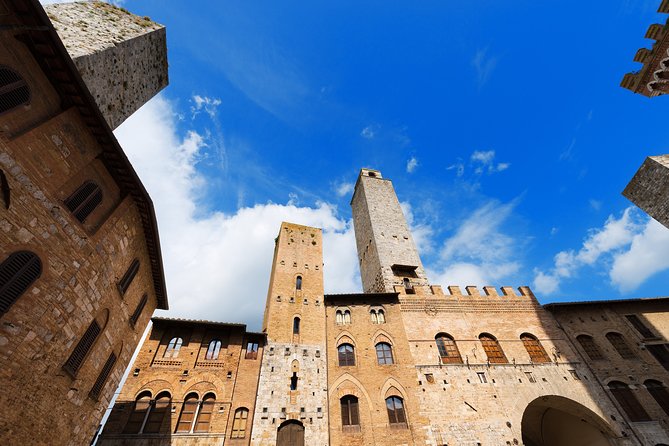
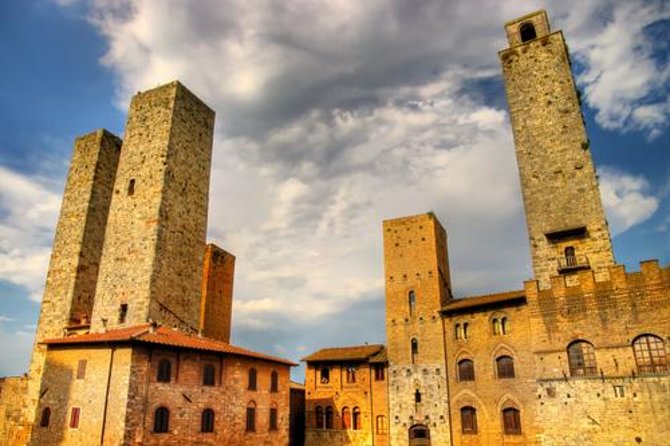
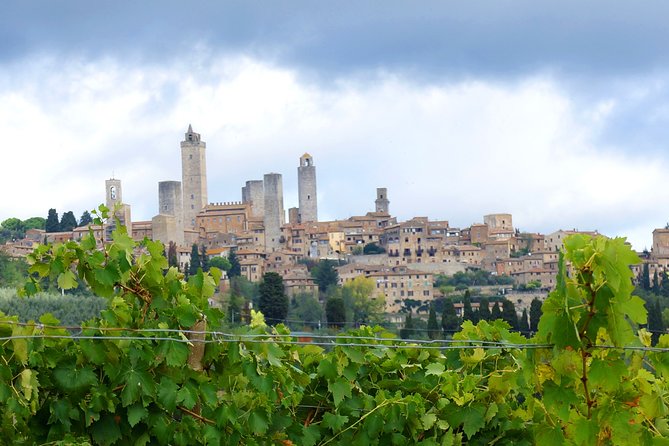
San Gimignano is the headline, and it earns it. The town has those tall medieval towers that still punch into the sky—so even before you dig into details, you get that instant “Tuscany postcard” moment.
The big walking experience here is the Via Francigena. This was a major pilgrimage route in the Middle Ages, traveling from northern Europe all the way toward Rome. In San Gimignano, the path doesn’t sit off to the side—it runs right through town—so you’re not just looking at history. You’re moving along it.
I like this setup because it changes how you experience the streets. Instead of wandering randomly, you walk with a purpose: narrow lanes, cobblestones, and viewpoints that make more sense once you learn who was traveling and why.
What You Should Do During Your Free Time
Once you’ve had the guided walk, you’ll get time to explore on your own. This is where you can aim for your priorities:
- Tower views: you may be able to ascend one of the matchstick-like stone towers (the kind medieval families used to signal status).
- Piazza del Duomo: slow down here. This is where the town’s main energy gathers.
- Church interior: the Collegiata is a great example of a place that can look plain from outside but surprises you inside, with black-and-white striped Gothic styling.
If you’re short on energy, pick one tower viewpoint plus the main square. If you have extra stamina, add a church stop and a slow wander through the smaller streets.
The San Gimignano 1300 Mini-Museum Stop (A Small Time Investment)
You’ll also have a short visit to San Gimignano 1300, a miniature museum meant to show what the town looked like in medieval times. It’s brief—about 10 minutes—so don’t expect it to replace walking the real streets.
But I like having something like this after you’ve already seen the towers. It helps you “read” the town differently. You start picturing how people lived and moved around the buildings, not just how it looks today.
Lunch at a Family-Run Farm: Saffron, Cheese, Prosciutto, and Vernaccia
By the time lunch rolls around, you’ve worked up an appetite browsing and climbing. The lunch stop is at a family-run farm outside San Gimignano, and it’s built around seasonal farm products.
Here’s what makes this lunch more than a simple meal:
- You’ll taste local favorites like cheese and prosciutto.
- You shouldn’t miss saffron-based dishes—this is one of the best parts of the day if you like local specialties.
- Saffron flavors often show up in more than one dish, so it’s not just a gimmick bite.
- Lunch is paired with Vernaccia white wine, a traditional wine closely tied to the region.
A practical note: since you’re eating at a farm, it can feel slightly different from a restaurant in town—more relaxed, more local, and very focused on what they grow and make. If you’re a picky eater, it’s still worth going, but you may want to mention preferences to your guide beforehand (when possible).
Volterra: Alabaster Craft and Etruscan-to-Roman-to-Medieval Layers

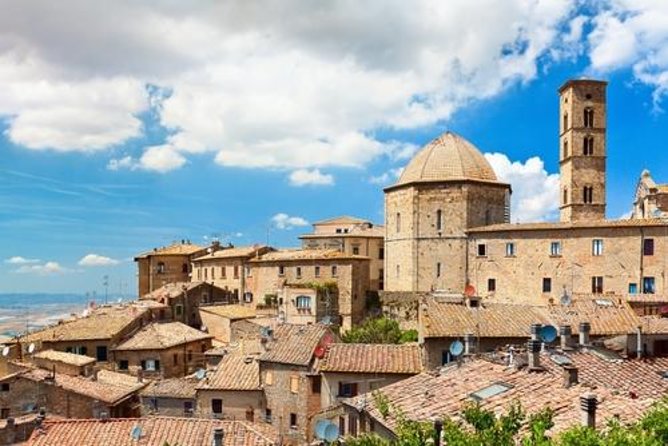
After lunch, you head toward Volterra, known for its alabaster. The town has a layered feel: Etruscan and Roman ruins mixed with medieval and Renaissance architecture, plus modern life woven in.
You’ll have about an hour of guided time here plus additional leisure time to roam the historical center. That balance matters. Volterra rewards wandering, but it also works better when you’re given a few anchors first—like which landmarks to look for and what the old stones are.
The Alabaster Workshop Visit (Why This Stop Gets Praised)
The workshop stop is a major reason this day trip gets strong word-of-mouth. You’ll visit an artisanal workshop where craftsmen work alabaster that locals have shaped for decades. This is the point where the day stops being only about viewing and becomes about seeing process.
If you’ve ever watched a craftsperson work wood or metal, you’ll recognize the same idea here—hands moving fast, tools doing specific jobs, and the stone turning into something precise. In past groups, guides have helped set the tone by introducing the craft and explaining why alabaster mattered historically.
This is also where you can buy something if you want a real souvenir—because it’s not a random gift shop stop. It’s tied to actual making.
Free Time Options in Volterra
In the historical center, you can pick what fits you:
- Etruscan museum (if you want more depth)
- Roman theatre and older arches
- Church stops and small stores
Even if you skip museums, just walking the town’s central streets is often enough, since the town’s ancient layers show up in the architecture.
How the Small-Group Van Day Feels in Real Life
This is a max 8 travelers tour, which is one of the reasons it works so well. In a smaller group, your guide can move you efficiently, answer questions without repeating themselves nonstop, and handle the flow of walking vs. breaks.
Still, it’s a full day. There are multiple transport legs between towns, and the time in each place is intentional. If you love slow travel, this won’t feel like a slow day. If you like getting big highlights without planning your own route, it hits the sweet spot.
Two practical considerations from real-world experiences:
- Some groups found the ride a bit cramped, especially if someone in the group is taller.
- If you’re seated in the back rows, it can be harder to hear introductions over the drive.
If you can choose your seat, aim for closer to the front. It pays off for the little bits of context your guide shares while you’re moving.
Price and Value: What $217.77 Really Buys You
At about $217.77 per person for an ~8-hour day, you’re paying for more than bus transportation. You’re paying for:
- Guided storytelling in three towns
- Lunch included, with saffron-focused food and Vernaccia pairing
- A visit to an alabaster workshop
- Transport in an air-conditioned minivan
If you tried to DIY this day, the cost would creep up fast once you add train/bus schedules, entrance fees, and the value of having someone coordinate the order of towns. The lunch alone helps justify the price because you’re not just stopping for a quick snack—you’re eating a proper farm meal.
The other value point: you avoid driving fatigue. Siena to hill towns can mean stressful narrow roads and parking hunts. Here, you get the views and the walking, minus the driving work.
Who Should Book This Day Trip
I think this tour suits you best if you want:
- A first-timer-friendly Tuscany day that still feels authentic
- Hill towns plus a real craft workshop, not just photo stops
- Local food built around saffron and farm ingredients
- A smaller group pace where your questions actually get answered
It might not be ideal if you’re the type who needs hours and hours in one place. You’ll have enough time to enjoy each town, but not enough to treat it like a stand-alone visit.
Should You Book? My Straight Answer
Yes—if you want a tightly organized, small-group day that covers San Gimignano and Volterra with strong specialty stops (saffron lunch and alabaster craft). This is the kind of trip where the payoff comes from the mix: medieval streets, pilgrim-route context, and watching a craftsman at work.
If you hate busy schedules, consider whether you prefer one town per day instead. For most people staying in Siena, though, this is a smart way to get a lot of Tuscany personality without the stress of planning and driving.
FAQ
What time does the tour start, and where do I meet?
You meet your guide at 9:30am at the church of San Domenico in Siena (Piazza S. Domenico).
How long is the day trip?
It runs for about 8 hours.
Is hotel pickup included?
No. The tour starts at the meeting point in Siena and ends back there.
Is lunch included?
Yes. Lunch is included, prepared using seasonal products from the farm stop.
Do I need a car to do this?
No. You’ll travel by air-conditioned minivan, so you don’t drive yourself between towns.
How big is the group?
The tour has a maximum of 8 travelers.
What languages is the tour offered in?
It’s offered in English.
Can I cancel and get a full refund?
You can cancel up to 24 hours in advance of the experience for a full refund.