REVIEW · NAPLES
Skip-the-Line Pompeii & Mt. Vesuvius Day Trip from Naples
Book on Viator →Operated by IAMME IA! - Gray Line Amalfi Coast · Bookable on Viator
A buried city, then a real volcano. I like the skip-the-line entry to Pompeii and the air-conditioned coach that gets you out of Naples traffic fast. The main catch: the Vesuvius part is outdoors and weather-sensitive, so rain can turn the day into a slippery, miserable hike.
This is a practical full-day mix: an official Pompeii guide with headphones for clearer audio in bigger groups, then time to walk at your own pace toward the crater edge. It also helps that the group size stays capped (up to 30), so you’re not fighting a city of strangers—just a crowd.
In This Review
- Key things to know before you go
- Coach Comfort From Central Naples
- The “Skip-the-Line” Deal: What It Really Buys You at Pompeii
- Pompeii in Motion: The Forum, Markets, and Baths
- Forum: the city’s political and commercial center
- Tempio di Giove Capitolino: statues you can actually picture
- Macellum: Pompeii’s food market
- Via dell’Abbondanza: the main street vibe
- Stabian Baths (Terme Stabiane): daily life in tile-and-steam
- The Stops That Add Drama (and One Possible Miss)
- Casa del Fauno: a mansion that signals elite status
- Teatro Grande: drama built into the hillside
- Basilica: law, business, and administration
- Lupanar: the famous brothel stop
- Walking Pompeii With a Guide: Why the Order Matters
- Mt. Vesuvius National Park: From 1,000 m to the Crater Views
- The hike is uphill, not leisurely
- Rain changes everything
- Photos and the crater: the point of the day
- When Vesuvius Can’t Open: Herculaneum as the Backup
- Group Size, Timing, and How It Feels on the Ground
- Price and Value: Why $139.07 Often Adds Up
- Practical Tips That Make the Day Easier
- Who This Tour Fits Best (and Who Might Prefer Another Plan)
- Should You Book This Tour?
- FAQ
- How long is the Pompeii and Mt. Vesuvius day trip?
- What’s included in the tour price?
- Is lunch included?
- What happens if Mt. Vesuvius is closed?
- How strenuous is the walk at Vesuvius?
- Where do I meet the group and where do I end up?
Key things to know before you go
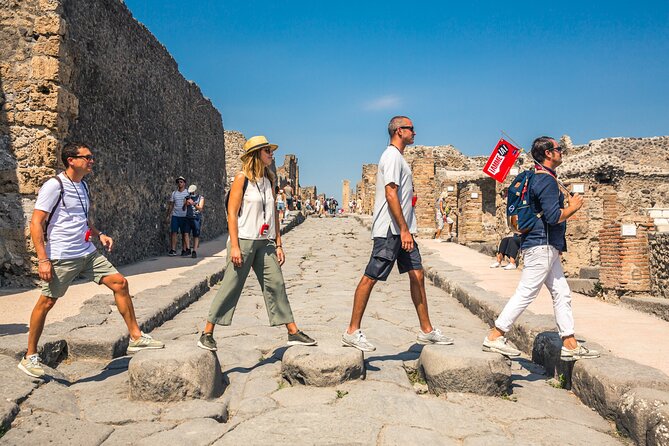
- Skip-the-line Pompeii saves time so you can spend more of your limited day actually seeing ruins
- Two levels at Vesuvius: drive up to about 1,000 m, then walk toward the crater area around 1,280 m
- Official Pompeii guide + timed stops: you get a guided “greatest hits” route plus wandering time
- Headphones in Pompeii if the group is larger, so you can hear the guide without craning your neck
- Lupanar may be skipped on some runs depending on crowd flow and restoration/queue realities
- Backup plan if Vesuvius closes: you’ll be offered skip-the-line access to Herculaneum instead
Coach Comfort From Central Naples
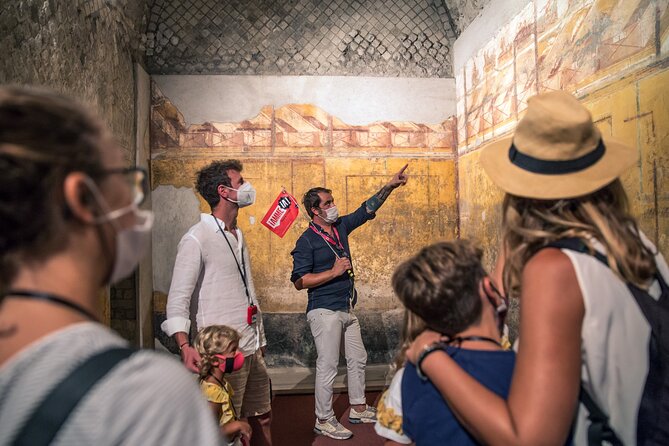
This day trip is built around getting you off local buses and into a comfortable air-conditioned coach. That matters in southern Italy, where a hot walk from one stop to the next can eat up your energy before you even start seeing ruins.
Pickup runs from central Naples, starting near Piazza Giuseppe Garibaldi (91) and departing from the Starhotels Terminus area. The day ends back at the same meeting point, which keeps your nerves down when you’re tired and hungry.
You can also read our reviews of more tours and experiences in Naples.


The “Skip-the-Line” Deal: What It Really Buys You at Pompeii
Pompeii is huge. Even with a guided route, you don’t have hours and hours to wander until your feet give up. The skip-the-line entry is valuable because it protects your schedule.
Here’s what you’re paying for in plain terms:
- Entrance to the Pompeii Archaeological Park is included
- Transport is included, so you’re not hunting for transit and transfers
- A Pompeii guide runs the key stops
- Time is the real luxury, because the ruins don’t care about your itinerary
The one caution: “skip-the-line” can still feel crowded once you’re inside, and the tour group needs to move as a group. You’re not touring the site in a private bubble.
Pompeii in Motion: The Forum, Markets, and Baths
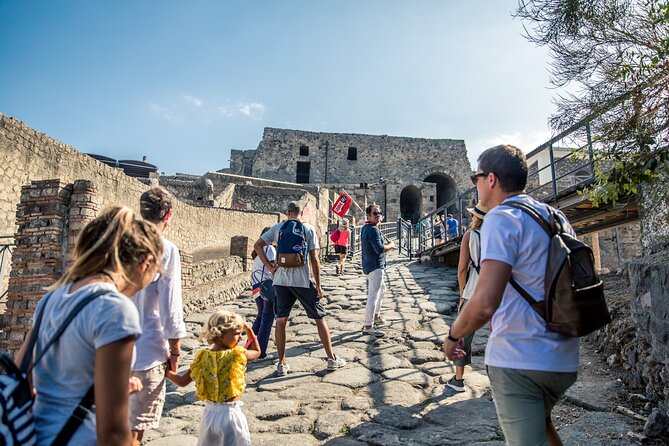
Pompeii gets a guided block of about 2 hours with admission included. You’ll follow a route designed to give you the layout quickly, not just individual photo spots. The stop list includes the Forum area, markets, major public buildings, and a few star residences.
Forum: the city’s political and commercial center
The Forum was Pompeii’s main hub—part market, part government space. It’s easy to miss the “why” if you only look at stones, so having a guide here helps you connect buildings to daily life.
Tempio di Giove Capitolino: statues you can actually picture
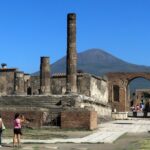
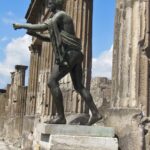
This is the temple area dominated by Vesuvius views and famous statues of Jupiter, Juno, and Minerva. The timing of the stop matters because this part is visually tied to the rest of the Forum: you get a sense of what faced people walking through.


Macellum: Pompeii’s food market
The Macellum served as a provisioning market. It also suffered after the earthquake in 62 AD, which is a helpful reminder that Pompeii wasn’t frozen in time—it was changing right up until the eruption.
Via dell’Abbondanza: the main street vibe
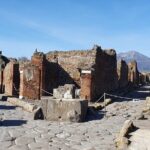
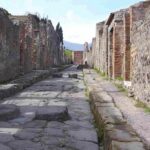
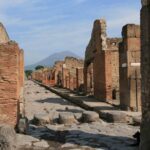
This ancient street (decumanus maximus) is where shops and daily noise would have lived. Even if you can’t picture the crowds exactly, walking it gives you a better sense of scale than staring at ruins from the sidelines.
Stabian Baths (Terme Stabiane): daily life in tile-and-steam
The Stabian Baths are one of the best “human” stops because they explain routine. You’ll see that men’s and women’s entrances were separate, and the men’s area maps the bathing progression: dressing room into different temperature spaces.
If you like everyday Roman details, this stop tends to feel more alive than some big monuments.
The Stops That Add Drama (and One Possible Miss)
Pompeii isn’t just temples and streets. The later stops bring in wealth, power, and even some scandal—at least, for those who enjoy the whole human mess.
Casa del Fauno: a mansion that signals elite status
This house is one of the largest and most luxurious private residences in Pompeii. It’s known for the Alexander Mosaic, a celebrated floor mosaic showing a battle scene. Even in ruins, you can feel why this mattered to wealthy residents.
Teatro Grande: drama built into the hillside
The Large Theater takes advantage of a natural slope. That hillside design helps you understand how Roman entertainment used space, not just buildings.
Basilica: law, business, and administration
In the Forum, the Basilica functioned as a public service space—business and justice. It’s a strong stop if you like the “how the city worked” angle.
Lupanar: the famous brothel stop
The Lupanar is the notorious highlight tied to erotic wall paintings. It’s on the standard plan, but here’s a realistic consideration: some guided routes may skip it if the group routing needs to avoid long queues, crowds, or restoration closures. If this is a must-see for you, treat it as a potential bonus rather than a guaranteed checkbox on a tight timetable.
Walking Pompeii With a Guide: Why the Order Matters
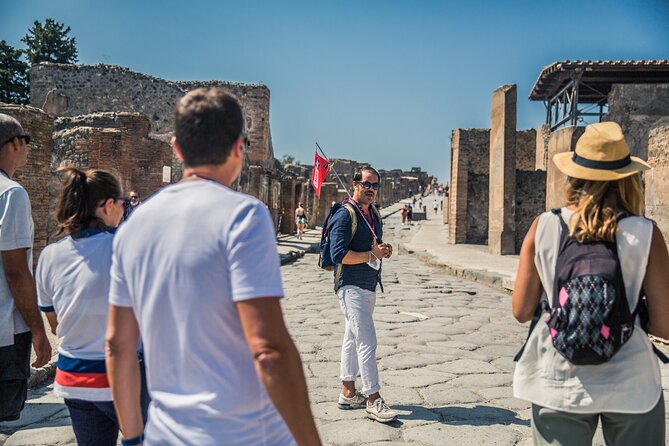
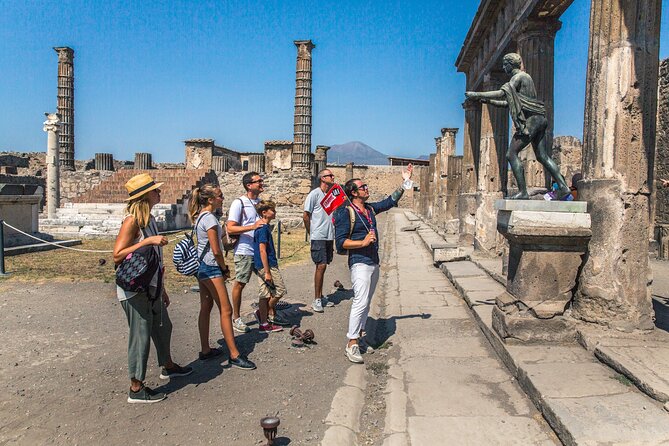
Pompeii can feel like a random scatter of ruins unless someone connects the dots. The strongest part of this tour is that it doesn’t treat the day as a bunch of separate stops. It threads you through the Forum core and then outward to major buildings and elite spaces.
The “tradeoff” is that you’ll spend some time listening. With only around two hours on site, you’re getting a guided introduction, not full coverage. If you’re the type who wants to roam freely without stopping for explanations, you may feel the pull to do it again later on your own.
Mt. Vesuvius National Park: From 1,000 m to the Crater Views
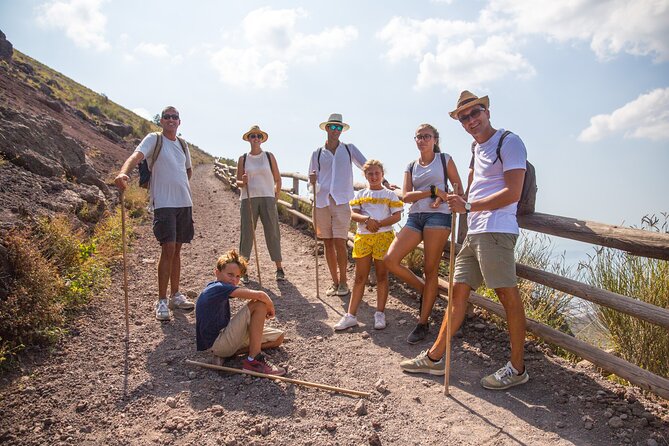
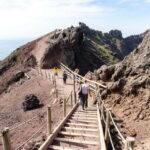
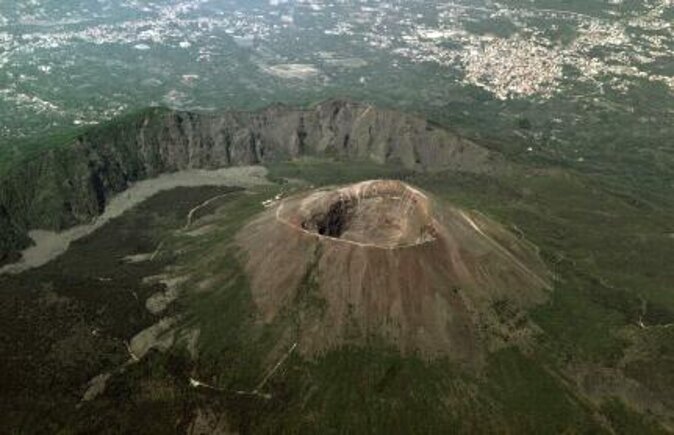
After Pompeii, you head toward Vesuvius and drive to a drop-off around 1,000 meters. The walk climbs to roughly 1,280 meters, which is where the crater-edge panorama and views over the Gulf of Naples come in.
You’ll have about an hour for the Vesuvius portion, with extra time at the crater area based on how you spend it. A local mountain guide may be on hand if you want more guidance for an added cost.
The hike is uphill, not leisurely
Wear real walking shoes. The surface is described as uneven, and multiple previous hikers have noted a steep early stretch and loose ash underfoot. This is not a paved nature walk, even if some people manage it comfortably with breaks.
Rain changes everything
One of the most important practical realities is that a rainy day makes the whole experience tougher. There’s no built-in cover once you’re hiking, so umbrellas can become a collision sport. If weather looks questionable, bring rain gear that covers your shoes too.
Photos and the crater: the point of the day
The payoff is big: crater views and a clear sense of how the eruption reshaped the area. You’re also right there to look back toward Naples and the coast from higher ground.
When Vesuvius Can’t Open: Herculaneum as the Backup
Volcano days are never fully predictable. If Vesuvius is closed, the plan shifts so you still get a skip-the-line ticket to visit Herculaneum instead. That’s a smart backup because it keeps your day anchored in Roman archaeology, not lost time.
If Vesuvius is open, you still get a well-defined hike portion. Either way, you should consider that the biggest variable isn’t the coach—it’s the mountain and the sky.
Group Size, Timing, and How It Feels on the Ground

This tour caps at 30 travelers. If you hate group logistics, you’ll still notice a “line” feeling at busy spots in Pompeii. Some people have also found it hard to see everything when standing farther back during explanations, especially in crowded areas.
The good news: headphones are provided in Pompeii when groups are larger than 10 passengers. That helps you hear the guide without relying on being perfectly positioned in the front row.
Also, this is a timed day. Delays can happen around meeting points, but the tour operates on set timing and the guide needs to keep the group together. If you want slow travel, this is not your pace.
Price and Value: Why $139.07 Often Adds Up
At $139.07 per person for about 8 hours, this isn’t the cheapest way to see Pompeii and Vesuvius, but it’s not trying to be luxury pricing either. The value is in what’s bundled:
Included value drivers:
- Round-trip transportation in an air-conditioned coach
- Skip-the-line access for Pompeii
- Pompeii admission
- Pompeii official guided portion
- Vesuvius National Park admission
- Headphones in Pompeii for larger groups
Not included:
- Lunch
So what are you really buying? You’re buying time management. You’re trading the headache of buses, ticket lines, and navigation for a guided schedule that hits the main sights and still gives you hike time.
If you’re traveling on a budget but also want to avoid wasting half your day on logistics, this price makes sense.
Practical Tips That Make the Day Easier
Here’s how I’d set myself up to enjoy the day, not just survive it:
- Plan footwear for volcanic terrain: uneven path plus loose ash is a real combo, so skip flimsy soles.
- Bring rain protection if forecasts look iffy. Umbrellas are awkward on group hikes, and soaked shoes can wreck the rest of your trip.
- Stay with the group in Pompeii. Explanations move quickly, and missing the walking rhythm costs you more than you’d expect.
- Use photo time smartly: the crater area is where your best “wow” images happen, so don’t spend it chatting in the wrong spot.
- Keep your expectations realistic for Pompeii. Two hours is a highlights lesson, not a full catalog of every street and villa.
Who This Tour Fits Best (and Who Might Prefer Another Plan)
This is a great fit if:
- You want a strong first visit to Pompeii without planning logistics
- You like guided context, especially for the Forum and daily-life public buildings
- You’re okay with a moderate fitness demand for the Vesuvius climb
- You’d rather ride in comfort than wrestle public transport in the heat
It may feel less ideal if:
- You dislike guided listening and prefer drifting at your own speed
- You’re very sensitive to rain and prefer fully sheltered experiences
- You need extensive time for Pompeii on your first day (this is designed as an intro)
Should You Book This Tour?
If you’re visiting Naples and you want both Pompeii and Vesuvius in one day without turning it into a planning project, I think this is a smart booking. The skip-the-line setup plus coach transport makes the day feel efficient, and Pompeii’s guided route gives you enough context to make the ruins mean something.
The decision hinge is the hike and the weather. If you can handle uneven ground and you’re willing to bring proper rain gear, you’ll likely feel like the day delivered. If bad weather is common in your travel window, go in with flexible expectations or book with a plan B mindset.
FAQ
How long is the Pompeii and Mt. Vesuvius day trip?
It’s listed at about 8 hours total, with transfer times that can vary based on traffic and the time of day.
What’s included in the tour price?
You get round-trip transportation by air-conditioned coach, skip-the-line access to Pompeii, an official guide in Pompeii, Pompeii admission, and admission to Vesuvius National Park. Headphones are included in Pompeii when the group is larger than 10 passengers.
Is lunch included?
No. Lunch is not included.
What happens if Mt. Vesuvius is closed?
If Vesuvius won’t be accessible, you’ll be offered an alternative: skip-the-line access to visit the archaeological site of Herculaneum.
How strenuous is the walk at Vesuvius?
You should have a moderate physical fitness level. The path is described as uneven, and you’ll be walking from around 1,000 meters toward the crater area near 1,280 meters.
Where do I meet the group and where do I end up?
Pickup is from central Naples, departing from the Starhotels Terminus area. The tour ends back at the same meeting point near Piazza Giuseppe Garibaldi, 91.