REVIEW · SEDONA
Sedona/Flagstaff: Grand Canyon Day Trip and Sunset
Book on GetYourGuide →Operated by Arizona Tour & Travel · Bookable on GetYourGuide
Sunset colors hit differently at the Grand Canyon, and this Sedona/Flagstaff small-group tour stacks the day with East and South Rim viewpoints. I love the way the Grand Canyon National Park route starts with big first views (Desert View area) and then widens out into the South Rim panoramas. I also love the small, no-more-than-14 van vibe, where guides like Brad, Charlie, or Steve can actually talk to you as people, not just as a crowd. One possible drawback: it’s a long day, and the sunset stop is timed tightly, so you may wish you could linger for the very deepest, post-sunset glow.
If you start in Sedona, you’ll leave the red rocks behind fast. You’ll head up through Oak Creek Canyon, winding about 27 miles, climbing roughly 2,000 feet as the scenery shifts to Ponderosa pine. Then the trip connects to Flagstaff, where the group meets up and the route runs past the dormant San Francisco Peaks before you get your first true Grand Canyon payoff.
A big part of the value is that the tour doesn’t treat the Canyon like just a photo stop. You’ll learn about geology, flora and fauna, adventure, and the region’s history while also visiting the Historic Cameron Trading Post on Navajo Tribal Land for hands-on culture and souvenir shopping. You still get dinner time on your own, though in practice guides often help coordinate where to eat, which makes it easier after the long day.
In This Review
- Key things I’d plan around on this Grand Canyon sunset day trip
- From Sedona red rocks to Ponderosa pine: the drive that sets expectations
- Flagstaff meetup and the route toward the East entrance
- Cameron Trading Post on Navajo Tribal Land: craft, context, and souvenirs with meaning
- Entering Grand Canyon from the East: Desert View and first Colorado River views
- South Rim viewpoints: how you get the widest, deepest views
- Sunset at the Grand Canyon: what you’ll feel when lighting finally lands right
- Dinner time after sunset: what to do with your free choice
- The guiding style is the real “value add”
- Price and logistics: is $240 a fair deal for this Grand Canyon day?
- Who should book this Grand Canyon sunset day trip?
- Should you book this tour?
- FAQ
- How long is the Grand Canyon sunset day trip?
- How big is the group?
- Where are pickup and drop-off?
- What’s included in the ticket price?
- What about dinner?
- Do non-U.S. residents pay an extra fee?
- Do I need to bring a child car seat or booster?
- Is the tour guided in English?
- How is cancellation handled?
- What should I bring for a sunset outing?
Key things I’d plan around on this Grand Canyon sunset day trip
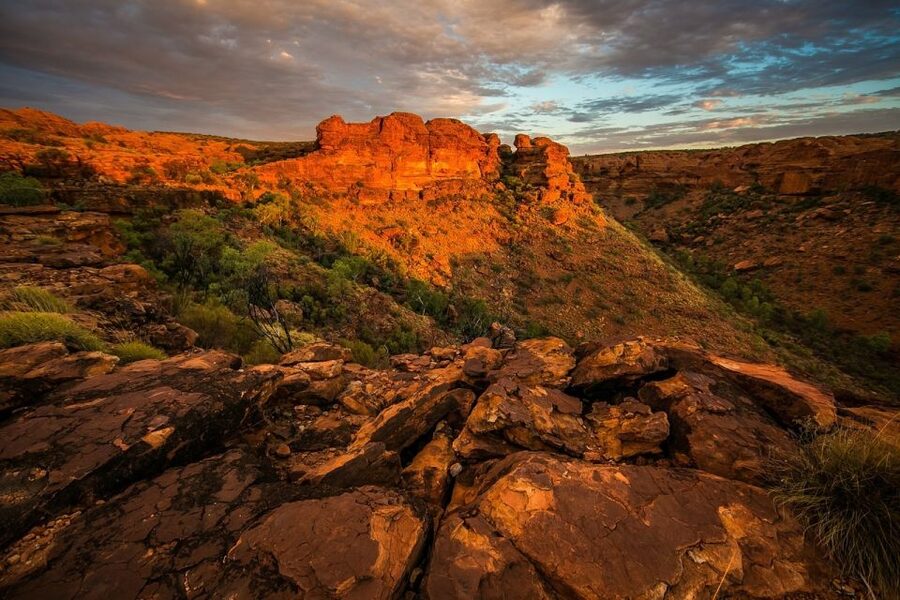
- Small group (up to 14): more time at viewpoints and fewer “stand behind me” moments.
- East Rim + South Rim combo: you get a wider set of angles across the canyon, not just one stretch.
- Cameron Trading Post on Navajo land: craft-focused shopping before the big canyon views.
- Desert View first impressions: early canyon and Colorado River sighting sets the tone for sunset.
- Sunset spot chosen by your guide: the timing is part of the experience, but it’s not an all-night hang.
- Photo help and comfort extras: guides have been known to take pictures for you and bring warmth on colder evenings.
From Sedona red rocks to Ponderosa pine: the drive that sets expectations
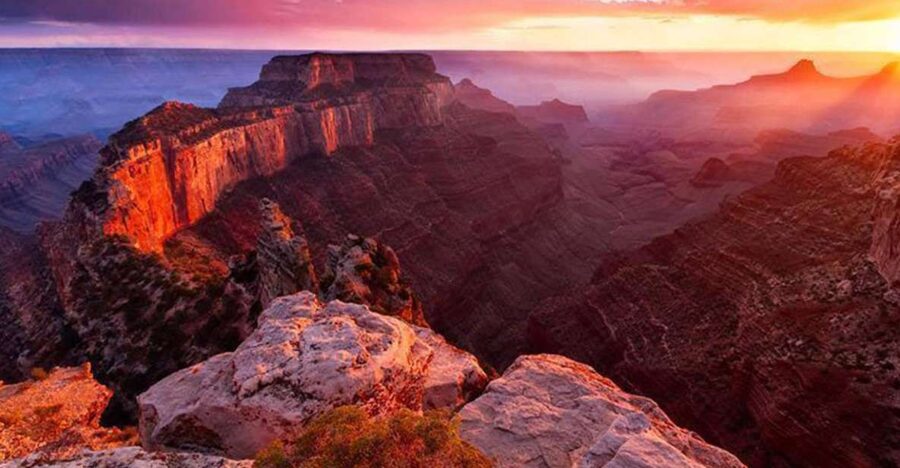
This tour is long enough that the “how you get there” matters. If you’re departing from Sedona, you start with a climb through Oak Creek Canyon. The road twists for about 27 miles, and you can feel the elevation change in the air and in the vegetation. You leave the red rock behind and gradually move into a landscape of tall Ponderosa pines.
That matters because it frames the Grand Canyon in your mind before you see it. You’re not stepping straight from a desert road into a postcard. You’re transitioning—step by step—into the high country that surrounds the Canyon. When the trip shifts onward toward Flagstaff and the San Francisco Peaks area (dormant volcano country), the drive becomes a warm-up talk: what the region’s like, what you’ll be looking for, and why certain canyon views work better than others.
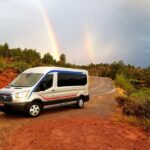
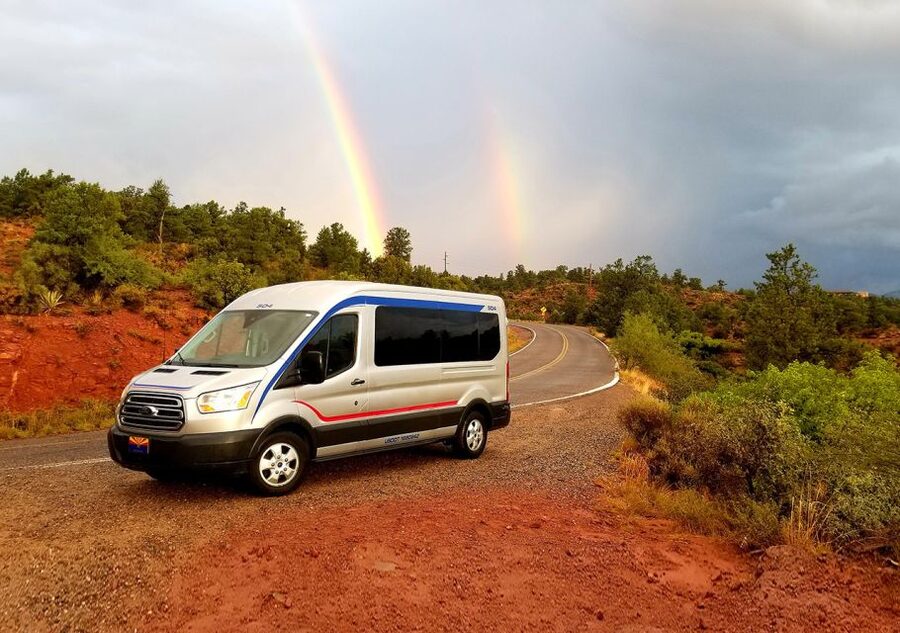
You’ll ride in an air-conditioned vehicle that seats no more than 14 passengers. That small size is a real quality-of-life win on a day trip. You get a smoother rhythm at stops, and the guide can explain what you’re about to see in a way that feels personal, not like you’re trapped in a loud lecture.
Practical tip: bring a layer for the van ride and the Canyon viewpoints. Even if daytime is comfortable, sunset times can get chilly fast.
You can also read our reviews of more tours and experiences in Sedona.
Flagstaff meetup and the route toward the East entrance
After the Sedona start, the group connects in Flagstaff to pick up remaining guests. From there, the drive heads toward Grand Canyon National Park, and you’ll pass the San Francisco Peaks area. Even if you’re not fixated on volcanoes, the guide’s narration tends to connect the dots between how the area formed and what that means for what you’re about to see.
One part I like about this route is that it doesn’t rush you straight into the South Rim. It builds toward the Canyon from the outside in—starting with the broader region—so when you enter the park, the first views feel earned.
Cameron Trading Post on Navajo Tribal Land: craft, context, and souvenirs with meaning
The first major stop is the Historic Cameron Trading Post on Navajo Tribal Land. This is not just a quick bathroom and stretch stop. It’s where you get a culture-and-craft moment before you go to the big stone.
Expect time to check out Native American craftsmanship. If you’re shopping, this is the kind of stop where you can slow down. Look at what’s being made, ask questions, and shop with intention rather than treating it like a fast tourist pit stop.
Even if you don’t buy anything, I think it’s worth it for context. It helps you shift your mindset before you stare into the Canyon. You’re seeing the Grand Canyon region as a living place with peoples and traditions, not just scenery.
Tip for your wallet: set a loose budget before you walk in. Craft pricing can vary a lot, and the most rewarding purchases are the ones you actually meant to make.
Entering Grand Canyon from the East: Desert View and first Colorado River views
The route takes you to the Grand Canyon’s East entrance on the way in. From that area you’ll pass views of the Little Colorado River Gorge and the western edge of the Painted Desert. Then you’ll enter Grand Canyon National Park and reach Desert View, where you’ll get some of the park’s early “wow” moments.
This is one of the tour strengths: you get your first real hit of the Canyon and the mighty Colorado River before the itinerary settles into the South Rim viewpoints. It’s a smart pacing move. You don’t spend the entire day feeling like you’re waiting to finally start seeing the Canyon.
Also, Desert View works well as a mental reset. It gives you scale fast. That makes later distances—things like how far across the canyon you can see—feel real instead of theoretical.
South Rim viewpoints: how you get the widest, deepest views
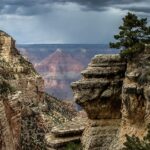
Once you’re into the South Rim, the tour focuses on panoramic viewing. You’ll make multiple stops along the rim so you can see different angles. The guiding idea here is simple: the Grand Canyon isn’t one view. It’s many views, and small changes in viewpoint location can change what you understand about depth, distance, and how the layers read from above.
You’ll also be able to gaze across about 14 miles to the North Rim. That detail sounds technical, but it’s useful. It helps you appreciate that the Canyon is not only huge in the vertical direction; it’s huge in the horizontal direction too. You’re looking across a big gap in time and in geology.
One special feature of this tour is a stop at the only point where you can see both Phantom Ranch and the Kaibab Suspension Bridge. If you’re the kind of person who likes “I didn’t expect that” moments, this is one of them. It’s not just a pretty overlook. It’s a perspective that connects structures and human stories to the scale of the canyon.
If you’re into photography, this is where your guide’s timing helps. Guides are typically positioning you for viewpoints that minimize crowds and maximize light. You’re not just standing wherever the group happens to stop.
Sunset at the Grand Canyon: what you’ll feel when lighting finally lands right
The highlight is the sunset portion. Your guide takes you to a spot aimed at getting the color, shadows, and changing lighting that make Grand Canyon sunsets famous.
This is where the small group size helps most. You’re not dealing with a huge mass of people trying to angle a phone above a sea of strangers. The guide can also give you quick pointers for what to watch for: how the canyon’s layers shift tones as the sun drops, how shadows gather, and what kind of framing works from that exact overlook.
In colder months, guides have been known to bring warmth like blankets. If you’re going in shoulder season or winter, that can be a difference between enjoying the moment and wanting to rush back to the van.
One consideration: the sunset stop is timed. That’s usually a good thing for a day trip schedule, but a couple of guests have felt the wish to stay longer because the best colors can show up after the sun dips. If you’re the type who wants the “full arc” of twilight color, plan to accept that you’ll be leaving soon after sunset hits the horizon.
Practical tip: bring a phone tripod or stabilize your phone on your hands. The best shots often happen when you’re trying to capture layers without frantic repositioning.
Dinner time after sunset: what to do with your free choice
Dinner is on your own time. In practice, guides often help by coordinating options and ordering ahead at a few choices so you’re not stuck hunting after a long day in the dark.
Expect a normal dinner rhythm after the Canyon. Some meals are close to “hole-in-the-wall” style places, and that can be good news: the food can be surprisingly solid when everyone’s actually hungry and not trying to eat fast-casual from a convenience shelf.
What I like about the way dinner is handled: it gives you a chance to take the brakes off your brain. You’ve spent hours learning and looking. Then you eat, talk, and decompress with the other people in your small group.
Practical tip: set expectations that dinner is not included automatically in the price. Bring some cash or a card that works for U.S. purchases, and keep an eye on the dinner plan your guide shares.
The guiding style is the real “value add”
This tour depends heavily on the guide, and the guide performance is a major reason people keep rating this day so high.
Different guides have led the trip in different departures, including Brad, Charlie, Steve, Stevee, and Ezra. But the consistent pattern in the experience is this: the narration stays going, and it stays connected to what you’re seeing.
Guides have shared facts about geology and geography, pointed out plants and local wildlife, and connected the Canyon to Indigenous nations and regional history. They also tend to manage logistics well—timing viewpoint stops, building in breaks, and helping with practical stuff like bathroom stops.
There’s also a “photo assist” element that I really appreciate. A guide can step in to take your photo so you don’t have to fight with selfie-mode timing at the most scenic moments.
If you want a tour where you learn something real without it feeling like homework, this is the kind of guided day trip that can deliver that.
Price and logistics: is $240 a fair deal for this Grand Canyon day?
At $240 per person, you’re paying for more than seats on a van. You’re paying for:
- hotel pickup and drop-off
- entry fees and permits
- a live guide
- water
- and a route that strings together multiple high-value viewpoints across the Canyon
If you tried to DIY this, you’d need a car (or multiple rides), you’d have to plan the timing for East Rim and South Rim stops yourself, and you’d still risk missing the “why this viewpoint matters” part. Grand Canyon parking and driving can chew up time, especially when you’re trying to hit the right sunset angle without spending the day doing logistics instead of seeing.
So the value is strongest for you if you want:
- a guided storytelling layer
- less driving stress
- and a sunset that’s intentionally placed, not improvised
The main reason you’d hesitate is purely personal: if you already have a strong plan for where you’ll go and you’re comfortable driving and timing sunset on your own, the guide fee may feel like extra. Also, if you’re extremely flexible about the exact sunset timing, you might not mind doing this independently.
Who should book this Grand Canyon sunset day trip?
This tour fits you best if you want a day that feels efficient but still human.
I’d especially point you toward it if you:
- are visiting from Sedona or Flagstaff and don’t want long-drive planning
- like the idea of East Rim and South Rim viewpoints in one day
- want a guide to explain geology, flora/fauna, and regional Indigenous connections
- care about sunset timing but also want your comfort taken care of (air-conditioned transport, water)
It’s also a good choice if you’re traveling as a couple or solo. With a small group limited to 14, you’re less likely to feel swallowed by the crowd.
If you’re traveling with very young kids, note that the tour requires you to provide a child seat/booster seat due to Arizona law for children eight and younger. If you don’t have one, you’ll need to figure that out before booking.
Should you book this tour?
If you’re aiming for a one-day Grand Canyon experience with a real sunset focus, I think booking makes sense. You get a tight set of viewpoints across both the East and South Rim, a meaningful cultural stop at the Cameron Trading Post, and a guide-led day that’s built around learning what you’re actually seeing.
I’d book it if you prefer “handled for me” logistics and you value narration that connects geology and the region’s people to the Canyon. I’d hesitate only if you’re the type who wants to stay at sunset until the very end of twilight colors, since the schedule is timed.
One last thing: if you can, ask what guide you’re getting. People consistently mention specific names like Brad, Charlie, Steve, Stevee, and Ezra, and the guide personality seems to affect the feel of the entire day.
FAQ
How long is the Grand Canyon sunset day trip?
It runs about 510 to 630 minutes, roughly an 8.5-hour day. Departures from Flagstaff are daily around 12:00 to 12:30, with return around 8:30 to 9:00 pm.
How big is the group?
The tour is limited to 14 participants, and you’ll ride in an air-conditioned vehicle.
Where are pickup and drop-off?
Hotel pickup and drop-off are included. If you start from Sedona, the tour begins with the drive up through Oak Creek Canyon, then the group meets in Flagstaff to pick up remaining guests.
What’s included in the ticket price?
Included are hotel pickup/drop-off, all necessary entry fees and permits, a live English-speaking guide, and water.
What about dinner?
Dinner time is allotted and you’ll have time for dinner on your own.
Do non-U.S. residents pay an extra fee?
Yes. Non-U.S. residents aged 16 and older are charged an additional $100 USD per person for select national parks. You must contact the tour company and provide a credit card for processing prior to the tour date, and bring valid photo ID for residency verification.
Do I need to bring a child car seat or booster?
Yes. Arizona law requires children eight and younger to be in a car seat/booster seat, so you’re required to provide your own.
Is the tour guided in English?
Yes. The live tour guide provides narration in English.
How is cancellation handled?
Free cancellation is available up to 24 hours in advance for a full refund.
What should I bring for a sunset outing?
Wear layers, since sunset temperatures can feel different from daytime. Also plan to have water available (water is included), and consider bringing a phone camera support if you want steadier sunset photos.