REVIEW · AVIGNON
Provence Highlights Full-Day Tour from Avignon
Book on Viator →Operated by Time 4 Provence.H · Bookable on Viator
Provence, mapped in one long day. This full-day Provence Highlights tour strings together the region’s best-known villages with a big finish at the UNESCO-listed Pont du Gard. You’ll get short, high-impact stops and enough walking time to actually feel where you are.
I love the small-group vibe (max 8), because it keeps the ride calm and the conversations easy. I also like that the day is guided by pros—guides you may get include Nathalie and Kelsey—who explain what you’re seeing and help you time photos without rushing you too hard.
One possible drawback: it’s a full day on the move. If you hate van time, or if strong winds hit (hello, Mistral), the hilltop villages can feel brisk and a bit exposed.
In This Review
- Key highlights to look forward to
- From Avignon at 9:00 to an Early-Evening Return
- Why this “highlights” route is a smart Provence plan
- Stop 1: Fontaine de Vaucluse and the drama of flowing water
- Gordes: the hilltop postcard stop you shouldn’t skip
- Abbaye Notre-Dame de Senanque: a short photo stop with lavender timing
- Roussillon: ochre streets, color you can touch, and a lunch reset
- Saint-Remy-de-Provence: fountains, squares, shops, and a gentle walk
- Les Baux de Provence: the stone fortress feeling
- Pont du Gard: the Roman aqueduct that still does the heavy lifting
- Time management, photo tips, and what to bring
- Price and value: what $157.21 is buying you
- Who this tour fits best
- Should you book this Provence Highlights tour from Avignon?
- FAQ
- How long is the Provence Highlights full-day tour from Avignon?
- What is the group size limit?
- Is the tour offered in English?
- Are admissions included for all stops?
- Is there time for lunch during the tour?
- When does the Senanque abbey photo stop happen for lavender?
- Where do we meet for the tour?
- What is the cancellation policy?
Key highlights to look forward to
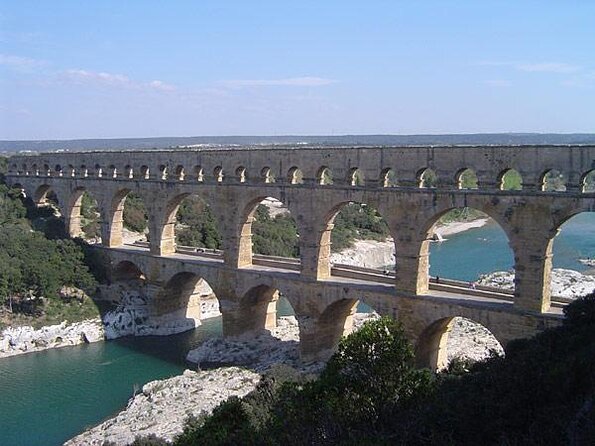
- UNESCO Pont du Gard with admission included and time to walk the aqueduct viewpoints
- Small-group pacing (8 max) for a more personal day and better photo spots
- Fontaine de Vaucluse: famous spring (admission free) with a real sense of water power
- Roussillon’s ochre colors plus a proper lunch break to reset
- Senanque abbey photo moment in lavender season, with a short window and no ticket included
From Avignon at 9:00 to an Early-Evening Return
The day starts at 9:00 am in Avignon, meeting at 41 Cr Jean Jaurès. It runs about 9.5 hours and ends back at the same meeting point, so you don’t have to plan onward transport after a long day.
This tour runs with a small group (up to 8) and is offered in English, with a mobile ticket you can use on the day. Reviews also mention comfortable vehicle rides and practical touches like cold water, which matters when your schedule is packed from morning into early evening.
If you’re planning a day with no spare time buffers, this is still a smart choice. Just remember: it’s designed to cover multiple locations, so you’ll trade deep lounging for a wide, well-timed sweep across Provence.
You can also read our reviews of more tours and experiences in Avignon.

Why this “highlights” route is a smart Provence plan
Provence can be tricky if you only have a day or two. Distances add up, parking can be stressful, and village-by-village exploring can turn into a lot of driving and repeating wrong turns.
This route helps you get your bearings fast. In one day, you’ll see Roman engineering at Pont du Gard, Provençal village life up on the hills, and the color story of ochre land. The timing is also practical: most stops are around 30–60 minutes, long enough for a short walk and photos, short enough to stay on schedule.
The small-group limit is a hidden value here. With fewer people, guides can steer you toward viewpoints, answer questions in real time, and adjust pacing when a street is crowded. One more bonus: you’re not stuck trying to interpret signs or figuring out the best angles alone—your guide handles the “what matters here” part.
One caution I’d keep in mind: this is an outside-heavy day. If the wind is up, hilltop villages feel windier. Bring a layer even in warm months, and don’t assume you’ll be in perfect sun the whole time.
Stop 1: Fontaine de Vaucluse and the drama of flowing water
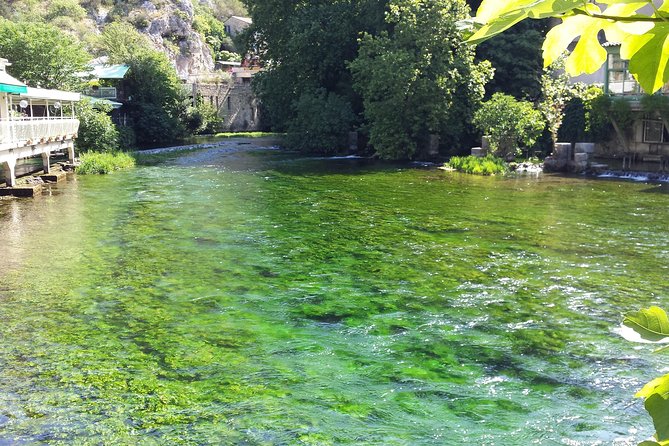
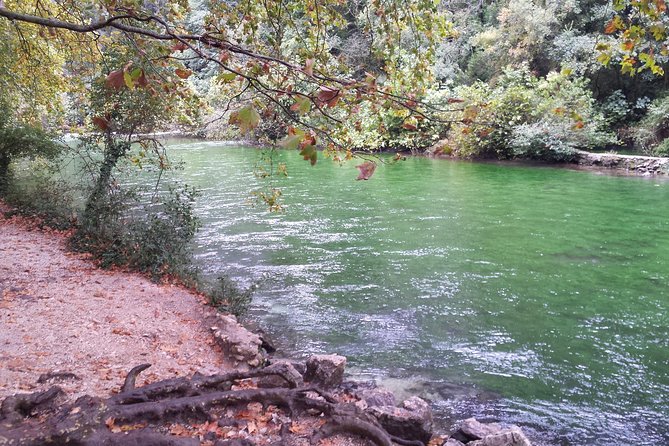
Your first big nature stop is Fontaine de Vaucluse, with about 45 minutes there and free admission. This place is famous for its spring that behaves differently by season: in winter and summer it can be cool and quiet, while in spring and autumn it turns into a surging, forceful torrent.
That seasonal shift is the point. Even if you’ve seen photos, you’re likely to feel the change when you’re standing near the water. It’s one of those rare “nature landmark” moments where the setting does the explaining.
Practical tip: plan to spend your time walking at a comfortable pace and letting the water sound set the rhythm. If you’re the type who likes to linger and read every sign, you might wish for longer than 45 minutes. Still, the time is enough for the key sights and to feel you started your day on the right foot.
Gordes: the hilltop postcard stop you shouldn’t skip
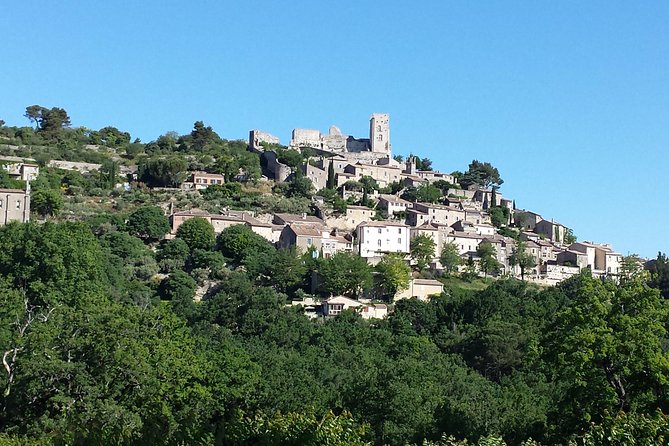
Next up is Gordes, one of Provence’s most recognizable hilltop villages, with about 30 minutes and free admission. It’s the classic scene: stone buildings perched above the valley, narrow lanes, and viewpoints that make you stop without trying.
This stop works best if you treat it like a mini-walk, not a full-on village day. You’ll get quick photo opportunities and enough time to sample the vibe—then you move on before the schedule gets too tight.
Wind can be a factor here. Reviews specifically warn about the Mistral, and I agree with the logic: hilltops can be much cooler and more exposed than the road-level towns. A light jacket or scarf is worth it even when Avignon feels warm.
Abbaye Notre-Dame de Senanque: a short photo stop with lavender timing
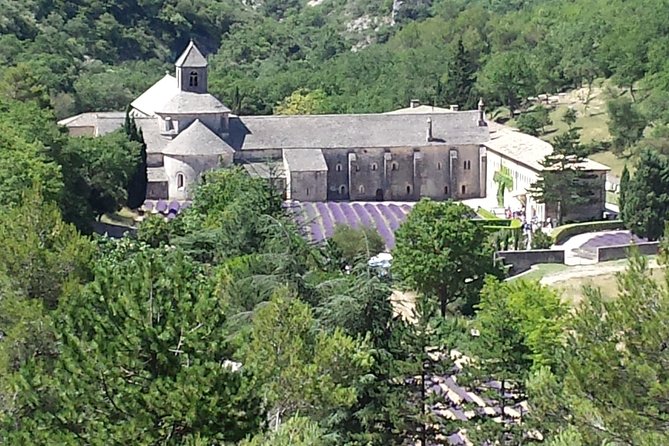
Then comes Abbaye Notre-Dame de Senanque for a photo stop only, around 10 minutes. Here’s the catch: it’s tied to lavender season. The stop is timed for the lavender blossom window (last week of June through mid-July).
Also, admission is not included for this stop. That matters if you’re hoping for more than photos—your time on-site is brief, and you may need separate tickets if you want to go beyond viewing.
If you’re traveling outside lavender season, you’ll still likely see the abbey and the surrounding setting, but the signature lavender scene won’t be the same. The tour’s structure basically tells you what it prioritizes here: quick, iconic photos during bloom, then straight back into village highlights.
Consideration: 10 minutes disappears fast if you linger at the wrong viewpoint or if the group is busy. If lavender is a big reason you booked, arrive ready with your photo plan and keep moving with the group.
Roussillon: ochre streets, color you can touch, and a lunch reset
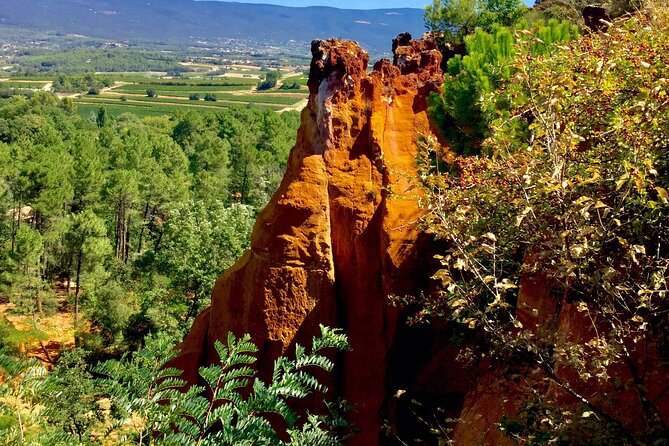
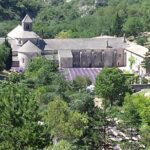
Roussillon is where Provence’s color story becomes literal. You spend about 1 hour 30 minutes here, with a lunch stop, and the tour lists free admission. The village sits in the heart of the world’s biggest ochre deposits, so the streets, stairs, and buildings carry a whole palette of orange, rust, and yellow tones.
Wandering those narrow lanes is one of the simplest ways to understand why this region has always inspired artists. It’s not just a scenic backdrop; it’s an environment shaped by natural pigment and long-used local know-how. That’s why Roussillon can feel different from other hill villages—you’re surrounded by geology.
This is also the stop where you’ll likely want to pause for food, even if you don’t buy anything fancy. The walking can be sun-heavy, and the lunch break is a real “reset button” before you head back into more stone towns.
If you’re sensitive to heat, aim to do your main exploring earlier in that window. Later in the day, your energy might be better spent in shade and on shorter walks to viewpoints.
Saint-Remy-de-Provence: fountains, squares, shops, and a gentle walk
After Roussillon, you move to Saint-Remy-de-Provence for a 45-minute walking tour. Admission is listed as free, and the tour emphasizes classic village elements: old fountains, shady squares, restaurants, and boutique storefronts.
This is a good “breather” stop. Compared with fortress-like Les Baux or the engineering focus at Pont du Gard, Saint-Remy feels more everyday and stroll-friendly. You can watch people move through squares, browse if you want, and let the guide point out the details worth noticing without turning it into a lecture marathon.
If you like photography, this is also a good place to capture the village rhythm: corners, doorways, and water features. Just don’t over-plan your photos here. The schedule is built around short blocks, and the real win is doing the whole route without losing your momentum.
Les Baux de Provence: the stone fortress feeling
Next is Les Baux de Provence, one of Provence’s “must-see” village fortress scenes. You’ll have about 1 hour, with free admission listed. The village is officially classified and labeled as one of the most beautiful villages in France, and when you’re standing in the stone maze, that reputation makes sense.
This stop is all about scale and mood. It’s not just pretty streets; it feels like a stronghold, with wide views and massive stone structures that dominate your senses. If you like dramatic architecture and elevated panoramas, you’ll probably feel happiest here.
Time note: one hour can be tight if you decide to explore every lane and lookout. The best approach is to walk in a loop, pick one main viewpoint, and then enjoy the smaller alley details as you pass.
Also, fortress towns often mean more exposed walking. Keep an eye on your footing—stone can get slippery if weather changes.
Pont du Gard: the Roman aqueduct that still does the heavy lifting
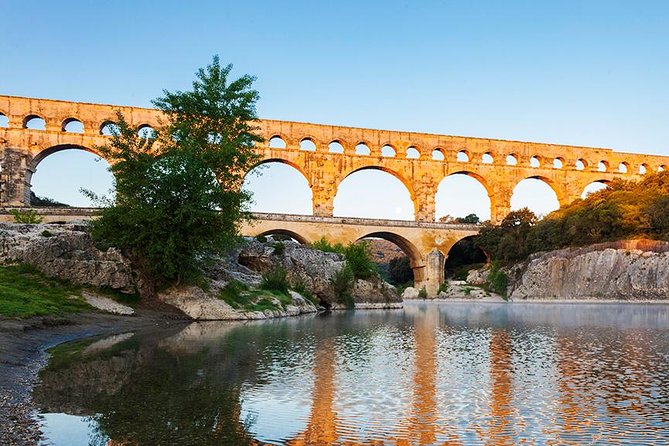
Your grand finale is Pont du Gard, with about 45 minutes and admission included. Pont du Gard is a UNESCO World Heritage site and a masterpiece of ancient Roman architecture, built in the 1st century AD as part of a larger aqueduct system.
Here’s what makes it more than an old bridge: it was built as a three-level aqueduct, roughly 50 meters high, designed to carry water across the Gardon River. The aqueduct supplied Nîmes, once called Nemausus, and stretched about 50 km—a huge engineering achievement for its time.
When you arrive, look at the aqueduct in levels. It’s easier to understand the engineering if you mentally trace how water would have moved from upper channels to lower structures. And because the site is iconic, it’s a place where even a short visit can feel satisfying.
If you’re the type who likes to soak in views, 45 minutes will feel like “enough to be impressed, not enough to be obsessed.” But that’s part of the tour’s logic: it keeps the day moving and still gives you a real stop at the headline attraction.
Time management, photo tips, and what to bring
This is a jam-packed day by design, and the best way to make it work is to travel light and think like a photographer, not a museum visitor.
A few practical things to bring:
- Light layers for wind on hilltops
- Closed-toe shoes for stone streets and uneven ground
- Sunscreen and a hat for the open village walking
- A small water strategy (the tour has been described as offering cold water, but the terrain is still outdoors)
Photo-wise, the tour’s best asset is timing. With a guide steering the group, you can hit viewpoints before the crowds lock in. Guides you may get on this route, like Nathalie or Kelsey, are often praised for pointing out where to stand for photos and suggesting where to grab food nearby.
One more tip: don’t try to capture everything. Pick your top shot in each village, then enjoy being there without looking through your camera screen the entire time.
Price and value: what $157.21 is buying you
At $157.21 per person for about 9.5 hours, you’re paying for convenience plus guided structure—not just transportation.
Here’s the value breakdown that matters:
- You get guided visits across multiple major Provence stops, instead of piecing together separate day trips
- The itinerary includes Pont du Gard admission (the one site explicitly noted as ticket included)
- Several other stops list free admission, including Fontaine de Vaucluse, Gordes, Roussillon, Saint-Remy-de-Provence, and Les Baux de Provence
- You also get a lunch break window in Roussillon (even if you’ll choose where and what to eat)
- The group size cap of 8 helps your day feel personal rather than chaotic
Is it “cheap”? Not really. But it often competes well with the real costs of doing it yourself: car rental, fuel, parking, and the mental load of navigating village streets while trying to hit multiple destinations.
If your priority is to maximize Provence in a single day without driving, this price can feel fair. If you’d rather slow down and live inside one town, a self-guided plan might suit you better.
Who this tour fits best
This tour is built for:
- First-time visitors to Provence who want the top highlights without planning a complicated route
- Travelers who want to see many places in one day but still appreciate a bit of walking
- People who like history and scenery, especially the Roman engineering of Pont du Gard
- Anyone who values the calm of a small group and English explanations
It may not fit as well if:
- You want long stays in one village (this is not designed for that)
- You dislike schedule-heavy travel
- You’re chasing a deep, slow exploration of lavender fields beyond a short abbey photo moment
Solo travelers can still have a good time in a small-group format. One practical note from real-world experience: timing can sometimes shift slightly to balance group logistics, so it’s smart to confirm your final pickup/start details as you get closer to your date.
Should you book this Provence Highlights tour from Avignon?
I’d book it if you want a strong one-day overview and you’d rather spend your time looking at Provence than figuring out transport. The big win is the combination: Roman UNESCO wonder, classic hilltop villages, and the color-and-water personality of Fontaine de Vaucluse and Roussillon.
If your dream Provence day is ultra-slow, pick-your-own-pace wandering, you might feel the day is tight. But if you’re realistic about the trade-offs, this tour delivers a lot of Provence with solid timing and a guide who helps you notice what’s worth noticing.
FAQ
How long is the Provence Highlights full-day tour from Avignon?
It lasts about 9 hours 30 minutes (approx.).
What is the group size limit?
The tour has a maximum of 8 travelers.
Is the tour offered in English?
Yes, it is offered in English.
Are admissions included for all stops?
Not all stops list admissions as included. Pont du Gard has admission included, while the Senanque abbey photo stop has admission not included. Fontaine de Vaucluse, Gordes, Roussillon, Saint-Remy-de-Provence, and Les Baux de Provence are listed as free admission.
Is there time for lunch during the tour?
Yes. There is a lunch stop in Roussillon lasting 1 hour 30 minutes.
When does the Senanque abbey photo stop happen for lavender?
It’s timed for lavender blossom season, from the last week of June until mid-July.
Where do we meet for the tour?
The meeting point is 41 Cr Jean Jaurès, 84000 Avignon, France. The tour ends back at the same meeting point.
What is the cancellation policy?
You can cancel for a full refund up to 24 hours before the experience start time. If it’s canceled because the minimum number of travelers isn’t met, you’ll be offered a different date/experience or a full refund.