REVIEW · BUDAPEST
From Budapest: Danube Bend Day Trip in English
Book on GetYourGuide →Operated by Cityrama Budapest Travel Agency · Bookable on GetYourGuide
There’s something about the Danube bend that keeps drawing you back. This 8.5-hour tour strings together three towns—Visegrád, Esztergom, and Szentendre—with expert-guided history, big river photos, and medieval-to-baroque street wandering. I like how the day is built around walkable viewpoints, so you’re not stuck staring out a window.
My favorite part is the Esztergom segment, where you get the big-hammer Catholic sights (largest cathedral in Hungary and the Bakócz Chapel details) and then a clear view across the river toward Slovakia. The one drawback to plan for: lunch isn’t included, so you’ll need to budget extra and decide where you’ll eat when the stop comes.
In This Review
- Key highlights I’d focus on
- Why This Danube Bend Day Trip Fits the Budapest Schedule
- Getting Started at the Cityrama & Gray Line Office
- Visegrád: 750-Year-Old Stones and the Danube Panorama
- Esztergom Basilica: Hungary’s Largest Cathedral and Mindszenty’s Final Resting Place
- The Danube Bridge Moment: Photos Across to Slovakia and Seasonal Boat Time
- Szentendre’s Narrow Streets: Baroque Atmosphere Built on Medieval Ruins
- How the English/Spanish Guide Setup Can Affect Your Day
- The $91 Value: What’s Included, What’s Not, and Where Extra Money Can Go
- Practical Tips: Motion Sickness, Footwear, and Photo Strategy
- Who This Tour Suits Best
- Should You Book This Danube Bend Day Trip?
- FAQ
- What stops are included on this Danube Bend day trip?
- How long is the tour?
- How much does it cost?
- What’s included in the price?
- Is lunch included?
- Are there entry fees included for Visegrád?
- What languages is the guide available in?
- Where do I meet for the tour?
Key highlights I’d focus on
- Visegrád royal-residence stones: 750-year-old history right where you stand
- Esztergom Basilica + Bakócz Chapel: Renaissance elements and the cathedral experience
- Cross-border Danube views: photo moments looking across to Slovakia
- Szentendre’s narrow lanes: baroque town built on medieval ruins, then up to a panorama
- Guide-led rhythm: enough guided time to connect the dots, with time to walk and photograph
Why This Danube Bend Day Trip Fits the Budapest Schedule

A Danube Bend day trip lives or dies on timing, and this one is planned for a single long day: 8.5 hours from Budapest with hotel-free pickup style (you meet at the operator office), then steady travel between towns. At $91 per person, you’re paying for more than transport. You’re buying a live English/Spanish guide, air-conditioned vehicle time, and (seasonally) a boat ticket.
If you only have a short window in Budapest, this is a smart way to stretch your trip. Instead of spending your time doing just one big attraction, you cover a whole corridor of Hungarian river history: royal power at Visegrád, church authority in Esztergom, and artist-town energy in Szentendre.
Just know what this kind of trip means in practice: you’ll see a lot, but it’s not a slow day where you linger for hours. If you hate being on the move, you might feel the pace. If you’re okay with a “walk, view, photo, next stop” rhythm, you’ll probably love it.
Getting Started at the Cityrama & Gray Line Office
You meet at the Cityrama & Gray Line Hungary office. That matters because it keeps the start point simple and predictable, especially if you’re staying somewhere central in Budapest. In a day like this, small logistics win: fewer delays at the start means more daylight for viewpoints.
This tour also runs with English and Spanish (and sometimes both languages at the same time). If you strongly prefer one language, keep an eye on how your group is assigned so you hear the commentary you came for.
The overall structure is straightforward: you get driven between stops, you walk through key areas with your guide, and you end back in Budapest after the day’s sightseeing. The vehicle is listed as air-conditioned, which is a real plus when summer temperatures hit.
Visegrád: 750-Year-Old Stones and the Danube Panorama
Visegrád is the first “wow” stop, because the scenery starts working on you even before you reach the main sites. This is where the river starts looking like a bend worth writing postcards about.
You’ll walk close to the 750-year-old stones of the former royal residence. One practical detail: the tour notes that entry fees are not included here, so what you’ll do is mostly exterior viewing and guided orientation from the right spots. Don’t treat that as a disappointment. For many people, the best part is exactly this: standing in the right place to understand the Middle Ages and then looking outward at the valley.
What makes Visegrád work is the mix of story + view. Your guide connects what you’re seeing to how power was organized along the Danube, and then you get a proper panorama moment over the Danube valley. It’s also an easy stop for photographers because the angles change as you move along the viewpoint paths.
Tip: wear shoes you trust. Even if the distances aren’t long, the ground can be uneven and the walkways are outdoors.
Esztergom Basilica: Hungary’s Largest Cathedral and Mindszenty’s Final Resting Place
Esztergom is the tour’s emotional center if you care about European church history. This city is described as the northern gate of Budapest, and the feeling is right: you go from river bend views into the scale and authority of a major religious center.
You’ll see the largest cathedral in Hungary and get to appreciate the Basilica’s presence from the outside. You also get a close-up on specific architectural highlights, including the Bakócz Chapel and its Renaissance elements. Even without focusing on interior time, these details help you understand why Esztergom matters.
The guide also points out that Esztergom is a key place in Catholic history, including the burial place of some of the country’s most famous cardinals, specifically Primate József Mindszenty. That name carries weight, and it adds a sharper meaning to what can otherwise feel like just a big church exterior in a busy day.
Then you get a view stop designed for perspective: you’ll enjoy the view over Slovakia across the river. This is one of those moments where the geography becomes part of the story. Your brain starts mapping borders, trade routes, and why the Danube has always been strategic.
If you’re the kind of person who reads facades like history pages, Esztergom will feel worth the stop. If you want lots of time inside churches, plan around the fact that this tour’s emphasis is exterior viewing and guided storytelling.
The Danube Bridge Moment: Photos Across to Slovakia and Seasonal Boat Time
The Danube bend is the headline for a reason. It’s hard not to keep stopping for photos once the river widens and the opposite bank comes into view. One of the tour’s stated highlights is snapping photos while gazing across the Danube River toward Slovakia.
That’s not just scenery—it’s a built-in learning moment. The Danube isn’t a background. It’s the main character tying Visegrád, Esztergom, and Szentendre together. When you see the same river again and again from different heights and angles, the entire region makes more sense.
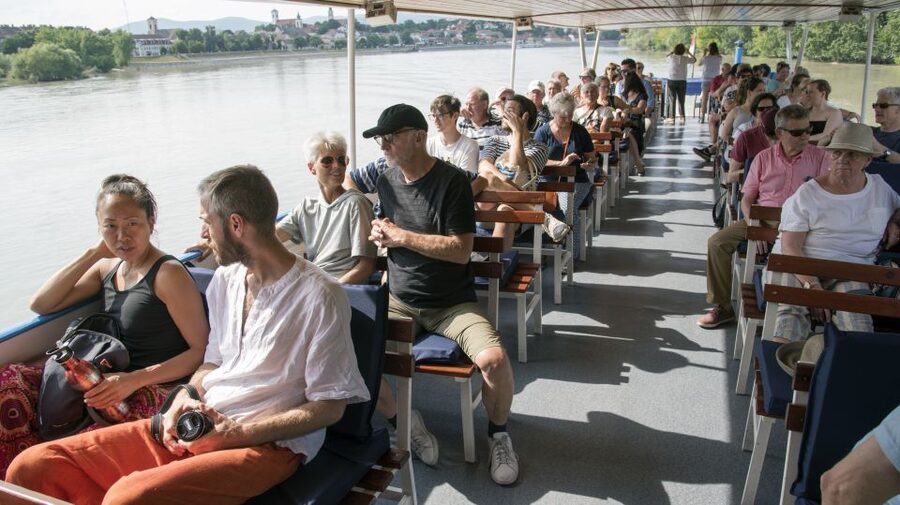
You’ll also have a boat ticket included from May to September, except Mondays. That’s a meaningful value add because it changes the feel of the day. A boat segment gives you a different viewpoint than roadside pulling-over and walking. It also helps you break up the long day in a way pure driving can’t.
If your travel dates are outside the May–September window, the listing is clear only about the boat ticket being included during that season. So treat the boat as a seasonal bonus, not a guarantee year-round.
Practical note: even if the boat part isn’t your thing, the viewpoints will likely be.
Szentendre’s Narrow Streets: Baroque Atmosphere Built on Medieval Ruins
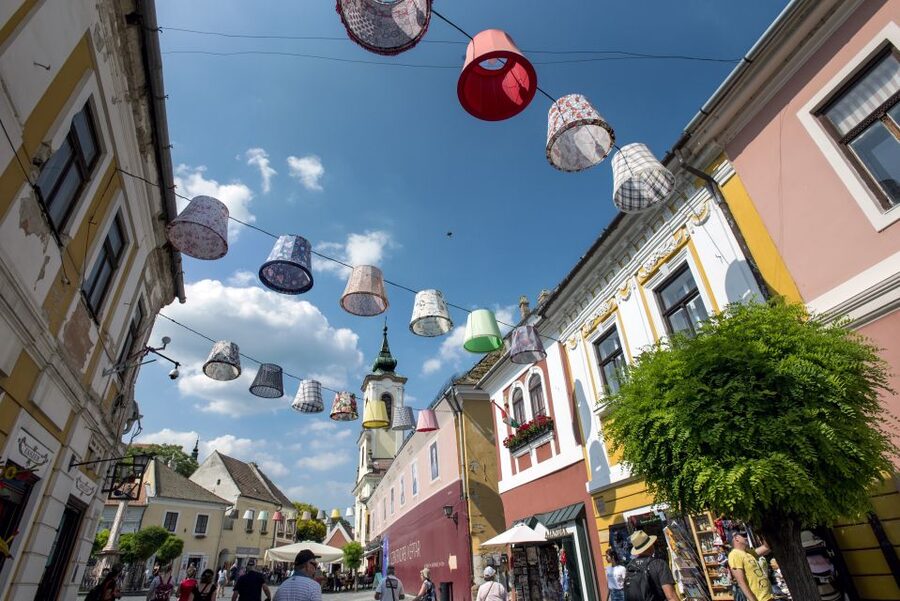
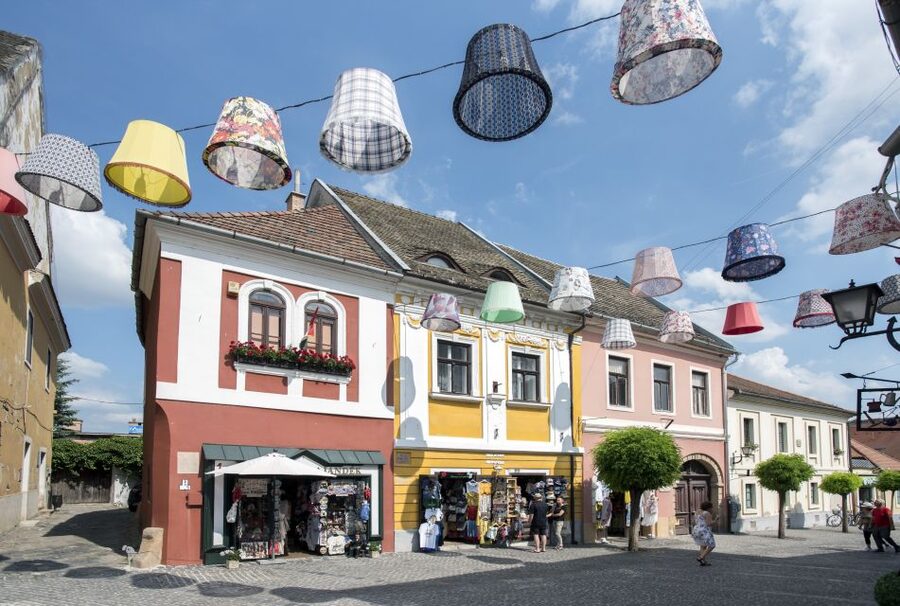
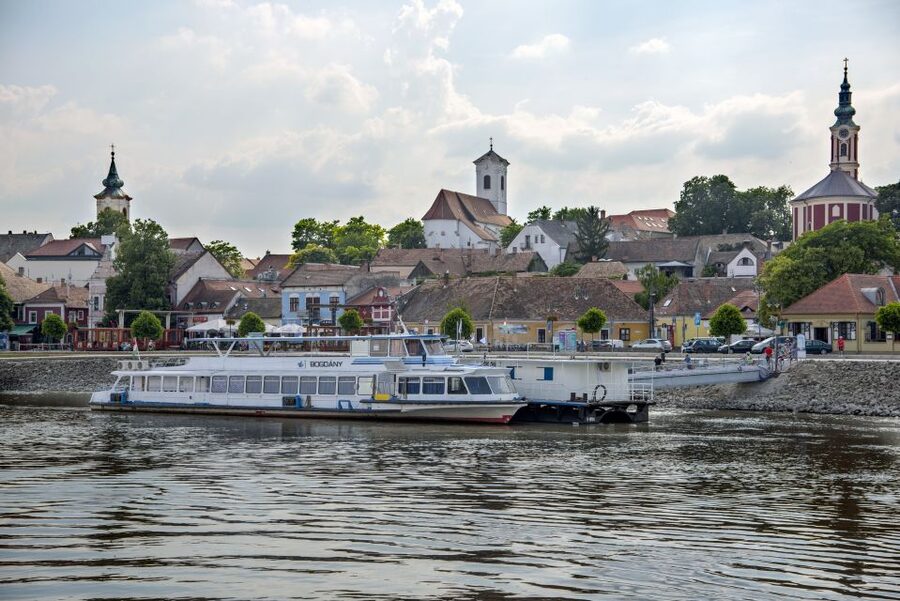
On the return journey, you stop at Szentendre, described as an artist’s village at the gate of the Danube Bend. It’s a small baroque city tucked into a striking natural setting at the meeting place of the Danube River and the Pilis Mountains.
What I like about Szentendre on a day trip is that it shifts the mood. Esztergom is church-scale and authority. Szentendre is texture: small streets, compact views, and that “wander but still on schedule” feeling.
You’ll walk around the baroque settlement, which is built on medieval ruins. That layering is the point: you’re not just looking at pretty buildings—you’re seeing how eras stacked over each other in one place. Then you’ll go up narrow streets to a panorama viewpoint over the Danube. This is the kind of finish that makes your last hour feel productive, because you end with a view that ties the whole route together.
Some groups have also praised the guidance and pacing here—enough time to walk and take photos without feeling like you’re stuck in a museum line. Still, this is a day trip. If you want a deeper hangout in Szentendre, consider pairing it with a longer stay later.
How the English/Spanish Guide Setup Can Affect Your Day
This tour runs with a live guide in English and Spanish, and it’s noted that the tour might be held in English & Spanish simultaneously. That detail matters more than it sounds.
In some situations, your English commentary can feel like it shares airtime if the group is organized bilingually. In other situations, the guide may switch between languages more often than you expect. In short: you’ll still get the guide’s stories, but the exact balance of English vs Spanish can vary.
When names came up in past groups, a few guides were repeatedly singled out for strong delivery, including Maximo and Eva for making history feel human, and Vera and Anna for warmth and careful timing. So the “people” factor is real here. A strong guide can make the same stops feel very different.
If you want to maximize your experience:
- arrive a little early so you can settle and get oriented before commentary starts
- ask questions during walking breaks, not only on buses
- if you’re sensitive to language balancing, choose the departure that best matches your preferred language
The $91 Value: What’s Included, What’s Not, and Where Extra Money Can Go
Let’s talk value, because $91 is a price point where you should know exactly what you’re getting.
Included:
- Live guide
- Air-conditioned vehicle
- Boat ticket from May to September, except Mondays
Not included:
- Lunch
Also, there’s an additional note that entry fee isn’t included at the Visegrád royal residence area (so you’re seeing the stones and exterior viewpoints more than paying for an inside ticket).
So your “extras” budget likely includes:
- lunch (since it’s not included)
- any optional entries you decide to add on your own at stops not covered by included access
Is it worth it? For most people who want to see the Danube Bend corridor in one go, yes. The guide + transport combination saves you time and confusion, especially for moving between three towns without relying on your own navigation. The boat ticket (when included) sweetens the deal.
If you already plan to rent a car, you might argue you can do this cheaper. But you’d also trade away guided connections and the simple “get dropped at the right viewpoint” convenience.
Practical Tips: Motion Sickness, Footwear, and Photo Strategy
This day involves driving roads that can feel twisty and bumpy. One practical tip that came up in past groups: if you’re prone to motion sickness, bring medication. It’s the kind of small prep that can keep the whole day from turning into a struggle.
Footwear matters too. You’re walking through:
- viewpoint areas at Visegrád
- exterior spaces around a major cathedral zone in Esztergom
- Szentendre’s narrow streets, which tend to mean cobbles or uneven paving
And for photos, don’t wait until the bus stops to get ready. The best views arrive right when you step out and look in the right direction. When you hear the guide set up a photo moment (especially cross-river toward Slovakia), take it seriously and position yourself quickly.
Also, keep in mind that the tour is 8.5 hours. That’s long enough that you’ll want water, even if the itinerary doesn’t mention it. Plan for basic comfort.
Who This Tour Suits Best
This is a great fit if:
- you want a Danube Bend sampler without the stress of self-driving
- you like guided storytelling tied to architecture and geography
- you want a day outside Budapest that still feels organized
You might want to choose something else if:
- you dislike exterior-only viewing and prefer lots of inside time
- you need long, slow free time in each town
- you’re traveling with someone who hates walking through old street patterns
For couples, solo travelers, and families who can handle a long day and a few outdoor walks, this is a strong option.
Should You Book This Danube Bend Day Trip?
I’d book it if your goal is a single-day look at Hungary beyond Budapest with stops that make sense together: royal-era stones at Visegrád, major Catholic architecture in Esztergom, and the charming street feel of Szentendre. The $91 price feels fair for the guide-led value and included transport, and the seasonal boat ticket can add a nice change of pace.
I’d hesitate only if lunch budgeting will stress you, or if you strongly prefer interior time at major sites rather than guided exterior viewing. If you fall in the middle—wanting guided context, photo views, and enough walking to feel the towns—you’re exactly the target.
FAQ
What stops are included on this Danube Bend day trip?
You’ll visit Visegrád, Esztergom, and Szentendre, with guided time in each place.
How long is the tour?
The tour duration is 8.5 hours.
How much does it cost?
The price is $91 per person.
What’s included in the price?
The tour includes a live guide, transportation by air-conditioned vehicle, and a boat ticket from May to September (except Mondays).
Is lunch included?
No. Lunch is not included.
Are there entry fees included for Visegrád?
The tour notes that the entry fee is not included for the former royal residence area in Visegrád.
What languages is the guide available in?
The tour offers English and Spanish.
Where do I meet for the tour?
You meet at the Cityrama & Gray Line Hungary office.