REVIEW · CASABLANCA
Private Marrakech Day Trip from Casablanca with Free Camel Ride
Book on Viator →Operated by Premium Transfers and Tours Travel · Bookable on Viator
Camel time fixes a long day. This Casablanca-to-Marrakech trip is built for people who want the big sights, with a registered historian steering the story and a free camel ride in the Palmeraie. You get a packed day that feels efficient, even if Marrakech can be a little intense on foot.
The one catch: it is a time-crunch tour. You move at a steady pace, shopping can take longer than you expect, and you will likely feel like you saw a lot more than you actually had time to savor.
In This Review
- Key points before you go
- Casablanca to Marrakech transfer: Hassan II Mosque views plus comfort
- La Palmeraie camel ride: the palm grove that turns into a photo set
- Jardin Majorelle: Jacques Majorelle’s garden and the cubist villa
- Secret Garden time: calm courtyards in the middle of the Medina
- Koutoubia Mosque, Mellah, and Bab Agnaou: power, faith, and protection
- Jemaa el-Fnaa: the square that never runs out of theater
- Souk Semmarine and the Medina loop: shopping gets fun fast, then it gets heavy
- Gueliz and Bahia Palace: French-style streets, then Islamic and Moroccan design
- How the guides and timing actually feel in a real day
- Price and value: what $110.50 buys you, and what it does not
- Who should book this Casablanca to Marrakech day trip
- Should you book this day trip from Casablanca?
- FAQ
- How long is the Marrakech day trip from Casablanca?
- What is the price per person?
- Is pickup included?
- Is the camel ride included?
- Are entrance fees included?
- Does the tour include Wi-Fi and air conditioning?
- How big is the group?
- Is there a historian guide?
- Does the price include food?
- Is there free cancellation?
Key points before you go
- A historian-led format keeps stops from turning into check-the-box sightseeing
- Free camel ride in the Palmeraie is the built-in wow moment
- A/C vehicle with onboard Wi-Fi makes the Casablanca drive far more tolerable
- Small group size (max 15) means fewer bottlenecks in tight medina lanes
- Two extra ticket stops are clearly flagged for pay-as-you-go: Secret Garden and Bahia Palace
Casablanca to Marrakech transfer: Hassan II Mosque views plus comfort
The day starts with pickup from your Casablanca hotel (and in the general options, from the cruise port, airport, or city center). Then you roll out in an air-conditioned vehicle with onboard Wi-Fi and a multilingual driver who helps keep the ride calm and organized.
The drive is long enough that you will want that Wi-Fi and A/C working for you. Early on, you pass the Hassan II Mosque, the huge one built over the water with a minaret listed at 210 meters. You do not get a full stop to wander here, but the sight is worth the quick “wait, that is enormous” moment—especially if you have never seen it in person.
Once you arrive near Marrakech, the tour structure kicks in: you meet up with your historian guide, then you start stacking heritage sites in an order that makes geographic sense. The big payoff here is not just convenience. It is momentum. You are not trying to figure out transit, timing, and ticket lines while managing jet lag, heat, and crowds.
Practical tip: this is a 12-hour day. Pack water, keep sunscreen handy, and plan on comfy shoes. Marrakech can turn into a lot of walking quickly, even when you are mostly “only stopping” for short windows.
You can also read our reviews of more tours and experiences in Casablanca.
La Palmeraie camel ride: the palm grove that turns into a photo set
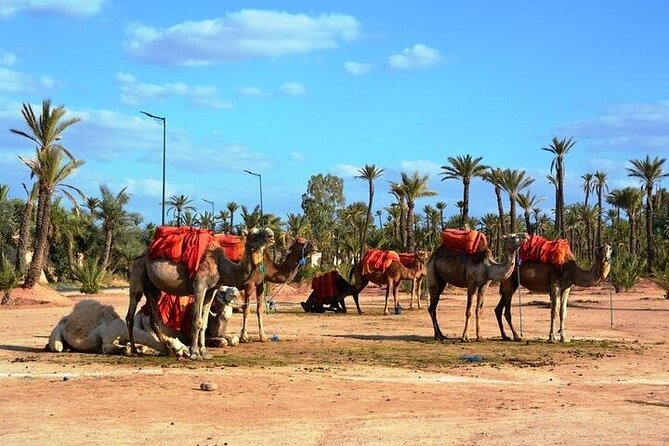
Your first meaningful Marrakech experience is the Palmeraie, the large oasis at the edge of the city covering about 140 square kilometers. You also hear the scale in plain terms: it is known for roughly hundred thousand palm trees, which is basically the definition of get-your-bearings instant.
You get a camel ride here with admission included, and this is the part people remember. It is not a short cameo; it is long enough to enjoy the rhythm of it and to grab classic pictures—camel head in the frame, palms stretching behind you, and that unmistakable sense you are not just sightseeing from a vehicle.
One thing to know: in a day like this, the camel ride becomes a reset button. Your body has been in a car for hours. Suddenly you are moving slowly through open space. That change of pace is a big deal.
Practical tip: if you are sensitive to bumps or have mobility issues, let the driver or guide know early. You want to be comfortable before you get on.
Jardin Majorelle: Jacques Majorelle’s garden and the cubist villa
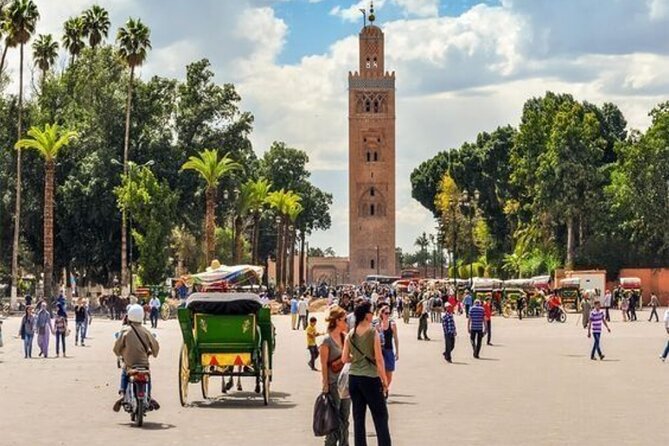
After the Palmeraie ride, you head to Jardin Majorelle. This is a French oriental artist’s garden, created by Jacques Majorelle over 40 years. The site is described as a one-hectare garden, and it is known for its cubist villa, which served as the artist and his wife’s residence from 1930 until 1950.
Even if you are not a garden person, this stop works because it gives Marrakech a different texture. Instead of medina alleys and mosque silhouettes, you get an environment shaped by one creative vision and designed for slow looking. The colors, the geometry, and the mix of art and landscape feel very intentional.
A quick reality check: because the day is tightly scheduled, this is not going to be a full, meandering afternoon. You get time to see what matters, then you move on. If Jardin Majorelle is a top priority for you, arrive ready to focus and skip anything that feels like it will eat time you need elsewhere.
Secret Garden time: calm courtyards in the middle of the Medina
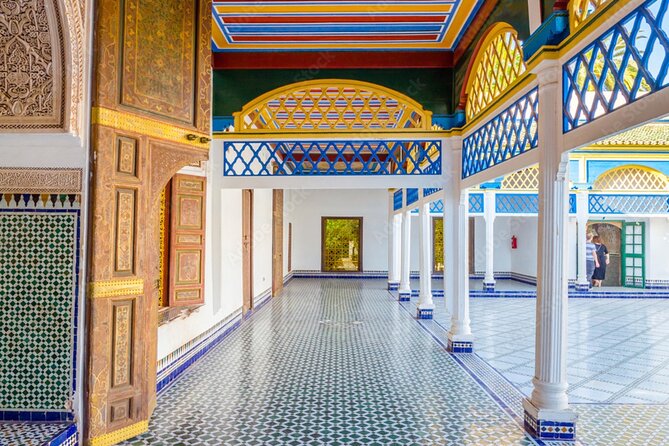
Next comes the Secret Garden, described as a hidden oasis inside the medina with lush greenery, flowers, and intricate Moroccan design. The selling point is the escape factor: secluded courtyards, fountains, and the feeling that the city noises drop down a notch.
This is also one of the two sights that are listed as pay-as-you-go, with the Secret Garden admission noted at about $10. So mentally budget for it if you want to go in rather than just look from the outside.
Why this stop fits the overall tour: after big squares and busy shopping lanes, you need a pause that is actually quiet. The Secret Garden gives you that breath—plus it is a nice contrast to the more monumental religious and civic architecture you will see later.
Practical tip: if you hate feeling rushed, this is the time to slow down. Even 20–30 minutes of focused quiet makes the rest of the day easier to handle.
Koutoubia Mosque, Mellah, and Bab Agnaou: power, faith, and protection
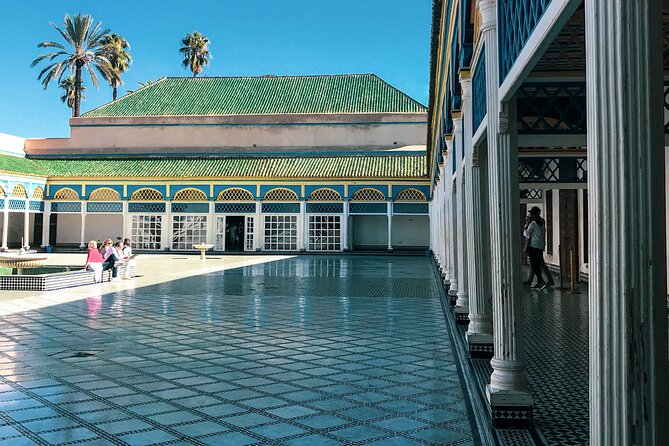
You then get the core “heritage belt” of Marrakech.
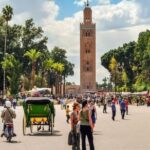
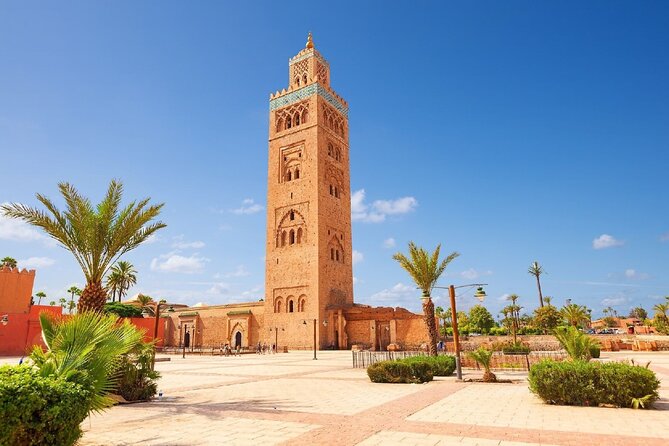
First is the Koutoubia Mosque. It is a 12th-century religious construction whose architecture and decoration reflect Almohades art. The tour description also calls it the largest mosque and a key landmark of the city. Even if you are not planning to study architecture details, it is one of those anchor points that helps you understand where you are and why the city grew around certain spaces.
Then the itinerary mentions a ride toward the Mellah. This district dates to 1557 and is known for narrow alleys. It is also connected to the Lazama Synagogue, described as an essential landmark. The Mellah is framed as the former Jewish quarter protected by the Kasbah walls. This is a valuable stop because it adds depth beyond the “medina as markets” idea. You start to see how Marrakech organized communities and power.
Finally, you reach Bab Agnaou, one of the city’s best-known gates. It served as the main entrance to the Royal Kasbah, built by the Almohad caliph Yaqub Al Mansour in the 12th century. This is another stop with admission included, and it is the kind of place where a good guide makes a difference. Gates like this are not just doors. They are statements—about defense, status, and who controlled access.
Practical tip: for gates and major landmarks, bring a little patience. Photos are easy here. Getting everyone to the same spot for pictures can take longer than the stop time suggests.
Jemaa el-Fnaa: the square that never runs out of theater
From Bab Agnaou you ride to Jemaa el-Fnaa, the famous public square in Marrakech. You get about 1 hour 30 minutes here, and it is described as attracting around 1 million visitors every year.
This is the heart of Marrakech’s public life. The tour framing emphasizes variety—how Moroccan identities show up side by side through different cultures and performers. You are not just seeing a monument. You are watching a living stage.
Here is how to enjoy it without feeling swallowed:
- keep your eyes moving: people, food, music, crafts
- pick one or two things you want to focus on
- set yourself a time limit for shopping stalls
In a tour day like this, Jemaa el-Fnaa can easily turn into “one more minute” shopping that steals from your later stops. So decide in advance what you want: one snack, one short wander, then back with your group.
Practical tip: if you want great photos, position yourself thoughtfully before you start shooting. Otherwise you end up moving constantly through thick foot traffic.
Souk Semmarine and the Medina loop: shopping gets fun fast, then it gets heavy
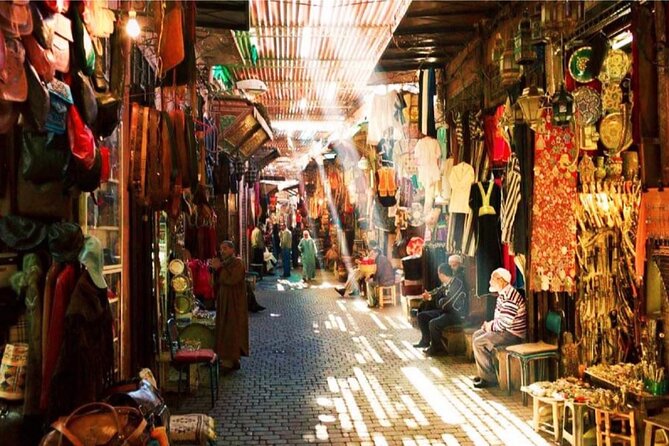
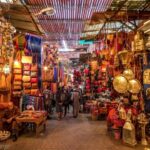
After a short ride, you reach Souk Semmarine, described as one of the best-known markets because it sits adjacent to Jemaa el-Fnaa. The name explanation is part of the charm: in Arabic, it points to the old practice of replacing shoes for mules and donkeys. Now the area is described as a tight maze of passages filled with Moroccan handicrafts and goods.
You are given about 30 minutes here with admission included, with a range of items mentioned: spices, perfumes, slippers, ceramics, brass, rugs, caftans, and more.
Then you move into the Medina of Marrakech for about 1 hour. The description focuses on narrow alleys and famous markets.
This is where the day’s “time-crunch” can start to feel real. In practice, Souk Semmarine plus the Medina loop means:
- short stops for big views
- frequent turning directions through narrow lanes
- shopping that can be harder to pause than you think
The good news is that you do not have to plan the route. Your guide handles navigation, and a historian-style guide can help you interpret what you are seeing so it feels less like wandering.
Practical tip: if you are serious about buying something, do it in one location and then stop. Marrakech shopping can train you into spending time and money in the same motion.
Gueliz and Bahia Palace: French-style streets, then Islamic and Moroccan design

After the medina and markets, you shift to Gueliz. This is the more spacious, French-style area of Marrakech with restaurants, bars, art galleries, and fashion stores. The description adds one fun detail: it was designed by a painter of the same name and later acquired by Yves Saint Laurent.
This part of the day is a breather. The streets feel wider, and the vibe shifts from crowded old lanes to an area that feels more modern and open.
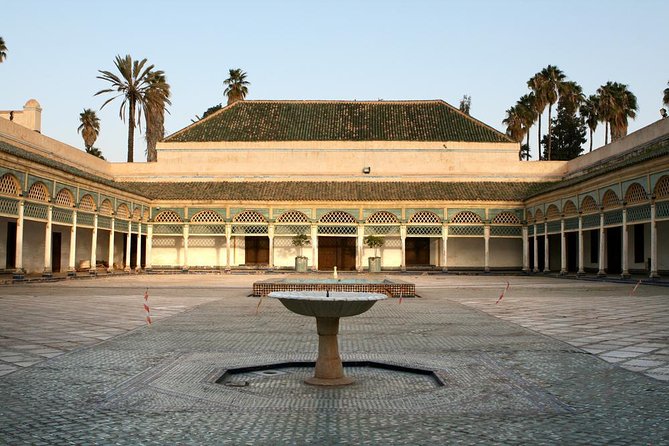
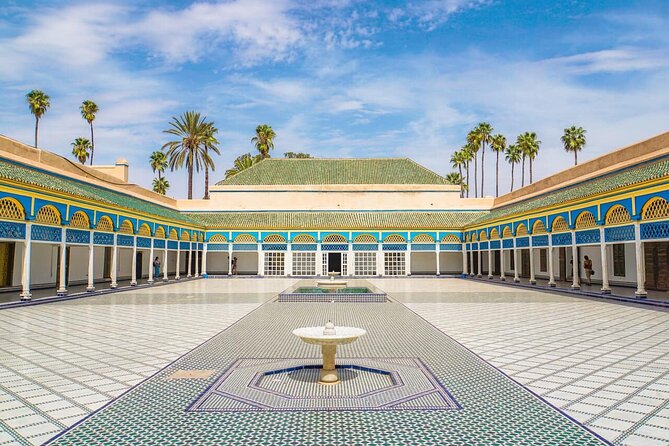
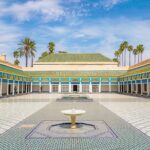
Then you head to Bahia Palace, the 19th-century palace complex with decorated rooms, paintings, and mosaics, plus gardens. The palace was intended to be the greatest palace of its time, focused on Islamic and Moroccan styles. Bahia Palace is listed as pay-as-you-go, with admission noted around $10, and you get about 30 minutes.
Why Bahia Palace matters in a tour like this: you end the day with something you can visually compare to the rest of Marrakech. You have seen gates, mosques, public squares, markets. Now you see private splendor—how power expressed itself in rooms, gardens, and craftsmanship.
Practical tip: this is a good place to slow down and let your eyes rest. Don’t rush the room-to-room transitions. Take a moment in a mosaic-heavy corridor or courtyard. It helps the whole day feel more human.
How the guides and timing actually feel in a real day
A lot of the positive energy behind this experience comes down to the crew and how they handle pacing.
The tour includes a registered historian as your guide and a multilingual driver in the A/C vehicle. In past departures, guides with strong English delivery have been mentioned by name—people like Abdullah and Youssef show up in the program history. Drivers also get credit for being safe, friendly, and prompt, with names like Reda and Ali appearing in feedback.
That matters because Marrakech is not the easiest place to manage as a first-time visitor. If the guide keeps you moving in an intelligent order, you spend less time stuck, less time confused, and more time actually seeing what you came for.
Still, do not expect total flexibility. This is a structured 12-hour trip with fixed stops and set durations. If you love shopping and want to linger, you may have to advocate a little. One of the practical notes from the program pattern: if there is a store you love, you may need to ask to stop and keep it moving so you do not miss later sights.
Price and value: what $110.50 buys you, and what it does not
At $110.50 per person, the price looks most reasonable when you count the whole package, not just the Marrakech part.
What you do get:
- hotel pickup and drop-off (plus the broader options like cruise port or airport)
- A/C vehicle and onboard Wi-Fi
- a registered historian guide
- free camel ride in the Palmeraie
- mineral bottled water
What you do not get:
- entrance fees for all sites
- food and drinks
The data also flags two pay-as-you-go admissions: Bahia Palace (about $10) and the Secret Garden (about $10). So you should plan on at least those extras.
Here is the way I think about it: this tour is paying you back in logistics. You are buying a guided route, transport, and a guided structure that prevents the day from turning into chaos. If you were going to hire a guide and figure out transfers on your own, you would spend time and money in ways that are harder to predict.
Who should book this Casablanca to Marrakech day trip
This trip is a strong fit if:
- you want a first-time orientation to Marrakech without transit stress
- you like guided context, not just photo stops
- you care about the Palmeraie camel ride enough to make room for it
- you want a small group format (max 15) rather than a huge bus crowd
It is less ideal if:
- you hate tight schedules and want long free roaming time
- you want food and entry costs wrapped into one price
- you want lots of slow wandering with zero pressure to keep up
If you are traveling with a cruise ship, the return timing is a big deal, and this kind of organized day trip can be exactly what you need.
Should you book this day trip from Casablanca?
My take: book it if your priority is big Marrakech highlights plus the camel ride, and you are okay with a full, guided day. The historian-led approach and the free Palmeraie camel experience make the day feel like more than a drive-by.
I would pass or look for a longer alternative if you want breathing room, deep pauses in the medina, and lots of unscheduled time. This tour is designed to move, and Marrakech rewards slow time. You can still enjoy it here, but you will do it on a guided clock.
Before you go, do one small homework task: decide your must-do items (camel ride, Secret Garden, Bahia Palace, Jemaa el-Fnaa). Then treat the rest as bonus. That way, the schedule stays fun instead of frustrating.
FAQ
How long is the Marrakech day trip from Casablanca?
It runs about 12 hours.
What is the price per person?
The price is $110.50 per person.
Is pickup included?
Yes. Hotel pick-up and drop-off are included, and transfers are also described as available from the cruise port, airport, or city center.
Is the camel ride included?
Yes. A free camel ride through the Palmeraie is included.
Are entrance fees included?
Entrance fees are not included across the board. The Secret Garden and Bahia Palace are specifically listed as pay-as-you-go (about $10 each).
Does the tour include Wi-Fi and air conditioning?
Yes. The vehicle has A/C and onboard Wi-Fi.
How big is the group?
The tour has a maximum of 15 travelers.
Is there a historian guide?
Yes. The tour includes a registered historian knowledgeable tour guide.
Does the price include food?
No. Food and drinks are not included.
Is there free cancellation?
Yes. Free cancellation is available up to 24 hours in advance for a full refund.