REVIEW · SEATTLE
Mt. Rainier National Park Highlights Tour
Book on Viator →Operated by Customized Tours · Bookable on Viator
Mt. Rainier hits you fast. This Seattle day trip is built around big views, guided time in the park, and the kind of waterfall-and-meadow route that’s hard to match on your own. You’ll ride a warm, air-conditioned bus, follow an easy plan even when conditions change, and get narrated context along the way.
I like that the day is well paced for a group: quick photo stops where you want them, plus real hiking time where it counts (like the Twin Firs loop). I also like that park admission fees are included, so you’re not doing extra ticket math at each visitor area. The main drawback? Mt. Rainier weather and road access can change the schedule, especially in winter—so you should plan to be flexible if Paradise access shifts.
In This Review
- Mt. Rainier Highlights Tour: The Best Bits at a Glance
- Morning Pickup in Seattle: Why This Day Starts Early
- Price and Value: What $150 Buys You (and Why It’s Not Just a Ride)
- From Seattle to the Park: Lakes, Town Stops, and Mountain Climber Territory
- Longmire Museum and Trail of the Shadows: Volcano and Forest With Real Learning Time
- Longmire Proper: Viewpoints, Lodge Time, and Optional Hikes
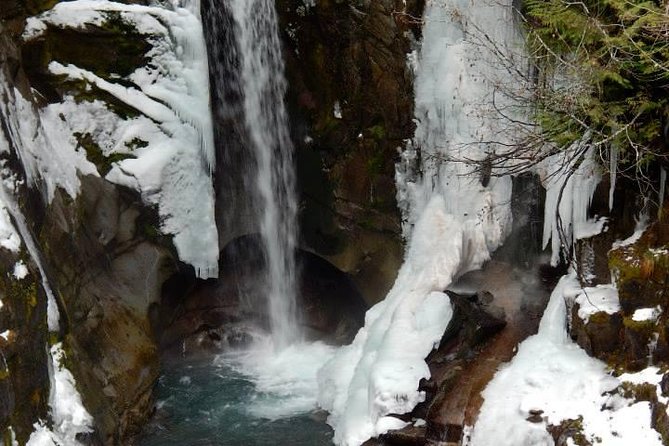
- Christine Falls and Narada Falls: The Two Waterfalls That Make the Camera Happy
- Paradise Valley at 5,400 Feet: The Day’s Main Event (and Winter Rules)
- Twin Firs Loop and Reflection Lakes: Old-Growth Time and Mirror-Style Views
- Seasonal Swaps: How Sunrise Visitor Center and Tipsoo Lake Fit In
- Road Closures and Schedule Changes: What You’re Really Paying For
- Guides Make It Work: Names Like Lucas, Cory, James, and Joel
- Pace, Packing, and Comfort Tips That Actually Matter
- Who This Tour Is Best For (and Who Might Prefer DIY)
- Should You Book This Mt. Rainier Highlights Tour?
- FAQ
- How long is the Mt. Rainier National Park Highlights Tour?
- What time does the tour start, and when is pickup?
- Where does pickup and drop-off happen?
- What is included in the ticket price?
- Is food included?
- Which stops are part of the day?
- What happens to Paradise access in winter?
- Is snowshoeing available?
- How big is the group?
Mt. Rainier Highlights Tour: The Best Bits at a Glance
- Pickup from select downtown Seattle and airport hotels keeps your morning from turning into a scavenger hunt
- Narada Falls walk plus Christine Falls viewpoint gives you two classic waterfall moments without a big effort tax
- Longmire Museum and the Trail of the Shadows add geology and local history, not just scenery
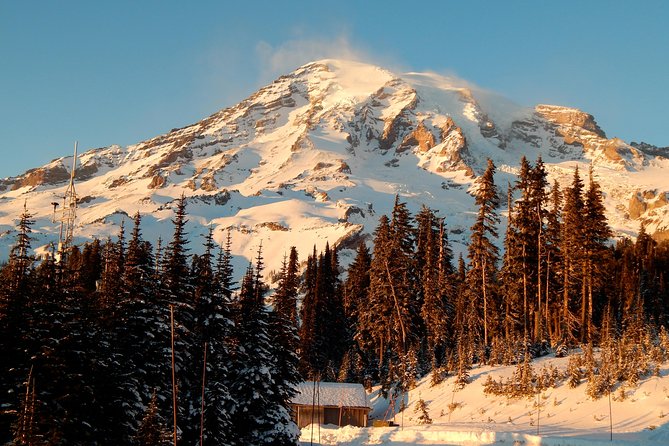
- Paradise Valley at 5,400 feet is the day’s focal point, with lunch options when it’s accessible
- Max 24 travelers means the group stays manageable and your guide can actually keep everyone together
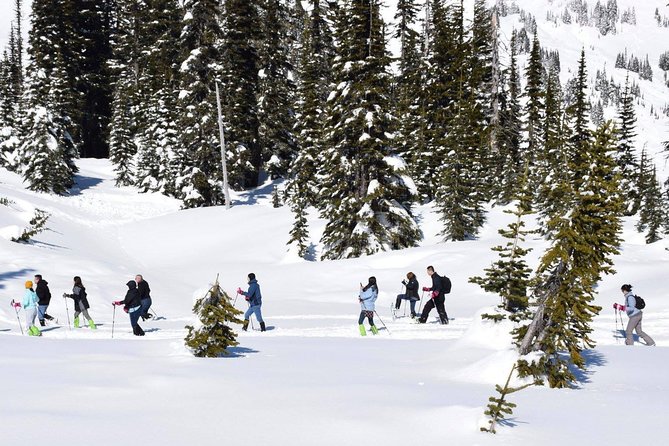
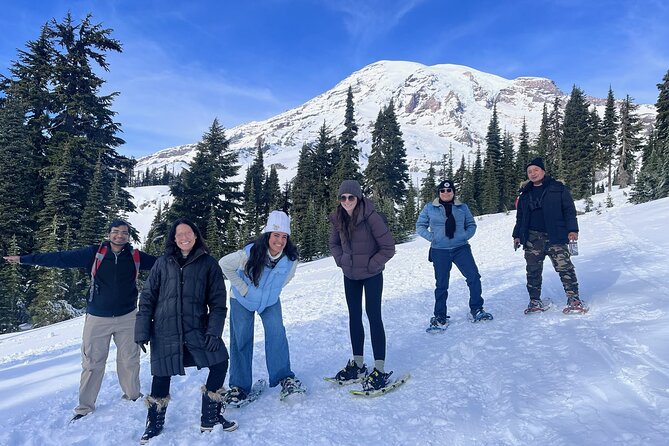
- Winter days can include snowshoeing if conditions allow, but the route may vary with closures
Morning Pickup in Seattle: Why This Day Starts Early
Your day begins at 7:20am, and pickup starts soon before 8am depending on where your hotel is. That early start matters here. Rainier access is all about timing—roads open and close, visibility changes, and the best light on waterfalls and meadows usually happens before crowds get thick.
The tour uses a guide-led bus format with clear stop timing. You’re not trying to navigate park turns, parking lots, and trailheads while juggling weather. Instead, you get a structured day plus a guide who adjusts as roads and conditions dictate. That’s a smart trade for a 10 to 12 hour long day.
You can also read our reviews of more tours and experiences in Seattle.
Price and Value: What $150 Buys You (and Why It’s Not Just a Ride)
At $150 per person, the ticket looks like a lot until you break down what’s actually covered. You’re paying for:
- A professional guide
- Pickup and drop-off from select Seattle areas
- Transport on an air-conditioned, fully insured commercial bus
- Park admission fees
- Mobile ticket handling, plus support from a live representative during business hours
The value is strongest if you’re the type who hates duplicating logistics. If you were doing this independently, you’d still spend on transportation, park entry, and the time costs of planning. Here, the bus does the long commute, and the included admissions help you spend more of your day outside.
Food and drinks aren’t included (there’s typically a $20 per person budget noted), but the day is structured around where you can buy lunch at the park when access allows—or grab food en route when options are limited in shoulder season.
From Seattle to the Park: Lakes, Town Stops, and Mountain Climber Territory
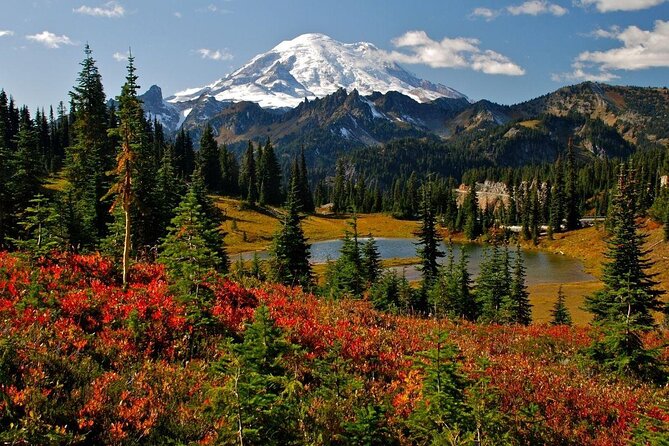
The scenic drive is part of the experience. Along the way, you may pass a scenic lake stop en route to the mountain area. Then, depending on conditions, the guide may pivot the route around unexpected closures.
One detour possibility is a stop in a small town area with stops like:
- The Hobo Inn
- A historic Lutheran Church
- The Mt. Rainier Scenic Railroad
- And a giant sasquatch-style roadside landmark
It sounds goofy, but it’s also practical. If roads are closed inside the park, these town stops keep your day from going stale.
You may also stop at a base camp area for mountain climbers. It’s a useful reminder that Rainier isn’t just scenic—it’s a serious mountain with a whole world of training, climbing history, and conditions behind it.
Longmire Museum and Trail of the Shadows: Volcano and Forest With Real Learning Time
This is where the day gains depth. Longmire Museum time is built in at about 15 minutes, and it’s more than a quick look. You’ll see animal exhibits and get history and stories tied to the region, plus volcanology information. If you like understanding why a place looks the way it does, this stop gives you a framework before you chase the views.
Next, you’ll often move to the Trail of the Shadows for around 30 minutes. The theme here is forest ecology and local history, with hot springs referenced as part of the experience. It’s subject to change based on weather and road conditions, but even a short guided walk adds texture beyond what you get from straight lookouts.
A couple of practical notes:
- These are not marathon hikes. They’re short, guided, and designed for the full-day rhythm.
- Admission for the Longmire Museum and Trail of the Shadows is included in the experience.
Longmire Proper: Viewpoints, Lodge Time, and Optional Hikes
After the museum, you may spend up to about 45 minutes in Longmire itself. This is where you get options: viewpoints, a gift shop stop, and time at the lodge area. There’s also mention of optional hikes and a suspension bridge connection via the Trail of the Shadows.
Longmire is useful because it gives you a base area feel. Instead of racing from waterfall to waterfall, you get a real pause in the park atmosphere. In winter, that pause can be even more valuable since travel time and access can be less predictable.
Christine Falls and Narada Falls: The Two Waterfalls That Make the Camera Happy
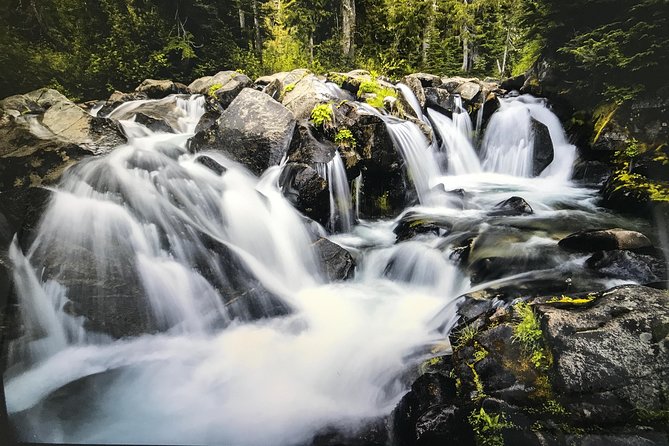
You’ll get a classic waterfall sequence that’s designed for quick payoff.
Christine Falls is typically a short viewpoint stop (around 10 minutes). The viewpoint is especially photo-friendly because the falls are framed by a stone bridge. Even in foggy conditions, you usually still get a sense of motion and scale.
Then comes Narada Falls (about 20 minutes). This is often described as the most popular waterfall in the park, and that reputation is easy to see. You walk along the Nisqually River up to the falls, so you get more than just a static view—you get a little river corridor experience before you reach the main drop.
Both waterfall stops are listed as admission-free in the flow of the day, but your guide’s timing and route choice are what make the stops feel smooth rather than rushed.
Paradise Valley at 5,400 Feet: The Day’s Main Event (and Winter Rules)
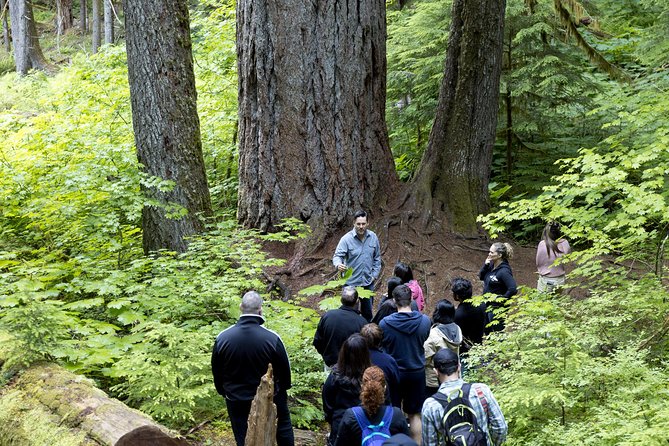
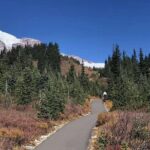
Paradise Valley is the big headline stop: alpine meadows, major viewpoints, and a chance to breathe in the scale. It’s listed at 5,400 feet (1,646 meters) above sea level and usually gets about 2 hours.
This is also where the day can shift most depending on season and road access.
Key winter reality:
- Starting Nov 12, access to Paradise during winter months is only accessible Friday through Monday, based on road conditions.
So if Paradise is your #1 must-see, plan your travel dates with that rule in mind.
Other practical winter context:
- In mid October through April on weekdays, food services inside the park can be limited.
- Lunch may be possible at Paradise when accessible, but the day notes you’ll also have opportunities to purchase food en route.
- The Henry M Jackson Visitor Center at Paradise has limited hours during these months.
In summer, the day may replace Paradise with the Sunrise Visitor Center stop instead (when it’s available and based on the guide’s plan).
Twin Firs Loop and Reflection Lakes: Old-Growth Time and Mirror-Style Views
After Paradise time, the itinerary often shifts into quieter nature moments.
Twin Firs Loop Trail is about a quarter-mile loop with old-growth forest trees described as hundreds of years old. It’s around 30 minutes and includes admission. This is a great counterbalance after the main meadow viewpoint—less crowd energy, more grounded forest walking.
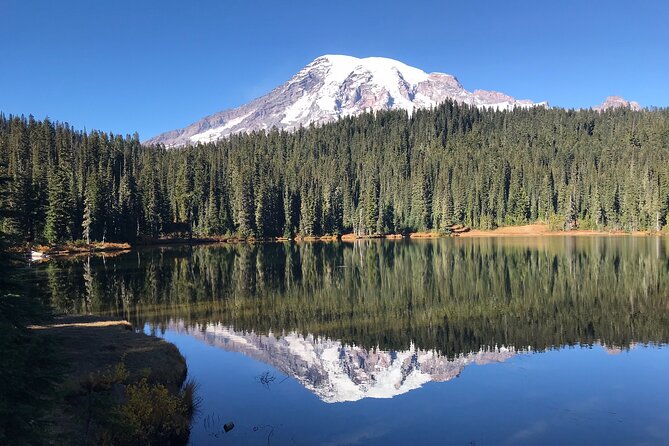
Reflection Lakes are more seasonal. The plan lists Reflection Lakes as a summer-friendly stop that gives iconic mirror views when there’s no breeze. In the winter period, Reflection Lakes stop availability is limited because the lakes are only available in season excluding winter time.
What I’d watch for:
- If it’s windy, your mirror effect can fail fast—so focus on the overall composition and not just perfect reflections.
- Wildlife spotting is mentioned generally throughout the day, so keep your eyes open while moving between stops.
Seasonal Swaps: How Sunrise Visitor Center and Tipsoo Lake Fit In
Rainier is one of those places where the park changes its mood by the month. This tour reflects that.
Two potential summer-only swaps:
- Sunrise Visitor Center stop (about 1 hour) can replace Paradise. It’s rare and special and not available on every tour date. The road is noted as bumpy.
- Tipsoo Lake Loop (about 30 minutes) is summer-only and not guaranteed. It depends on what the guide can access that day.
In real terms, this means you shouldn’t “lock in” one photo plan for every month. The tour is designed to adjust, and your guide is driving the day based on what’s open and visible.
Road Closures and Schedule Changes: What You’re Really Paying For
This is a weather-and-operations tour, not a guaranteed list of exact views. Stops can vary due to conditions, and road closures can prompt reroutes (like the town stop described earlier).
You also take a bit of risk in winter. The tour notes that the route and itinerary vary depending on weather and road closures, and refunds are only offered if the park is closed. That’s not a trick—it’s how mountain access works.
The upside is that you’re not stranded with nothing to do. The day is designed with alternative stops so you still get a meaningful outing even when one viewpoint is off the table.
Guides Make It Work: Names Like Lucas, Cory, James, and Joel
One theme from guide-led days like this is simple: the guide sets the tone. This tour emphasizes narration and adapting the day to visibility.
From recent firsthand stories tied to this experience, you might be guided by people like:
- James, sharing volcanology and tectonic context and even bringing reading materials on the bus
- Lucas, making sure you see what’s accessible and often building extra time with hiking when Paradise is closed
- Cory, balancing humor and local knowledge, and tailoring the day to group interests
- Joel, keeping things fun while still hitting the key park moments
Those names aren’t promises, but they reflect the real strength of the concept: you’re not just being transported—you’re being guided through the park.
Pace, Packing, and Comfort Tips That Actually Matter
This is a full-day group tour. Even with bus comfort, you’ll be walking and stepping out for viewpoints, river walks, and short loops.
Plan on:
- Layers (Mt. Rainier weather can change quickly)
- Comfortable walking shoes; waterproof hiking shoes are preferred
- In Nov to Jun, wear for snowy conditions and bring extra socks
- Winter boots in snowy months are recommended
Also, make bathroom planning part of your mental checklist. The day includes multiple stops and breaks, but the schedule is still a long loop starting early.
Finally, remember the tour highlights are not just “look and leave.” You’ll have moments where you’ll walk—like up to Narada Falls and through the Twin Firs loop. If you’re the type who likes to stretch your legs, this format fits.
Who This Tour Is Best For (and Who Might Prefer DIY)
This tour is a strong fit if you:
- Want the classic Mt. Rainier highlights from Seattle without driving
- Prefer a guided day with park education and narration
- Like easy-to-moderate hikes and short walks instead of a single long trek
- Are visiting in a season when parking and road access can be frustrating
You might choose something else if you:
- Need a fully fixed route with minimal variability (especially in winter)
- Want to control every stop length on your own schedule
- Are traveling with very specific accessibility needs not addressed in the provided tour info
Should You Book This Mt. Rainier Highlights Tour?
If your goal is a well-organized Seattle day trip that hits waterfall favorites (Christine and Narada), includes guided forest and history time (Longmire and the Trail of the Shadows), and gives you a real shot at Paradise viewpoints, then yes—this is a solid booking.
The decision hinges on season. In clear months, the Paradise-centered route is the payoff. In winter, you need a flexible mindset about access and timing, and you should treat the outing as an active, guide-led nature day—not a guarantee of a single view.
If you’re ready for that trade, you’ll likely appreciate how the tour handles the mountain reality: weather changes, roads shift, and the guide adapts so the day stays worthwhile.
FAQ
How long is the Mt. Rainier National Park Highlights Tour?
It runs about 10 to 12 hours.
What time does the tour start, and when is pickup?
The start time is 7:20am. Pickup begins soon before 8am, depending on your hotel location. You’ll need to confirm your exact pickup time for your address.
Where does pickup and drop-off happen?
Pickup and drop-off are offered from select downtown Seattle and airport hotels.
What is included in the ticket price?
The tour includes a professional guide, transport by air-conditioned fully insured commercial bus, pickup/drop-off from select locations, and park admission fees. You also get a mobile ticket.
Is food included?
No. Food and drinks are not included, and the day notes $20 per person. You can buy food in the park when options are available, and there are opportunities to purchase food en route during limited-service months.
Which stops are part of the day?
Stops can vary based on weather and road conditions, but commonly include Longmire Museum, Trail of the Shadows, Christine Falls viewpoint, Narada Falls, Paradise Valley, Twin Firs Loop Trail, and Reflection Lakes (seasonal). In summer months, the day may include Sunrise Visitor Center and/or Tipsoo Lake Loop instead of Paradise.
What happens to Paradise access in winter?
Starting Nov 12, access to Paradise during winter months is listed as only accessible Friday through Monday based on road conditions.
Is snowshoeing available?
During wintertime, an optional snowshoe adventure is possible if conditions allow. Paradise Valley is the area where snowshoeing and hiking are mentioned in winter.
How big is the group?
The maximum group size is 24 travelers.