REVIEW · ATHENS
Meteora Day Trip with central Pick up & optional Lunch
Book on Viator →Operated by Open Top Bus hellas M.E.P.E. · Bookable on Viator
Meteora from Athens is a whole day movie. This trip takes you out to the rock monasteries above Kalabaka, with central pickup and an audioguide so you’re not just snapping photos—you’re following the story of how monks lived on those pillars. I especially like the stress-free round-trip transport and the way the schedule builds in time for lookouts and actual monastery visits.
Two things I’d pick this for: the organized transport (4 Athens pickup options, small group feel up to 50 people) and the way you learn while you go—English-speaking guide plus a multilingual audio guide. The main drawback is the time commitment. This is a long coach day, with lots of stairs at the monasteries, and you’ll feel it if you’re not comfortable with walking and climbing.
In This Review
- Key highlights to know before you go
- Price and what you actually get for $60
- The long coach reality: timing, comfort, and sanity
- Getting picked up in Athens without playing detective
- The ride to Kalabaka: countryside photos and photo breaks
- Stop 1: Kalabaka lunch time, with vegan options
- Stop 2: The Hermit Caves of Badovas (a great warm-up)
- Stop 3: Meteora rocks and active monasteries
- Dress code and stairs: how to avoid the last-minute scramble
- Lunch option vs no lunch: the small choice that changes the whole day
- Audioguide setup: use it, don’t toss it
- What makes this tour worth it (and what doesn’t)
- Packing list: small things that save big annoyance
- Who this trip suits best
- Should you book this Meteora day trip?
- FAQ
- How long is the Meteora day trip from Athens?
- Is pickup included, and where do I meet the bus?
- Do I need to pay monastery entrance fees?
- Is lunch included?
- Is the tour guide English speaking, and are audio guides included?
- What should I wear for the monasteries?
Key highlights to know before you go
- Four Athens pickup points with a clear meeting spot at the Blue Hop on Hop off stop sign
- Hermit Caves of Badovas for a quieter, older stop before the big monastery viewpoints
- Audio guide in many languages (headphones included), paired with a live guide at the key moments
- Lunch in Kalabaka if selected, including vegan and vegetarian-friendly choices
- Monastery visits cost extra (plan on €5 per monastery, plus any small cash costs like toilets)
Price and what you actually get for $60
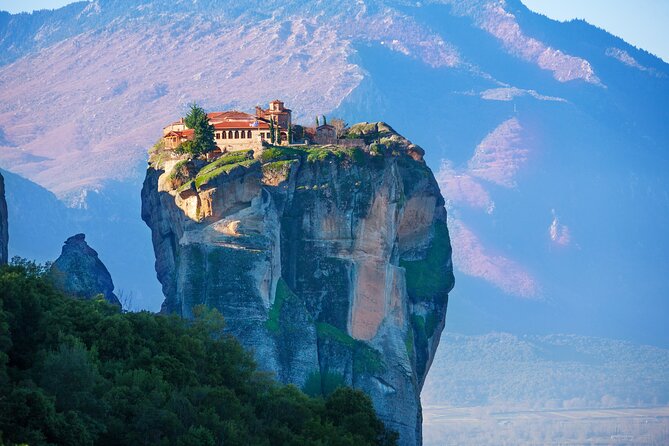
At $60.03 per person, this Meteora day trip lands in the value zone for what you’re buying: a full-day organized escape that includes air-conditioned round-trip coach, pickup, an English-speaking local expert guide, and an audioguide.
Here’s the important part for budgeting. The itinerary includes major time at Meteora, but the monastery entrance fees are not included—expect €5 per monastery. Many stops also involve small on-site costs (for example, toilets where cash is needed), and drinks aren’t included. So the real cost is: your ticket plus whatever monasteries you enter (often two) plus small cash odds and ends.
If you’re doing Meteora anyway, this kind of all-in-one transport is where the savings usually hide. Driving yourself means tolls, parking, and timing stress. Doing it by coach means you trade comfort for time—and the comfort is genuinely good on this style of trip.
You can also read our reviews of more tours and experiences in Athens.

The long coach reality: timing, comfort, and sanity
Start time is listed as 7:00 am, and in practice you’re signing up for an early, late day. One review experience put the return around 9:30 pm, so yes—bring a “whole day” mindset. You’re looking at hours of riding, with the day structured so you can still enjoy the stops when you get there.
A couple of practical notes that matter:
- Bring snacks and water. Lunch may be included depending on your option, but you’ll still have long stretches between meals.
- The bus has no toilet listed in the travel notes you provided, and the first meaningful break is often a while after departure. Plan for it.
- Some seats aren’t window seats. If you care about views on the way there and back, don’t sit in the back row. You want a seat that lets you see out.
Comfort is also a mixed bag depending on how full the bus gets. Your schedule will run, and the drivers tend to be described as capable and safe, but the “luxury coach” label doesn’t always mean “lots of personal space.” If you’re sensitive to cramped seating, choose your bus seat thoughtfully when you board.
Getting picked up in Athens without playing detective
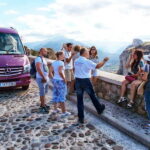
Pickup is one of the big selling points here because it removes the Athens navigation stress. You’ll wait at the sign of the Sights of Athens Blue Hop on Hop off bus stop, and a bus from the operator comes to collect you.
A real-world trick from participant notes: use the GPS pin from the pre-trip info rather than trying to find the “broad area.” That keeps you from wasting time in the dark before departure. It’s also the kind of stop where other tour buses are often present, so go early and check that you’re in the right line.
This tour is capped at 50 travelers, which usually helps the process feel organized even when multiple groups are gathering. Still, show up with time in hand. The meeting point is straightforward, but it’s busy.
The ride to Kalabaka: countryside photos and photo breaks
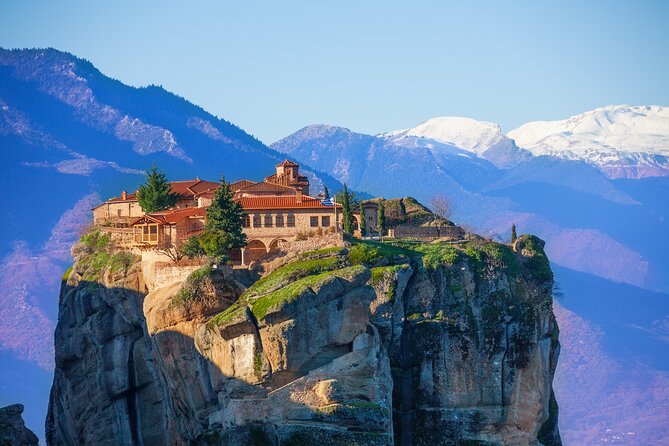
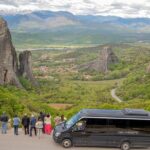
Once you’re on board, you travel to Meteora in a small-group format by bus. The listed drive time to the Meteora region is about 4 hours, and you’ll pass through countryside scenery where you can take photos from the road.
The itinerary gives you a key arrival point: Kalabaka by noon. That matters because it sets you up for lunch immediately, instead of forcing you to eat later after hours of climbing. It also means you’re not arriving to the monasteries exhausted; you’re ready to explore before the day gets too long.
Don’t expect constant narration during the drive. The guide’s main teaching moments tend to happen once you reach the monastery area, so use the bus time to rest. Many people basically sleep through parts of the trip, and that’s not a bad strategy.
Stop 1: Kalabaka lunch time, with vegan options
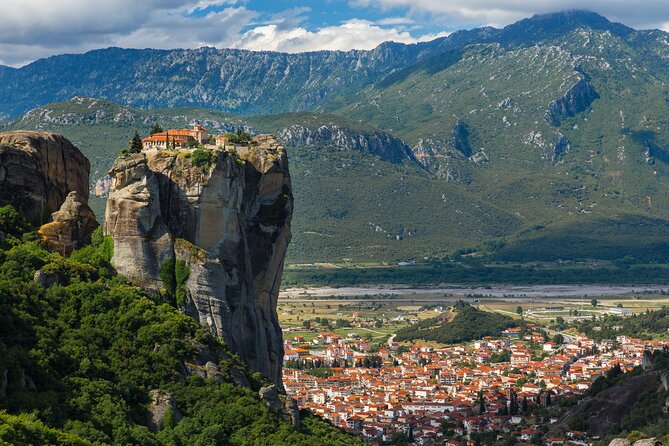
Kalabaka is the base town for Meteora, and it’s where the day turns from “travel” into “this is real.” If you selected the lunch option, the plan is to eat here around midday, which is a smart pacing choice.
Lunch is described as traditional Greek, and importantly, there are vegan and vegetarian options available. One participant described a vegan-friendly plate with roasted vegetables and rice. If you’re picky with food, still bring patience: group lunches are simpler than restaurant-at-your-own-pace meals.
If you didn’t choose the lunch option, you’ll still be in Kalabaka, but you’re on your own for food. That’s why I’d recommend selecting the lunch—especially on a day this long—unless you’re comfortable finding quick meals after a bus journey.
Stop 2: The Hermit Caves of Badovas (a great warm-up)
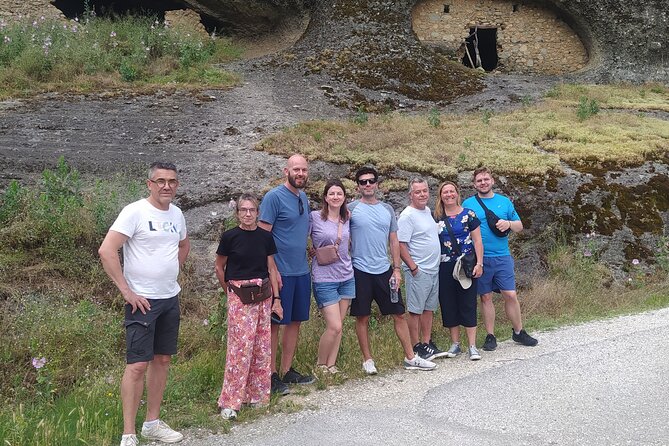
Before the big monastery complex, you get a Hermit Caves stop called the caves of Badovas. It’s close to Kastraki village, positioned between Kastraki and Kalabaka.
Badovas is also the name of a nearby restored but abandoned monastery dedicated to Saint Nicolas of Badovas. That link helps you understand the “why” behind the caves: this was a place for solitary devotion, not just scenery.
Time here is listed as about 1 hour. That’s enough to absorb the vibe without turning it into a speed-run. I like this stop because it slows the day down for a moment, and it gives context to what you’ll see later—monks weren’t only building monasteries; they were also living in rock spaces designed for isolation.
If you’re hoping for a lot of walking, this part may be lighter than the monasteries. Still, wear good shoes. Stone paths and steps can be slippery, especially in rain.
Stop 3: Meteora rocks and active monasteries
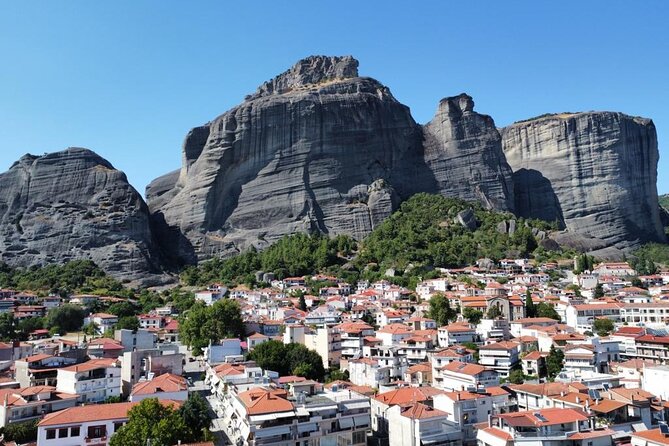
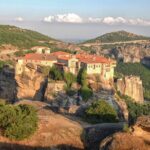
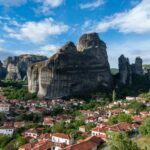
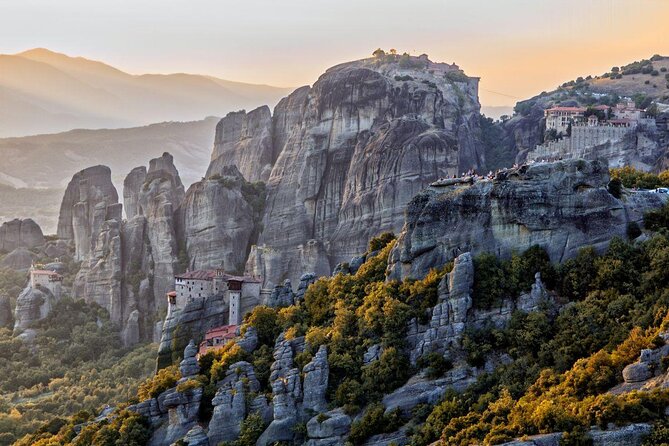
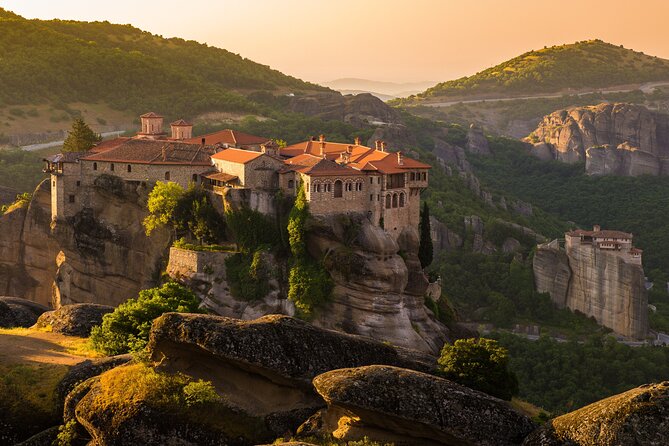
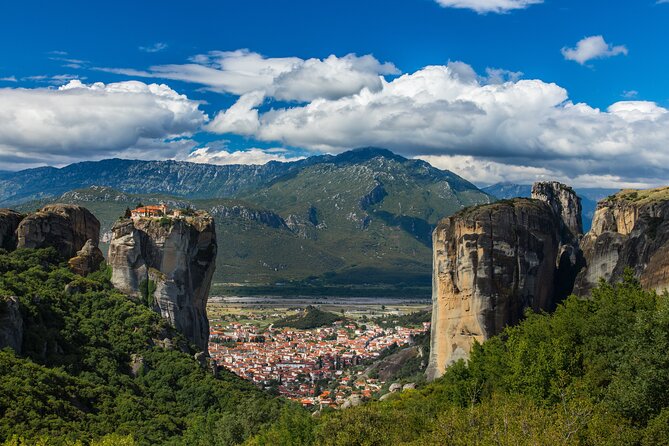
This is the big event: you reach the Meteora rock formations and visit the active monasteries. The tour description emphasizes that these caves and rock areas may have been inhabited as early as 50,000 years ago, and then monks returned in the 9th century, with major monastery building beginning around the 14th century.
What you’ll experience on the ground:
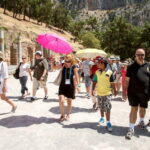
- A local guide meets you and explains the geology and the spiritual history tied to the pillars.
- You get photo stops at key viewpoints.
- You use multilingual audioguides while you’re there (English, Spanish, French, German, Portuguese, Russian, Italian, Chinese).
One detail that affects expectations: the full plan references visiting multiple active monasteries, but your real day can end up being two monasteries depending on timing and conditions. Either way, the walking and climbing are the point. Plan for stairs and uneven surfaces.
Also plan your money. Monastery entry fees are not included, and the amount is listed as €5 per monastery. Toilets are sometimes paid separately; one experience mentions a €1 cash-only toilet at a first stop after lunch.
Dress code and stairs: how to avoid the last-minute scramble
Meteora monasteries have modest dress expectations. In the practical notes you provided, women are told to wear skirts or use a wrap/scarf option at the entrance if needed. Long shirts and long sleeves are also recommended in the same spirit—cover up, keep it respectful, and you’ll be fine.
The biggest physical consideration is simple: you’re doing stairs. One person noted they didn’t get many steps in on the overall day, but others emphasized the stair-heavy portions inside and between monasteries. So treat this as moderate-to-active. Good shoes help. A lot.
Lunch option vs no lunch: the small choice that changes the whole day
If you choose lunch, you anchor the day with a known meal in Kalabaka. If you skip it, you’re trying to time food while your schedule is already packed.
From the way the day flows, I’d choose the lunch option if:
- you want to avoid searching for food around midday,
- you’re traveling with kids or with older family members,
- you hate decision fatigue on long days,
- you want better odds of getting a vegan/vegetarian meal.
And if you’re skipping lunch, plan your own snacks for the coach ride and the gap between lunch and the return drive. The return is long enough that empty stomach + cramped seating can turn into grumpy mode fast.
Audioguide setup: use it, don’t toss it
The tour includes an audioguide and also uses a microphone approach with the live guide during monastery time. That means you can actually follow what you’re seeing instead of guessing.
To make it work:
- bring a charged phone for photos (no charging slots were mentioned),
- set your language before you get to the important stops,
- listen for the parts that explain what you’re looking at, not only the dates.
The audio also helps if you’re traveling in a group where not everyone hears the guide the same way. It’s a simple add-on that makes a noticeable difference.
What makes this tour worth it (and what doesn’t)
This is the “why it works” list, based on what people consistently got excited about:
- Meteora feels unreal in person. Those monasteries really do sit on top of the rocks in a way that photographs can’t fully explain.
- The day has good pacing for a long drive: you arrive by noon, you get a cave stop, then you move into the monasteries with time for viewpoints and photos.
- Guides like Eva and Riki were mentioned as strong parts of the experience—people liked their explanations and photo help at lookouts.
Now the downsides to keep your expectations grounded:
- It’s a long day with a lot of time on the coach.
- Seat comfort can vary with bus fullness, and some seats have limited view. If you care about comfort, don’t wait last minute for boarding.
- Monastery visits cost extra. You’ll want to have cash ready.
Packing list: small things that save big annoyance
Here’s what I’d pack for a day this long and stair-heavy—based on the details you shared:
- Cash for monastery entrances (€5 per monastery) and possible toilet fees (cash-only at least at one stop in the notes).
- A power bank, since charging slots and Wi‑Fi were noted as not available.
- Snacks for the long gaps, especially if you didn’t choose lunch.
- A light layer. It can be cool up top and damp weather changes everything.
- Modest clothing. If you forget, some coverage is available at the entrances, but it’s easier to show up prepared.
- Good walking shoes with grip.
Who this trip suits best
This is a strong choice if you:
- want a guided Meteora day trip from Athens without renting a car,
- enjoy photo stops but also want explanations,
- don’t mind a very full day and lots of stairs,
- like structured group travel with audioguides.
It may not be ideal if you:
- hate long coach rides and want a short Athens side trip,
- have limited mobility or low stair tolerance,
- are very sensitive to cramped seating.
Should you book this Meteora day trip?
If you want Meteora and you don’t want to manage logistics, I think this is a smart booking. The value comes from the combination: pickup, transport, guided learning with audioguides, and enough time on-site to feel like you actually visited—not just “passed through.”
Book it if Meteora is a priority and you can commit to the long day. Skip or reconsider if your ideal day is quick and relaxed, because the ride time is real and the stairs are real.
FAQ
How long is the Meteora day trip from Athens?
The duration is listed at about 13 hours 30 minutes, with an early 7:00 am start and return later in the evening (some experiences noted around 9:30 pm to 10 pm).
Is pickup included, and where do I meet the bus?
Pickup is included from four central meeting points. You wait at the sign for the Sights of Athens Blue Hop on Hop off bus stop, and the company’s bus picks you up there.
Do I need to pay monastery entrance fees?
Yes. Monastery entrance fees are not included, listed as €5 per monastery. A cash payment may also be needed for some toilets on-site.
Is lunch included?
Lunch is included only if you select the lunch option. It’s described as traditional Greek and vegan and vegetarian options are available.
Is the tour guide English speaking, and are audio guides included?
The tour includes an English-speaking local expert guide and an audio guide in multiple languages, including English, Spanish, French, German, Portuguese, Russian, Italian, and Chinese.
What should I wear for the monasteries?
Modest clothing is required. In the notes provided, women are expected to wear skirts (or use an available wrap/scarf at the entrance), and long shirts and long sleeves are recommended.