REVIEW · VIENNA
Mauthausen Concentration Camp Day Trip from Vienna
Book on Viator →Operated by Vienna a la carte Reisebuero GmbH · Bookable on Viator
Mauthausen hits hard, even before you arrive. This Vienna day trip is built around round-trip transport and a self-guided visit at the memorial, so you can focus on the place without stressing over logistics. You’ll leave the city early, get context during the drive, then walk the preserved grounds at your own pace with audio support in 11 languages.
Two things I’d call out right away: the tour includes your entry to Mauthausen Memorial and the museum, so you’re not hunting tickets at the worst possible time. And I like that the main site visit is independent, which gives you the breathing room you’ll likely want in a place like this. You’re also not just looking at buildings; you’ll see key areas such as the Wiener-Graben quarry outside the memorial and the camp’s work in granite for Hitler’s projects.
One possible drawback: the day is long, and most of the “camp understanding” is on audio while you walk. If you need a fully guided, live narration at every step, you may feel you want more time—or more human explanation—than the schedule allows.
In This Review
- Key points worth knowing before you go
- Why Mauthausen from Vienna is worth planning for
- Price and time: what $143.25 buys you for an 8–9 hour day
- Meeting point at Albertinaplatz: an easy start, no hotel pickup
- The coach ride: context before you step into Mauthausen
- Entering KZ-Gedenkstatte Mauthausen: audio-guided, independent, and structured
- What to look for on the grounds
- The museum and the Room of Names
- A quick reality check on pace
- Food at the memorial
- Wiener-Graben quarry and the Stairs of Death: forced labor outside the main site
- The main drawback of this stop: time
- The return and lunch at Landzeit St. Valentin: don’t skip fuel
- What to wear, how to pace yourself, and how to keep your head clear
- Guides, English support, and how the group day works (up to 40 people)
- Who this Vienna-to-Mauthausen trip is best for
- Who might prefer a different format
- Should you book this Mauthausen Concentration Camp day trip from Vienna?
- FAQ
- How long is the Mauthausen day trip from Vienna?
- What’s included in the price?
- Do I get an audio guide, and what languages are available?
- Where do I meet the tour, and is hotel pickup included?
- Is this tour suitable for kids?
- What is the cancellation policy?
Key points worth knowing before you go
- Round-trip Vienna transport means no arranging trains or buses on your own.
- Audio guide in 11 languages lets you control the pace inside the memorial area.
- Museum with the Room of Names adds a deeper layer beyond the outdoor grounds.
- Wiener-Graben quarry + the Stairs of Death show how forced labor worked outside the main complex.
- Plan for lots of walking outdoors and dress in layers.
Why Mauthausen from Vienna is worth planning for
From Vienna, this is a straightforward day trip, but the subject matter is not light. Mauthausen Memorial sits on the site of a major Nazi labor camp complex, and the scale is staggering: roughly 200,000 people were imprisoned there between 1938 and 1945, and about half are thought to have died.
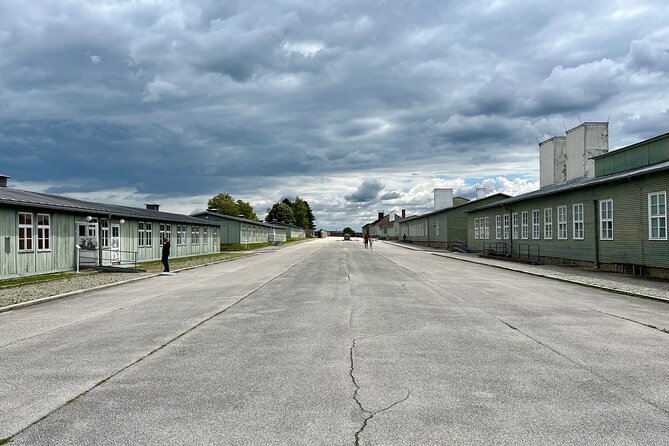
What makes this trip feel “real” in a way books and documentaries can’t is the way the site is preserved and organized for visitors. It’s not about gore. It’s about structure: barracks and camp spaces you can actually walk through, memorials you can read, and museum displays that connect the site to broader WWII history. For me, that mix of preserved areas plus the museum is the best combination for understanding what happened there.
Also, Mauthausen is often discussed alongside other camps, but this one has its own place in the story. It was one of the last camp complexes liberated by the Allies. That detail matters because it helps explain how long the system of imprisonment and forced labor lasted.
You can also read our reviews of more tours and experiences in Vienna.
Price and time: what $143.25 buys you for an 8–9 hour day
At $143.25 per person for an 8 to 9 hour outing, you’re paying for three practical things: transportation from Vienna, the memorial admission, and the in-person escort who keeps the day running smoothly.
Here’s the value angle: you’re not just buying “a bus to a place.” You’re buying a day where most of the hardest logistics are handled. There’s round-trip transit, transfers to the quarry, and your memorial admission is included. If you tried to piece this together yourself, the cost usually stops looking “cheaper” once you account for transport time and museum entry.
Timing is the other part of value. The schedule is tight enough that you’ll see the major highlights, but not so rushed that you’re trapped in a scripted route the whole time. Still, it is a full day. If you like slow travel, treat this as a day of remembrance, not a casual outing.
Meeting point at Albertinaplatz: an easy start, no hotel pickup
The meeting point is at Tourist-Info Wien Albertinapl. 1, 1010 Wien. You start at 8:30 am, and the tour ends back at the same place.
Two practical takeaways. First, since there’s no hotel pickup, you’ll want to build in time to get to the meeting point calmly. Second, the early start is part of the deal: it gives you enough daylight and enough hours on site to cover the memorial grounds and the quarry without skipping the museum.
If you’re the type who likes arriving early and settling in, this is a good setup. Just plan your morning around that 8:30 departure and keep breakfast simple.
The coach ride: context before you step into Mauthausen
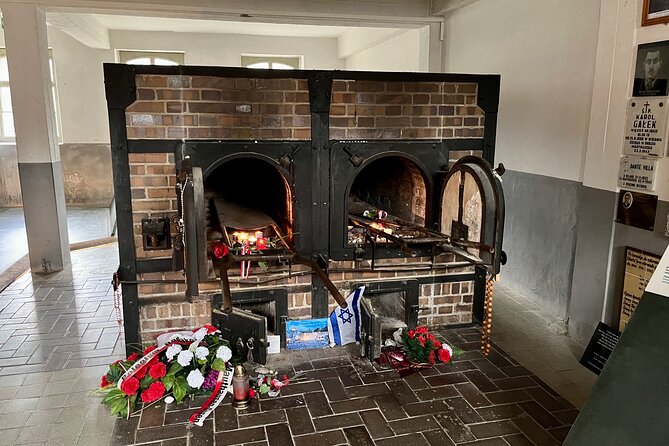
Before you ever reach the memorial grounds, you’ll ride through the countryside of Lower and Upper Austria. During this drive, you meet your English-speaking tour escort and learn key background about what you’re about to see.
This matters more than it sounds. Mauthausen can be emotionally overwhelming, and having the basic framework first helps you interpret what you’re walking past. The day works best if you approach the memorial like a guided lesson with independent time, not like a quick sightseeing stop.
You also get the benefit of staying in one group, which makes timing easier. A few minutes saved here or there can translate into extra time inside the museum rooms, where you’ll likely want it.
Entering KZ-Gedenkstatte Mauthausen: audio-guided, independent, and structured
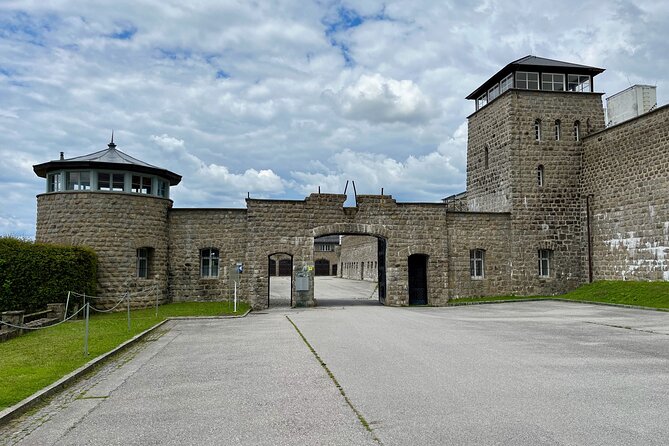
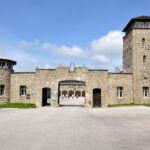
The main stop is at KZ-Gedenkstatte Mauthausen (Mauthausen Memorial). The tour gives you a self-guided visit supported by an audio guide. The audio is available in 11 languages, including English, German, French, Spanish, Italian, Hebrew, Dutch, Polish, Czech, Russian, and Hungarian.
You’ll typically be at the memorial long enough to do more than a quick loop. The schedule allots about three hours for this stop, which is a realistic window to cover the outdoor preserved areas and also spend time inside the museum.


What to look for on the grounds
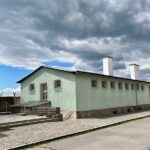
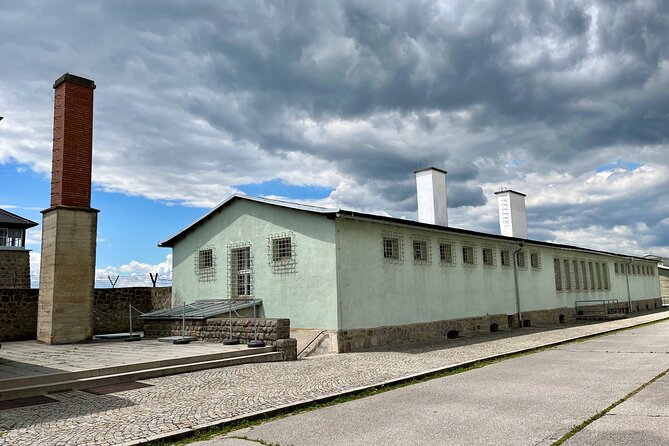
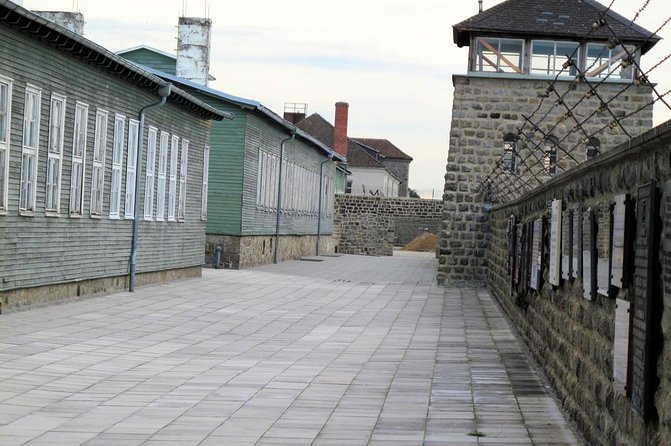
The audio-guided visit is where you’ll see major preserved areas such as:
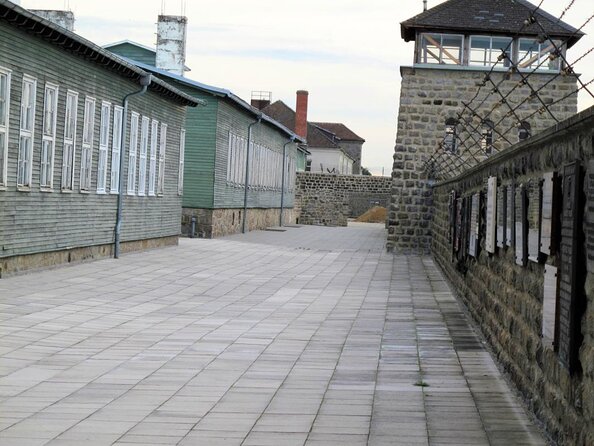
- prisoners’ barracks
- the roll call area
- SS quarters
- the camp prison
- the gas chamber
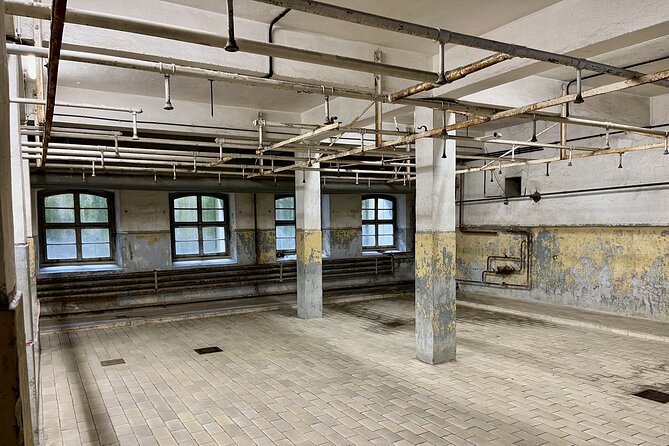
Even if you don’t linger, these stops give you a clear sense of the camp’s internal logic: confinement, routine, control, and punishment. One of the most striking things visitors note is how little the site is altered. Some preserved technical spaces like showers and an autoclave remain in place, and they help you visualize what conditions were like.
The museum and the Room of Names
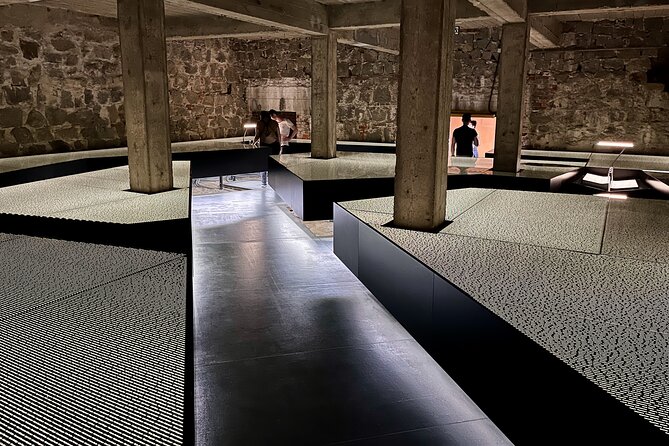
The museum is a big part of why this tour is worth doing. It’s described as thorough and contemporary, and it includes the museum’s “Room of Names,” a key feature for anyone who wants the human side of the story rather than only the architecture and timeline.
My practical advice: don’t force a “museum speedrun.” If you find yourself reading and pausing, it’s fine. The tour format is set up to let you move at your own pace. You’ll get more out of the museum if you slow down just a little and let the materials land.
A quick reality check on pace
Because this is self-guided, you’re in charge of how much you see in those three hours. That’s a strength for many people, but it’s also a risk if you’re unsure how the memorial is laid out. If you’re the kind who wants everything explained live, you may find you need more direction than what an audio route alone provides. The good news is the site is set up for visitor navigation; you just have to use that time intentionally.
Food at the memorial
If you get hungry, there’s a bistro at the memorial where you can grab snacks and drinks. It’s not a full meal guarantee, but it helps you avoid a stressful food scramble in the middle of the day.
Wiener-Graben quarry and the Stairs of Death: forced labor outside the main site
After the main memorial visit, you transfer to Wiener-Graben quarry, located outside the memorial. This stop is shorter—about 15 minutes—but it’s meaningful because it shows where the camp’s forced labor connected to real-world construction and production.
Here’s the key detail: you’ll see where prisoners worked extracting granite used for Hitler’s major construction projects. That’s a heavy theme, but it’s also a clear one. You’re not only learning about imprisonment. You’re seeing how labor was physically tied to ideology and grand building schemes.
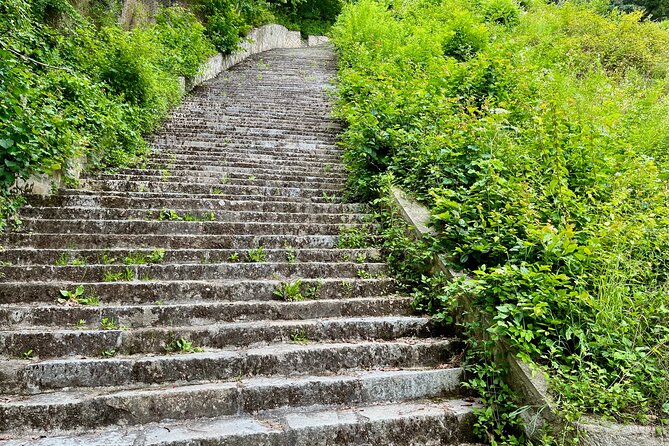
You’ll also see the area known as the Stairs of Death. In this quarry area, the Stairs of Death are described as now closed, so you may not be walking the entire route as you might imagine from photos. Still, the setting helps you connect the labor route with the name visitors recognize.
The main drawback of this stop: time
Fifteen minutes is not long. You’ll be able to look and absorb, but you won’t have a lot of time to linger, especially if the ground is uneven or you’re trying to follow audio details at the same time. If this quarry is a priority for you, go in with a mindset of short stop, big takeaway.
The return and lunch at Landzeit St. Valentin: don’t skip fuel
On the way back toward Vienna, you stop at Landzeit St. Valentin for about 45 minutes. Lunch here is on your own expense.
This is one of those “practical lifeline” moments in a long day. You’ll have walked and spent mental energy at the memorial, and you’ll likely be ready for a real meal. I’d recommend eating something filling rather than treating it like a quick snack, because you’ll still have the drive back to Vienna afterward.
Also, since the day has a lot of outdoor time, keep your energy steady. If you tend to feel cold or tired quickly, plan for it with warm layers before you sit down to eat.
What to wear, how to pace yourself, and how to keep your head clear
This is not a museum on a hot afternoon in AC. A lot of the experience happens outside, and the emotional subject matter also drains focus. A good chunk of people recommend dressing in layers and wearing comfortable shoes, and I agree with that logic.
My do-this checklist:
- Comfortable walking shoes: you’ll want stable footing for the grounds.
- Layers: mornings can feel chilly, and outdoor time can stretch.
- A calm pace: self-guided time is your chance to pause when you need to.
Also, remember the structure of the tour: there’s live support on the coach, but the memorial walk is audio-driven. That means you’ll want to stay alert enough to follow the audio while you look at preserved spaces. If you’re prone to zoning out, take short breaks and reset often. It’s okay to step aside, especially around emotionally heavy areas.
Finally, manage expectations about “how much you’ll fit.” Even people who plan carefully sometimes realize they could have spent longer at the memorial museum. If you think you’ll want that extra time, accept that you’re still getting the core highlights in this format.
Guides, English support, and how the group day works (up to 40 people)
You’ll travel with a maximum group size of 40 travelers, and you have friendly English-speaking escort support with you on the day.
One of the best parts of the experience is that you’re not thrown onto a bus with zero guidance. People have praised escorts by name, including Ferdinand, Johann, Irene, Robert, Martin, and Joseph, and they’re often described as providing real historical context and handling the emotional weight with care.
At the memorial itself, the visit is self-led with audio, so the on-site guide presence may be more about framing and support than constant narration across every marker. That works well if you like autonomy, but it’s worth knowing in advance: you’re responsible for turning the audio into understanding as you walk.
If you’re hoping for a fully guided walk through every stop, this tour is still valuable, but you may want to mentally plan to do some of the explaining yourself via the audio guide and museum signage.
Who this Vienna-to-Mauthausen trip is best for
This day trip is a strong fit if you:
- want round-trip convenience from Vienna
- want audio guidance rather than a nonstop live lecture
- appreciate seeing both the preserved memorial grounds and the quarry connection outside the main site
- plan to spend real time at the museum, including the Room of Names
It’s also generally approachable for most adults. The one note is that it’s not recommended for child aged 13 and under, which makes sense given the subject matter and the length of the day.
Who might prefer a different format
If you need a deeply guided, live-narration experience for every area, the self-guided nature at the memorial could feel limiting. If you’re also very short on time in Vienna, it can be a lot to spend a full day on one site. In that case, consider whether you’d rather do a shorter half-day option or a longer, more guided program.
Should you book this Mauthausen Concentration Camp day trip from Vienna?
I think this is a “yes, if you’re ready” kind of booking. The price feels fair when you factor in round-trip transport plus admission plus audio-supported time at the memorial. And the schedule is built around the places that matter most: the preserved camp areas, the museum with the Room of Names, and the quarry connection to forced labor.
Book it if you want structure without hand-holding all the way through, and if you’re willing to handle an emotional day with patience. Skip it or look for an alternative if you strongly prefer live guidance at every stop, or if the length of the day would be too much for you right now.
If you do book, go in with two goals: give the museum time to work on you, and use the quarry stop to connect the camp story to the real machinery of forced labor.
FAQ
How long is the Mauthausen day trip from Vienna?
It runs about 8 to 9 hours, starting at 8:30 am.
What’s included in the price?
The tour includes round-trip transportation from Vienna, admission to the Mauthausen Memorial and Museum, a self-guided tour with audio guides, transfer to the Wiener-Graben quarry and the Stairs of Death area, and an English-speaking tour escort.
Do I get an audio guide, and what languages are available?
Yes. You’ll pick up an audio guide at the memorial, available in English, Spanish, French, German, Italian, Hebrew, Dutch, Polish, Czech, Russian, and Hungarian.
Where do I meet the tour, and is hotel pickup included?
You meet at Tourist-Info Wien Albertinapl. 1, 1010 Wien, Austria. Hotel pickup and drop-off are not included.
Is this tour suitable for kids?
It is not recommended for children aged 13 and under.
What is the cancellation policy?
You can cancel for a full refund up to 24 hours in advance. If you cancel less than 24 hours before the start time, the amount paid is not refunded.