REVIEW · CASABLANCA
Casablanca to Tangier Day Trip by High-Speed Train
Book on Viator →Operated by STE Easy Transfers · Bookable on Viator
Tangier in a single day can feel almost unfair. This Casablanca-to-Tangier run uses the high-speed Boraq train plus an air-conditioned minivan, so you spend less time traveling and more time in the sights. I especially like how the day is structured around Tangier’s key areas, from the Kasbah viewpoint zones to the coast.
A second big win for me: you get door-to-door help in both cities, including hotel or station pickup and drop-off, and a guided walking circuit through the medina lanes. That means you can get your bearings fast instead of hunting for taxis and meeting points.
One possible drawback to weigh: it’s a lot of walking in a short window, and some stops have admission fees that aren’t included—so if you hate stepping quickly from one place to another, this plan might feel rushed.
In This Review
- Key Highlights You’ll Feel in Your Day
- Casablanca to Tangier by Boraq: Why This Works as a Day Trip
- Pickup and Train Timing: The Part That Makes or Breaks the Day
- Tangier’s Kasbah and Dar El Makhzen: A Palace That Explains the Area
- Medina of Tangier: The Lanes, the Walls, and the Real Vibe
- Petit Socco and Socco Alto (Grand Socco): People-Watching Central
- Petit Socco
- Socco Alto / Grand Socco
- Tangier American Legation Museum: The US Connection You Might Not Expect
- Tomb of Ibn Battouta: A Small Stop With Big Travel Lore
- Cap Spartel and the Strait Views: The Coast Angle Everyone Remembers
- Cap Spartel
- Caves of Hercules
- Transportation in Tangier: Air-Conditioned Comfort Between Walking Blocks
- Tour Guides: When Personality Matters More Than You Think
- Price and Value: Is $149.83 a Good Deal?
- What the Day Feels Like Hour to Hour
- When You Should Avoid This Trip (Yes, Sometimes)
- Should You Book This Casablanca to Tangier Day Trip?
- FAQ
- What’s the duration of the Casablanca to Tangier day trip?
- How much does the tour cost?
- Do I need to buy entry tickets for the museums and monuments?
- What’s included in the price?
- Is food included?
- How early does the day start?
- Is there a group limit?
- Are mobile tickets used?
- What’s the cancellation policy like?
- Can I participate if I have limited experience walking?
Key Highlights You’ll Feel in Your Day
- Boraq train speed: You’ll trade hours of road time for quick rail travel to Tangier.
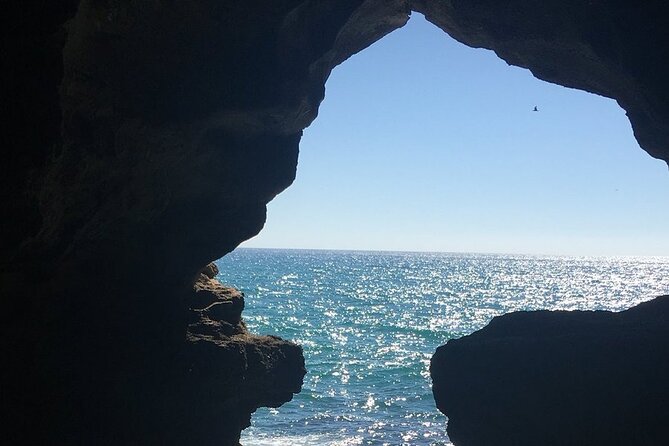
- Tangier’s best photo angles: Cap Spartel and the Caves of Hercules set up big views toward the Strait of Gibraltar.
- Tight medina route: You’ll cover the Petit Socco, Socco Alto/Grand Socco, and the entrance area near Bab Fass with a guide.
- Door-to-door logistics: Pickup and drop-off in both Casablanca and Tangier cut down the stress.
- Small group size: Max of 10 travelers keeps the day more manageable than large coach tours.
Casablanca to Tangier by Boraq: Why This Works as a Day Trip
The magic of this experience is simple: you’re not trying to squeeze Tangier into a vague “free time” schedule. Instead, you start with a Boraq high-speed train transfer that pulls you away from slow, stop-and-go travel. You also get a local guide and an organized loop in Tangier, which is the difference between seeing a few highlights and actually getting a sense of the place.
The day runs around 10 hours total. That includes your ride time plus the sightseeing circuit, and you’ll have a dedicated vehicle in Tangier for moving between stops. Expect a packed but efficient pace: most stops are timed, and the itinerary is built to cover both the old city and the coast.
One thing I like about this style of tour is that it doesn’t ask you to constantly make decisions. If you’ve ever spent a day in a new city accidentally wandering in circles, you’ll appreciate how this keeps you moving in the right directions.
You can also read our reviews of more tours and experiences in Casablanca.


Pickup and Train Timing: The Part That Makes or Breaks the Day
Your start time is 8:15 am, and you’ll be picked up either from your hotel or a nearby transport point, then taken to the train. The goal is to have you ready before you need to figure anything out. In real life, that matters. Tangier’s old city is best navigated with a plan, not guesswork—especially when you’re short on time.
On the rail side, a strong theme shows up in the feedback: the process is generally smooth, the trains and stations are modern, and it’s easy to navigate once you’re at the right place. People also call out that the view from the train can be a nice payoff—countryside rolling by as you approach the coast.
Practical tip: since the day is timed, don’t plan anything the same morning in Casablanca. You’ll want clean buffer time to handle pickup without stress.
Tangier’s Kasbah and Dar El Makhzen: A Palace That Explains the Area
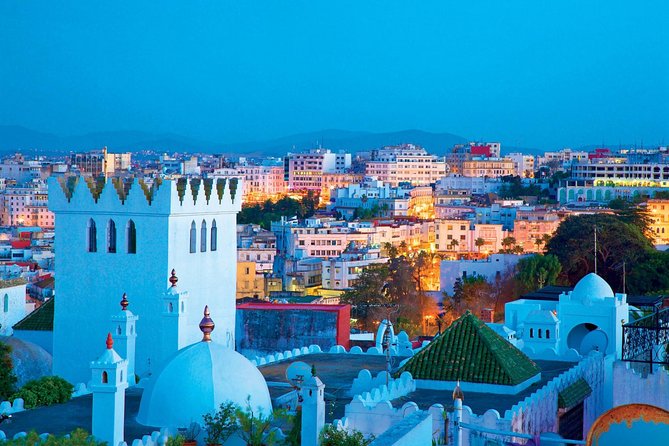
You begin with the Tangier Casbah area and a museum set in the former sultan’s palace, Dar El Makhzen (refurbished). This stop is designed to give you context before you start wandering the old city lanes.
Even if you’re not a museum person, the Kasbah setting helps. The Casbah is where you get the feeling of Tangier’s strategic position—overlooking and controlling routes between regions. This museum focuses on the area’s history from prehistoric times through the 19th century, so it’s a quick way to understand why the old city is arranged the way it is.
Duration is about 45 minutes here, and admission isn’t included. If you’re trying to manage costs, this is one of the first places you should mentally budget for.
Medina of Tangier: The Lanes, the Walls, and the Real Vibe
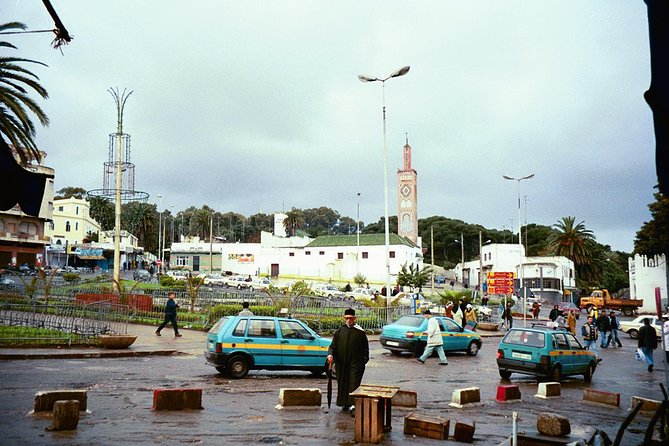
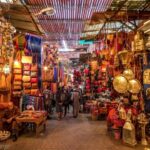
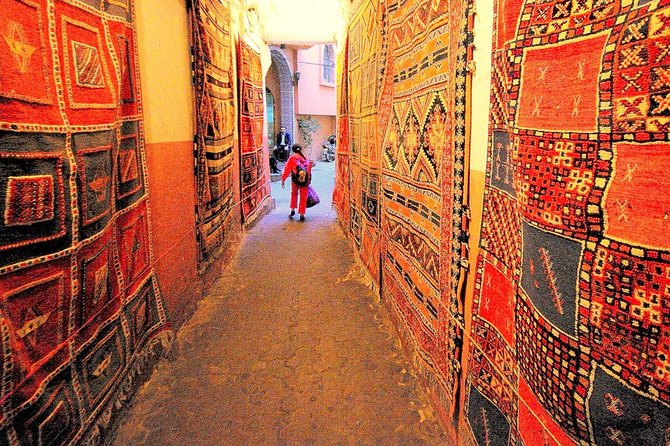
After the Kasbah intro, you transition into the Medina of Tangier, one of the town’s biggest draws. The medina is a maze of alleyways—part commercial, part residential—wrapped within the boundary of a 15th-century Portuguese fortress. Many buildings you’ll see are more recent than that original framework, which is a nice reminder that medinas are living places, not frozen museums.
This stop is timed at about 45 minutes and doesn’t require a ticket fee for entry.
Here’s how to make this segment pay off: treat it like a guided “orientation walk.” Don’t try to read every storefront. Instead, look for patterns—where traffic funnels, where the vibe shifts from shops to neighborhood life, and where the key public squares connect.
Also, medina days can vary depending on weather. If it’s raining, the cobbles and narrow alleys can make the walking feel longer than it should. Comfortable shoes matter more than you think.
Petit Socco and Socco Alto (Grand Socco): People-Watching Central
Next come two squares that bookend the feel of Tangier’s old city social scene.

Petit Socco
This area (Place Souq Ad Dakhil) has a sharper past. Historically, it was known as a notorious crossroads. Today it’s a calmer tourist-friendly stop—an easy place to sit, watch, and sip mint tea while your eyes reset after narrower lanes.
It’s about 45 minutes and free.
Socco Alto / Grand Socco
Then you reach the Grand Socco, Place du 9 Avril 1947, a palm-ringed, sloping plaza with a central fountain—set up as a more romantic entry point toward the old city. It sits before Bab Fass, the keyhole gate, which is one of the medina’s recognizable thresholds.
This segment is also about 45 minutes and free.
Both squares work as photo points because they sit at openings—where you can get views outward and not just down-and-in alley angles.
Tangier American Legation Museum: The US Connection You Might Not Expect
One of the more interesting cultural stops on the route is the Tangier American Legation Museum. It’s in an elegant five-storey mansion and tells a specific story: Morocco was the first country to recognize the fledgling United States (1777), and this legation building was the first American real estate abroad.
It’s timed at about 45 minutes. Admission isn’t included.
If you like history that connects places, this is a strong stop because it gives you a concrete example of Tangier’s international role—more than the typical “market and old streets” vibe people expect.
Tomb of Ibn Battouta: A Small Stop With Big Travel Lore
You also visit the Tomb of Ibn Battouta, a modest site tied to the life of Ibn Battuta, born in Tangier in 1304. He became one of the great travelers of his era, and his journey stretched across North Africa, the Middle East, and beyond—eventually reaching areas such as Russia, Central Asia, and China, with returns via places like Sri Lanka and East Africa.
This stop is about 45 minutes and admission isn’t included.
Even though it’s short, it adds a nice “lens” to the day: Tangier isn’t only a crossroads on the map. It’s connected to the idea of people moving through the world—long before modern tourism.
Cap Spartel and the Strait Views: The Coast Angle Everyone Remembers
Now you shift from city streets to dramatic coastal perspective.
Cap Spartel
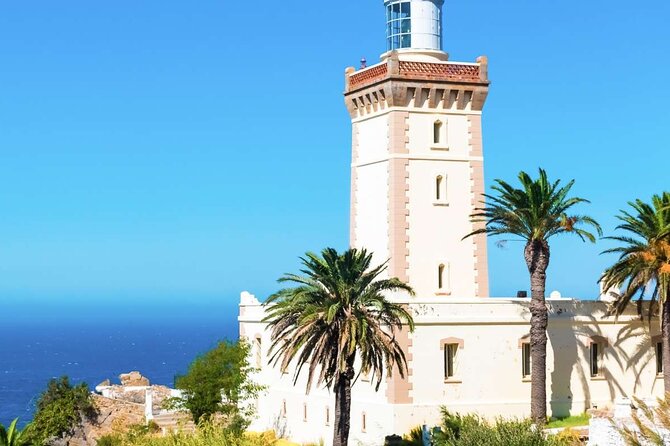
Cape Spartel sits at about 1,000 feet above sea level at the entrance to the Strait of Gibraltar, roughly 12 km west of Tangier. This is where you get those classic wide views across the water toward the Rock of Gibraltar—plus the big Atlantic energy in the foreground.
Stop time is about 45 minutes. Admission isn’t included.
Caves of Hercules
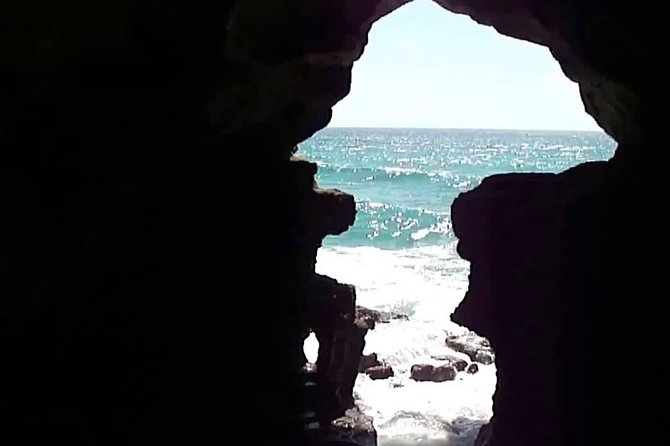
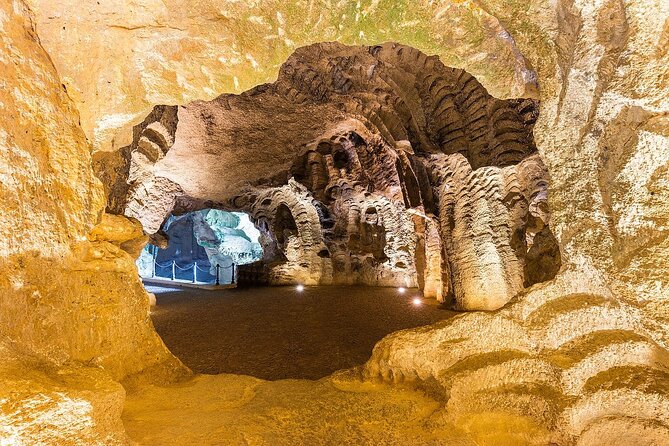
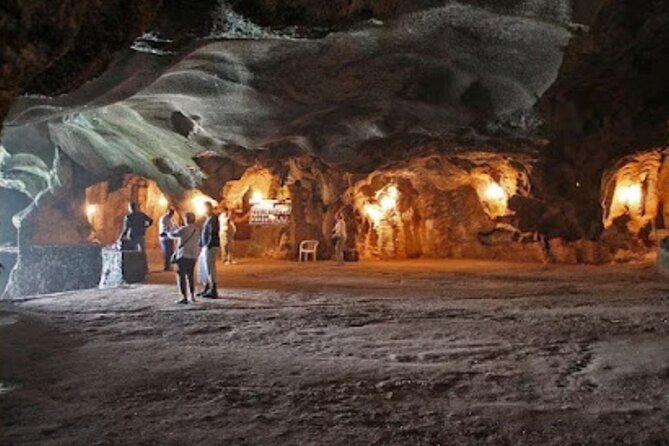
Below Cap Spartel you’ll visit the Caves of Hercules, a set of caverns tied to the legend of Hercules resting during his labors. The caves are known for an opening said to resemble Africa in shape.
This stop is about 45 minutes and the site is listed as free.
These are the most “wow” moments on the itinerary for many people because they’re not just pretty. They help you understand why Tangier has always felt like a hinge between continents.
Transportation in Tangier: Air-Conditioned Comfort Between Walking Blocks
A key part of making a day like this work is how you move between stops. You’ll use an air-conditioned minivan in Tangier to connect the sites, which helps when the medina walk wears you down.
You’ll still do plenty of walking, and some parts are naturally uneven and step-heavy, but having a vehicle between zones prevents the day from becoming pure endurance.
There’s also small-group structure here (max 10), which usually keeps the pace more human than large tours that herd people through every square.
Tour Guides: When Personality Matters More Than You Think
Guides can make or break how you experience a tight schedule. In the feedback, some guide names come up repeatedly: Abdul is mentioned often, along with Hamza, Mahdi, Mohammed, and Ahmed. One person specifically points to Abdul for the walking tour in the medina.
Here’s the practical angle for you: when the guide’s English is strong and the stories are tied to what you’re seeing, the whole day feels richer. When the guide’s explanations are brief or the walking tour feels like a speed-run, the itinerary can feel like a checklist.
If you’re booking and you care about narration (not just navigation), look for a day where you get a guide with clear communication. If you don’t, don’t panic—some stops still deliver big views and strong places, especially the coast.
Price and Value: Is $149.83 a Good Deal?
At $149.83 per person, you’re paying for a full “door-to-door + rail + guided day” package. That cost includes the local guide, Casablanca and Tangier pickup/drop-off, the Tangier sightseeing tour, the air-conditioned minivan, and the return high-speed train ticket (Boraq).
Food and drinks are not included. Monument entry fees aren’t included either, though some sites on the route are free.
So is it value? For me, it’s best seen as paying to remove planning time and uncertainty. If you had to book a round-trip train, arrange local transport, and hire a guide separately, the total often creeps higher—especially once you add time costs.
Where value can slip: if you end up spending extra money on multiple ticketed museums, and if your group has limited time in each place to actually enjoy it. Also, if you strongly dislike shopping stops or any pressure to buy, keep a close eye on how much time you’re given in shops during the tour. That’s the one “experience risk” that shows up in negative feedback.
What the Day Feels Like Hour to Hour
This is the kind of tour where your day will feel like a sequence of “zones,” not a slow meander.
1) Start with Kasbah history at Dar El Makhzen
2) Drop into the medina maze and connect key squares
3) Add museums and legend tied to Tangier’s identity
4) Finish with the coastal views that justify the trip
5) Return by high-speed train to Casablanca
Because each stop is timed, you don’t get long stretches of free time to drift. If you’re the type who wants to linger for one great photo or sit longer in one café, you’ll need to adjust your expectations. You can still enjoy the sites—just don’t plan on “unhurried.”
When You Should Avoid This Trip (Yes, Sometimes)
One small piece of advice from real-world feedback: if you can choose dates, try to avoid Sundays. That note is simple, and it likely comes down to how the day feels on the ground.
Also, check your comfort with walking. The route includes steps and lots of moving through old streets. If you’re sensitive to that, you might find the schedule tiring.
And finally: weather matters. Rain can dampen the whole day, especially in medina areas where surfaces and walking conditions change.
Should You Book This Casablanca to Tangier Day Trip?
Book it if you want a fast, organized route to Tangier and you value logistics that work. This is a smart choice for a first trip when you want Tangier’s big highlights—Kasbah, medina squares, museums, and the coast—without having to plan train times and navigation.
Skip it or choose a different style if:
- You want lots of downtime and slow wandering.
- You dislike any chance of being steered into shops.
- You have limited mobility and walking-heavy routes aren’t your thing.
If you do book, come prepared: comfortable shoes, a little cash for any ticketed museums, and a calm attitude toward the pace. Done right, this trip gives you a real “Tangier in one day” feeling—especially the coastline angles at Cap Spartel and the Caves of Hercules.
FAQ
What’s the duration of the Casablanca to Tangier day trip?
It runs about 10 hours in total (approx.).
How much does the tour cost?
The price is $149.83 per person.
Do I need to buy entry tickets for the museums and monuments?
Monument entry fees are not included. Some stops are free (like the Medina of Tangier and the Caves of Hercules), while others require admission tickets.
What’s included in the price?
You get a professional local guide, hotel/station pickup and drop-off in Casablanca and Tangier, a Tangier sightseeing tour, air-conditioned minivan transport in Tangier, and the return high-speed train ticket (Boraq).
Is food included?
No, food and drinks are not included.
How early does the day start?
Pickup starts at 8:15 am.
Is there a group limit?
Yes. The tour has a maximum of 10 travelers.
Are mobile tickets used?
Mobile ticket is listed as a feature.
What’s the cancellation policy like?
This experience is non-refundable and cannot be changed for any reason. If the minimum number of travelers isn’t met and the tour is canceled, you’ll be offered a different date/experience or a full refund.
Can I participate if I have limited experience walking?
Most travelers can participate, but the day includes walking and moving between several stops, so comfortable shoes are important.