REVIEW · BEIRUT
Anjar, Baalbek & Ksara Day Trip – With Lunch (4G on Board)
Book on Viator →Operated by Nakhal & Cie · Bookable on Viator
Baalbek makes the day feel ancient. This trip strings together three Lebanon stops that each changed the region in a different era, from Roman Heliopolis to an Umayyad palace-city and finally the cave cellars of Chateau Ksara. You’re guided the whole way, with air-conditioned coach comfort while the countryside gives you time to reset between sites.
I love the way this tour is paced around big visual payoffs: Baalbek’s Temple of Jupiter and Bacchus are the kind of ruins that force you to slow down and look. I also like that lunch is built in, with a proper Lebanese set menu (mezze plus a main, then fruit or dessert) so you’re not hunting for food while the day is moving.
The main thing to consider is the long coach day. At around 9 hours, you’ll spend serious time in transit, and the stops do require walking across uneven archaeological surfaces.
In This Review
- Key highlights you’ll actually notice
- Baalbek’s Temple of Jupiter and Bacchus: Where the stones feel impossible
- Anjar’s Umayyad palace-city: A different kind of impressive
- Lebanese mezze lunch near Zahle: Fueling the afternoon without slowing it down
- Ksara Caves and Chateau Ksara: Wine tasting with real underground context
- Coach comfort, timing, and why group size matters more than you think
- Guides and how the day feels when someone explains what you’re seeing
- What you get for the price: Is $95 good value?
- Tips so the day feels smooth (not rushed)
- Should you book the Anjar, Baalbek & Ksara day trip?
- FAQ
- How long is the trip?
- What time does the tour start?
- Is lunch included?
- Are entrance fees included?
- Do we get wine tasting at Ksara?
- Is hotel pickup available in Beirut?
- What happens if the tour is canceled due to weather or minimum travelers?
Key highlights you’ll actually notice
- Baalbek’s monumental Roman scale: Temple of Jupiter on a huge podium, plus Bacchus as a standout
- Anjar’s Umayyad city layout: arcades, gates, and Hellenistic/Roman-style details in the Bekaa
- A lunch that feels like part of the plan: Lebanese mezze set menu with soft drink included
- Ksara caves you can tour: cool cave cellars discovered in 1898, with winery insights and wine tasting
- Comfort + onboard connectivity: air-conditioning, bottled water, and WiFi on board, plus 4G on board
- Real guiding, not just drop-offs: licensed English and French guide commentary throughout
Baalbek’s Temple of Jupiter and Bacchus: Where the stones feel impossible
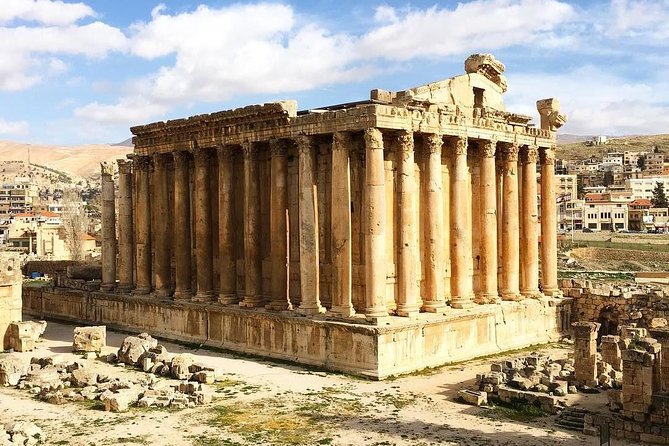
Baalbek is the kind of place that makes you wonder how anything was built without modern machinery. You arrive and set off with your guide, and the first big wow lands fast: the Temple of Jupiter, built on a massive podium and organized around a rectangular courtyard area used for sacrifices. Even if you’re not a Roman-architecture nerd, the sheer mass of the remains makes your brain work overtime.
What I love here is the storytelling focus. Your guide doesn’t just point at columns. You’ll also hear about the mystery scholars have wrestled with for ages: the gigantic stones used as foundations for earlier temples on the site. The size and weight are so extreme that the question of how they were transported and positioned is still debated.
Then there’s Temple of Bacchus, the other major stop on the Baalbek side. It’s described as one of the best-preserved temple experiences in the area, and it’s an easy one to connect to because it feels designed for people to approach and gather—architecture as stagecraft, not just ruins. You’ll walk enough to feel like you visited, but you’re still within a structured timeline.
Practical note: Baalbek’s ground can be uneven and the sun can be strong. Bring sunscreen, water (you get bottled water, but you’ll likely want more), and wear shoes you’re comfortable scuffing around in.
Anjar’s Umayyad palace-city: A different kind of impressive
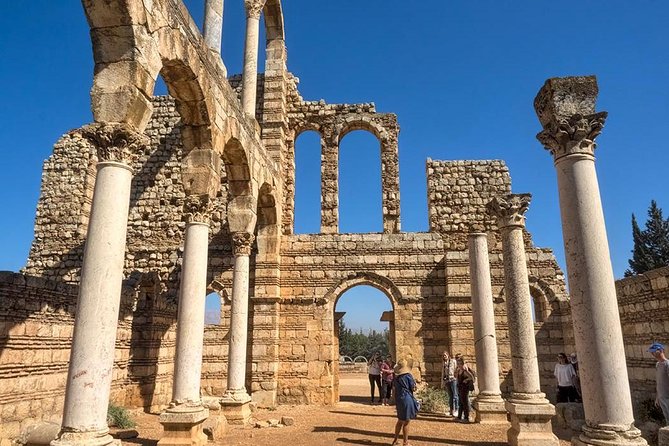
After Baalbek, the day shifts gears. You’ll head to Anjar, and this stop is a great way to avoid history overload by repetition. Baalbek screams Roman scale; Anjar gives you a clearer sense of city planning—more walls, gates, arcades, and an urban layout you can imagine living inside.
Before you even reach the showpiece ruins, you have time to stretch your legs and look around Anjar’s souks. It’s not about shopping for hours. It’s about getting your bearings and feeling the place as a lived town, not only a museum site.
Then comes the Umayyad ruins: remnants of an 8th-century palace-city ruled by the Umayyad dynasty. The complex is filled with ruined temples and structures, and many elements are built with Hellenistic and Roman-style influence. That mix matters. It shows how power and taste traveled through the region rather than staying locked into one style.
This is also where the guide’s job becomes especially valuable. With the architecture’s mix of references, you’ll understand more of what you’re seeing if someone explains how gates, arcades, and courtyards fit together. Without that, you can still enjoy the setting, but you may miss why the design feels so deliberate.
Practical note: Anjar isn’t billed as a strenuous hike, but you will walk among uneven ruins. If you have moderate physical limits, this tour is still a reasonable fit, especially because it stays organized between stops.
Lebanese mezze lunch near Zahle: Fueling the afternoon without slowing it down
Lunch is set up for efficiency and flavor: Lebanese mezze (small dishes) with a main dish, plus fruits or dessert and a soft drink. It’s included, and it’s timed so you don’t reach Ksara tired and irritable.
I like that the lunch is not an afterthought. In a day like this—Roman temples, Umayyad ruins, then wine caves—food at the right moment keeps the energy up for the final leg. You’re not stuck trying to find something fast in an unfamiliar area while your schedule punishes you.
Also, there’s a real advantage to this being a local restaurant meal rather than a generic stop. You get the sense that you’re eating what people actually eat when they’re not accommodating tourists’ tight timetables.
One more detail I appreciate: the included meal has variety. In at least one group experience, people reported that even vegan preferences were handled well. I can’t promise every single day will match every dietary need, but it’s a good sign that the meal isn’t just one safe, repetitive option.
Ksara Caves and Chateau Ksara: Wine tasting with real underground context
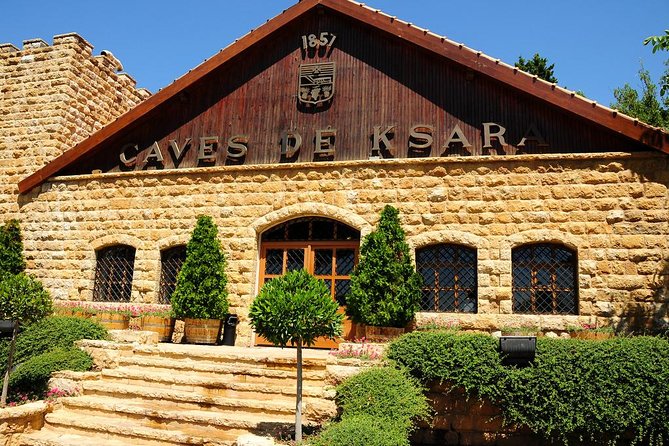
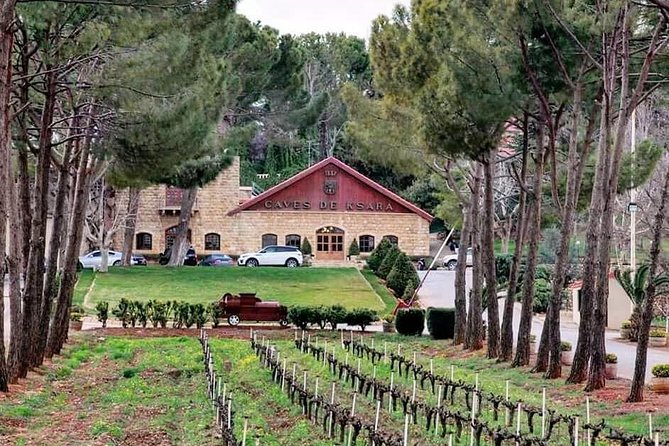
Then you’re off to the Bekaa Valley and Ksara, where the mood changes immediately. Instead of bright ruins, you’re heading into caverns that were discovered in 1898 and are used today by Chateau Ksara, described as Lebanon’s oldest wine estate.
The cave setting does something smart for the visit. It gives you a break from heat and sun, and it turns wine history from abstract into physical reality. Seeing and learning how the caves are used as cellars connects production to place, not just to marketing.
At Ksara, the winery tour covers the process and the logic behind storage and aging underground. You’ll also learn what it means to have thousands of bottles stored in cave cellars. That’s not just an impressive number—it’s a reminder that this is infrastructure, not a gimmick.
Wine tasting is included as part of the Chateau experience. If you like tasting rooms, this is a satisfying finish to the day because it ends with a sensory payoff rather than more stone and signage.
Practical note: Caves can feel cooler than outside. Bring a light layer so you don’t go from hot coach to chilly caverns and feel uncomfortable.
Coach comfort, timing, and why group size matters more than you think
This is a full-day outing around three major sites, and the coach ride is a real part of the experience. The vehicle is air-conditioned, and you get bottled water and WiFi on board, plus 4G on board (handy for maps, messaging, and checking plans back home). In my view, that connectivity matters on long days because it helps you stay calm and organized instead of feeling cut off.
The day starts at 8:30 am, ending back at the meeting point. Pickup is available for hotel stays within Beirut city (not for hostels, Airbnb, or private apartments). If you’re not getting pickup, you’ll want to be at the meeting point on time so you don’t feel rushed.
Group size is capped at 25, which is a plus for logistics. Still, it’s worth knowing that in a day with multiple departures and security checks, the more people in the group, the more your timing depends on the slowest moment—boarding, lining up, or moving from one area to the next. You’ll still have a guided flow, but if you’re very sensitive to delays, this is the part to manage expectations around.
A final pro move: use the coach time. If the guide includes commentary between stops, it can make the sites hit harder. When you understand what you’re seeing before you arrive, you get more out of the few hours you’re on-site.
Guides and how the day feels when someone explains what you’re seeing
The difference between a decent tour and a great one is often the guide’s ability to make the day cohere. With this outing, you’ll have a professional licensed guide speaking English and French all day, and that matters because the stops cover different civilizations in one shot.
From past departures, guides such as Natasha, Lucy, Fadi, and Waleed have been mentioned for their mix of friendliness and depth. The best part is that the guide doesn’t just recite dates. You’ll hear practical context and vivid explanations, including the big Baalbek stone-transport puzzle and how Anjar’s Umayyad layout fits into wider regional influences.
There’s also a behind-the-scenes element you may not notice until it’s needed: handling traffic. One account describes the driver using a clever maneuver to escape a traffic gridlock. In other words, you’re not just riding; the team actively protects the schedule.
What you get for the price: Is $95 good value?
At $95 per person, this trip is priced like a full package for a reason. You’re paying for a full day of transportation, a licensed guide, entrance fees to the listed sites, lunch, bottled water, and connectivity (WiFi and 4G on board). Wine tasting at Chateau Ksara is also included.
The value angle for me is simple: you’re buying convenience and guided access across several major sites that are spread out. Doing this on your own means coordinating transport, tickets, and timing for Baalbek, Anjar, and Ksara—plus finding lunch that actually fits the schedule. Even if you can DIY parts of it, the day becomes harder than it looks.
This is also a good value choice if you’re short on time in Beirut and want a structured route into Lebanon’s historical heartlands. You get a coherent arc: Roman monumental power, Umayyad city-life design, then a modern link to ancient winemaking.
Tips so the day feels smooth (not rushed)
Here are the things that make the biggest difference on a long coach day like this:
- Wear comfortable walking shoes. You’ll be on uneven surfaces at archaeological sites.
- Bring sunscreen and a hat. The open areas at Baalbek can feel exposed.
- Carry a small layer for the caves. Ksara caves can feel cooler than you expect.
- Go into lunch with an open mind. Mezze means you’ll get multiple small dishes before the main.
- Plan for a real day. This is a 9-hour outing, so eat light earlier if you tend to feel heavy after big meals.
Should you book the Anjar, Baalbek & Ksara day trip?
I’d book this if you want one day that covers three Lebanon highlights with minimal hassle: Baalbek’s Roman temples, Anjar’s Umayyad ruins, and Chateau Ksara’s cave cellars with tasting. The tour also helps you avoid common DIY headaches—entrance fees, timing, and a guide to connect what you’re seeing.
Skip it or consider another format if you hate long coach days, or if you need lots of free time with no group structure. The sites are worth it, but the schedule is still a schedule.
If you’re visiting Beirut and want a high-impact, history-and-culture day that ends with something you can taste, this is a strong choice.
FAQ
How long is the trip?
It runs for about 9 hours.
What time does the tour start?
The start time is 8:30 am, and it returns to the meeting point at the end.
Is lunch included?
Yes. Lunch is included as a set menu of Lebanese mezze, a main dish, fruits or dessert, and one soft drink.
Are entrance fees included?
Yes. Entrance fees to all the sites in the program are included.
Do we get wine tasting at Ksara?
Yes. The Chateau Ksara visit includes a winery tour and wine tasting.
Is hotel pickup available in Beirut?
Pickup is included for guests staying in hotels located within Beirut city. It is not offered for hostels, Airbnb, or private apartments.
What happens if the tour is canceled due to weather or minimum travelers?
This experience is non-refundable and cannot be changed, but if it’s canceled due to poor weather you’ll be offered a different date or a full refund. If the minimum number of travelers isn’t met, you’ll also be offered a different date or a full refund.