REVIEW · BANGKOK
Angkor Wat 3-Day Tour from Bangkok
Book on Viator →Operated by Angkor Partner Travel &Tours - APTT · Bookable on Viator
Temples plus border chaos, all in three days.
This private Angkor Wat trip strings together two major parts of Cambodia: the awe of the Angkor complex and a real look at life on Tonle Sap Lake. I like that you get a licensed guide doing the talking, not just driving and dropping you off.
My favorite part is the pacing and comfort for such a long route. You’re in an air-conditioned vehicle for the big stretches, then you have two nights in a 4-star hotel with breakfast, plus the afternoon floating village on Day 1.
One consideration: the Poipet border crossing can be slow and stressful, and delays can stack with holiday crowds. If you hate uncertainty, this is the section you’ll want to plan around.
In This Review
- Key points to know before you go
- Bangkok to Siem Reap: what your “3-day” really includes
- Poipet border crossing: how to keep it from eating your whole day
- Chong Kneas Floating Village on Tonle Sap: the “different Cambodia” moment
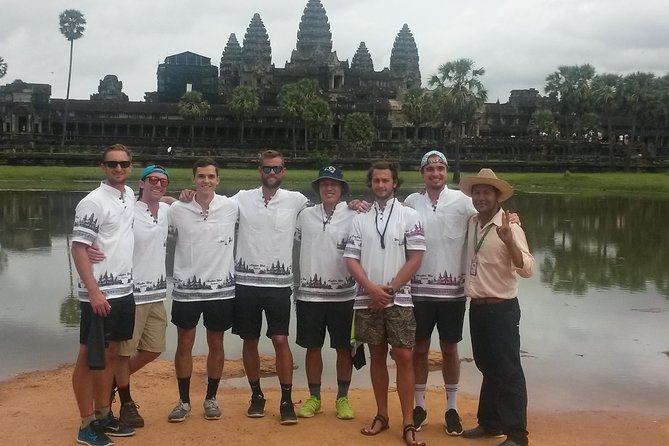
- Angkor Wat: scale, story, and why timing can matter
- Angkor Thom South Gate to Bayon faces: your “walk-through-the-empire” feeling
- Preah Khan and Ta Prohm: the stones you’ll actually remember
- Siem Reap hotel + free evening time: practical downtime after temples
- Day 3 return to Bangkok: manage the border and the long ride home
- Price and value: is $490 worth it?
- Should you book this Angkor Wat 3-day tour from Bangkok?
- FAQ
- Where does the tour start and end?
- How long is the Angkor Wat 3-day tour?
- How much does it cost?
- What’s included in the price?
- Is the tour private?
- What’s not included?
- Do I need a visa for Cambodia?
- Which passports get free entry?
- What should I wear to temples?
- Is transportation included?
- What tickets do I get for Angkor?
Key points to know before you go
- Door-to-hotel pickup in Bangkok or Pattaya, with private A/C transport for your party
- Border assistance at Poipet, with e-visa recommended and help through the process
- Chong Kneas Floating Village on Tonle Sap Lake by private boat, timed for sunset-area light
- Temple tickets included, so you’re not juggling lines and fees
- Angkor day is built like a circuit: Angkor Wat → Angkor Thom → Bayon → Preah Khan → Ta Prohm
- 4-star Siem Reap base with breakfast, giving you evening time to roam Pub Street and markets
Bangkok to Siem Reap: what your “3-day” really includes
This tour is really a road trip with a purpose. Day 1 starts early, then you drive from Thailand to Poipet, cross into Cambodia, continue on to Siem Reap, and still squeeze in a boat ride to the floating village. By the time you’re done, you’ll feel like you traveled all day, even though you haven’t seen Angkor yet.
Day 2 is the main temple day and it’s a long, hot one. You’ll hit the big names in a logical order: Angkor Wat first, then Angkor Thom South Gate, Bayon, Preah Khan, and Ta Prohm. Most people leave this kind of day tired but happy, mostly because the guide helps you notice what you’d otherwise miss in plain sight.
Day 3 is transfer day back to Thailand after breakfast. You’ll be back in Bangkok or Pattaya or Koh Chang, depending on where you started. The temple excitement is great, but plan for the trip home to bring you right back to logistics mode.
You can also read our reviews of more tours and experiences in Bangkok.
Poipet border crossing: how to keep it from eating your whole day
The tour handles the big structure of the crossing, but you should still expect friction. You arrive at Poi Pet Border / Entry Cambodia around late morning, and Cambodia visa is not included, so you need to be ready with the right documentation.
If you’re using the recommended option, apply for a Cambodia e-visa online and print two copies. The tour also notes you can do visa on arrival at Poipet, but you’ll need one ordinary photo. The border process is where reviews show the widest range of experiences, from smooth handling to long waits and confusion about where to stand.
A pattern shows up in the feedback: holidays can slow everything down. People reported longer Thai-side lines during busy periods, including Chinese New Year. That’s not something a driver can fix. What you can do is keep your expectations flexible and arrive with patience.
Tip that will help you: pack your passport, e-visa prints, and a pen in one easy-to-reach spot. When the border is crowded, anything that reduces rummaging lowers your stress level fast.
Chong Kneas Floating Village on Tonle Sap: the “different Cambodia” moment
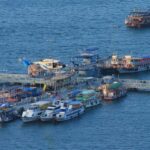
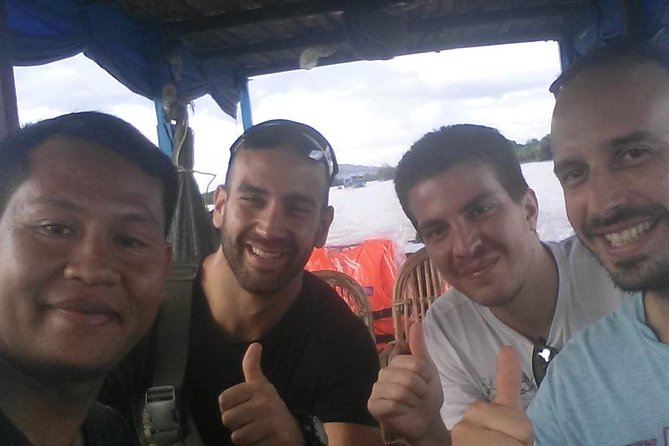
Day 1’s standout is the afternoon boat trip to Chong Kneas Floating Village on Tonle Sap Lake. It’s not just scenery. This is a working way of life shaped by seasonal water levels, and seeing it from the water changes how you understand the region.
The tour includes the private boat component, and you’ll return to your Siem Reap hotel in the early evening. Reviews often describe the timing as part of the charm, with the experience feeling calmer and more personal than big-ticket temple sightseeing.
What to know before you go: you’ll be on a boat, so bring sun protection. Your hotel day schedule is also tight, so you won’t have time to “find” what you need later. Bring water and keep it accessible.
This stop balances the intensity of Angkor. One day you’re among carvings and corridors of stone. The next, you’re looking at daily life on the lake. That contrast is a big reason this 3-day format works better than squeezing everything into 2 days.
Angkor Wat: scale, story, and why timing can matter
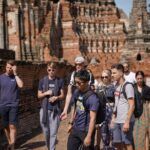
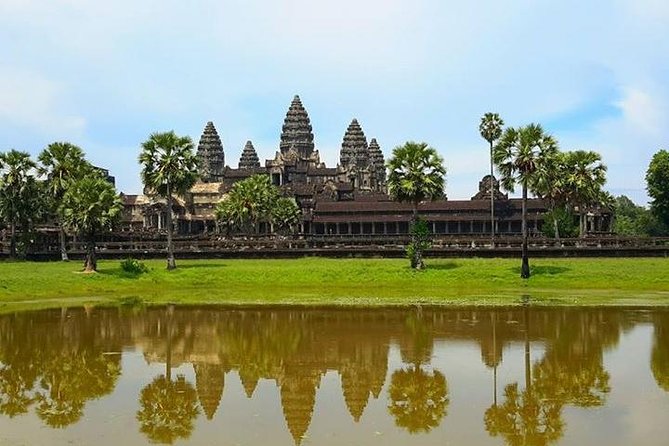
Angkor Wat is the main event, and the tour gives it real time—about 2 hours. You also get temple tickets included, which saves you from the practical hassle of ticketing on the ground. The guide’s role here is huge: the temple’s size is so big that without context, you can walk past meaning without noticing.
One recurring theme in guide feedback is how much people appreciated being pointed to the details in carvings and layouts. Guides like Mr Saruon and Rhak were praised for explaining the stories behind what you’re seeing, from Hindu to Buddhist themes represented in the stone work. Even when English wasn’t perfect for every driver or guide, the best guiding moments were the ones that connected the carvings to why they were placed there.
Can you build in early morning? One review mentioned an optional sunrise start that was especially memorable. The provided schedule shows Angkor Wat on Day 2, not sunrise as a guarantee. If you really want sunrise light, ask in advance what start-time options exist for your specific dates.
Dress code matters here. The tour notes that short dress won’t be allowed at temples. It’s an easy rule to follow: bring something that covers shoulders and knees, especially when you’re making temple-to-temple transitions in the heat.
Angkor Thom South Gate to Bayon faces: your “walk-through-the-empire” feeling
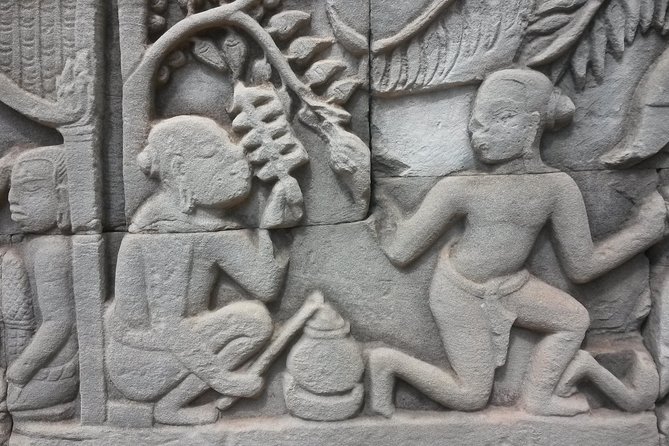
After Angkor Wat, you’ll shift to Angkor Thom South Gate for about 1 hour. This is where you start to feel the bigger “city” concept of Angkor, not just one temple complex. Think of it as a threshold into a whole sacred layout, with a strong visual punch.
Next is Bayon Temple (about 1 hour). Bayon is famous for its face towers, but what people tend to love most is how the guide ties those expressions to the Khmer worldview and the era that built them. Reviews praised guides such as Sothy (Mr Sothy / Mr T) and Bunrong for handling the day like a story, not a stamp-collection.
If you prefer a relaxed pace, this segment is your friend. It’s still intense, but it’s built for walking, pausing for photos, and asking questions. The heat can be real, so you’ll want to use breaks strategically and keep water on hand.



Preah Khan and Ta Prohm: the stones you’ll actually remember
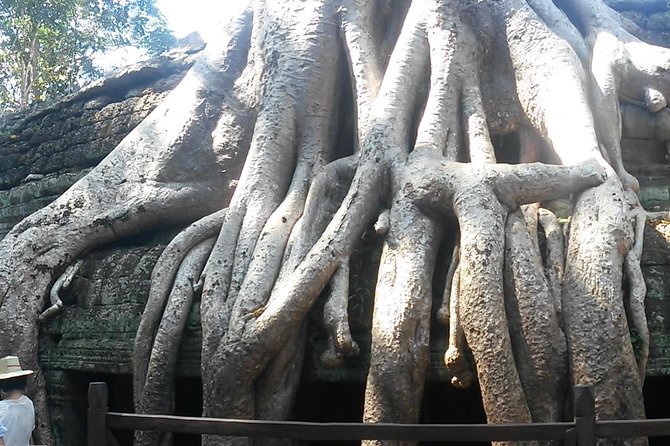
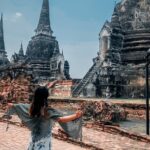
Then comes Preah Khan (about 1 hour). This is one of those stops where the temple feels less like a single postcard and more like a lived-in ruin—still dramatic, but with a different mood than Angkor Wat. The tour keeps moving, but the guide time helps you notice architecture and layout instead of just looking up.
Finally, you’ll reach Ta Prohm (about 1 hour). It’s often the most visually dramatic stop on these circuits because it’s visually iconic—stone and roots tangled together. You’ll want to slow down here for photos, because the angles make a difference and it’s easy to feel rushed.
One more thing: the temple day is long. Multiple reviews pointed out that the days were very hot, and the best part of the day was having the car ready and cool between stops. Bring a hat, use sunscreen, and plan to take shade whenever you can.
For many people, this end-of-day pair (Preah Khan plus Ta Prohm) is where the memory sticks. It’s not only because of how the temples look, but because you’ve built context by then.
Siem Reap hotel + free evening time: practical downtime after temples
You get two nights in a 4-star hotel with breakfast. This matters more than it sounds, because after a long travel day and a hot temple day, you don’t want a bare-bones place. Reviews repeatedly mention comfortable rooms and solid breakfasts, and one review described the hotel as a clear step up from what they expected.
The tour’s evening structure gives you room to reset. After the floating village day, you’ll have time to explore Pub Street, restaurants, and a night market area. After the full temple day, you’ll also have that downtime to do your own thing, like finding a massage or just letting your feet recover.
A small but important detail: you’ll be busy, but you’re not trapped on a fixed schedule every hour. That “off switch” is part of what makes 3 days feel more humane than 2.
Day 3 return to Bangkok: manage the border and the long ride home
After breakfast on Day 3, you’ll check out and transfer back to Thailand. The tour notes you’ll be returning to Bangkok or Pattaya or Koh Chang. Expect another round of border processing, and expect it to be the roughest part if crowds build up.
Reviews highlight traffic and long queues during peak holiday periods. Some people said the return felt smooth; others reported getting stuck in long lines on the way back into Thailand. If you have a flight later that day, this is the place to leave a bigger buffer than you think you need.
The best strategy is simple: travel light, keep your key documents ready, and plan to snack. The tour includes temple tickets and transport, but lunch and dinner are not included, so having a plan for meals helps you avoid last-minute stress when the schedule shifts.
And yes, you’ll likely see more of Thailand’s countryside from the road than you bargained for, which can be a pleasant distraction if you settle in for the ride.
Price and value: is $490 worth it?
At $490 per person, the price feels steep on paper. But you’re not just paying for entry tickets to Angkor. You’re paying for the whole “door to door” machine: hotel for two nights, breakfast, licensed guide, temple tickets, and private A/C transport plus the floating village boat portion.
Here’s the value logic. A lot of travelers underestimate how much effort it takes to manage a border crossing plus a temple circuit plus a hotel base. Doing it yourself can be cheaper, but you give up the time saved by having someone coordinate the flow and keep you on track.
On the other hand, you’re also buying into the reality that this is a long road transfer. If you strongly dislike border uncertainty or you’re sensitive to delays, a higher-cost option like flying can make the experience smoother. That’s not a knock on the tour. It’s just choosing what kind of stress you want.
So who gets the best value? People who want structure and local guidance, and who are okay with the fact that Poipet is the wildcard.
Should you book this Angkor Wat 3-day tour from Bangkok?
Book it if you want one guided, organized package that covers Angkor Wat plus multiple surrounding temples, includes two hotel nights, and doesn’t make you manage tickets and transfers solo. If you like talking with guides and you want help reading what you’re looking at, the guide experience is often the difference between a good day and a memorable one.
Skip or reconsider if your biggest priority is avoiding border slowdowns. Also think twice if you’re traveling with a very tight timeline back to Thailand, since holiday crowds can stretch the lines.
If you do book, do one thing that helps a lot: prepare for the border with the required e-visa prints (two copies) or the right plan for visa on arrival. That single detail can turn chaos into calm faster than you’d think.
FAQ
Where does the tour start and end?
The tour starts and ends in Bangkok, Thailand. Hotel pickup is offered from any hotel in Bangkok or Pattaya, and the return transfer is back to Bangkok or Pattaya or Koh Chang depending on your starting point.
How long is the Angkor Wat 3-day tour?
It runs for 3 days (approx.).
How much does it cost?
The price is $490.00 per person.
What’s included in the price?
Included are hotel pickup and drop-off, a private tour by air-conditioned vehicle, 2 nights of accommodation at a 4-star hotel with breakfast, a licensed tour guide, and temples tickets.
Is the tour private?
It’s described as a private tour for just you and your party. The maximum group size listed is up to 15 pax, with a minimum of 1 pax.
What’s not included?
Visa to Cambodia, lunch and dinner, and other personal expenses are not included.
Do I need a visa for Cambodia?
Yes. The tour notes Cambodia visa is not included. You can apply for an e-Visa online and print two copies, or you can do visa on arrival at Poi Pet border with one ordinary photo.
Which passports get free entry?
For ASEAN countries, the tour states you get a free visa to Cambodia for 30 days.
What should I wear to temples?
Short dress won’t be allowed at temples. Plan for clothing that covers appropriately for temple entry.
Is transportation included?
Yes. You’ll travel by private air-conditioned vehicle, and the floating village stop includes a private boat on Tonle Sap Lake.
What tickets do I get for Angkor?
Temples tickets are included in the tour price, and the tour also notes you’ll receive a mobile ticket.