REVIEW · KRAKOW
1 Day Trip Auschwitz Birkenau and Salt Mines with Hotel Transfer
Book on Viator →Operated by Krakow Tours by KrakowDirect · Bookable on Viator
Two UNESCO sites. One long, unforgettable day. You start with hotel transfer from Krakow, watch The Liberation of Auschwitz on the ride, and use headsets on your Auschwitz walk.
I especially love how the camps are led with museum-licensed guidance and clear audio, plus the day’s contrast when you head underground into the Wieliczka Salt Mine with salt-carved chambers and sculptures. The one real drawback is the physical load: expect a lot of walking and big stair counts, and the salt mine routes can feel tight.
In This Review
- Key things I’d clock before you go
- Krakow to the Camps: Hotel Pickup, Film on the Van, and Real Timing
- Auschwitz-Birkenau: Gate Access, Headsets, and a Museum-Licensed Guide
- Auschwitz I to Birkenau: What You’re Seeing and Why the Order Matters
- How the Day Can Feel Long: Walking Distance, Weather, and Lunch Timing
- Wieliczka Salt Mine: Underground Stairs, Salt Sculpture, and a Cooler Temperature
- Timing the Salt Mine Tour: 4pm or 5pm Slots and Road Conditions
- What the Price Really Covers: Value in Transport, Tickets, Guides, and Headsets
- Comfort and Control: Group Size, Equipment, and Real-World Organization
- Who Should Book This Combo Day (and Who Might Want Another Option)
- The Booking Trap to Avoid: Make Sure You’re Getting the Auschwitz + Salt Mine Option
- Should You Book This Auschwitz and Wieliczka Day Trip?
- FAQ
- How long is the Auschwitz-Birkenau and Wieliczka Salt Mine day trip?
- Do I get hotel pickup and drop-off in Krakow?
- Are entrance fees included?
- Is the tour in English?
- Do I need my passport or ID for Auschwitz-Birkenau?
- How many stairs will I face at the salt mine?
- What’s the group size?
Key things I’d clock before you go
- Hotel pickup and air-conditioned transport from central Krakow make the day feel organized.
- Museum headsets help you hear every word during the Auschwitz visits.
- A licensed Auschwitz-Birkenau guide runs the camp narration, with tightly managed group sizes.
- Birkenau plus Auschwitz I in one day gives you the full “why it mattered” geography of the camps.
- Wieliczka down to about 140 meters with hundreds of stairs and cool underground temperatures.
- Entrance fees and skip-the-line tickets are handled for you, so you spend less time sorting logistics.
Krakow to the Camps: Hotel Pickup, Film on the Van, and Real Timing
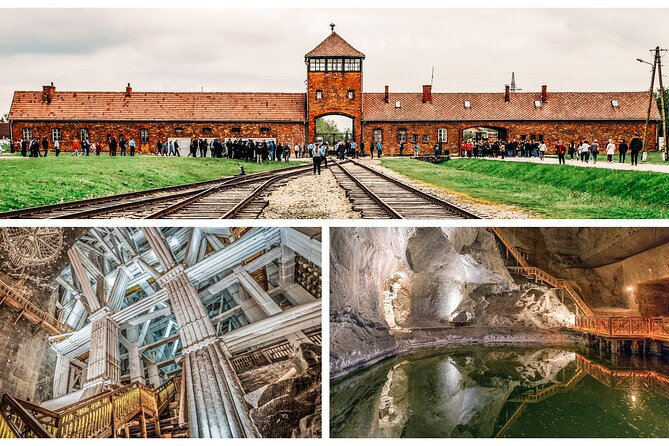
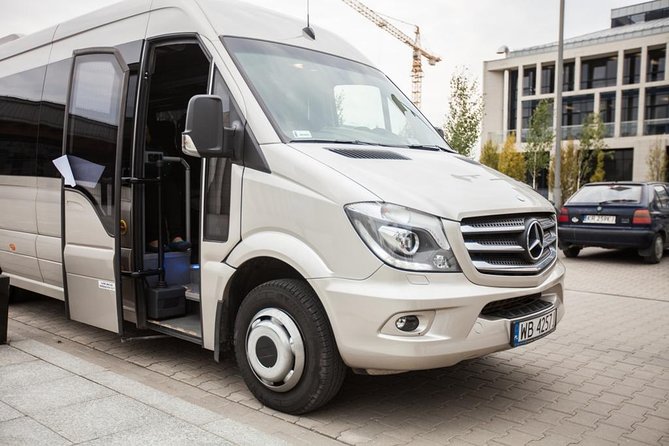
This is one of those Krakow day trips that starts easy and stays that way. In the morning, you meet a driver at your hotel (or a listed meeting point, depending on what you selected) and board an air-conditioned Mercedes-Benz minivan or minibus. Pickup times are confirmed the day before, but they can shift due to the museum schedule and traffic.
On the ride toward Oswiecim, you’ll watch The Liberation of Auschwitz, a short documentary that includes footage from the Soviet soldiers who liberated the camp. It’s not there to entertain you. It’s there to frame what you’re about to see, so the morning hits with context instead of just shock.
You’ll drive about 1 hour 15 minutes each way. Before you enter the museum complex, there’s usually a brief break to grab a coffee and fresh air, plus time for the outdoor exhibitions near the entrance area.
You can also read our reviews of more tours and experiences in Krakow.

Auschwitz-Birkenau: Gate Access, Headsets, and a Museum-Licensed Guide
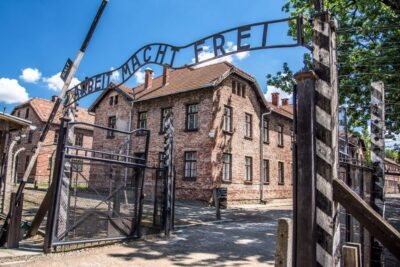
Once you arrive, the experience becomes structured in a way that helps your brain keep up. Your Auschwitz-Birkenau segment begins with walking through the gate of Auschwitz I and passing under the sign that reads Arbeit Macht Frei. You’ll follow a licensed, professional guide, and you’ll wear headsets so your group can hear clearly as you move.
This is also where you’ll notice how tightly controlled the visit is. The museum limits group size (up to 30), and that’s a big deal. Smaller groups mean fewer interruptions, less crowd pressure, and a better chance you can actually understand what’s being explained.
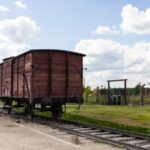
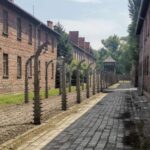
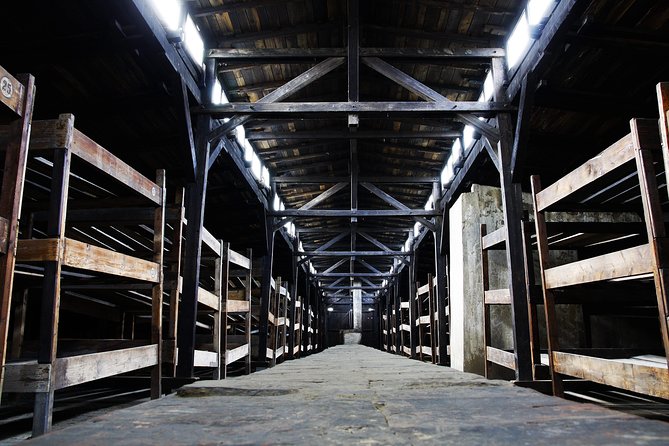
You’ll see original sites like wooden barracks, fortified walls, barbed wire fences, and the infrastructure tied to mass killing. The tour typically focuses on Auschwitz I for about two hours, then you’ll get a short break before heading to Birkenau.
One practical thing you should not skip: for Auschwitz-Birkenau, you must bring your passport or ID. The museum requires personal details to be confirmed at the entrance. If you forget it, entry can be denied.
Auschwitz I to Birkenau: What You’re Seeing and Why the Order Matters
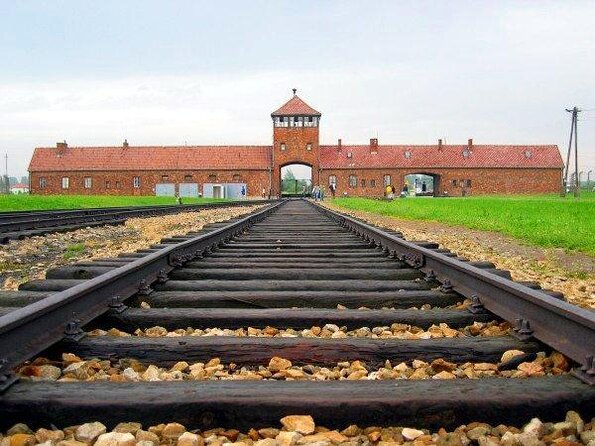
After the first camp portion, you move on to Birkenau (Auschwitz II), which is close by—just a few minutes from Auschwitz I. Birkenau is the larger camp, and your guide continues the story there with specifics about Nazi planning and the camp’s design. This is where the tour’s “map” clicks for many people: you start to understand the scale and how everything was set up for systematic persecution.
Birkenau was built and operated with the aim of making Europe Judenrein. It was constructed in 1941 under orders connected to SS commander Heinrich Himmler, and it could hold around 90,000 prisoners. Your guide explains the brutal living conditions, the selection process, and the pseudo-scientific medical experiments carried out by Nazi doctors, including Josef Mengele.
The walking route at Birkenau is emotionally intense for obvious reasons, but it also helps that it’s guided. You’re not left alone with random facts—you’re given a narrative you can follow while you stand in the remains of the camp’s machinery. The tour ends with a liberation story, including the opening of the gates on January 27, 1945 by soldiers from the 60th Army of the First Ukrainian Front.
One consideration: this is not a “take your time and wander” kind of site. The day runs on museum schedules and group slots, so you’ll move with purpose. For some people, that pacing helps. For others, it can feel brisk. Plan to accept that the tour controls tempo, not you.
How the Day Can Feel Long: Walking Distance, Weather, and Lunch Timing
This tour is about depth, not rest. The day clock is long (about 10 hours 30 minutes total), and both sites require steady walking on uneven surfaces and through large complexes.
If you’re going in colder months, dress like you mean it. Even if the weather looks calm in Krakow, the camp area can feel harsher, and wind can turn an otherwise tolerable day into a chilly one. Good footwear matters, because you’ll be on your feet for hours.
Lunch is handled as a break at the salt mine area later in the day. There’s also about an hour break before your underground tour for coffee, quick groceries, or just sitting down and resetting. If you’re the type who needs a long sit-down meal to feel human again, you’ll want to manage expectations here: this is structured around the sights and the ticketed time slots.
Wieliczka Salt Mine: Underground Stairs, Salt Sculpture, and a Cooler Temperature

After Auschwitz, you transfer to Wieliczka Salt Mine, one of the oldest working salt mines in the world. You’ll stop with time to breathe—usually about an hour for coffee or a light purchase—then head into the ticketed underground tour.
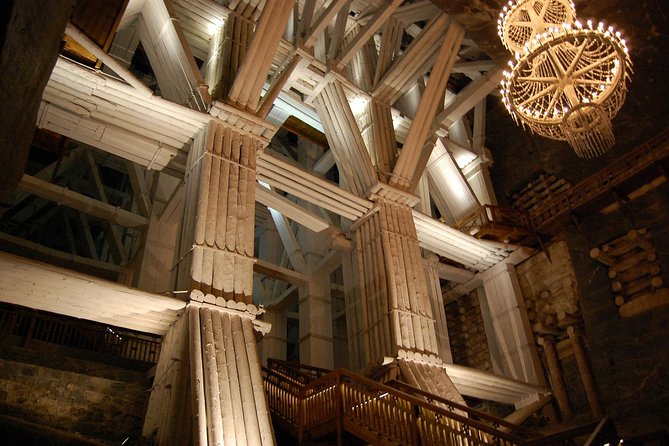
This mine is UNESCO-listed and tied to salt production that goes back more than 700 years. The guided tour takes you up to about 140 meters underground. Your visit includes a route that runs for about 2.5 km, with chambers and areas featuring impressive salt carvings and sculptures in glistening white.
The guided portion is roughly 2.5 hours, and you’ll go through more than 2.5 km of the tourist route at underground level. That’s a good chunk of time to be moving slowly through big open spaces and then walking connecting sections.
Two practical realities you should plan for:
- The temperature underground is around 59°F (about 15°C), so bring a layer even if Krakow is warm.
- The descent itself involves about 400 steps down, and the full tourist route includes over 800 stairs total.
Also, once you’re underground, you can’t simply shorten the visit and turn back. It’s one continuous route with set points. If that sounds stressful, consider your comfort level with stair-heavy sightseeing.
And if you’re traveling with kids: Wieliczka allows children, but they need to be able to walk unassisted or be carried in baby slings/carriers. Baby pushchairs are not allowed underground.

Timing the Salt Mine Tour: 4pm or 5pm Slots and Road Conditions
Your salt mine tour time is usually scheduled at either 4pm or 5pm, depending on road conditions. That means you’re not choosing your exact entry time, and your evening might be shaped by traffic and the day’s earlier schedule.
This is still a good thing, overall. The mine is a timed experience, and being flexible is what keeps everything smooth—especially since the Auschwitz visit is on a fixed museum timetable.
You’ll typically have a coffee/rest window before the guided underground tour, which makes the 2.5-hour underground portion more doable. Think of that hour as your buffer to regroup.
What the Price Really Covers: Value in Transport, Tickets, Guides, and Headsets
At $117.30 per person, you’re buying a lot more than two attractions. You’re paying for:
- Transportation from central Krakow to both sites and back in an air-conditioned vehicle
- Guaranteed skip-the-line entrance tickets
- Professional guiding with headsets for the Auschwitz section
- Licensed guidance at Auschwitz-Birkenau
- Entrance fees handled for you (including Auschwitz-Birkenau entry for the Auschwitz option)
- The onboard documentary screening plus insurance
- Pickup included via hotel transfer options (if selected)
That value shows up in one big way: you lose less time to logistics. You’re not hunting ticket counters, booking separate transfers, or coordinating timing between sites yourself. For a day this long, shaving off friction can matter as much as the sights.
The one cost you need to plan for is personal spending: food and drinks are not included. Bring a simple plan for snacks or a few funds for what you want during the breaks.
Comfort and Control: Group Size, Equipment, and Real-World Organization
This tour runs with a maximum of 35 travelers overall. Inside the Auschwitz museum, regulations keep groups to 30, and that tends to make the experience feel more controlled than the “big bus, big crowd, no context” style of sightseeing.
You’ll travel with an English-speaking group leader who helps with day flow, and at Auschwitz you’ll have an officially licensed local guide. Headsets are provided for the Auschwitz walking tour, which is one of those small things that can seriously change your experience. When you can hear clearly, you don’t spend the day reading your guide’s lips and hoping.
If you get a guiding team similar to the ones praised in real-world feedback, you can expect a clear, structured narrative. Names that have shown up include Mihael for Auschwitz-Birkenau, and drivers like Pioter, Peter, Thomas, and Gregory were highlighted for friendly, smooth operations. You might not get the same team, but the standard described is the same: good communication and careful pacing.
Who Should Book This Combo Day (and Who Might Want Another Option)
This fits best if you want a single, pre-planned day that hits both UNESCO sites from Krakow without hassle. You’ll enjoy it most if you’re comfortable with:
- A long day (about 10.5 hours)
- Lots of walking
- Stair-heavy sightseeing in the salt mine
It also makes sense if you like guided context, especially for Auschwitz-Birkenau, where you really benefit from a clear narrative and museum-grade guidance.
It might be a rough match if you have limited stamina or trouble with stairs. The salt mine alone includes about 400 steps down, plus over 800 stairs on the route, and the underground paths can feel tight. The tour also notes moderate physical fitness as a requirement.
The Booking Trap to Avoid: Make Sure You’re Getting the Auschwitz + Salt Mine Option
One risk with day trips from Krakow is confusion between similarly titled options. This provider offers a combined option (Auschwitz-Birkenau plus Wieliczka Salt Mine) and also a salt mine-only option. Your voucher should clearly match what you think you booked.
Before you go, take 30 seconds and check your selected option name. If you accidentally book salt mines only, you won’t get the Auschwitz-Birkenau visit—even if the overall product title looks like a combo.
This is one of those times when reading the exact option matters more than the headline on the search results.
Should You Book This Auschwitz and Wieliczka Day Trip?
I’d book it if you want a well-organized, guided day with transport plus skip-the-line tickets, and if you’re ready for a serious morning followed by an unexpectedly beautiful underground afternoon. The salt mine portion brings a strong contrast, and the headsets plus museum-licensed guidance at Auschwitz make the morning easier to follow than a self-guided visit.
I would hesitate only if stairs and long walking are a deal-breaker for you, or if you know you’ll struggle with a tightly scheduled, museum-timed day. This tour doesn’t let you linger for your own rhythm—it runs on the sites’ rules.
If you go, dress for the weather, bring your passport/ID, and wear shoes that can handle uneven ground. Then let the day do its job: educate you, unsettle you, and leave you with a clearer understanding of why these places must be remembered.
FAQ
How long is the Auschwitz-Birkenau and Wieliczka Salt Mine day trip?
It runs for about 10 hours 30 minutes (approx.).
Do I get hotel pickup and drop-off in Krakow?
Pickup is offered, including at your Krakow hotel if that option is selected. The exact pickup time is confirmed the day before, and the tour ends back at the meeting point.
Are entrance fees included?
Yes. Entrance tickets are included for Auschwitz-Birkenau (for the Auschwitz option) and for the Wieliczka Salt Mine. Skip-the-line tickets are also included.
Is the tour in English?
The tour is offered in English.
Do I need my passport or ID for Auschwitz-Birkenau?
Yes. You’re required to bring a passport or ID to confirm personal details at the museum entrance.
How many stairs will I face at the salt mine?
You descend about 400 steps, and the underground tourist route features over 800 stairs total.
What’s the group size?
The tour has a maximum of 35 travelers. At Auschwitz, museum regulations limit group size to 30 people.