REVIEW · SPLIT
Split and Trogir Half Day Tour from Split (with port pickup)
Book on Viator →Operated by Croatian Trails · Bookable on Viator
Split and Trogir are the kind of places that feel bigger than they look, and this half-day tour gets you there without the hassle. I like the port pickup for cruise-day ease, and I like the mix of guided time plus breathing room to wander Trogir’s lanes. The one thing to consider is the walking: it’s not an all-stroller sit-down tour, so comfy shoes matter.
In This Review
- A smart plan, especially for a short day
- Key things to know before you go
- From the cruise berth to Old Split: how logistics actually work
- Air-conditioned comfort and the right group size
- Split’s Diocletian palace: what you can see in 20 minutes
- Trogir UNESCO: the hour that gives you context fast
- Cathedral of St. Domnius: the quick stop with a clear takeaway
- Kula Karmelengo and Prokurative: short stops, strong character
- St. Lawrence’s Cathedral in Trogir: why the end matters
- Guides make the difference: Tina, Sandra, and the story-first style
- Pace, rain, and what to wear
- Price and value: is $78.61 worth a half day?
- Should you book the Split and Trogir half-day tour?
- FAQ
- How long is the Split and Trogir half-day tour?
- What’s included in the price?
- Are admission tickets included for every stop?
- Where do I meet the tour?
- Where does the tour end?
- What time does pickup happen for cruise ships?
- Is the tour offered in English?
- What if it rains?
- Can I cancel for a full refund?
A smart plan, especially for a short day
You get an air-conditioned coach ride with live commentary, then short focused stops at the main landmarks. It’s great when you want real context fast, and it works well if you’re juggling a ship schedule. The only drawback I’d flag is timing pressure at the end—your tour finishes in central Split, and you’ll walk about 20 minutes back toward the ship terminal.
Key things to know before you go
- Port pickup and simple logistics: meeting at the cruise ship berth and ending in the city center, not back at your gate
- Air-conditioned coach + live guide: you learn while you ride, not just while you stand in place
- Trogir UNESCO in a manageable timeline: you see a lot in about an hour, with time to explore
- Entry fees aren’t uniform: some sites are free to view, while places like Diocletian’s palace and a couple of stops may require tickets
- Expect moderate walking: reviews call it a Level 2-style pace, with multiple short walks and steps
You can also read our reviews of more tours and experiences in Split.
From the cruise berth to Old Split: how logistics actually work
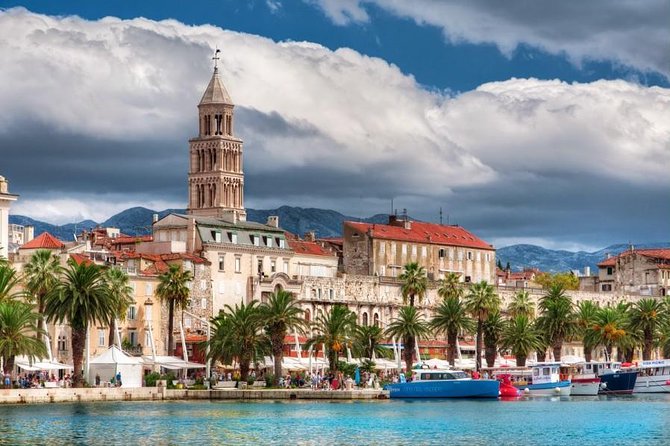
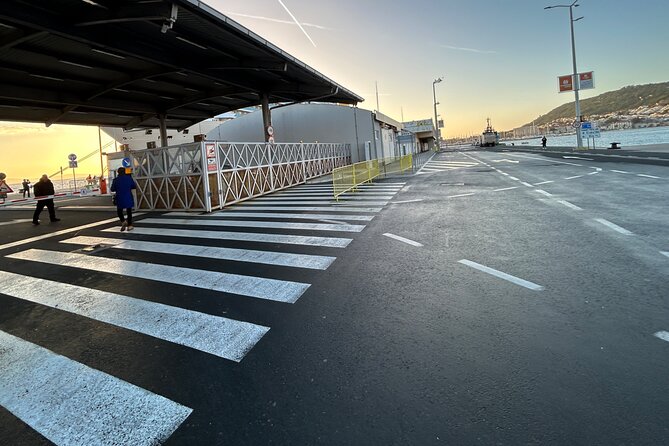
This is built for real-life port days. You meet at the New Split Berth for Cruise Ships at Obala kneza Domagoja 16, and your guide holds a sign for Croatian Trails near the ship-terminal entrance (close to the red hop-on/hop-off buses). It’s specific, and that’s good. When you’re on a cruise schedule, “generic directions” are where tours go sideways.
Pickup timing depends on when you dock and when you need to be back. If you’re arriving early (7:00–8:30 AM), pickup is at 9:00 AM. If you’re arriving later, you’ll receive exact details about a week before via Viator messaging. For non-cruise passengers, exact pickup details also arrive about a week prior.
At the end, the tour drops you back in central Split (Split Riva). The guide can help you arrange a taxi if needed, but the walk back to the ship’s terminal is about 20 minutes. If your ship is strict about re-boarding time, plan to use that time cushion.
Air-conditioned comfort and the right group size
The tour runs with a maximum of 50 travelers. That’s not a private yacht situation, but it’s often smaller than large coach crowds. The guide uses live commentary on board, so the bus ride doesn’t feel like dead time.
The coach is air-conditioned, which matters in Split’s summer heat. Even when the main stops are outdoors, the ride helps you conserve energy for the walking segments. It’s also a relief if you get a rain or wind day—because this operates in all weather and you’ll still move between sights.
Split’s Diocletian palace: what you can see in 20 minutes
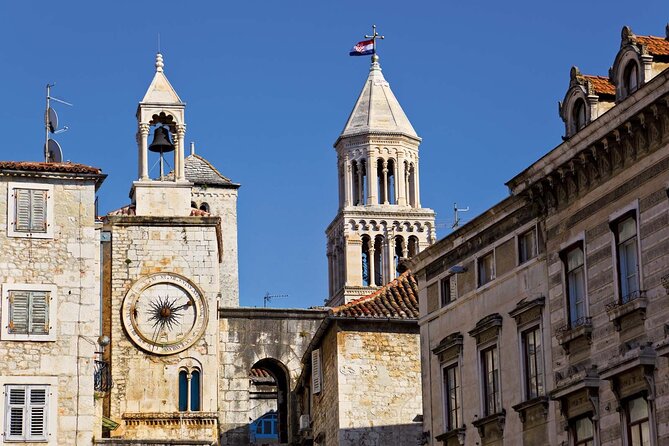
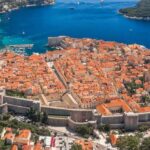
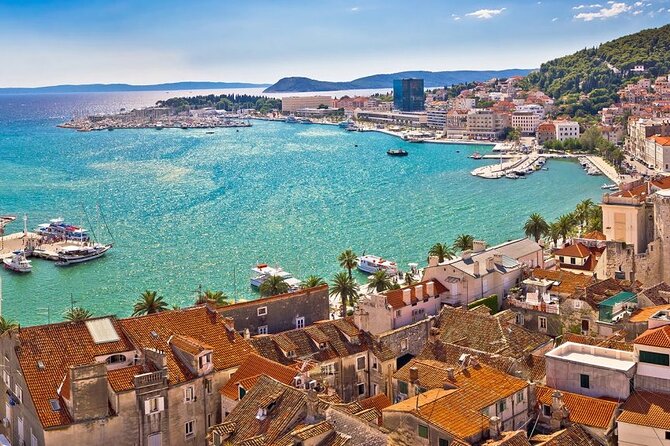
Your first major stop is Palazzo di Diocleziano, the Roman emperor Diocletian’s palace complex. Today it forms roughly half the old town and city center, so it’s not just a “building visit”—it’s the structure under many of the streets you’ll walk.
In about 20 minutes, you won’t exhaust the palace. Instead, think of it as getting oriented: where the power lived, how the space shaped the city, and why Split grew around that footprint. If you’ve only got a half day, this is a smart way to get the big-picture story without spending hours on one site.
One practical tip: wear comfortable shoes even if the stop sounds short. Palace areas and old-town streets can be uneven, and you’ll likely be walking in and out of shaded lanes and open squares.
Trogir UNESCO: the hour that gives you context fast
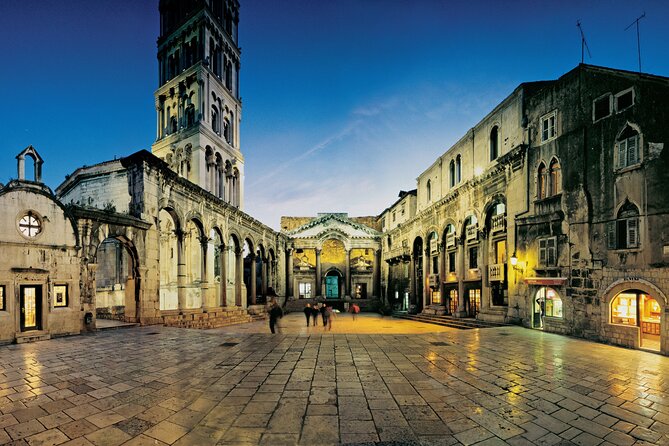
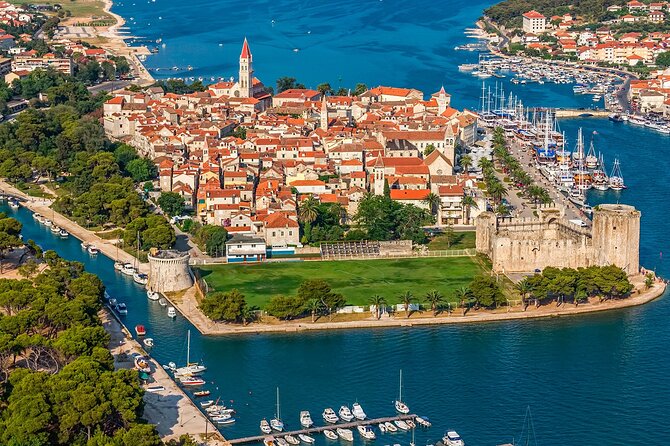
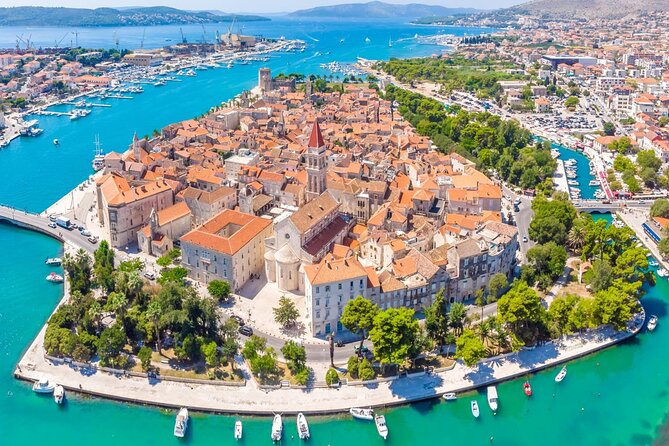
Then you head to Trogir by coach along the coast. Trogir is a UNESCO World Heritage Site with a continuous urban story going back about 2,300 years. It began with Greek colonists in the 3rd century BC, and the architecture reads like a timeline—Romanesque churches next to standout Renaissance and Baroque buildings from the Venetian period.
You get about an hour in the historic city, which is enough time to do two useful things:
- get the layout in your head (where the waterfront, church area, and main lanes connect)
- pick one or two details to focus on instead of trying to “see everything”
A big value here is that the guide’s commentary helps you understand what you’re looking at, not just what it is called. That makes your Trogir wandering feel intentional, even when you’re on your own.
Also, this is where some groups pick up food ideas. One review mentioned a gelato recommendation in Trogir—small moments like that are often what make a half-day feel like more than a checklist.

Cathedral of St. Domnius: the quick stop with a clear takeaway
Next up is the Cathedral of Saint Domnius. The guideframes it as a complex with a church formed from an Imperial Roman mausoleum, plus a bell tower. The key detail is the split dedication: the church is dedicated to the Virgin Mary, while the bell tower is dedicated to Saint Domnius.
In roughly 20 minutes, don’t try to absorb every architectural feature. Instead, use the time to spot the layers the guide talks about. When you understand that it’s not one single “style moment,” the building becomes easier to read—even at a glance.
One note for planning: admission ticket isn’t included for this stop. You can treat it as a “look-and-spot” stop if you’re trying to avoid extra fees, or as a ticketed visit if you’re ready for it.
Kula Karmelengo and Prokurative: short stops, strong character

The tour also includes a quick look at Kula Karmelengo, a mid-15th-century castle built as part of an expansion around the Veriga Tower area. It’s used for performances during the summer months, so it’s not just a static photo point. The name kamerlengo links to an Italian title (camerlengo) for an administrative official—another example of how titles and power show up in everyday place names.
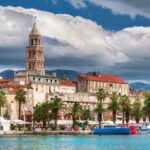
Then there’s Prokurative, built in the 19th century with supervision tied to General Marmont and initiated by Split’s mayor Antonio Bajamonti. The architecture is largely inspired by Italian styles from the construction period and is said to resemble St. Mark’s Square in Venice. One more detail that helps: the architect was from Venice and wanted something that reminded him of home.
These stops are short—about 15–20 minutes—but they’re valuable because they connect Split’s present shape to the power and cultural influence flowing through Dalmatia over centuries.
St. Lawrence’s Cathedral in Trogir: why the end matters
You finish with Saint Lawrence’s Cathedral, a Roman Catholic triple-naved basilica with Romanesque-Gothic elements. Because construction stretched across centuries, it shows styles that succeeded each other in Dalmatia.
This is one of those “don’t rush it” stops, even though it’s only listed at around 15 minutes. If you slow down for just a minute—look at how the building holds different eras together—you’ll feel like you’re getting the logic of the city, not just snapshots.
Admission ticket is listed as free for this stop, so it’s one less cost point and easier to work into your half-day pacing.
Guides make the difference: Tina, Sandra, and the story-first style
The biggest theme across the guide experience is how personal and organized the tours feel. Names that pop up in the feedback include Tina and Sandra, plus Hrvoje, Roku, Tia, and Josipa. Different personalities, same result: clear storytelling and a focus on making time for questions and needs.
Tina is described as energetic, articulate, funny, and very tuned in to the group—especially in hot weather. Sandra is noted for not rushing people and for giving practical recommendations for restaurants and shops during free time. Guides like Hrvoje and Roku are praised for strong context around Trogir and Split, and for caring that everyone’s having a good time. One guide-handling-the-weather story even mentions heavy rain without derailing the experience.
If you get paired with a guide in that style, you’ll likely enjoy the tour more than if you treat it like a photo sprint. You’re not just seeing monuments. You’re learning how the region’s history explains the streets.
Pace, rain, and what to wear
This is described as moderate physical fitness. Even with a coach and short stops, you’ll be walking multiple times on uneven old-town surfaces, and you’ll need to move efficiently between points.
One review explicitly notes “a lot of walking” and suggests a Level 2-type effort. So I’d plan like this: pack for short bursts of walking and standing, not for long uninterrupted “sit and soak” time.
It operates in all weather, and the itinerary points you’ll go out in rain. Bring a light rain layer you can actually move in. If it’s sunny, use sunscreen and a hat. Hydration matters because you won’t have a long meal break built in.
Price and value: is $78.61 worth a half day?
At $78.61 per person for about four hours, the value depends on how you prioritize logistics and interpretation. What you’re paying for here isn’t just access to sites. You’re paying for:
- port pickup (huge on cruise day)
- an air-conditioned coach
- a professional guide with live commentary
- taxes, fees, and handling included
Entry fees are not included across the board, and food and drinks aren’t included either. A couple of the stops may require tickets (like Diocletian’s palace and certain cathedral/castle locations), while others are listed as free to visit from the itinerary.
So here’s the practical way to judge it: if you would otherwise spend time figuring out transport, meeting points, and “what matters most,” this tour saves mental energy. If you already know Split and Trogir well and you hate walking in small chunks, you might prefer a do-it-yourself plan. But for most first-timers on a limited schedule, this price buys you structure plus a guide who makes the architecture make sense.
Should you book the Split and Trogir half-day tour?
Book it if you have a tight schedule, especially a cruise stop. The pickup system and the guided order make it easier to feel confident you’ll see the right things without running late.
I’d skip or reconsider if you want long stays in one site, or if you strongly dislike walking on uneven historic streets. The stops are short on purpose, and that’s part of the trade: you get breadth, not deep immersion.
One more deciding factor: you’ll likely enjoy it most if you like explanations while you look. With guides like Tina and Sandra getting standout mentions, this tour tends to deliver more than “dates and names.” It gives you reasons behind the stones.
FAQ
How long is the Split and Trogir half-day tour?
It runs about 4 hours.
What’s included in the price?
You get a professional guide, live commentary on board, port pickup, and an air-conditioned vehicle. Taxes, fees, and handling charges are also included.
Are admission tickets included for every stop?
No. Some stops list admission tickets as not included (for example, Palazzo di Diocleziano, Cathedral of St. Domnius, and Kula Karmelengo). Other stops list admission as free.
Where do I meet the tour?
For cruise passengers, the start is at the New Split Berth for Cruise Ships, Obala kneza Domagoja 16, Split.
Where does the tour end?
It ends in central Split at Split Riva. The guide can help you get a taxi, and the walk back to the ship’s terminal is about 20 minutes.
What time does pickup happen for cruise ships?
Pickup is at 9:00 AM for early arrivals (7:00–8:30 AM). Exact pickup details are sent before the tour for other arrival times.
Is the tour offered in English?
Yes, it’s offered in English.
What if it rains?
It operates in all weather conditions, so dress appropriately.
Can I cancel for a full refund?
Yes. You can cancel up to 24 hours in advance for a full refund.