REVIEW · SARAJEVO
Sarajevo to Srebrenica: Genocide Study Tour with War Veteran
Book on Viator →Operated by Dream Balkans Travel · Bookable on Viator
This trip starts with a hard question. The Sarajevo to Srebrenica day tour tackles the collapse of Yugoslavia and what happened in and around Srebrenica with a guide who brings real, lived perspective. You also get structured visits to major memorial sites, including the museum and the cemetery at Potocari.
I love the small-group format, capped at 12 people, so questions don’t get lost. I also love that the day is built to explain context first, not just the final atrocity—so the pieces of the 1990s story start to fit together.
The main drawback is the obvious one: this is emotionally heavy. Plan for a long day (about 10 hours) and consider doing a bit of basic reading first so you can follow the timeline and themes without feeling overwhelmed.
In This Review
- Key highlights you’ll notice fast
- Sarajevo to Srebrenica: why the drive sets the tone
- Meeting at 8:00 and the small-group rhythm
- The sandwich stop: simple fuel for a long, intense day
- Srebrenica Genocide Memorial: museum, memorial room, and what they’re designed to teach
- The battery factory and the Museum of Srebrenica Genocide
- The memorial room and the stories behind the display
- Admission is free
- Potocari Memorial Centre and the cemetery of identified victims
- Srebrenica city: the ghost-town feeling and lunch timing
- Your guide: why the personal voice is the difference
- Price and value: what $82.84 buys you on a 10-hour day
- Who should book this tour, and who should think twice
- Should you book this Sarajevo to Srebrenica study tour?
- FAQ
- What time does the tour start, and how long does it last?
- Is the tour offered in English?
- Where do I meet the tour, and can I get pickup?
- What food is included during the day?
- Are the memorial and museum admission tickets included?
- How large is the group?
- Can I cancel for a full refund?
Key highlights you’ll notice fast
- A guide with personal connection to the war era, with space for questions
- Free entry to the memorial and genocide museum stops
- Context before the sites, including the fall of Yugoslavia and how events unfolded
- Comfort-first transport with an air-conditioned vehicle for the long drive
- Lunch support with a traditional Bosnian sausage sandwich (vegetarian option on request) plus bottled water
Sarajevo to Srebrenica: why the drive sets the tone
The day is organized around a simple idea: understand how a modern society can fracture, then face what that fracture produced. The drive takes about two and a half hours each way, moving through eastern Bosnia’s mountainous terrain. It’s not just scenic window time. Your guide uses the road to build the story.
That matters, because Srebrenica doesn’t sit in a vacuum. You’ll get the key background on the fall of Yugoslavia, and how political choices and violence escalated into something catastrophic. When you arrive, you’re not only looking at sites. You’re interpreting them.
Also, the vehicle is air-conditioned. That sounds minor until you’re doing 10 hours focused on something grim. Comfort helps you stay present.
You can also read our reviews of more tours and experiences in Sarajevo.

Meeting at 8:00 and the small-group rhythm
Most departures start at 8:00 a.m., usually in front of the Info Bosnia Tourist Information Center area on Ferhadija, close to the Sarajevo Meeting of Cultures landmark. The tour’s stated meeting point is Velika avlija Laure Papo Bahorete 2, Sarajevo, so it’s worth going there first and matching it to your booking confirmation.
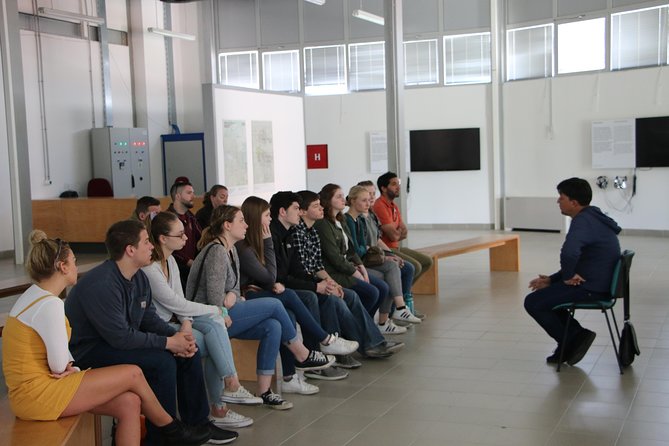
You’ll travel in a group with a stated maximum of 12 travelers. In practice, several guides’ groups can feel even smaller, which makes a difference when a topic demands questions, not just listening.
Pickup is available across Sarajevo, and the guide/driver returns you at the end of the day to the same meeting point. If your lodging isn’t a hotel, you may be asked for a Google Maps location so they can find you without guesswork. You’ll also receive a mobile ticket, which cuts down on paper and waiting.
The sandwich stop: simple fuel for a long, intense day
Before the long road starts, you’re given bottled water and a traditional Bosnian sandwich with sausage. There’s a vegetarian option available on request.
It’s not a glamorous meal, but it’s smart. You’re about to spend hours in memorial spaces where your body still needs basics: water, some salt, and a bit of energy. I like that the tour doesn’t assume you’ll find food on your own at a moment when your attention will be elsewhere.
Srebrenica Genocide Memorial: museum, memorial room, and what they’re designed to teach
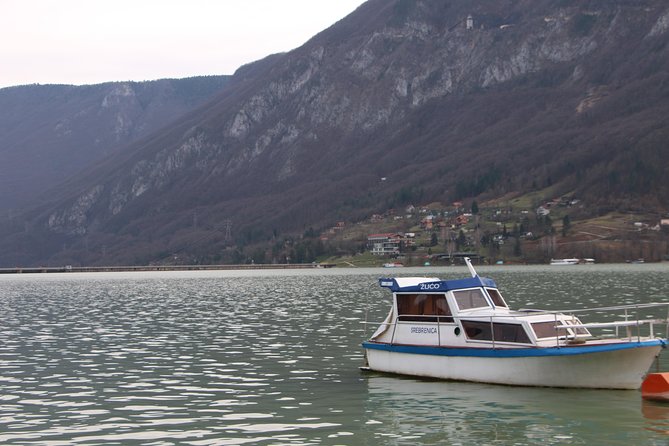
This is the core of the day. You’ll begin with the Srebrenica Genocide Memorial area and move through a sequence that’s meant to teach both events and consequences.
The battery factory and the Museum of Srebrenica Genocide
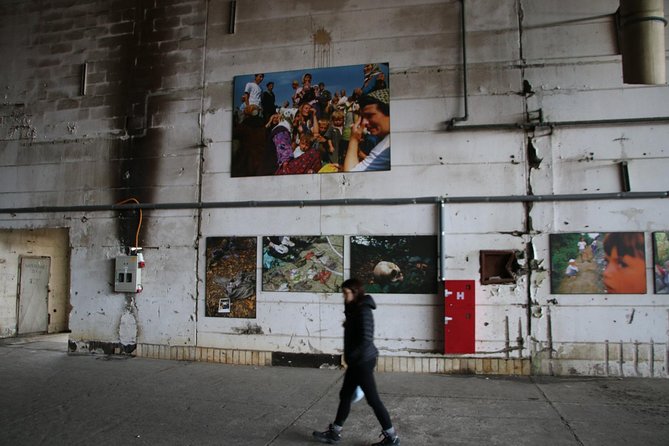
Your first major site includes a museum housed in a former battery factory area tied to UN forces during the Bosnian war period. It’s a powerful setup: a place that once served war functions now holds documentation and testimony.
You’ll meet the curator and use the museum’s multimedia facilities, including selected films that help explain events that led to the atrocity. This is where the tour’s structure earns its keep. You’re not just looking at names and dates. The media format helps you follow the story arc, then return to the human scale of it.
One practical perk: you get enough time to browse. Several people appreciated that they didn’t feel rushed, which is important in a museum like this where you’ll need a few quiet minutes to absorb what you see.
The memorial room and the stories behind the display
After the museum, you move to the memorial room. Here, you’ll hear victim stories created by a local journalist. Parts of the memorial room also address the people responsible for the massacre.
That balance—victims first, but not forgetting culpability—is part of why this tour feels more like study than sightseeing. It also helps explain why remembrance stays complicated. The goal isn’t shock. It’s clarity.
Admission is free
The tour specifies free admission tickets for the key memorial stops. That’s real value, because it reduces the last-minute budgeting stress on a day when you’ll likely be thinking about much bigger things than a receipt.
Potocari Memorial Centre and the cemetery of identified victims
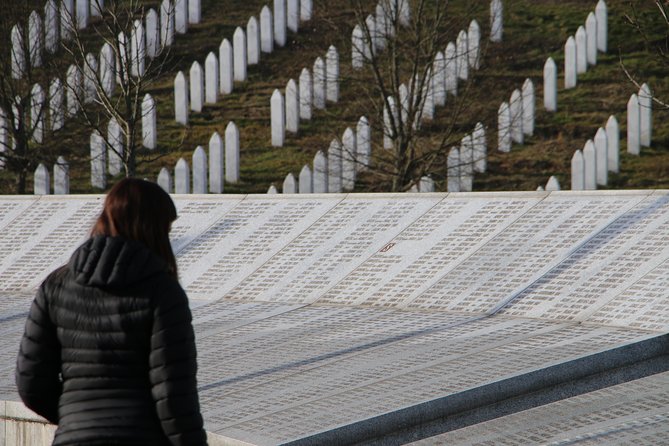
Next comes Potocari Memorial Centre, followed by time connected to the cemetery area. This is where the story stops being abstract.
You’ll hear that the cemetery now counts 6575 victims, and that the number increases each year as more people are found and identified. That detail is important. It means the past isn’t frozen; investigation and recognition continue.
Standing in a memorial cemetery changes how you read the rest of the information from the day. Your brain stops treating this as a topic and starts treating it as an accounting of real lives.
This is also where you’ll feel the tour’s emotional weight most clearly. Your guide will likely guide you through what to notice and how to hold it without turning away. You don’t need to force feelings. You just need to be ready for the day to hit you.
Srebrenica city: the ghost-town feeling and lunch timing
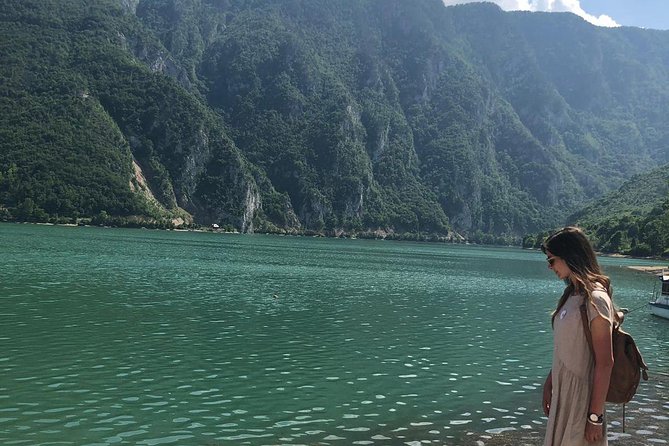
After the memorial visits, you continue into the city of Srebrenica. The tour describes it as a ghost city, which fits what you’ll likely experience: fewer signs of daily life, more silence than you expect.
Lunch is planned in Srebrenica itself because there aren’t a lot of nearby restaurants. That’s useful planning, even if the day’s emotion already weighs on you. It prevents the common travel problem of scrambling for food at the one place where your attention should stay on the sites.
One thing to keep in mind: the day has multiple “fixed” moments. If you’re the type who needs frequent flexibility, this route might feel tight. But if you want a guided, intentional flow, the structure helps.
Your guide: why the personal voice is the difference
The single most repeated praise across experiences like this is the guide. Names that came up include Adis, Adnan, Ömer, Ibrahim, Edin, Danijela, Kenan, and Yasimov. Each of them is highlighted for a mix of historical context, respectful communication, and personal connection.
Here’s what that means for you in plain terms:
- You’ll likely get background while driving, not only at the sites.
- You can ask questions and get answers on both history and the present-day political climate tied to the conflict’s aftermath.
- Some guides bring humor, which can sound strange in this context—until you realize it helps people keep their footing while learning something brutal.
One more detail I’d pay attention to: some guides explicitly welcome hard questions, even when they’re uncomfortable. That doesn’t mean you’ll get careless arguments. It means you won’t get brushed off. In a subject this sensitive, being patient with questions is a big deal.
It also helps that the tour isn’t a “read from a brochure” style. When your guide has lived experience or family connection, the information lands differently. You’ll still learn facts, but they’ll feel connected to human choices and consequences.
Price and value: what $82.84 buys you on a 10-hour day
At $82.84 per person, this isn’t just a ride to a memorial. You’re paying for a whole bundle of costs that add up fast if you try to self-organize:
- Driver/guide for the full day
- Air-conditioned vehicle for the Sarajevo-to-Srebrenica distance
- Hotel pickup and drop-off if you’re outside the Old Town, plus pickup across Sarajevo
- Bottled water
- A traditional Bosnian sandwich with a sausage option (vegetarian available on request)
- Free admission for the main memorial and museum components
If you rented a car, paid for your own transfers, and bought museum entry separately, you’d probably spend more in both money and time. The real value is the human thread: context + respectful guidance + time allocated for the sites.
Just be honest with yourself about what you’re buying. This isn’t entertainment. It’s a study day that will ask a lot of your attention and your emotions.
Who should book this tour, and who should think twice
I’d point most clearly at history-minded travelers who want more than slogans. If you’re trying to understand how Yugoslavia unraveled, how international actors failed, and how remembrance works at a place like Potocari, this fits.
It also seems to work well for solo travelers, since pickup/drop-off is handled and the group stays small. In that way, you get structure without needing to navigate the route alone.
On the other hand, if you’re expecting a casual day trip with easy levity, you’ll probably feel out of place. This theme is mentally hard. It asks you to sit with atrocities and with the ongoing process of identification and remembrance.
If you’re sensitive to intense topics, do a gut check before booking. You can still go—just go with the right expectations.
Should you book this Sarajevo to Srebrenica study tour?
If your goal is understanding—not just visiting—then yes, this is worth booking. The best part is the combination: free memorial access, a full-day schedule, and a guide who can connect the timeline from Yugoslavia’s collapse to what happened in Srebrenica.
Book it if you want context, structure, and a small-group setting that makes questions possible. Skip it only if you know you’re not ready for an emotionally heavy, long day.
If you do book, my advice is simple: bring basic background knowledge, wear comfortable shoes, and give yourself permission to feel whatever you feel. This day isn’t meant to be checked off. It’s meant to change how you understand the world.
FAQ
What time does the tour start, and how long does it last?
The tour starts at 8:00 a.m. and runs for about 10 hours (approx.), ending back at the meeting point.
Is the tour offered in English?
Yes. The tour is offered in English.
Where do I meet the tour, and can I get pickup?
You meet at Velika avlija Laure Papo Bahorete 2, Sarajevo 71000. Pickup is available from all locations in Sarajevo, and if your accommodation is a private home (not a hotel), you’re asked to provide a Google Maps location.
What food is included during the day?
You get bottled water and a traditional Bosnian sandwich (with a traditional Bosnian sausage; vegetarian option available on request).
Are the memorial and museum admission tickets included?
Yes. The Srebrenica Genocide Memorial museum and related entries are listed as free, with admission ticket free included in the tour experience.
How large is the group?
The tour has a maximum of 12 travelers.
Can I cancel for a full refund?
Yes. You can cancel up to 24 hours in advance for a full refund, and the cut-off is based on local time.