REVIEW · CUSCO
Sacred Valley (VIP) – Full Day Trip
Book on Viator →Operated by Peru Amazon Trips · Bookable on Viator
One day, five Inca stops. This Sacred Valley VIP trip is built for travelers who want big scenery and key ruins without spending two days on the road. Two highlights I really like are the chance to see Inca farming brains at Moray and the dramatic, photo-friendly geometry of Maras salt pools. One thing to keep in mind: it’s a long, sometimes rushed day where you’ll be moving fast between places.
The day runs about 12 hours, with Cusco hotel pickup included (but not private residences) and a bilingual English/Spanish guide. You’ll also get a buffet lunch in Urubamba with a vegan option, which is a real quality-of-life upgrade at altitude. Still, the pace can feel like the Reader’s Digest version of the Sacred Valley, so plan your expectations—and bring patience for tight timing.
The best part is that you’re not just collecting stops. You’re seeing how the Incas shaped land and water—terraces, irrigation, and stone architecture—then finishing in places like Pisac where you can’t miss the religious and astronomical intent.
In This Review
- Key Things to Know Before You Go
- Price and Logistics: Tickets, Cash, and the 12-Hour Pace
- Stop 1: Chinchero’s Terrace Views and Sunday-Market Energy
- Stop 2: Moray’s Circular Terraces as an Inca Crop Lab
- Stop 3: Maras Salt Mines for Photos, Hikes, and That Patchwork Pattern
- Stop 4: Ollantaytambo’s Fortress, Water Temple, and High-Altitude Steps
- Stop 5: Pisac’s Sun Dial, City of Towers, and Architecture That Refuses to Fade
- Intihuatana (Temple of the Sun)
- La Ciudad de las Torres (City of the Towers)
- Ñusta Encantada (Enchanted Princess) Legend
- Lunch in Urubamba: A Real Break with Vegan Options
- Guide and Group Size: What the VIP Label Gets Right
- The Trade-Off: Rushed Timing and Commercial Stops
- What You’ll Really Learn (If You Let the Places Talk)
- Should You Book This Sacred Valley VIP Full-Day Trip?
- FAQ
- Do I get hotel pickup in Cusco?
- What extra fees should I budget for?
- Is lunch included, and is there a vegan option?
- What’s the group size limit?
- How long is the trip?
- What’s the guide language?
- Can I cancel for a full refund?
Key Things to Know Before You Go
- VIP pace, not VIP comfort: Maximum group size is 19, but expect long travel blocks and quick walking.
- You’ll need extra cash: Budget for the Partial Tourist Ticket plus Maras salt mine admission.
- Some stops can feel like shopping time: There can be craft/workshop or shop stops, and the selling can be noticeable.
- Altitude means stairs and steps: Several stops are at serious elevation, and you’ll do plenty of climbing.
- Lunch has a vegan choice: You refuel in Urubamba with a buffet that includes vegan food.
- Bilingual guide quality varies: Many guides are praised for keeping things on time and explaining well in English and Spanish.
Price and Logistics: Tickets, Cash, and the 12-Hour Pace
At $55 per person, this is priced like a budget-friendly way to cover a lot. But the real cost picture isn’t just the tour price. You’ll also need a Partial Tourist Ticket (70 soles per person), plus Maras salt mines entry (20 soles per person). In practice, that means you should plan on an additional outlay right when you arrive—so don’t rely on only what’s on your card.
There’s also a practical mismatch to note: the stop descriptions indicate some admissions as free, yet the tour clearly requires that Partial Tourist Ticket. The safest move is to treat the Partial Tourist Ticket as mandatory for the day’s broader site access and carry cash for admissions that come up at Maras.
Finally, think about pickup and timing. Cusco hotel transfer is included, but pickup isn’t from private residences. And with a day around 12 hours, you’ll spend a lot of time in the vehicle—great for ticking off major sights, not ideal if you want long, slow hangs at each site.
You can also read our reviews of more tours and experiences in Cusco.
Stop 1: Chinchero’s Terrace Views and Sunday-Market Energy
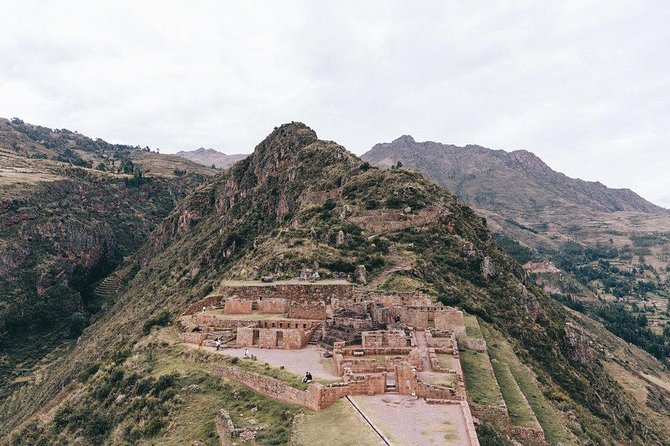
Chinchero is a windswept Andean village high above the Sacred Valley, sitting at 3,765 meters. Even before you hit the main ruins, the views do a lot of work here: you get a strong look toward the Cordillera Vilcabamba and the snow-capped peak of Salkantay on the western horizon.
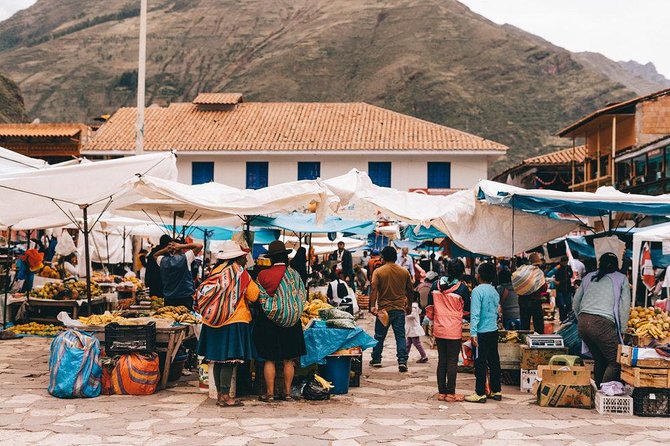
What I like about Chinchero is the feel of a working village more than a fenced-off ruin. The mud-brick (adobe) houses and locals moving through daily life keep it grounded. The big draw is the colorful Sunday market, which tends to feel less tourist-machine than Pisac’s market.
Inca-era clues show up in the massive stone wall in the main plaza, with its trapezoidal niches. It’s the kind of detail that makes you stop and look twice, because it’s not just “some rocks”—it’s a designed feature with a specific pattern. If you like cultural context, Chinchero is a strong opener because it mixes village life with Inca planning.
Stop 2: Moray’s Circular Terraces as an Inca Crop Lab
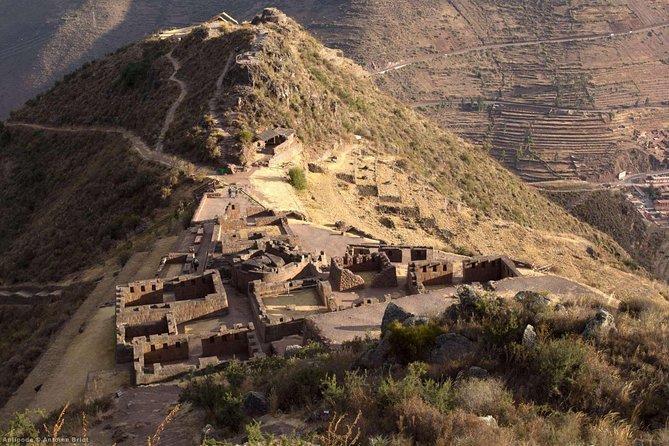
Then you go from village life to Inca science. Moray’s claim to fame is its circular terraces—retaining walls connected to an irrigation system—that create a set of microclimates. The terraces can go up to 330 feet deep, and that depth is the point: different layers act like different growing zones.
Moray is often described as a crop laboratory, and that’s a good way to think about it. The Incas weren’t just building pretty steps—they were experimenting with how to control temperature and conditions to grow different crops. Even if you’re not a plant nerd, the geometry makes sense when you’re standing there. You can literally feel the logic in the layout.
This stop is also relatively quick in the schedule (about 45 minutes), so you won’t get hours to wander. But Moray is compact enough that you can cover the main sights and still come away with the big idea.
Stop 3: Maras Salt Mines for Photos, Hikes, and That Patchwork Pattern
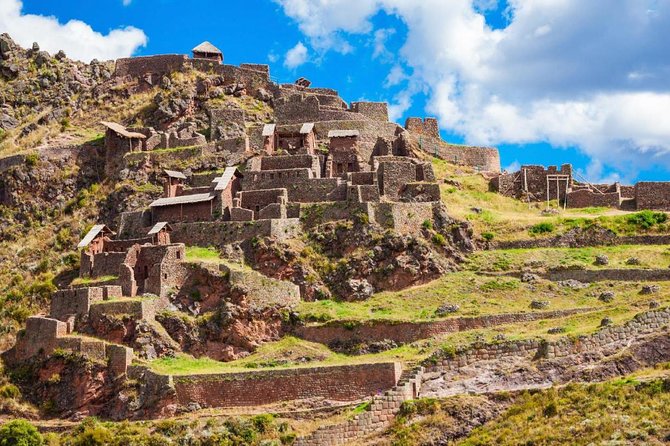
Maras is where the Sacred Valley turns into something you’ll want to photograph from every angle. The famous salt pools sit in the rural community of Pichingoto, and the view is a spread of shimmering rectangles and steps that look almost unreal when the light hits them.
This is also a good stop for active travelers. The area is great for hikers and mountain bikers, and there’s even a trail connection linking the salt mines with nearby villages like Tarabamba and Pichingoto. If you’re the type who likes to walk slightly off the main flow (without getting lost), Maras has room for that.
One more practical note: this is the stop where your extra ticket cost matters. Salt mines entrance is not included in the base price, and it’s listed as 20 soles per person. I strongly recommend bringing cash in small bills so you’re not scrambling mid-line.
And yes, part of Maras’s draw is that it looks good even if you don’t speak a word of Quechua. The place communicates with your camera.
Stop 4: Ollantaytambo’s Fortress, Water Temple, and High-Altitude Steps
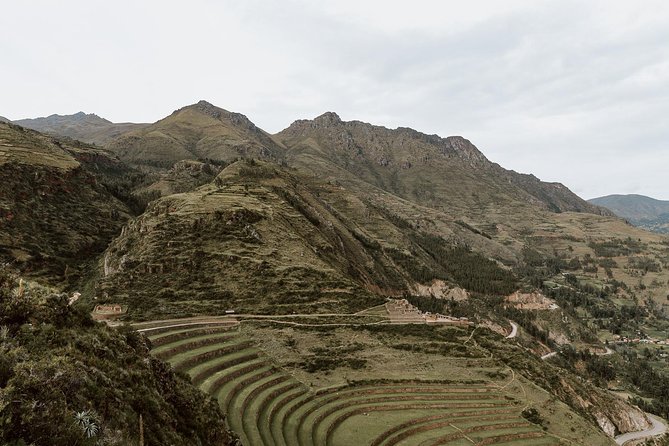
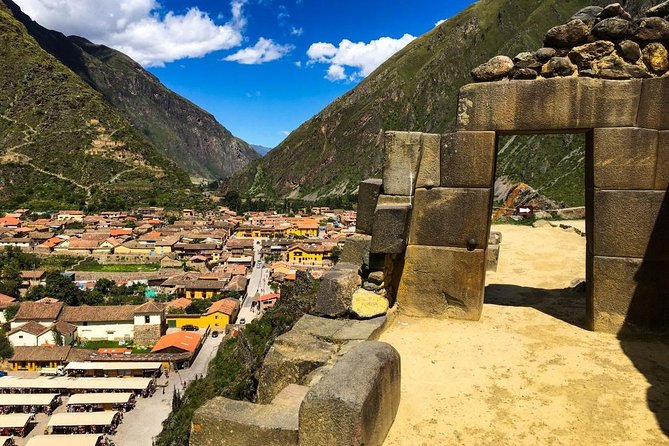
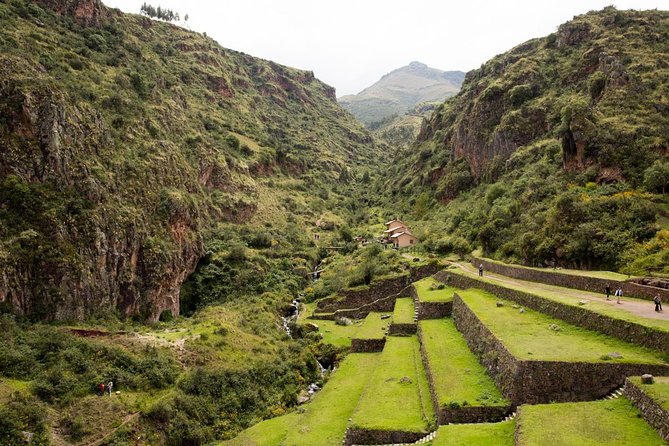
Ollantaytambo sits in the province of Urubamba at about 9,160 feet. That altitude doesn’t just add drama—it changes how you move. You’ll feel it when you start climbing stairs and stepping up to the main areas.
The standout features include a ceremonial temple tied to water, plus a fortress built between mountains to protect the valley. What makes Ollantaytambo hit is that it’s not only ruins. It’s also a town with its own rhythm, so you get Inca stone and lived-in Andean life side by side.
Inside the site, there are tiered terraces leading upward via steep stairs, including structures tied to the Temple of Inti (the sun god) and spaces linked to the Ñustas (princesses). There are also funerary towers (Cachiccata) and steep hillside terraces that still tell you how people used the terrain rather than fighting it.
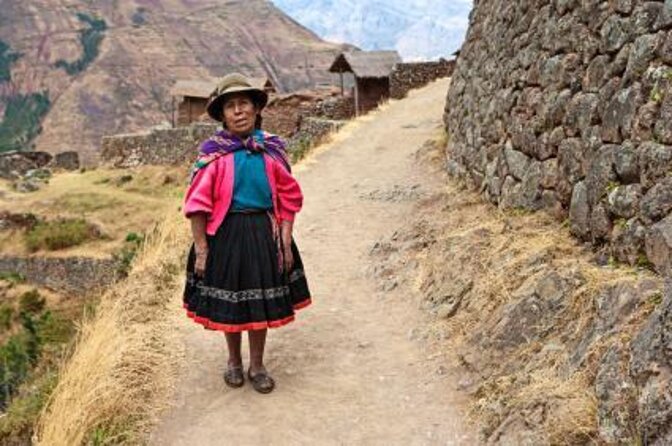
There’s even a local touch: the nearby Huayruros de Willoc community shows up with their red and black ponchos and hats, which you may notice as you move through the area.
This is one of the best sites on the route if you want the Incas to feel solid and defensive, like a civilization that could plan for invasion and still manage daily life.
Stop 5: Pisac’s Sun Dial, City of Towers, and Architecture That Refuses to Fade
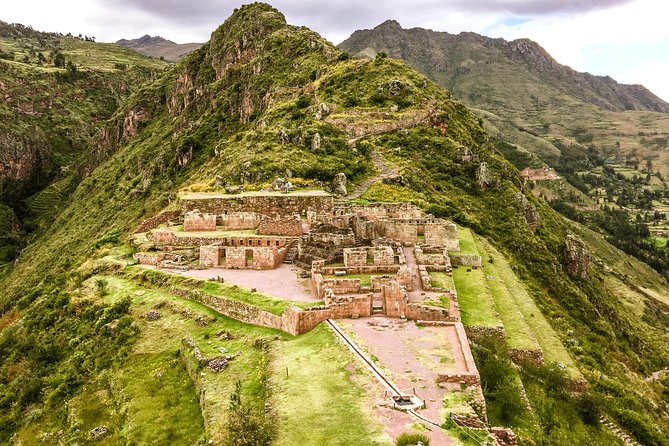
Pisac is huge on variety, and it’s easy to see why it’s a Sacred Valley must. The stonework here is famous for its careful proportions and tight joints—blocks that fit so cleanly you can almost forget they were carved by hand.
Pisac has a Quechua name that’s often linked with a partridge-like bird, and the site reflects that identity through layers of structure: terraces, palaces, towers, and ceremonial rooms connected across the mountain.
Intihuatana (Temple of the Sun)
One major stop within Pisac is Intihuatana, often described as a Temple of the Sun and linked to astronomical observation. Its name is tied to the idea of a sundial, and the carved rock walls align with the rising sun during the June Solstice.
Standing there, the meaning feels less like a lecture and more like an object you’re looking at. The alignment idea is powerful because it gives the stonework a job.
La Ciudad de las Torres (City of the Towers)
Then there’s the network of towers and channels. The site is believed to have served water distribution purposes, and the finishing quality is compared to Sacsayhuaman. Even if you don’t memorize every function, the scale gives you a quick lesson in how seriously the Incas engineered water and movement.
Ñusta Encantada (Enchanted Princess) Legend
If you enjoy connecting architecture to stories, Ñusta Encantada adds a fun layer. The rock complex is called ñusta (Inca princess) because its shape resembles a woman carrying saddlebags. There’s also a legend about a prince building a bridge overnight and a daughter needing to keep her eyes forward. It’s the kind of local tale that makes the stones feel less dead and more alive.
Lunch in Urubamba: A Real Break with Vegan Options
Urubamba is where the trip gives you something practical: a buffet lunch with a vegan option. After time at high altitude and on your feet, food becomes a bigger deal than usual, and this stop gives you the chance to reset.
You’ll also likely use this break to refuel before the later part of the day. The route ends up stacking major sites, so having a lunch that works for different diets is not just polite—it keeps your energy steadier for Pisac and Ollantaytambo.
Guide and Group Size: What the VIP Label Gets Right
This tour runs with a maximum of 19 travelers, which is a sweet spot. It’s small enough for a guide to manage the group, but big enough that you’re not stuck in a private-bus situation that can drag for no reason.
Guide quality seems to be a real factor. For example, some guides have been praised for being friendly and picture-happy, like Richard. Others have been praised for being upbeat and providing bilingual explanations with energy, like Jhonnatan. There’s also a strong theme of guides staying on schedule and keeping things moving smoothly, like Irving and Warner.
That said, the day can still feel rushed because of the itinerary density. Even a great guide can’t fully overcome the physics of time and distance.
The Trade-Off: Rushed Timing and Commercial Stops
The biggest downside signal is tempo. Even at its best, this is a jam-packed day, and some people feel it’s rushed. Expect quick walking, plenty of steps, and limited time at each site.
There’s also the issue of commercial stops. Some days include stops connected to alpaca processing and there can be salt shop or drink-style presentations. A silver store and jewelry stop have also shown up later in the day. If you’re not into shopping, decide ahead of time how you want to handle that—say no without apology, and treat these stops as optional bathroom breaks rather than part of the core experience.
One more tip: bus noise can be a factor. If you’re sensitive to sound, bring earplugs. It’s a small thing that can make a long ride feel less exhausting.
What You’ll Really Learn (If You Let the Places Talk)
The best part of doing the Sacred Valley in a single day is how the story connects.
- Chinchero gives you Inca stone features inside a living Andean village.
- Moray shows Inca engineering as experimentation—using terraces and irrigation to create microclimates.
- Maras turns agriculture and mineral extraction into a visible pattern of human control over nature.
- Ollantaytambo shows defense, water, sun worship, and steep-terrain mastery in one compact place.
- Pisac ties religious intent and astronomy to stonework you can look at directly.
If you want the Sacred Valley to make sense fast, this format works. If you want breathing room, you may wish you had two days instead. But as a first taste of the region, it’s a strong hit.
Should You Book This Sacred Valley VIP Full-Day Trip?
Book it if:
- You want major Sacred Valley highlights in one day and don’t want an overnight plan.
- You’re okay with stairs, quick site visits, and a fast pace.
- A bilingual guide and a vegan-friendly lunch matter to you.
- You’re comfortable paying extra admissions on top of the tour price.
Skip or reconsider if:
- You hate shopping stops and sales pitches.
- You want lots of quiet time at each ruin (this schedule is tight).
- You’re very altitude-sensitive or not comfortable with steep stairs.
If you’re in the middle—curious, energetic, and willing to move—this tour is a good value way to connect the Incas’ agricultural genius with the Sacred Valley’s most iconic sites.
FAQ
Do I get hotel pickup in Cusco?
Yes. Pickup is included from Cusco hotels, but it’s not included from private residences.
What extra fees should I budget for?
You’ll need a Partial Tourist Ticket (70 soles per person) and you also pay the entrance fee for the salt mines of Maras (20 soles per person). Bring extra cash for admissions.
Is lunch included, and is there a vegan option?
Yes. Lunch is included as a buffet in Urubamba, and a vegan option is available.
What’s the group size limit?
The tour has a maximum of 19 travelers.
How long is the trip?
It runs about 12 hours on average.
What’s the guide language?
The guide is bilingual in English and Spanish.
Can I cancel for a full refund?
Yes. You can cancel up to 24 hours in advance for a full refund. If you cancel less than 24 hours before, it isn’t refunded.