REVIEW · NARA
Osaka: Nara and Uji Day Trip with Deer Park and Hot Spring
Book on GetYourGuide →Operated by Tour Easy · Bookable on GetYourGuide
Deer, temples, and a soak in one day. This Osaka day trip strings together the famous deer park of Nara, the heavyweight temples around Todai-ji and Kasuga Taisha, and a wind-down at Genji no Yu hot spring. I really like the fact that the day is built around a few standout experiences, not a rushed list of stops. I also like that you get a guide who helps you connect the dots, especially if you’re new to the area.
The main drawback to plan around: it’s a 10-hour day with steady movement, and some key admission fees are not included (Todai-ji, Byodo-in, and the onsen). That means you’ll need a little extra cash, and you won’t have unlimited time at every single spot.
In This Review
- Quick hits you’ll care about
- From Namba to Nara: the morning rhythm and group setup
- Nara Park and the Deer Park feeding moment
- Todai-ji and the Great Buddha: what you’re really seeing
- Kasuga Taisha lanterns: bronze and stone at human pace
- Uji in-between moments: matcha sweets and The Tale of Genji
- Byodo-in Temple and the Tale of Genji Museum choice
- Genji no Yu hot spring: the best way to end temple walking
- Price and value: what $57 really buys you
- The guide factor: why this tour often gets glowing feedback
- Who should book this day trip (and who should skip it)
- Should you book the Osaka to Nara and Uji tour?
- FAQ
- What time does the tour leave and where do I meet?
- How long is the day trip from Osaka?
- Is deer feeding included?
- What are the main sights included?
- Are temple and onsen admission fees included?
- What about tattoos at the hot spring?
- What should I wear for this tour?
- Is the transportation comfortable?
- What if weather or traffic changes the schedule?
- What languages are offered by the guide?
Quick hits you’ll care about
- Deer crackers included for feeding Nara’s deer at the maple forest area
- Todai-ji and the Great Buddha to understand why this temple is so iconic
- Kasuga Taisha’s lantern lanes of bronze and stone lights
- Uji matcha street time plus cultural stops tied to The Tale of Genji
- Genji no Yu hot spring for a real recovery moment after temple walking
From Namba to Nara: the morning rhythm and group setup
Your day starts with pickup in the Namba Shinsaibashi area at Harimaya Bld (1-chōme-3-11 Nipponbashi, Chuo Ward). The departure time is 8:40am, and you’ll want to arrive about 15 minutes early because there’s no refund for latecomers and no-show. The guide is holding a yellow flag, and that makes it easier to find the right group fast.
You’ll ride in an air-conditioned vehicle. Seats are described as compact, so if you’re tall or traveling with lots of layers, pack lightly. The group is shared with people from different countries, and the guide offers explanations in English, Japanese, and Traditional Chinese.
You can also read our reviews of more tours and experiences in Nara.
Nara Park and the Deer Park feeding moment
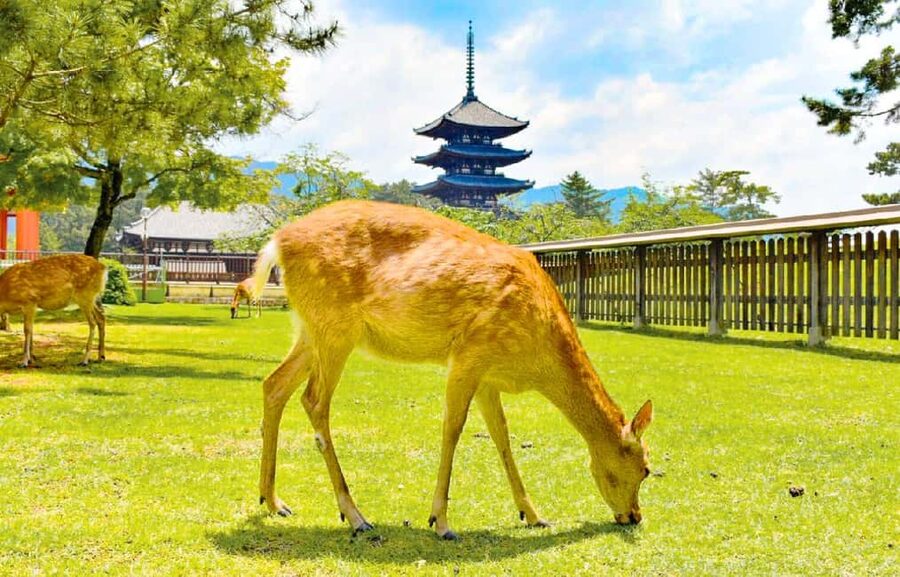
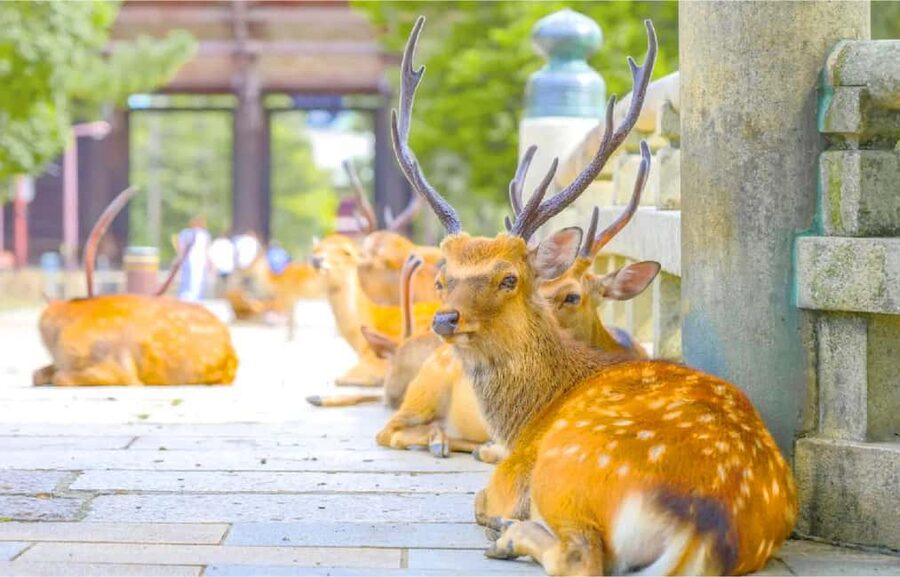
Nara Park is the emotional highlight for many first-timers, and for good reason. You’ll head to the urban park at the base of Wakakusa Mountain, where deer are known for being bold (in a friendly way) once they sense deer crackers. You’ll receive a complimentary pack of deer crackers, and that’s what turns the visit from watching into doing.
When you’re standing in the maple forest area, expect deer to approach if they think you have crackers in your hand. The trick is to stay calm. If you get a deer near you, hold the crackers carefully and don’t do sudden movements that spook the animal. Also keep an eye on groups around you—sometimes the loudest excitement is what causes the most chaotic close calls.
This isn’t a “petting zoo” vibe. It’s more like sharing space with wild-ish deer that are used to humans. If you want great photos, aim for the moments when the deer are relaxed. If they’re swarming, it’s usually better to step back a couple of paces and let the cluster shift.
Todai-ji and the Great Buddha: what you’re really seeing
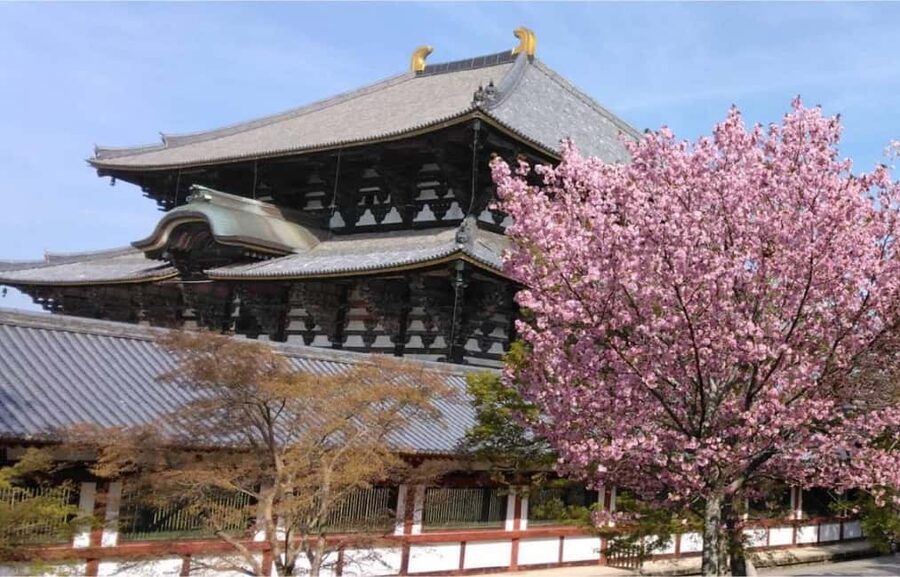
Todai-ji is one of those places where scale hits you before explanations do. You’ll spend time at the temple complex and see the Great Buddha of Nara, a world-famous historic landmark that’s part of why Nara became such a magnet for pilgrims and scholars.
Even if you’re only mildly into temples, Todai-ji works because it’s not just “another building.” The main hall and the Great Buddha are meant to impress—big enough to make you slow down and look longer than you planned. It’s also a good anchor point for the day: after feeding deer, Todai-ji gives you a sense of how serious this region’s spiritual identity is.
One practical note: admission to Todai-ji is not included in the tour price. So if you want to avoid surprises, budget for temple entry when you arrive.
Kasuga Taisha lanterns: bronze and stone at human pace
After Todai-ji, you’ll head to Kasuga Taisha Shrine, known for its thousands of bronze and stone lanterns. The experience here feels different from Todai-ji. Instead of one giant focal point, you get repeated visual rhythm—lantern after lantern—so your attention keeps moving.
This is a shrine where walking slowly pays off. You’ll want time to look up, notice the lantern density, and then step back to see how the area connects. The tour gives you scheduled time to explore, so don’t rush your own photo breaks. If you enjoy atmosphere over checklists, this is the stop that rewards it.
Like the other major sights later, admission to Byodo-in is separate, and the schedule also includes multiple cultural options. So at Kasuga Taisha, treat it as a chance to slow down before Uji turns into matcha-and-street-food mode.
Uji in-between moments: matcha sweets and The Tale of Genji
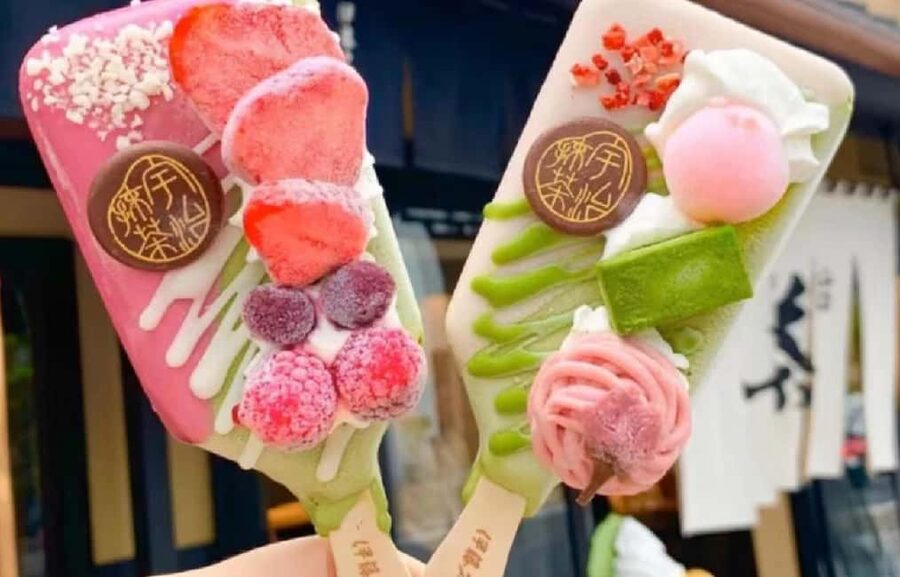
Then comes the switch: Uji. This area is famous for matcha ice cream, cakes, and even matcha-colored soba noodles. The tour gives you time to explore the streets and snack your way through the vibe. If you like desserts, Uji is a smart place to stop because you can do it without turning the day into a full-on food tour.
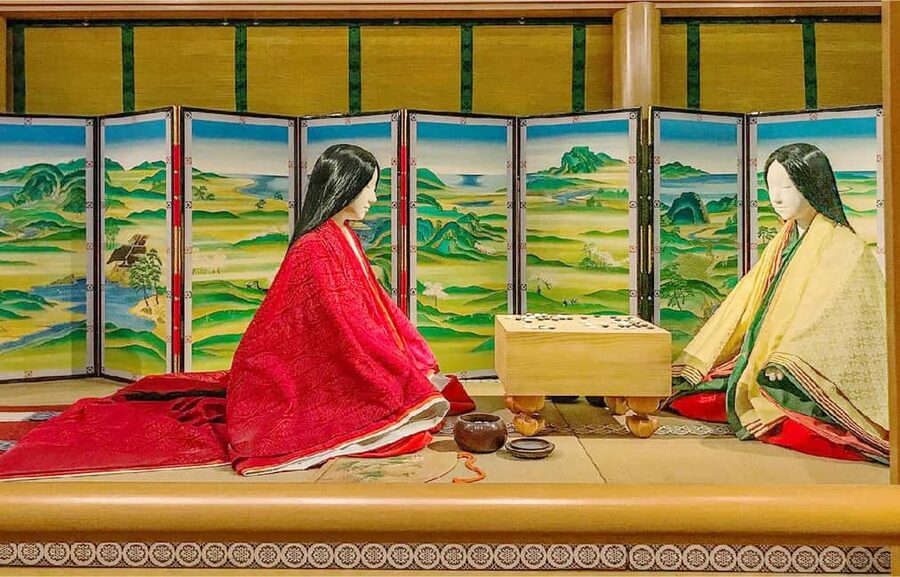
Uji is also tied to literature. It’s where the final ten chapters of The Tale of Genji are set, which is a rare blend of travel and reading culture. That matters because it turns “a pretty town” into a place with a story framework. You’ll likely feel it even if you don’t read Japanese literature—your guide can connect the sites to the narrative.
You’ll have about 1.5 hours in Uji for sightseeing. That’s enough time to wander and eat something, but not enough to turn this into a long lunch. If you want to do both temples and shopping, prioritize one or two snack moments rather than trying to sample everything.
Byodo-in Temple and the Tale of Genji Museum choice
In Uji, you’ll visit either the Byodo-in area (including Byodo-in Omotesando and Byodo-in Temple) or the Tale of Genji Museum. The tour format describes it as a choice, which is useful if you care more about pond-garden architecture than multimedia storytelling—or vice versa.
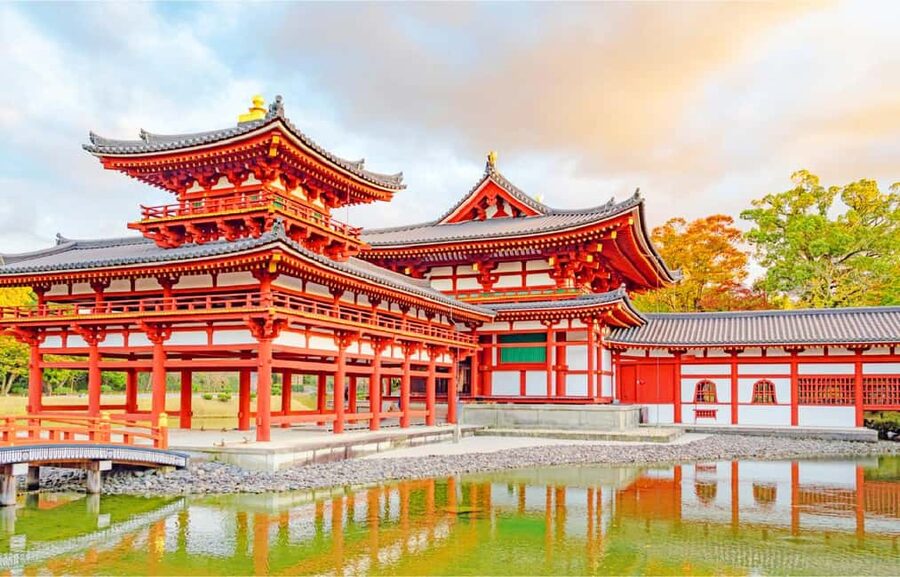
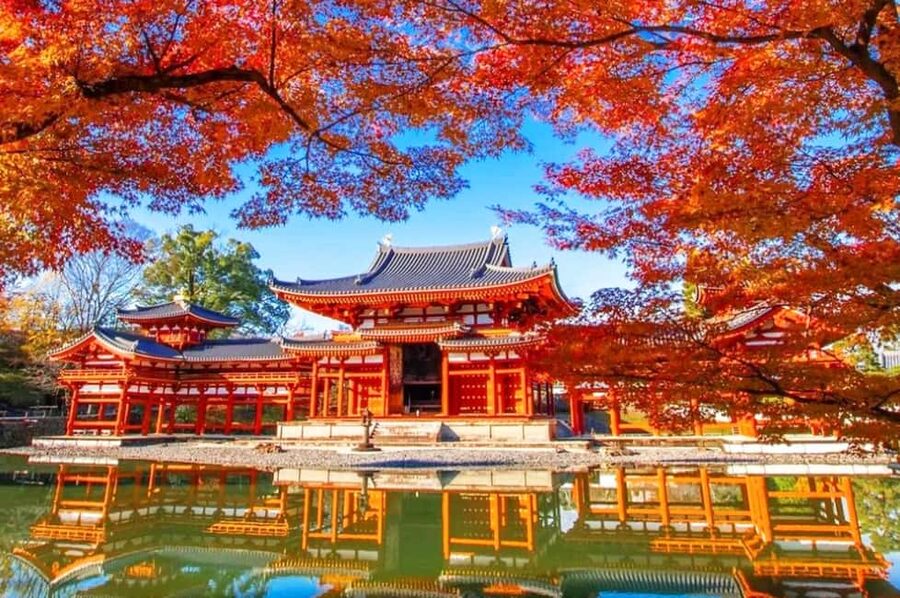
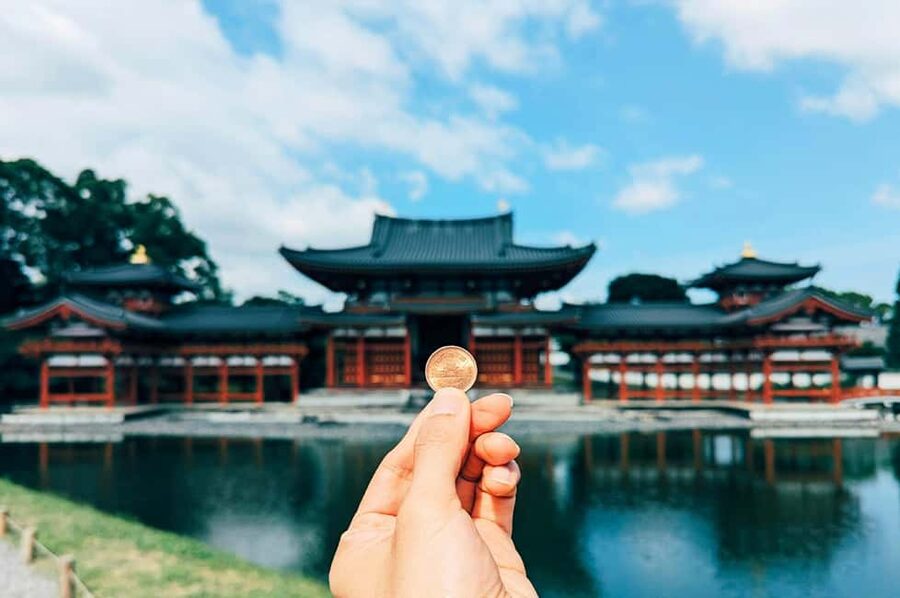
Byodo-in Temple is the Heian-era pond garden architecture highlight. This is the kind of place where you’re meant to notice composition: the relationship between the building, the water, and the walking areas. If you like classic Japanese scenery, you’ll feel like you’re stepping into a staged view.
The Tale of Genji Museum is different. It uses advanced multimedia and high-definition visuals to bring The Tale of Genji to life. If you’re more comfortable with modern explanations and visuals, this can be the easier way to understand the cultural background without feeling lost.
Admission to Byodo-in is not included, and that also applies to your onsen entry later. If you’re traveling with a tight budget, this is one of the reasons I think it’s important to treat the tour price as transportation plus guide service—not a full all-in museum pass.
Genji no Yu hot spring: the best way to end temple walking
By the time you reach Genji no Yu, you’ll likely be ready for a reset. This hot spring is Uji’s only natural hot spring, and the tour frames it as a serene, Japanese-style bathing experience. Water is drawn from 1,111 meters underground, and that detail helps you understand the source isn’t just symbolic.
The facility includes three indoor baths and one outdoor bath. The outdoor option is where you can feel the environment—if the weather cooperates—because it breaks up the time spent under indoor lighting.
Two practical things can make or break your experience. First, tattoos may prevent onsen entry. If that’s you, check ahead because the tour data is explicit about tattoo-related restrictions. Second, Japanese hot springs require that you do not wear clothing while bathing. This is standard practice, but it’s still good to say out loud: pack a plan for how you’ll handle towels and changing without overthinking it.
Also, the onsen time is about 1 hour. If you want long soak time, remember this is a tour schedule. Use the time wisely: wash up quickly, settle into the bath, then spend your last few minutes relaxing rather than rushing around for photos.
Price and value: what $57 really buys you

At about $57 per person for a 10-hour day trip, the value comes from the structure: transportation, a multilingual guide, and access to the main “big names” around Nara and Uji without you needing to plan transit.
What’s included is practical: round-trip transfers from Harimaya Bld, air-conditioned coach, guide service fee, and taxes/parking. The deer crackers are also included, which turns Nara Park into an active experience instead of a passive one. Many day trips look good on paper, but they fall apart when you’re figuring out timing. Here, the tight schedule is the product.
What’s not included is important for your budget math. Admission for Todai-ji, Byodo-in Temple, and the Uji onsen are not included. So your total trip cost will be your tour price plus entrance fees and whatever you eat.
If you’re the kind of traveler who wants a guided day with clear stops, this is solid value. If you prefer independent pacing—lingering for hours in one place, taking extra train hops, and deciding last minute—then a group tour can feel a bit compressed.
The guide factor: why this tour often gets glowing feedback
The biggest recurring praise across the guides is energy plus clarity. Names showing up in confirmed bookings include Ethan, Etta, Liao, Hugo, Vivi, Lucia, and Nick Lee. Many guests mention guides who were friendly, organized, and quick to answer questions. A few also point out that the guide used group chat-style communication to share where to go next and what to look for.
That matters because Nara and Uji can overwhelm you fast if you’re doing it alone: you’re dealing with crowd flow at deer feeding, then major temple navigation, then matcha street wandering, then onsen rules. A guide helps you get your bearings fast and reduces the guesswork.
Also, in cases where the number of participants is fewer than 13, the guide may serve as the driver too. That likely changes the flow slightly, but it can also make the explanations feel more personal because the same person is managing both logistics and storytelling.
Who should book this day trip (and who should skip it)
This tour is a great match for first-timers in Osaka who want an easy, organized way to see two of the area’s most iconic cultural zones: Nara’s temples and deer experience, and Uji’s matcha and The Tale of Genji atmosphere. It’s also a nice fit if you’re short on time and you want your day to feel like a guided highlight reel.
You might want to skip (or choose a different format) if you need long, slow time at each destination. Some bookings mention wishing they had more time per stop, especially around the onsen. This tour is designed to cover multiple anchors, so you trade depth for breadth.
And if tattoos are an issue for you, be aware you might not be able to enter the onsen. That doesn’t kill the day, but it does remove one of the tour’s signature relax-and-recover moments.
Should you book the Osaka to Nara and Uji tour?
Yes, if you want a structured day that hits the key icons—deer feeding at Nara, Todai-ji’s Great Buddha, Kasuga Taisha’s lanterns, and a matcha-focused Uji break—then finishes with a real hot spring soak. The included deer crackers and the guide’s multi-language support add real convenience.
I’d only hesitate if you’re traveling with a tattoo and really want onsen time, or if you strongly prefer one-location-at-a-time pacing. In that case, you’d probably enjoy building your own route instead of relying on a 10-hour schedule.
If the goal is maximum variety without transit stress, this is a smart booking.
FAQ
What time does the tour leave and where do I meet?
The tour departs at 8:40am from Harimaya Bld in the Namba Shinsaibashi area. The address is 1-chōme-3-11 Nipponbashi, Chuo Ward, Osaka, 542-0073. Please arrive 15 minutes early, and the guide will be holding the yellow flag.
How long is the day trip from Osaka?
The tour runs for about 10 hours.
Is deer feeding included?
Yes. You’ll receive a complimentary pack of deer crackers, and you’ll feed the deer in Nara Park.
What are the main sights included?
You’ll visit Nara Park (deer feeding), Todai-ji, Kasuga Taisha Shrine, and Uji. You’ll also go to either the Byodo-in area (including Byodo-in Temple) or the Tale of Genji Museum, and you’ll end at Genji no Yu hot spring.
Are temple and onsen admission fees included?
No. Admission to Todai-ji Temple, Byodo-in Temple, and the Uji onsen is not included.
What about tattoos at the hot spring?
If you have tattoos, you may not be able to enter the onsen. Also, when bathing in hot springs in Japan, wearing clothing is not allowed.
What should I wear for this tour?
Wear comfortable shoes for walking. The parking lot is noted as being a bit far from the scenic spots.
Is the transportation comfortable?
The tour uses an air-conditioned vehicle. Vehicle seat designs are generally compact, so expect smaller spacing than what you might be used to.
What if weather or traffic changes the schedule?
The schedule can adjust due to traffic or weather conditions. It’s recommended not to plan other transportation or activities after the tour ends.
What languages are offered by the guide?
The guide provides live explanations in English, Japanese, and Traditional Chinese.