REVIEW · NARA
Nara Half Day Trip Walking Tour (Private Option Available)
Book on Viator →Operated by MagicalTrip Inc. · Bookable on Viator
Deer, temples, and a smart route in five hours. I love that admission tickets and lunch are built into the price, so you spend less time hunting counters. I also love the way a local guide frames each stop—Kofuku-ji’s five-story pagoda, UNESCO Todaiji, and Kasuga Taisha—before you walk through on your own. One caution: gluten-free requests can’t be accommodated, and allergy needs can’t be fully guaranteed.
With a max of 8 people, the pace stays human: short breaks, time around Nara Park deer, and a final walk through Naramachi’s old merchant lanes near the end. You’ll mostly be outdoors, so bring water and a hat—summer in Nara can be brutal.
In This Review
- Key highlights to know before you go
- Why this Nara half-day route is so efficient (without feeling rushed)
- Kofuku-ji’s five-story pagoda: setting the tone with a Fujiwara classic
- Todaiji Temple and Nandaimon: guardian statues and the Great Buddha moment
- Lunch at 107 Zōshichō: where the day gets calmer
- Kasuga Taisha in the Primeval Forest: a shrine visit that feels different than the photos
- Nara Park deer time: how to enjoy it without getting bullied by deer
- Naramachi merchant lanes: old-town atmosphere and a look inside a traditional house
- How the 5-hour schedule actually feels in real life
- Price and value: what you’re really paying for at $105.45 per person
- Private option: when it’s worth paying for just your group
- Small practical notes that can save your day
- Who this tour is best for
- Should you book this Nara half-day walking tour?
- FAQ
- How long is the Nara half-day walking tour?
- What’s included in the price?
- Is the tour suitable for families and different ages?
- Can you accommodate gluten-free or allergy needs?
- Where does the tour start and end?
- What happens if weather is bad?
Key highlights to know before you go
- UNESCO anchors in one half-day: Todaiji and Kasuga Taisha get real time, not rushed photo stops.
- Kofuku-ji five-story pagoda at the start: a striking, Fujiwara-era landmark that sets the tone fast.
- 107 Zōshichō includes the pyramid surprise: a quirky stop you’d likely miss without help.
- Lunch is part of the plan, not an afterthought: traditional food in an old-town setting.
- Deer etiquette is practical: you’ll get guidance on how to interact respectfully (and avoid getting swarmed).
- Small-group size plus mobile ticket: easier movement and a simpler day-check-in.
Why this Nara half-day route is so efficient (without feeling rushed)
Nara is one of those cities where you can burn half a day just moving between sights. This tour is designed to cut the wasted time: you hit temple and shrine heavyweights first, then shift into park-and-street exploring before the daylight slips away.
What makes it work is the order. You start with standout architecture (Kofuku-ji’s five-story pagoda), transition into the emotional center of Todaiji, then finish with Kasuga Taisha, Nara Park, and Naramachi. By the time you reach the deer, you’re already in the right mindset—calm, curious, and not scrambling for where to go next.
Another smart piece for your day: the tour includes admission tickets and lunch. That matters because temples and shrines can be pickier than you expect, and ticket lines can stretch when crowds build.
You can also read our reviews of more tours and experiences in Nara.
Kofuku-ji’s five-story pagoda: setting the tone with a Fujiwara classic
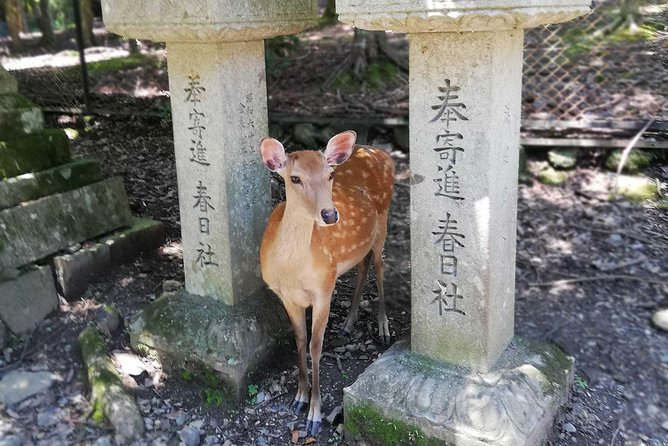
You’ll begin at Kofuku-ji Temple (five-story pagoda), one of Nara’s most recognizable temple landmarks. The pagoda was built by the Fujiwara clan in 730, which gives this stop a little extra weight—you’re not just sightseeing; you’re seeing an early piece of how Nara became what it is.
This is also the kind of stop that helps you calibrate your day. Pagodas and temple grounds can look similar if you’ve never been before. With a guide giving context, you can spot what makes this pagoda special and start reading the space instead of just passing through it.
Time on the stop: about 15 minutes.
Consideration: if you love architecture details, you might wish you had a few more minutes here. The payoff is that the next stops are longer.
Todaiji Temple and Nandaimon: guardian statues and the Great Buddha moment
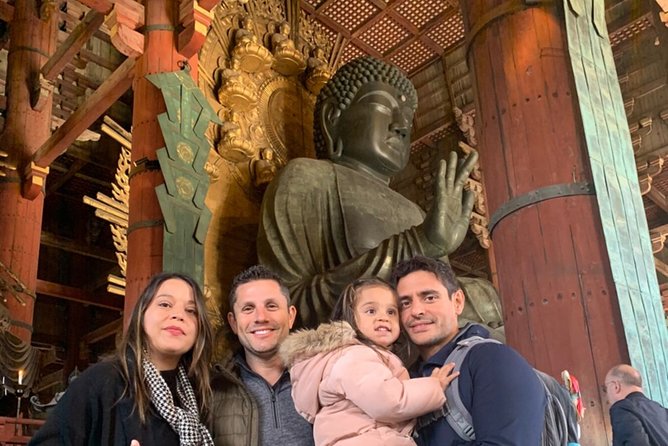
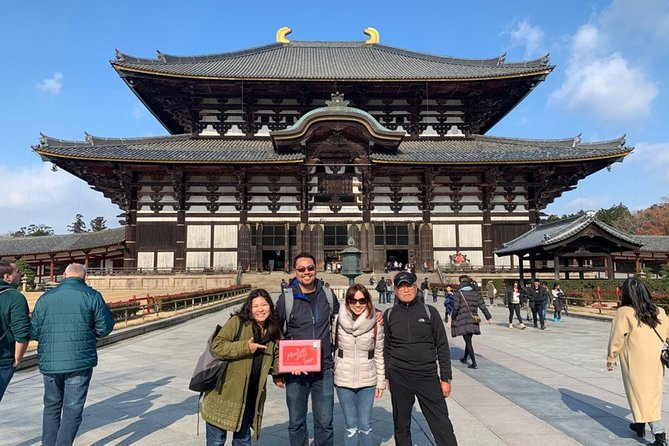
Next comes Todaiji Temple, where the main hall and the Nandaimon gate lead you toward the Great Buddha. As you approach, you’ll see the two imposing guardian statues (Kongorikishi). They’re the kind of dramatic entrance detail that makes the temple feel bigger the moment you step toward it.
Then you reach the part people remember: the Great Buddha. Even if you’ve seen photos, it’s the scale and the atmosphere that land. This is the UNESCO-listed anchor of the day, so the tour gives it a solid chunk of time.
Time on the stop: about 30 minutes.
Practical tip: go in with a plan for what you want from this stop—wide views outside, then a slower moment inside. Don’t try to do everything at once.
Lunch at 107 Zōshichō: where the day gets calmer
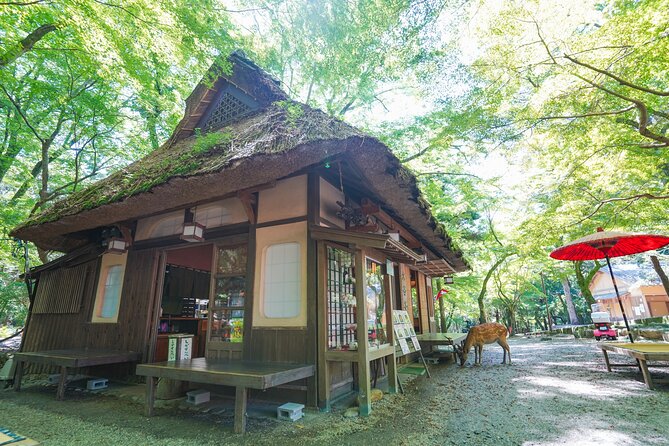
After Todaiji, you shift to food and a short reset. Stop 3 is 107 Zōshichō, described as a place for lunch at a traditional Japanese restaurant in an old-town setting.
The tour also includes the “hidden Japanese pyramid” surprise mentioned in the overview. That’s the beauty of this stop: it breaks the pattern of only big-ticket temples and shrines. Instead, you get a slightly quirky, local-feeling Nara moment.
Time on the stop: about 45 minutes.
Diet reality check: this experience can’t do gluten-free, and they can’t promise allergy-free meals. If you have dietary needs, request details in advance (by the day before), and be ready for limits.
Kasuga Taisha in the Primeval Forest: a shrine visit that feels different than the photos
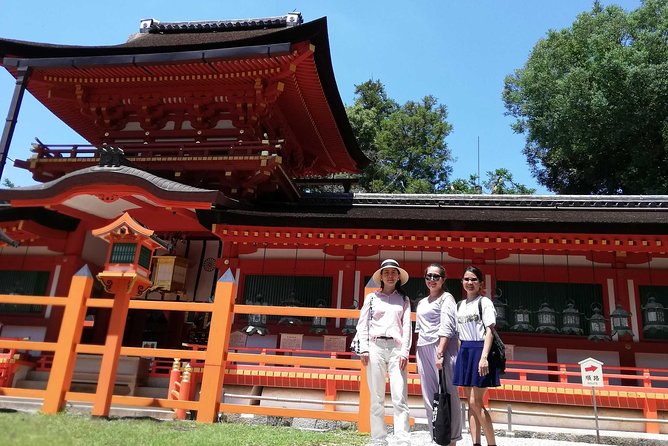
After lunch, you head to Kasuga Grand Shrine (Kasuga Taisha). What people often miss with Kasuga is that it isn’t just buildings and torii gates—it’s the shrine setting itself. The tour specifically points you toward Kasugayama Primeval Forest along with Kasuga Taisha.
That forest element changes the mood. Compared to the temple complexes that feel open and monumental, Kasuga can feel more sheltered and ceremonial. If you like learning the “why” behind Japanese shrine customs, this is one of your best stops because the surroundings help explain the atmosphere.
Time on the stop: about 30 minutes.
Photo tip: don’t only aim for the lanterns. If you pause and look around, you’ll notice how the shrine and the forest work together.
Nara Park deer time: how to enjoy it without getting bullied by deer
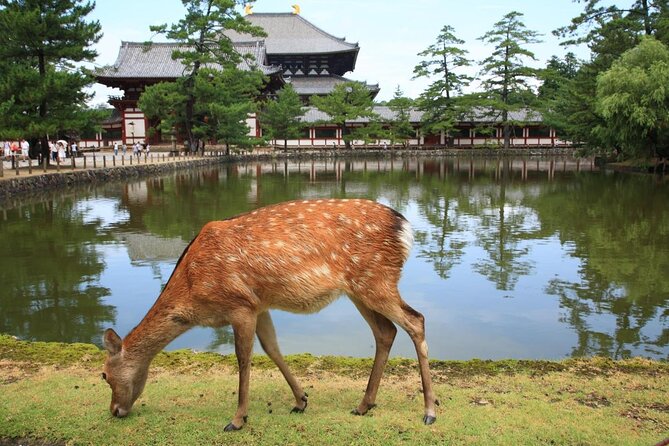
Then you reach Nara Park, and yes—the deer are the headline. But this tour treats deer time as more than a cuteness factor. You’ll get instructions on how to behave around the deer, which is key because they can be pushy if you’re not sure how to handle it.
One recurring detail from the experience: the deer interaction includes tips on respectful behavior, including the idea of having the deer bow before getting a cookie treat. You’re also more likely to have a calmer encounter if you follow the guide’s guidance instead of freelancing.
Time on the stop: about 30 minutes.
Reality check: if you go too fast, deer can feel chaotic. Slow down, keep your hands controlled, and let the guide set the pace.
Naramachi merchant lanes: old-town atmosphere and a look inside a traditional house
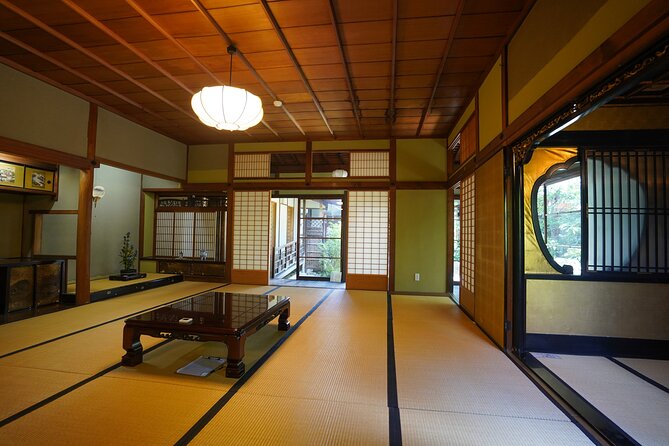
The final stretch is Naramachi, the old merchant area that feels a world away from modern Tokyo. You’ll head toward Naramachi Nigiwai no Ie, which is part of the stop’s “look at the old townscape and enter a historic merchant’s house” idea.
This is where your day becomes more human-scale. Temples and shrines are dramatic and huge; Naramachi is small, detailed, and lived-in-looking. You’ll walk among historical buildings and see how this part of Nara keeps its character.
Time on the stop: about 35 minutes.
What to expect: a slower, strolling feel where you can take photos, poke into sightlines, and soak in the texture of the neighborhood.
How the 5-hour schedule actually feels in real life
This is a half-day walking tour at about 5 hours total. The group size max is 8 people, which helps a lot because the guide can keep the pace steady and answer questions without losing everyone.
Expect short breaks, and plan for a lot of walking between sites. The route is designed to be doable for most people, but if anyone in your group has health concerns, the experience asks you to let them know in advance.
Your mindset matters here: if you’re hoping for a “see everything slowly” kind of day, you’ll need more than five hours. If you want a smart intro that hits the big cultural highlights and still leaves space to enjoy Nara Park, this duration makes sense.
Price and value: what you’re really paying for at $105.45 per person
At $105.45 per person, this tour is not the cheapest way to do Nara. But it prices itself around three things that usually cost you time and hassle if you do it solo:
- Admission tickets included
You’re not juggling ticket counters across multiple sites.
- Lunch included
In a half-day, lunch can become a stress point. Here, it’s handled as part of the flow.
- A guided route that connects the dots
Nara’s sights can feel like separate postcard locations if you don’t have context. With the guide’s narration, you tend to understand what you’re looking at—like why certain temple elements matter or how shrine settings create a different experience.
If you’re traveling as a family or a small group and want the “we don’t want to plan everything” payoff, the value starts to look better fast.
Also: the tour uses a mobile ticket, which usually cuts down on day-of confusion.
Private option: when it’s worth paying for just your group
This experience offers a private option. That’s a good fit if:
- you have kids and want a more flexible walking pace,
- you want to ask extra questions without worrying about timing for a larger group,
- you’d rather spend more time where your group is most interested (like deer time or Naramachi street wandering).
Even without privacy, the max group size of 8 helps keep things friendly and manageable.
Small practical notes that can save your day
A few planning details matter:
- Bring cash if you want snacks or drinks. The tour notes you don’t need to cover the guide’s food, but you may want to buy extras for yourself.
- Heat can hit hard in summer. Water and a hat are not optional.
- Diet requests need advance notice. Gluten-free can’t be accommodated, and allergy-free meals can’t be guaranteed.
- Weather matters: the experience requires good weather. If it gets canceled for poor weather, you’ll be offered another date or a full refund.
Who this tour is best for
This tour is a strong choice for first-time Nara visitors who want the big UNESCO and shrine/temple anchors without turning the day into logistics. It also works well for families because the stops mix major landmarks with a park highlight and a neighborhood stroll at the end.
If you’re traveling solo and want a guided structure, the small group size helps keep the experience calm. If you’re a hardcore temple-hunter who wants every side hall and museum detail, you may want extra time in Nara beyond this half-day.
Should you book this Nara half-day walking tour?
I’d book it if you want a well-paced introduction to Nara with major sights handled in a tight route: Kofuku-ji, Todaiji, Kasuga Taisha, Nara Park deer etiquette, and Naramachi’s merchant-town vibe. The combination of included admission tickets and lunch makes it feel like a day plan rather than a string of errands.
I wouldn’t book it if you need gluten-free meals or have strict allergy requirements that must be guaranteed. Also, if you hate walking for long stretches outdoors, you’ll want to take that seriously—this is a 5-hour walking tour with limited “sit and wait” time.
If your goal is a memorable, structured Nara day that doesn’t eat your schedule, this is the kind of tour that gives you exactly what you came for.
FAQ
How long is the Nara half-day walking tour?
It runs for about 5 hours (approximately). The stops are scheduled in timed segments, with short breaks during the walk.
What’s included in the price?
The tour includes a guided walking experience, admission tickets for the listed stops, and lunch at the lunch stop.
Is the tour suitable for families and different ages?
All ages are welcome. The tour includes walking with a few short breaks, so if anyone in your group has health concerns, you should let the provider know in advance.
Can you accommodate gluten-free or allergy needs?
Gluten-free requests can’t be accommodated. The tour also notes they’re unable to guarantee allergy-free meals or cater to dietary restrictions, since the food is prepared in kitchens not belonging to the tour provider. If you have a dietary request, you must request it in advance (by the day before).
Where does the tour start and end?
It starts at the Statue of Gyoki-bosatsu at 27 Higashimuki Nakamachi, Nara 630-8215. The tour ends back at the meeting point.
What happens if weather is bad?
This experience requires good weather. If it’s canceled due to poor weather, you’ll be offered a different date or a full refund.