REVIEW · MYKONOS
Mykonos Town: Archaeological Site of Delos Guided Day Trip
Book on GetYourGuide →Operated by Delos Travel · Bookable on GetYourGuide
Delos feels like time travel from Mykonos. I love the mosaics and marble columns that survive in shocking detail, and I especially like the stop at the House of Dionysus, where art and daily life feel linked. The main drawback is also the real one: Delos has very little shade, so you’ll need to plan for the heat and sun.
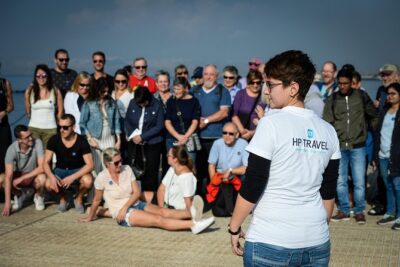
This is a well-run half-day excursion built around a short ferry ride and a guided walk through the most important parts of the ancient site. You get a live guide plus a wireless audio system, which helps you translate what you’re seeing into stories you can actually picture. Just know that group size can get big, especially when cruise ships are in port, so expect a more “efficient highlights tour” than a slow, quiet museum day.
In This Review
- Key highlights worth marking on your map
- A 4-hour Delos day trip: what you’ll actually see
- Getting to Delos from Mykonos: ferry timing and where to check in
- The guided walk on Delos: how the art and ruins connect
- House of Dionysus and the Theater area: the city feels real
- Temple of Apollo and the sanctuary zone: the spiritual center
- The main street, market ruins, and how daily life lived next to worship
- Boat ride comfort and the wireless audio: small issues, big impact
- Sun management on Delos: what to bring so your feet and head don’t quit
- Museums and photo time: what to do after the guided portion
- Price and value: does $93 make sense?
- Who this Delos guided trip is best for
- Should you book this Delos guided day trip?
- FAQ
- FAQ
- How long is the Delos guided day trip from Mykonos?
- Where do I meet the tour in Mykonos Town?
- Is hotel pickup available?
- What’s included in the price?
- Are food and drinks included?
- What languages are the live guides?
- Is there time for the museum?
- What should I bring?
- Is the tour wheelchair accessible?
- What if I can’t hear the guide well?
- What happens if the tour is canceled due to low participation?
Key highlights worth marking on your map
- Wireless audio helps you follow the ruins without squinting at every slab of stone
- House of Dionysus and its stunning decoration make the past feel personal
- Temple of Apollo gives you the sacred-site context in the right order
- Market streets and sanctuary zone connect trade, worship, and street life
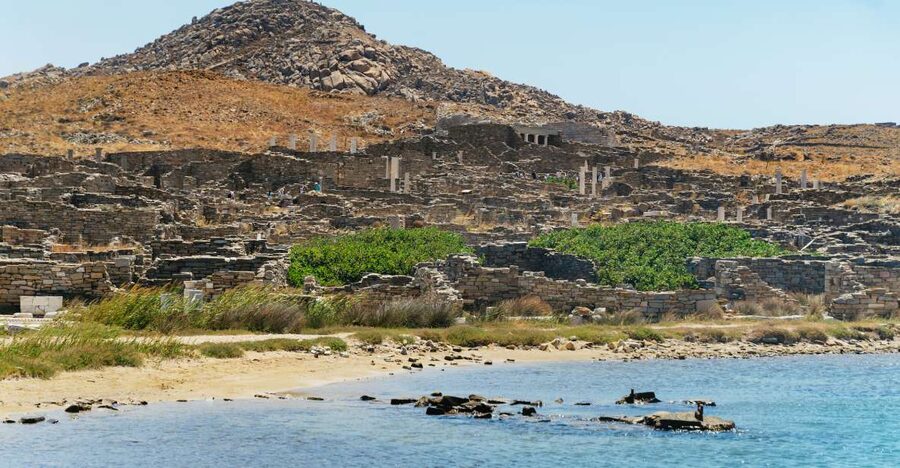
- Colossus of the Naxians and Propylaia hit you with scale and symmetry
- No-shade reality means bring sun protection before you arrive
A 4-hour Delos day trip: what you’ll actually see
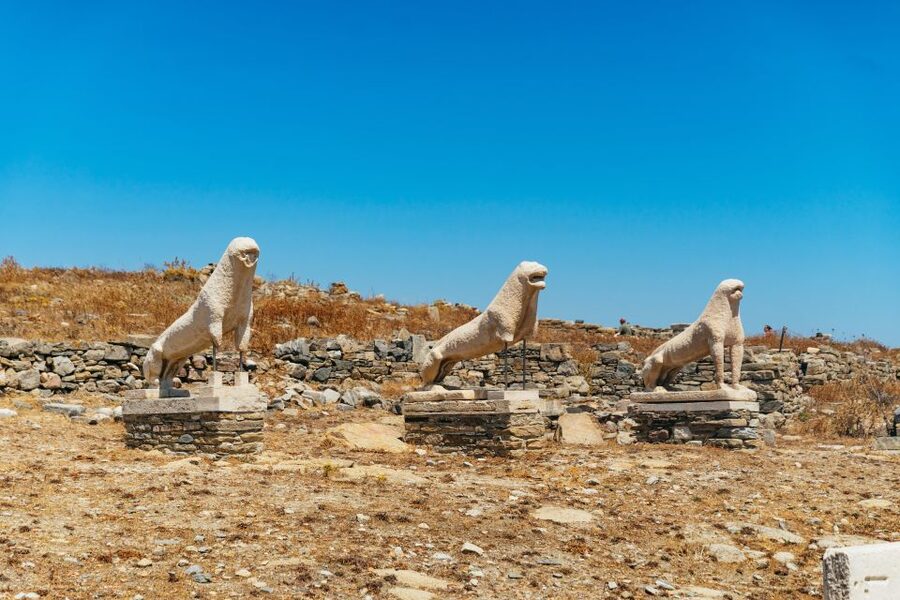
This trip is built for momentum. In roughly four hours total, you’ll cross by boat, get a guided orientation, and cover a concentrated route through Delos’ top sights. It’s not the kind of outing where you wander for hours and forget the schedule. Instead, it’s a guided sprint with context, so you know what you’re looking at when your feet hit the ground.
On Delos, the walking portion is about 1.5 hours with a guide. That sounds short until you realize how much this island throws at you: sacred architecture, restored-looking sections of town, and artworks like mosaics and wall paintings. The payoff is that you don’t just see “ruins,” you start seeing a city layout—street to sanctuary, homes to public spaces.
You can also read our reviews of more tours and experiences in Mykonos.

Getting to Delos from Mykonos: ferry timing and where to check in
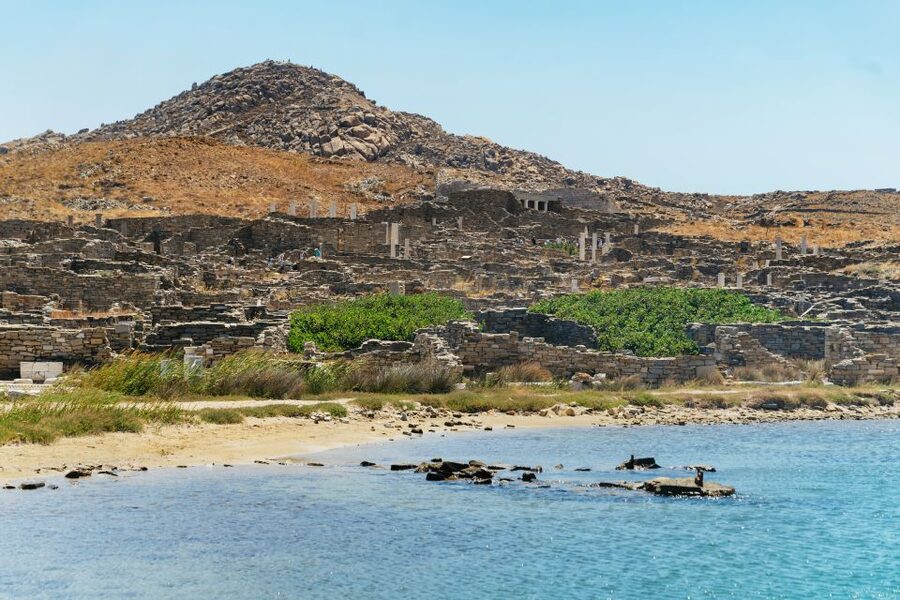
The boat portion is about 30 minutes each way. That’s long enough to enjoy the ride and short enough that you’re not losing your whole morning to transit. When the ferry is busy, it can be a bit chaotic, and on some days you may find yourself squeezed for space—so plan to arrive early and stay flexible.
Check in at Deliana port in Mykonos Town at the Delos Tours ticket office. If you choose a transfer option, pickup timing is typically about 45 minutes to 1 hour before departure, and you’ll receive your exact details by email. If you don’t choose transfers, the tour leaves from the old port area, so make sure you’re at the correct dock for your option.
A small caution from real-world experience: at least one group reported needing a short water taxi to reach a larger boat due to how the boats were staged. If that happens to you, don’t panic. It’s usually a quick logistics step to get everyone boarded safely.
The guided walk on Delos: how the art and ruins connect
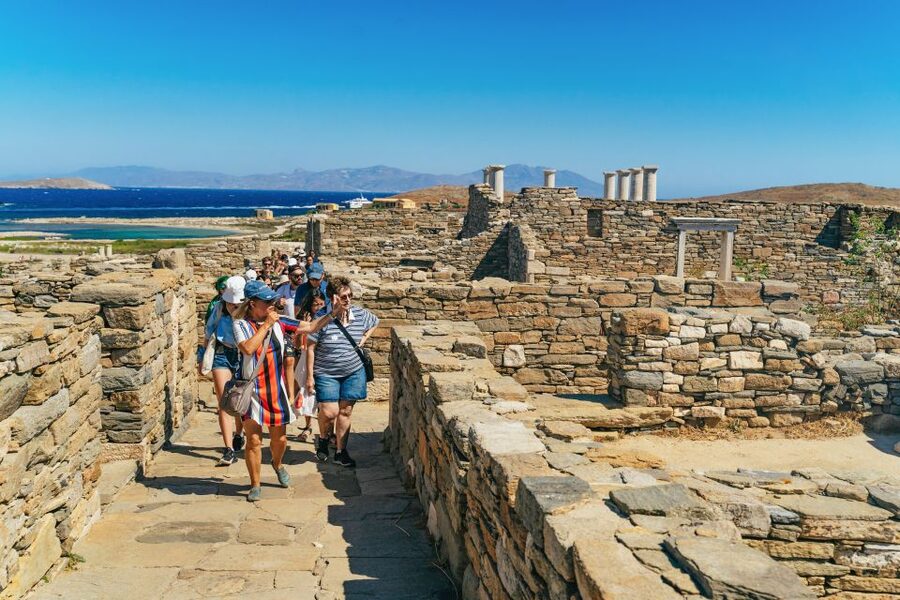
Delos is one of those places where a guide can completely change the visit. Without context, you can end up admiring individual bits—columns, walls, a mosaic—and still feel like the story is missing. With a guide, the pieces snap together into a route that makes sense: city streets first, then sacred and ceremonial zones.
During the guided portion, you’ll move through narrow city streets and key monuments in an order that helps you understand how different areas functioned. One of the biggest “aha” moments is when you see how the site’s artwork fits into both everyday life and religious meaning. You’ll get exposure to elements like marble columns, wall paintings, and mosaics—things that are exceptionally well preserved compared to what you may expect from open-air archaeology.
Guide quality matters here. I’ve seen many strong comments tied to names like Celia, who’s described as having an archaeological background, plus guides such as Ilona/Ilana, Amaryllis, Joanna, and others. Even when groups are large, the best guides do the same thing: they keep the group together, explain what matters at each stop, and make you look at the right detail in the right minute.
House of Dionysus and the Theater area: the city feels real
Two stops anchor the experience emotionally. First is the House of Dionysus, where you get the sense that these weren’t bare stones—they were decorated spaces meant for human life. When you’re standing inside or beside these preserved sections, it’s easier to imagine a room rather than a “ruin.”
Second is the Theater of Delos area, which helps you widen the picture beyond homes and sacred spaces. You start to see Delos as a place with public events and social rhythms, not only temples. Even if the theater isn’t the single most photogenic structure on the island, it adds structure to your understanding of how people moved through the city.
If you’re the type who loves connecting architecture to people, this guided route is a strong fit. The tour doesn’t try to cover everything on the island; it chooses the sights that communicate the most.
Temple of Apollo and the sanctuary zone: the spiritual center
The Temple of Apollo is the kind of place that makes you slow down, even on a timeline. This is the religious heart of the visit, and the guide’s job is to connect the temple to what you’ll see around it. Instead of treating Apollo as a name on a sign, you’ll get the spatial logic of a sanctuary zone—how ceremonial spaces relate to the broader city.
You’ll also walk a segment that includes major ceremonial and monumental features such as the Stoa of Phillipe, the Propylaia, and the Colossus of the Naxians. These aren’t just “more ruins.” They’re markers of importance and planning, showing that Delos was engineered to impress, host, and organize.
If you’re traveling with someone who’s more into mythology or sacred architecture than mosaics, this is where the tour wins them over.
The main street, market ruins, and how daily life lived next to worship

One of my favorite parts of any archaeological visit is when the tour proves the ruins weren’t only religious stages. Delos does that by giving you a main-street walk down toward market ruins and the sanctuary zone. You’re essentially tracing how movement worked—people traveling between practical spaces (commerce) and spiritual spaces (worship).
As you walk along the market route, you can start to understand why Delos mattered as a place where different kinds of life happened close together. That’s the magic of this kind of guided day trip: you don’t just memorize monuments. You see connections between city functions.
And yes, the wind and sun are part of the experience. You’re stepping through an open site with Aegean light everywhere. It’s great for photos, but it’s also a reminder that you’ll want to treat the day like a heat outing, not like a shaded ruins stroll.
Boat ride comfort and the wireless audio: small issues, big impact
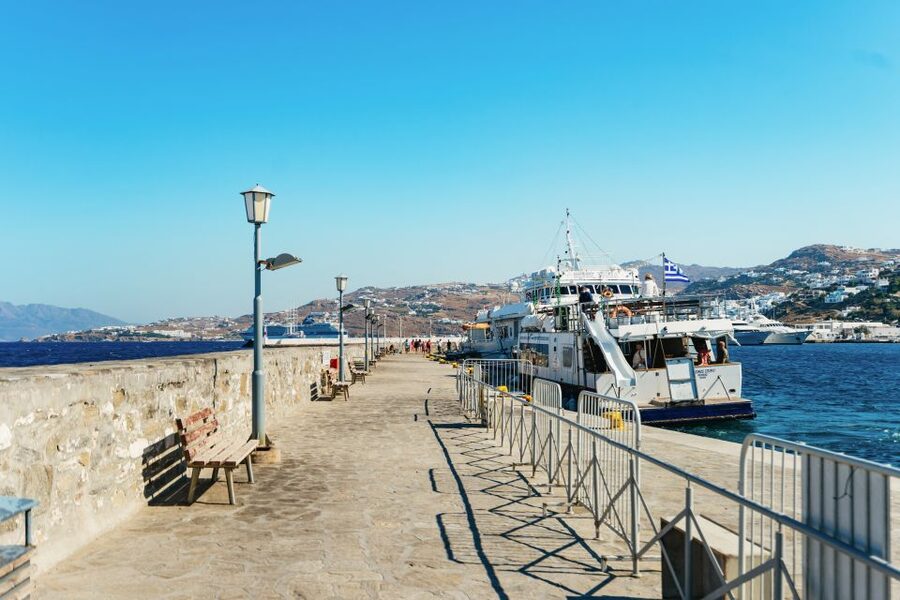
The ferry ride is about 30 minutes, and it’s generally described as comfortable, just busy on crowded days. If you get motion-sensitive, it can help to bring your own coping strategy (seat choice, water, and staying mindful of how the boat moves). The timing is short, so you’re not stuck at sea for long—still, it’s real water, not a pool.
The wireless tour guide system is included and designed to help you hear the guide without standing on their heels. That’s a big deal on a site with other groups and loud foot traffic. The catch: audio may cut out if you get too far from your guide, and a couple of groups reported headphone issues that reduced audio at moments. The fix is simple: don’t lag behind. Stay within the group and listen for the guide’s “next stop” cues.
Sun management on Delos: what to bring so your feet and head don’t quit
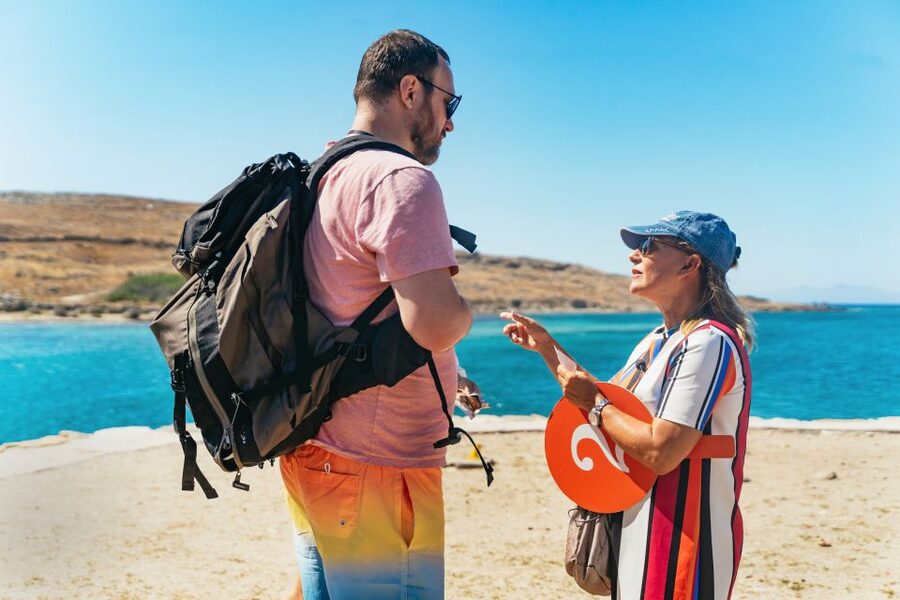
Delos is not a forgiving place for sun. Multiple visitors flagged that there’s basically no shade, and you’ll be walking in open air for a concentrated stretch. That means your sun protection isn’t optional if you want to enjoy the ruins instead of surviving them.
Bring:
- Comfortable shoes (you’ll be on uneven ground)
- Sunglasses and a sun hat
- Sunscreen
- A face mask or protective covering, as requested
- Passport or ID card
One very practical detail: there are only a couple of toilets on the island. If you’re the “I’ll wait” type, don’t. Use the facilities when you have the chance, because time can feel tight once the group is moving.
Also consider bringing water and using the board time wisely. The trip doesn’t include food and drinks, but some ferries are reported to have snacks available for purchase, and you can plan to grab what you need before you start walking.
Museums and photo time: what to do after the guided portion
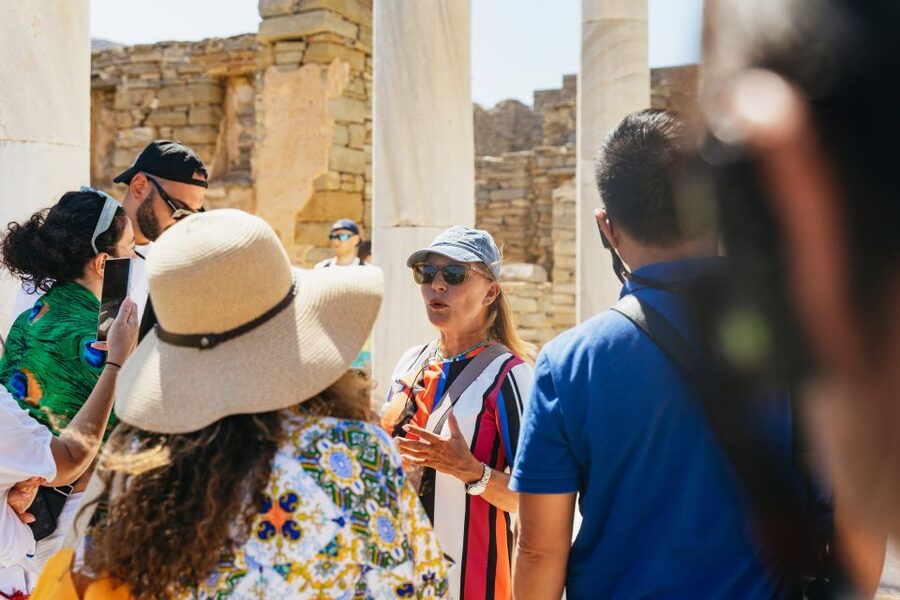
Entrance fees to the archaeological site and museum of Delos are included, and that matters. The guided route gets you the big highlights, but there’s also value in stepping inside the museum collection to make sense of artifacts you’ve seen outside.
In real terms, your freedom depends on the day and how smoothly the group moves. Some visitors said they had enough time after the guided walk to see the museum. Others noted the visit window was tight, so they focused on the essentials or chose a later return option to slow things down.
If you’re a photo person, plan to shoot at times when the guide is pausing. The guide’s stops are your best moments for framing, because they’ll naturally align you with the most readable angles of mosaics and structures.
Price and value: does $93 make sense?
At $93 per person for about four hours, the value comes from what’s wrapped into the price, not just the boat ride. You’re paying for:
- Roundtrip boat tickets
- Entrance fees to the archaeological site and museum (notably listed as 20 euros per person)
- A live guide
- A wireless audio system
- Safety equipment
- Optional hotel pickup in some cases (depending on the option)
So the question isn’t only whether $93 is affordable. It’s whether it’s cheaper than doing this day trip on your own while also figuring out how to connect the monuments into a coherent route. For most people, this format wins because Delos is big, hot, and easy to misunderstand without help. The guide turns scattered ruins into a story you can follow in 1.5 hours.
If you’re the kind of traveler who loves self-guided walking with an audio app and time to roam, you might feel the guided portion is too condensed. But if you want the best use of limited time from Mykonos, this price structure is the right fit.
Who this Delos guided trip is best for
This trip works especially well if you:
- Want the top Delos sights without building a whole plan yourself
- Like archaeology that connects to daily life, not only famous temples
- Appreciate guided explanations of mosaics, wall paintings, and preserved structures
- Have limited time in Mykonos and still want a major ancient-site day
It may feel less ideal if:
- You hate heat and open-air walking (Delos has little shade)
- You need a quiet, uncrowded experience (group sizes can be large on busy cruise days)
- You’re hoping for a full island exploration at a leisurely pace (this is a highlights walk, not an all-day wander)
Should you book this Delos guided day trip?
Yes, I’d book it if you want a high-impact Delos visit from Mykonos with minimal guesswork. The combination of the guided route, included entrances, and wireless audio makes it easy to get real meaning out of the ruins instead of just collecting photos.
My main advice is simple: treat it like a sun outing. Wear real walking shoes, bring sun protection, and don’t plan to rely on shade. If you’re okay with a packed, structured half-day, you’ll likely leave with a Delos map in your head—temple to sanctuary, city street to market ruins, home to theater—rather than a pile of impressive stone.
FAQ
FAQ
How long is the Delos guided day trip from Mykonos?
The total duration is about 4 hours, including the ferry rides and the guided walk at the archaeological site.
Where do I meet the tour in Mykonos Town?
Head to Deliana port in Mykonos Town and check in at the Delos Tours ticket office.
Is hotel pickup available?
Pickup is optional. If your option includes transfers, pickup is arranged based on your hotel location (about 45 minutes to 1 hour before departure). If you choose no transfers, the tour departs from the old port.
What’s included in the price?
The package includes roundtrip boat tickets, 1 way hotel pickup if you select it, entrance fees to the archaeological site and museum of Delos, a live guide, taxes, safety equipment, and a wireless tour guide system.
Are food and drinks included?
No. Food and drinks are not included on the tour.
What languages are the live guides?
Live tour guides are available in French, Italian, English, and Spanish.
Is there time for the museum?
Entrance to the museum is included, and some visitors use the available time after the guided walk to visit. Time can be tight depending on the day.
What should I bring?
Bring your passport or ID card, comfortable shoes, sunglasses, a sun hat, sunscreen, and a face mask or protective covering.
Is the tour wheelchair accessible?
No. The tour is not suitable for wheelchair users.
What if I can’t hear the guide well?
A wireless audio system is provided, but it can stop working correctly if you get too far from the guide, and a device issue may happen. Staying with the group helps.
What happens if the tour is canceled due to low participation?
There’s a minimum number of participants required (8). If it doesn’t meet the minimum, you’ll be informed so you can reschedule or get a refund.