REVIEW · GIRONA
Medieval Three Villages Small Group Day Trip from Barcelona
Book on Viator →Operated by Explore Catalunya · Bookable on Viator
Three medieval villages in one day beats the usual shuffle. This small-group Girona outing stitches together Besalú, Rupit, and Tavertet, plus a stop in tiny Castellfollit de la Roca, with guide-led walks and plenty of time to wander on your own. I love the mix of major set-piece sights (like the Romanesque bridge and Jewish bath in Besalú) with postcard views from cliff towns in the Ter Valley.
One practical consideration: lunch is on your own in Rupit, so you’ll want to plan for limited options and make choices quickly once you’re there.
In This Review
- What makes this trip work so well
- Key highlights to pay attention to
- Getting out of Barcelona fast: Palau de la Música start
- Besalú: Romanesque bridge, monastery, and the Mikveh
- Castellfollit de la Roca: the tiny town with a big drop
- Rupit: hanging bridge vibes, church stop, then real free time
- The one place to be ready: lunch planning
- Weather reality check
- Tavertet and the Cingles de Tavertet cliffs: the last medieval payoff
- The drive back: forests, El Montseny, and the end-of-day unwind
- Price and value: what $119.72 buys you
- Who should book this medieval day trip
- Should you book it?
- FAQ
- What is the duration of the Medieval Three Villages day trip?
- Where do you meet for the tour, and when does it start?
- How many stops are included?
- Is the tour guided?
- Is food included?
- What language is the tour offered in?
- Do I need to buy tickets for sights?
- What’s the group size?
- Can I cancel for a full refund?
- Is the trip suitable for someone with moderate physical fitness?
What makes this trip work so well
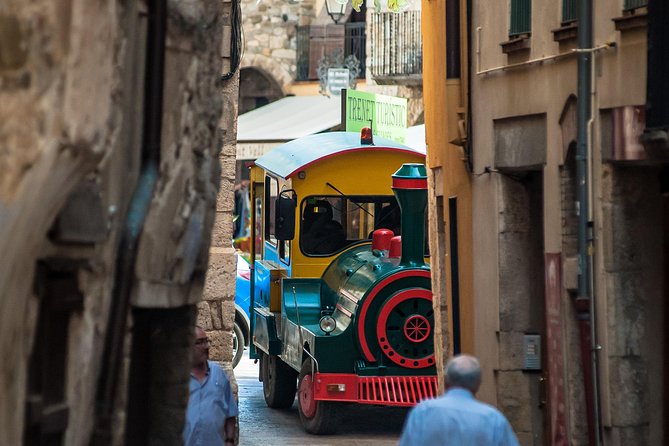
The route is built for pacing. You get guided context early, then you spend the middle of the day roaming at your own speed—cobblestones, bridges, churches, and castle ruins included. If you get a guide like Sergio or Rod, you’ll likely come away with clearer ideas about Catalan culture, not just dates and names.
The downside is simple: it’s a full day. You’ll be on the road and walking more than you might expect from just three “villages,” so wear shoes you trust and bring layers for cooler, higher spots.
Key highlights to pay attention to
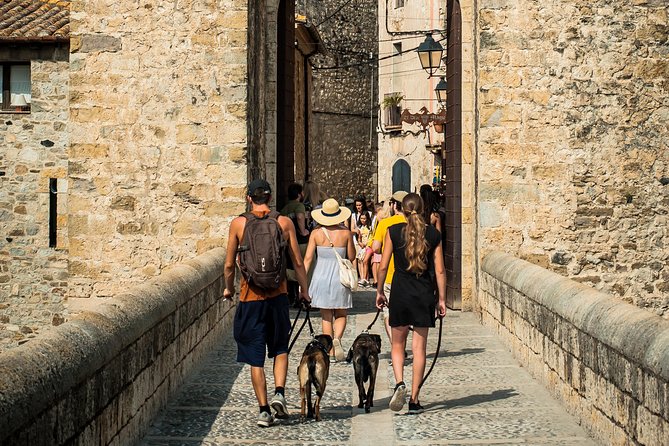
- Besalú’s Mikveh and Jewish quarter details: a 12th-century Jewish bath (mikveh) and a medieval synagogue stop that add depth beyond the stonework.
- Castellfollit de la Roca’s basalt-cliff charm: a very small place (about 1,000 residents) perched dramatically above the landscape.
- Rupit’s hanging bridge and Church of Sant Miquel: classic medieval streets, then a baroque stop and time to fuel up.
- Castle of Rupit ruins on a rocky peak: an easy-to-spot target once you’re in town, great for photos and a bit of climbing.
- Tavertet’s preserved village + Sant Cristòfol: 16th- and 17th-century homes, plus an 11th-century Romanesque church visit.
- Cingles de Tavertet viewpoints near Pantà de Sau: cliffs over the lake, with a short walk that pays off.
Getting out of Barcelona fast: Palau de la Música start
You begin your day near Palau de la Música in central Barcelona, with a meet-up around 8:15am and departure shortly after. The location is convenient if you’re staying anywhere in the Ciutat Vella area or want an easy walk to the meeting point. The tour uses an air-conditioned vehicle, which matters on a long day, especially if you’re traveling in warmer months.
Expect the first chunk of time to be pure movement: you’ll roll out of the city and head toward the Girona region. This is also when your guide frames the day—what you’ll see and what to look for when the villages start to blur together later. It’s one reason this trip feels more satisfying than a “drive-by photo tour.”
Tip for your comfort: since it’s a 10.5-hour day, plan your footwear and water like you mean it. You’ll do more strolling than sitting.
Besalú: Romanesque bridge, monastery, and the Mikveh
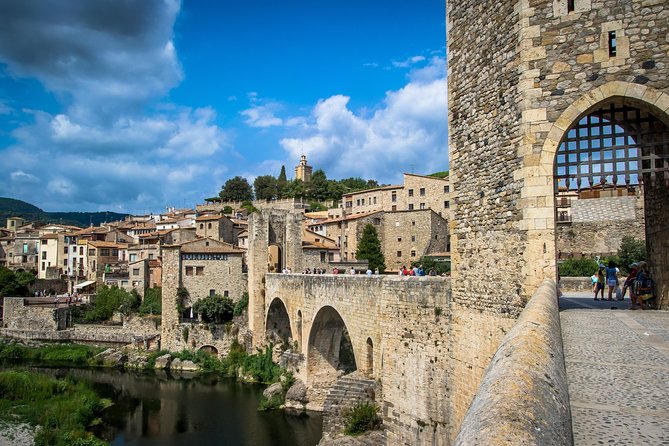
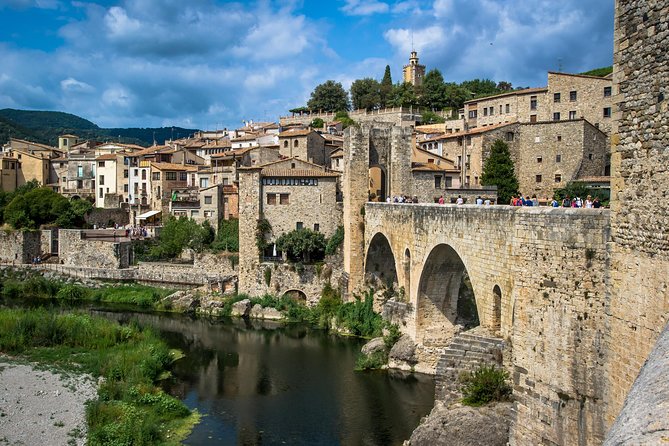
Besalú is the big hitter on the itinerary. Once you arrive, you start with a walking tour through streets where medieval architecture is still the main character. The timing is good: you get the guided overview while the village is calm, before the day’s heat (and crowds) rise elsewhere.
A few sights are worth anchoring in your mind:
- The 12th-century Romanesque bridge: this is one of those structures you can look at from multiple angles and still feel the medieval engineering. Don’t just snap a photo—pause and watch how the arch frames the river.
- The 11th-century Monastery of St. Pere: even if you don’t go deep into every corner, the church architecture helps you understand what “power” looked like in small medieval towns.
- The Mikveh (Jewish bath): you’ll visit this 12th-century mikveh, a rare and meaningful stop. It connects the village’s medieval life to a community history that’s easy to overlook when you only focus on Christian-era landmarks.
- A medieval synagogue stop: seeing this alongside the mikveh helps the story click—religion, daily routines, and community spaces were all part of town life.
You’ll also get free time during this part of the day. This is important. Besalú has narrow lanes and small visual surprises. If you only stay on the main route, you’ll miss the quieter corners—good views from side streets and little facades tucked between bigger buildings.
If you want the best use of your free time, do this: walk once with confidence (so you know where everything is), then loop back for slower photos and a cup of something warm or cold depending on weather.
Castellfollit de la Roca: the tiny town with a big drop
Between Besalú and Rupit, you pass Castellfollit de la Roca, a minuscule village perched on the edge of a basalt cliff. It’s one of those places where the scale shocks you a little: around 1,000 residents, in roughly 1,000 square meters. Even if your time there is brief, the stop does something valuable—it widens the mental map.
What you should pay attention to here is the way the village clings to the rock. The best photos usually come from viewpoints where you can see the cliff’s edge and the river valley below in one frame. If you’re prone to motion sickness, take a moment before you approach any sharp viewpoints and let your brain steady itself.
This stop also adds variety. Besalú is stone-and-water classic medieval. Rupit and Tavertet bring more steep streets and cliffside perspective, so Castellfollit de la Roca acts like a bridge—visually and emotionally—between the “big” village and the more dramatic ones.
Rupit: hanging bridge vibes, church stop, then real free time
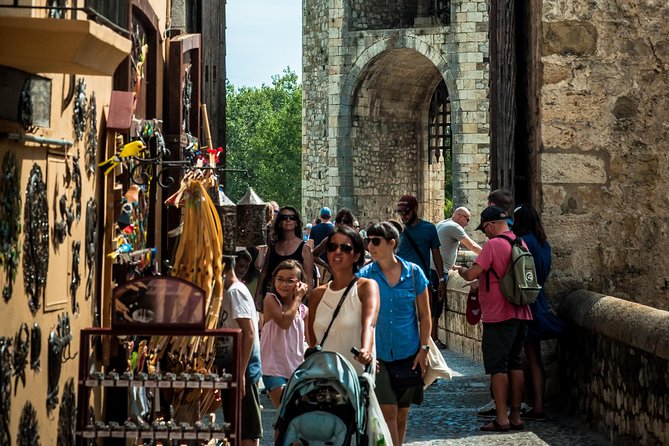
Rupit is where this tour turns into a slower, more personal experience. You’ll have around two hours to explore at your own pace, which is exactly what you want after the guided walk in Besalú.
Here’s what makes Rupit feel special:
- Cobblestone lanes and 16th-century houses: the streets are narrow and built for wandering. You’ll likely find yourself looking up more than forward.
- The hanging wooden bridge: it’s a signature experience and a fun contrast to the Romanesque stone you saw earlier.
- Church of Sant Miquel: a baroque-era church visit gives the town a different historical flavor than the medieval-only vibe.
- Lunch is on you: you eat in Rupit at your own expense, and your guide can help with options or reservations.
After lunch, you have choices. You can visit the ruins of the Castle of Rupit on its rocky peak, or you can keep things easier and take more time to stroll. If you have energy, the castle ruins are the kind of stop that rewards a little effort—views, texture, and that sense of medieval defense built into the geography.
The one place to be ready: lunch planning
Since lunch is not included, you’re responsible for your timing. Rupit is small, and it can fill up. If you walk in hungry at the exact wrong moment, you might wait. A practical move: when you arrive, take a quick look around and decide where you’ll eat before you wander too far. If your guide offers restaurant help, take it early.
Weather reality check
Rupit sits in higher terrain than Barcelona. It can be colder than you expect, and a light rain can change the vibe fast. Bring a jacket you can actually wear during the walks, and consider an umbrella if clouds look stubborn.
Tavertet and the Cingles de Tavertet cliffs: the last medieval payoff
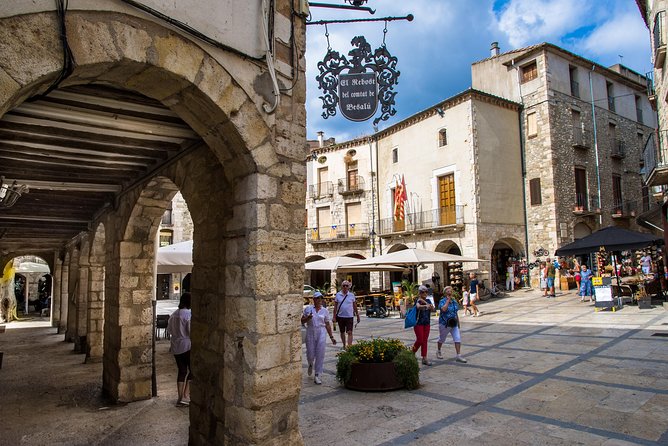
The day’s final village is Tavertet, reached after a scenic drive toward the Cingles de Tavertet area and viewpoints near Pantà de Sau. This part of the route matters because it sets up the wow factor: you’re no longer just in villages. You’re standing over wide views across the river valley.
In Tavertet, you’ll explore with your guide, focusing on village life and the architecture. You’ll have time to see:
- 48 preserved homes from the 16th and 17th centuries: even if you don’t read every plaque, you can see how the buildings shape the streets.
- 11th-century Romanesque Church of Sant Cristòfol: the church adds continuity with the morning’s Romanesque theme, but in a more intimate setting.
- A short walk to cliff overlooks: the view doesn’t require hours of effort. It’s designed for a quick payoff.
This stop is shorter than Rupit, so don’t treat it like a leisurely afternoon. Do what I call the two-speed method: take a quick guided walk to understand what you’re seeing, then use your free time for the specific shots and viewpoints you want most.
If you love churches, Tavertet is a strong finish. If you love scenery, the cliffs and lake views are the reason to be there at all.
The drive back: forests, El Montseny, and the end-of-day unwind
After Tavertet, you head back toward Barcelona with another scenic stretch. The route takes you past green forests and through areas tied to El Montseny, listed as a UNESCO Man and Biosphere reserve.
This matters more than you might think. It gives your brain a rest between “medieval stops.” By the time you arrive back around 6:45pm, you’re done with stairs and cobblestones for the day, but you still have something to look at out the window.
Your drop-off is in central Barcelona near Arc de Triomf, and your guide can help you figure out the next step—taxi or metro—depending on where your hotel is.
Price and value: what $119.72 buys you
At about $119.72 per person, you’re paying for a full-day package: local guide + air-conditioned vehicle plus multiple stops where admissions are listed as free in the plan. The real value isn’t only the price tag—it’s the efficiency.
Here’s what makes the math work in your favor:
- You’re getting three medieval villages plus a cliffside stop, not just one.
- The guide helps you understand what you’re seeing—especially at Besalú’s Jewish sites—so the time feels purposeful.
- The pacing includes guided time and then meaningful free exploration, rather than constant “follow me” walking.
What you don’t get: food and drinks. Lunch in Rupit is on your own, and you may also want coffee in Tavertet. So budget for at least one full meal plus snacks, and you’ll keep the day stress-free.
If you hate long drive days, the cost may feel steep. If you enjoy structure and want to see Girona villages without planning your own transport, this price looks fair.
Who should book this medieval day trip
This tour fits best if you:
- want a medieval-focused Girona day trip without renting a car
- enjoy architecture, small-town streets, and stone churches
- like guided context followed by free time to wander
It’s also a good option for people who prefer a small group atmosphere. This one runs with a maximum of 20 people, which usually keeps the day from feeling rushed or chaotic.
You might choose a different format if you:
- want a super slow day with minimal walking
- don’t want to think about lunch planning at all
- get overwhelmed by a packed 10.5-hour schedule
Should you book it?
I’d book this if your ideal day in Catalonia is part guided history, part wandering, and a few big-picture views from cliff towns. The best reason to go is the way Besalú and its Mikveh add real texture, while Rupit and Tavertet give you the fairy-tale look people imagine when they think of medieval Spain.
The main check before you click confirm:
- Are you okay handling your own lunch in Rupit?
- Are your shoes ready for cobblestones and short climbs?
- Do you pack layers for cooler spots?
If you answer yes, this is one of the more satisfying day trips from Barcelona for medieval lovers who also want real scenery.
FAQ
What is the duration of the Medieval Three Villages day trip?
It runs about 10 hours 30 minutes.
Where do you meet for the tour, and when does it start?
The meeting point is at Explore Catalunya, C/ Palau de la Música, 1, Ciutat Vella, 08003 Barcelona, and the start time is 8:30am. The tour ends near Arc de Triomf.
How many stops are included?
The tour visits Besalú, a stop by Castellfollit de la Roca, Rupit, and Tavertet.
Is the tour guided?
Yes. A local guide is included, and you’ll have guided walking time plus free time in the villages.
Is food included?
No. Food and drinks are not included (lunch in Rupit is at your own expense).
What language is the tour offered in?
The tour operates in English.
Do I need to buy tickets for sights?
The itinerary notes admissions as free for the listed stops, and you’ll receive a mobile ticket.
What’s the group size?
The tour has a maximum of 20 travelers.
Can I cancel for a full refund?
Yes. Free cancellation is available if you cancel up to 24 hours in advance for a full refund.
Is the trip suitable for someone with moderate physical fitness?
The tour is listed for travelers with moderate physical fitness, since it includes walking and some time exploring on foot.